Species · Flowering plants
Common Hoptree Ptelea trifoliata
The scientific name of the Common Hoptree is Ptelea trifoliata. It is a species of flowering plant in the family Rutaceae (rue family), order Sapindales.
- Scientific name
- Ptelea trifoliata L.
- Common name
- Common Hoptree
- Genus
- Ptelea
- Family
- Rutaceae (Rue Family)
- Order
- Sapindales
- Class
- Magnoliopsida
- Red List category
- LC Least Concern
- Recorded in
- 13 countries
- Name status
- accepted in the Catalogue of Life

Overview
Ptelea trifoliata is native to North America, including Canada, Mexico, and the United States. It is distinguished by its three-parted compound leaves and round, papery, wafer-like fruits.
Written 26 November 2026 from the sources listed below. Each statement was checked against the passage it cites; statements that could not be supported were removed.
Appearance
The common hoptree is a deciduous shrub or small tree with alternate, compound leaves consisting of three leaflets. It typically reaches approximately 6–8 m in height and develops a broad crown.[1][2]
The leaflets contain oil glands and measure approximately 7.6–12.7 cm long and 5.1–7.6 cm wide. Mature leaves are dark green and shiny on their upper surfaces and paler green underneath.[3][4][5]
The leaves turn rusty yellow in autumn.[6]
The flowers have four or five narrow, greenish-white petals and measure approximately 1–2 cm across.[7][8]
The fruit is a round, papery, wafer-like samara that is light brown and contains two seeds.[9]
Habitat
In the southeastern United States, the common hoptree commonly occurs in rocky forests with moist or dry soils. These habitats are often associated with calcareous or mafic substrates.[10][11]
In the Ozarks, it has been observed at clearing edges in moderately moist soils, but not beside streams.[12]
The species grows successfully in both full sun and shade and tolerates a wide range of soil types.[13][14]
Established plants have considerable drought tolerance.[15]
Diet
Larvae of the giant swallowtail butterfly feed on the leaves of the common hoptree. The giant swallowtail butterfly is identified as the principal host-associated species feeding on wafer ash.[16][17]
Behaviour
Several bee species visit the flowers of the common hoptree.[18]
Reproduction and life cycle
The common hoptree produces flowers during May and June. Its flowers occur together in terminal, spreading, compound cymes containing fertile and sterile flowers.[19][20]
The fruit ripens in October and remains attached until strong early-winter winds dislodge it.[21]
Uses
The common hoptree has been used by Native Americans as a seasoning and herbal medicine. German immigrants in nineteenth-century Texas used its seeds as a substitute for hops in beer production.[22][23]
Cultivars of the species have been developed for ornamental planting in parks and gardens.[24]
Classification of the Common Hoptree
| Kingdom | Plantae |
|---|---|
| Subkingdom | Pteridobiotina |
| Phylum | Tracheophyta |
| Class | Magnoliopsida |
| Order | Sapindales |
| Family | Rutaceae (Rue Family) |
| Subfamily | Zanthoxyloideae |
| Tribe | Pteleeae |
| Subtribe | Pteleinae |
| Genus | Ptelea (Hoptree) |
| Species | Ptelea trifoliata L. |
Where the Common Hoptree is found
Checklists and occurrence records place Ptelea trifoliata in 13 countries across Asia, Europe and North America. GBIF holds 23,821 georeferenced records of it.
Countries where it is native or its origin is not stated
Countries where it has been introduced
Regions and cities with the most records
- Texas, United States 5,748
- Illinois, United States 1,383
- Austin, United States 1,379
- Arizona, United States 964
- Brushy Creek, United States 804
- Round Rock, United States 785
- Indiana, United States 782
- Cedar Park, United States 743
- New Mexico, United States 736
- Pflugerville, United States 716
- Ontario, Canada 703
- San Antonio, United States 609
- Live Oak, United States 550
- Michigan, United States 548
- Ohio, United States 514
- Georgetown, United States 476
- Leander, United States 447
- Converse, United States 421
- Missouri, United States 357
- Universal City, United States 324
- Portage, United States 315
- Hutto, United States 297
- Wisconsin, United States 272
- Schertz, United States 260
- Georgia, United States 236
- Cibolo, United States 234
- Hobart, United States 228
- Vyshneve, Ukraine 227
- Sofiivska Borschahivka, Ukraine 226
- Svyatopetrivske, Ukraine 221
- Berwyn, United States 215
- Gary, United States 213
- Cicero, United States 211
- Arkansas, United States 209
- Florida, United States 207
- Bilychi, Ukraine 206
24 more countries have a few records outside this range
These countries hold a few records of Ptelea trifoliata but lie outside the range the checklists give for it. Such records are often zoo or garden specimens, museum material or vagrants, so the species is not counted as occurring there.
A number beside a place is its count of GBIF occurrence records. A place without a number comes from a checklist alone. Records show where a species has been observed or collected, which can include escapes and vagrants.
Common names
English
- Common Hoptree
- American Hop Tree
- Wafer Ash
- Hoptree
- Shrub Trefoil
- Stinking Ash
- Stinking-ash
- Three-leaved Hop-tree
- Wafer-ash
Names in 18 other languages
- Chinese
- 榆橘, 鲍尔温榆橘, 齿叶榆橘
- Czech
- křídlatec trojlistý
- Danish
- Kløver-Læderkrone
- Dutch
- Hopboom
- Estonian
- harilik humalapuu, kolmiklehine humalapuu
- Finnish
- Ptelea, humalalaikkio
- French
- Orme de Samarie, Ptélée à trois feuilles, ptéléa trifolié
- German
- Dreiblättriger Lederstrauch, Kleeulme
- Hungarian
- hármaslevelű alásfa
- Japanese
- ホップノキ
- Lithuanian
- Trilapė ptelija
- Norwegian Bokmål
- humlebusk
- Polish
- Parczelina trójlistkowa
- Russian
- Птелея трёхлистная
- Slovak
- krídlatec trojlístkový
- Spanish
- Palo zorrillo
- Swedish
- klöveralm
- Ukrainian
- В'язовик, Птелея трилиста
Synonyms
2 other scientific names have been used for this species and are now treated as synonyms of Ptelea trifoliata.
- Ptelea trifoliata f. trifoliata
- Ptelea trifoliata var. trifoliata
Subspecies and varieties
- Ptelea trifoliata subsp. angustifolia subspecies
- Ptelea trifoliata subsp. coahuilensis subspecies
- Ptelea trifoliata subsp. pallida subspecies
- Ptelea trifoliata subsp. polyadenia subspecies
- Ptelea trifoliata subsp. trifoliata (Wafer-ash) subspecies
- Ptelea trifoliata var. cognata variety
- Ptelea trifoliata var. confinis variety
- Ptelea trifoliata var. lutescens variety
- Ptelea trifoliata var. mollis (Hairy Wafer-Ash) variety
- Ptelea trifoliata var. persicifolia (Peachleaf Wafer-ash) variety
Related species
-
 Western HoptreePtelea crenulata
- Ptelea aptera
-
 PomeloCitrus maxima
-
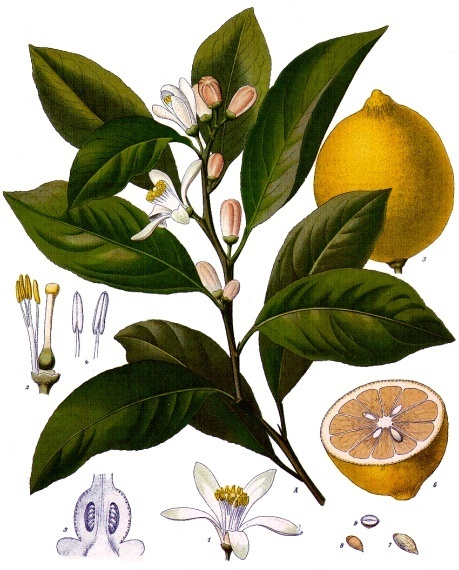 LemonCitrus × limon
-
 YuzuCitrus × junos
-
 Swatow OrangeCitrus × reticulata
-
 CitronCitrus medica
-
 Bitter OrangeCitrus × aurantium
Compare
Questions and answers
What is the scientific name of the Common Hoptree?
The scientific name of the Common Hoptree is Ptelea trifoliata. Written with its author, the full name is Ptelea trifoliata L..
Which family does the Common Hoptree belong to?
Ptelea trifoliata belongs to the family Rutaceae, in the order Sapindales and the class Magnoliopsida.
Where is the Common Hoptree found?
Checklists and occurrence records place Ptelea trifoliata in 13 countries, including United States, Mexico, Canada and Ukraine.
What is the conservation status of the Common Hoptree?
The IUCN Red List category recorded for Ptelea trifoliata is Least Concern (LC).
What other names does the Common Hoptree have?
Ptelea trifoliata is also known in English as American Hop Tree, Wafer Ash, Hoptree, Shrub Trefoil, Stinking Ash and Stinking-ash.
What is a common hop tree?
The common hoptree is a deciduous shrub or small tree in the family Rutaceae. It has alternate, compound leaves consisting of three leaflets and produces round, papery, wafer-like fruits.[1][9]
Where to plant an hop tree?
The common hoptree grows successfully in both full sun and shade and tolerates a wide range of soil types. Established plants have considerable drought tolerance.[13][14][15]
Where is the hop tree native to?
The common hoptree is native to North America, including Canada, Mexico, and the United States. Its northern native range extends into Ontario and Quebec, Canada, and its southern native range reaches Mexico.[25][26][27]
Sources
Passages the profile rests on
- Ptelea trifoliata is a deciduous shrub or small tree with alternate, compound leaves consisting of three leaflets. Source passage: “It is a deciduous shrub or tree, with alternate, trifoliate leaves.” — English Wikipedia
- The species typically reaches approximately 6–8 m in height and develops a broad crown. Source passage: “growing to around 6–8 m (20–26 ft) tall with a broad crown.” — English Wikipedia
- Its leaves are alternate and compound, with three leaflets containing oil glands. Source passage: “Its leaves are alternate and compound with three leaflets, dotted with oil glands.” — English Wikipedia
- The leaflets measure approximately 7.6–12.7 cm long and 5.1–7.6 cm wide. Source passage: “3–5 in (7.6–12.7 cm) long by 2–3 in (5.1–7.6 cm) broad” — English Wikipedia
- Mature leaves are dark green and shiny on their upper surfaces and paler green underneath. Source passage: “When fully grown the leaves are dark green and shiny above and paler green beneath.” — English Wikipedia
- The leaves turn rusty yellow in autumn. Source passage: “In autumn they turn a rusty yellow.” — English Wikipedia
- The flowers have four or five narrow, greenish-white petals. Source passage: “The flowers are small, 1–2 cm (0.39–0.79 in) across, with 4–5 narrow, greenish white petals.” — English Wikipedia
- The flowers measure approximately 1–2 cm across. Source passage: “The flowers are small, 1–2 cm (0.39–0.79 in) across” — English Wikipedia
- Its fruit is a round, papery, wafer-like samara that is light brown and contains two seeds. Source passage: “The fruit is a round wafer-like papery samara, 2–2.5 cm (0.79–0.98 in) across, light brown, and two-seeded.” — English Wikipedia
- In the southeastern United States, the species commonly occurs in rocky forests with moist or dry soils. Source passage: “In the Southeastern United States it is most often found in rocky forests, in both moist and dry soil” — English Wikipedia
- Its southeastern forest habitats are often associated with calcareous or mafic substrates. Source passage: “often associated with calcareous or mafic substrates.” — English Wikipedia
- In the Ozarks, the species has been observed at clearing edges in moderately moist soils, but not beside streams. Source passage: “In the Ozarks I have found it at the edge of clearings in good, moderately moist soils but not next to streams.” — uaex.uada.edu
- The species grows successfully in both full sun and shade. Source passage: “It grows equally well in full sun or shade” — uaex.uada.edu
- The species tolerates a wide range of soil types. Source passage: “and is tolerant of a wide array of soil types.” — uaex.uada.edu
- Established plants have considerable drought tolerance. Source passage: “Once established, Ptelea has considerable drought tolerance” — uaex.uada.edu
- Larvae of the giant swallowtail butterfly feed on the leaves of Ptelea trifoliata. Source passage: “Larva of the giant swallowtail butterfly Papilio cresphontes feed on the leaves.” — English Wikipedia
- The giant swallowtail butterfly is identified as the principal host-associated species feeding on wafer ash. Source passage: “the Wafer Ash or Hop Tree (Ptelea trifoliata), the principle host to the giant swallowtail butterfly.” — uaex.uada.edu
- Several bee species visit the flowers of Ptelea trifoliata. Source passage: “Several bee species have been documented visiting the flowers of wafer ash” — English Wikipedia
- The species produces flowers during May and June. Source passage: “Flowers are produced in May and June.” — English Wikipedia
- Its flowers occur together in terminal, spreading, compound cymes containing fertile and sterile flowers. Source passage: “Fertile and sterile flowers are produced together in terminal, spreading, compound cymes” — English Wikipedia
- The fruit ripens in October and remains attached until strong early-winter winds dislodge it. Source passage: “The fruit ripens in October, and is held on the tree until high winds shake them loose in the early winter” — English Wikipedia
- The species has been used by Native Americans as a seasoning and herbal medicine. Source passage: “It has several Native American uses as a seasoning and as an herbal medicine for different ailments.” — English Wikipedia
- German immigrants in nineteenth-century Texas used its seeds as a substitute for hops in beer production. Source passage: “German immigrants to Texas in the 19th century used its seeds in place of hops in the beer-making process” — English Wikipedia
- Cultivars of the species have been developed for ornamental planting in parks and gardens. Source passage: “Numerous cultivars have been developed for ornamental use in parks and gardens.” — English Wikipedia
- The species is native to North America, including Canada, Mexico, and the United States. Source passage: “It is native to North America, where it is found in Canada, Mexico, and the United States.” — English Wikipedia
- Its northern native range extends into Ontario and Quebec, Canada. Source passage: “where its northern limits are in Ontario and Quebec, Canada.” — English Wikipedia
- Its southern native range reaches Mexico. Source passage: “Its southern limits are in Mexico.” — English Wikipedia
- The specific epithet trifoliata refers to the plant's three-parted compound leaves. Source passage: “The specific epithet "trifoliata" refers to the three-parted compound leaf.” — English Wikipedia
- The species name trifoliata refers to its three-parted leaves. Source passage: “The species trifoliata is in reference to the three parted leaf.” — plants.ces.ncsu.edu
- Its bark ranges from reddish brown to gray brown and develops short horizontal corky ridges. Source passage: “The bark is reddish brown to gray brown, with short horizontal lenticels” — English Wikipedia
Data
- Catalogue of Life, 2026-10-16 XR cc by
- Global Biodiversity Information Facility CC BY 4.0
- Wikidata CC0
- GeoNames CC BY 4.0
- Wikimedia Commons per image; credit shown with each image
- Within the Catalogue of Life, this name comes from Synonymic Checklists of the Vascular Plants of the World cc by
References
- L. where the name was published
This species in other databases
- Catalogue of Life 4PSYD
- Wikidata Q1326200
- iNaturalist 50625
- World Flora Online wfo-0000471373
- GRIN 30275
Page built on 27 November 2026. See how the catalog is made and all sources and licences.
Cite this page
ScientificNames.org. (2026). Ptelea trifoliata (Common Hoptree). Retrieved November 27, 2026, from https://scientificnames.org/species/ptelea-trifoliata
“Ptelea trifoliata (Common Hoptree).” ScientificNames.org, 2026, scientificnames.org/species/ptelea-trifoliata. Accessed 27 Nov. 2026.
ScientificNames.org. “Ptelea trifoliata (Common Hoptree).” Accessed November 27, 2026. https://scientificnames.org/species/ptelea-trifoliata.
@misc{scientificnames_ptelea_trifoliata_common_hoptree,
  author = {{ScientificNames.org}},
  title = {Ptelea trifoliata (Common Hoptree)},
  year = {2026},
  url = {https://scientificnames.org/species/ptelea-trifoliata},
  note = {Accessed 2026-11-27}
}