Species · Flowering plants
Bitterbrush Purshia tridentata
The scientific name of the Bitterbrush is Purshia tridentata. It is a species of flowering plant in the family Rosaceae (rose family), order Rosales.
- Scientific name
- Purshia tridentata (Pursh) DC.
- Common name
- Bitterbrush
- Genus
- Purshia
- Family
- Rosaceae (Rose Family)
- Order
- Rosales
- Class
- Magnoliopsida
- Recorded in
- 2 countries
- Name status
- accepted in the Catalogue of Life

Overview
Purshia tridentata grows on arid mountainsides and slopes, and occurs across parts of western North America, from southeastern British Columbia to New Mexico and California. It has green, lobed leaves, pale yellow flowers, and clusters of dry, slender achenes.
Written 26 November 2026 from the sources listed below. Each statement was checked against the passage it cites; statements that could not be supported were removed.
Appearance
Its leaves are green, wedge-shaped, and measure 4–20 millimetres long and 2–12 millimetres wide. They have three to five teeth at their tips, with green upper surfaces and grayish, densely hairy lower surfaces.[1][2][3]
Its flowers have five petals that can be pale yellow, yellow, or white and measure 5–9 millimetres long.[4][5]
Its fruits are achenes measuring 1–2 centimetres long. They are obliquely ovoid.[6]
Its bark is brown and covered with dense hairs.[7]
Habitat
Bitterbrush grows on arid mountainsides and slopes. It also occupies rocky or well-drained soils with somewhat more moisture than sagebrush steppe soils.[8][9]
It commonly grows as an understory plant alongside taller trees. It occurs in antelope bitterbrush-bluebunch wheatgrass and antelope bitterbrush-Idaho fescue plant communities.[10][11]
In Utah, it occurs in sagebrush-grass, mountain brush, pinyon-juniper, and ponderosa pine communities at elevations of 1,220–2,775 metres. It also occurs in warm, dry Douglas-fir habitats and pinyon-juniper communities.[12][13]
In California, it occurs at elevations between 700 and 3,400 metres. In British Columbia, it occurs at elevations between 320 and 1,065 metres.[14][15]
Diet
Bitterbrush is an important browse plant for wildlife and livestock. It provides important winter forage for deer.[16][17]
Pronghorn, mule deer, elk, bighorn sheep, and moose extensively consume the species. It can account for 91 percent of mule deer diets during September.[18][19]
Mule deer use of bitterbrush is greatest during periods of deep snow. Cattle prefer it from mid-May through June and again during September and October.[20][21]
Behaviour
Bitterbrush provides cover for small animals and birds.[22]
Reproduction and life cycle
Flowering occurs between April and June.[23]
Conservation
Bitterbrush is considered apparently secure, although some populations are declining and showing poor regeneration after fires and overgrazing.[24]
Uses
Bitterbrush is used extensively in land reclamation.[25]
Paiute communities in Nevada brewed its leaves and twigs to treat colds, pneumonia, and skin problems. Paiute communities in Oregon used its bark to make moccasins.[26][27]
Klamath communities in Oregon used its seed coat to produce violet dye for objects including arrows and bows. Navajo communities used its bark to make diapers.[28][29]
Similar species
Bitterbrush can resemble Purshia stansburyana and Fallugia paradoxa during vegetative and flowering stages. Unlike these species, it lacks persistent feathery fruit appendages.[30][31]
When fruits are absent, bitterbrush can be distinguished from these two species by having only one or two pistils.[32]
Classification of the Bitterbrush
| Kingdom | Plantae |
|---|---|
| Subkingdom | Pteridobiotina |
| Phylum | Tracheophyta |
| Class | Magnoliopsida |
| Order | Rosales |
| Family | Rosaceae (Rose Family) |
| Subfamily | Dryadoideae |
| Genus | Purshia (Bitterbrush) |
| Species | Purshia tridentata (Pursh) DC. |
Where the Bitterbrush is found
Checklists and occurrence records place Purshia tridentata in 2 countries across North America. GBIF holds 16,329 georeferenced records of it.
Countries
Regions and cities with the most records
- California, United States 3,102
- Oregon, United States 1,806
- Idaho, United States 1,650
- British Columbia, Canada 1,593
- Washington, United States 1,278
- Nevada, United States 1,269
- Colorado, United States 1,193
- Utah, United States 1,172
- Truckee, United States 605
- South Lake Tahoe, United States 455
- Wyoming, United States 428
- Carson City, United States 361
- Boise, United States 355
- Reno, United States 343
- Bend, United States 328
- Pocatello, United States 285
- Sparks, United States 283
- Eagle, United States 270
- Meridian, United States 232
- Sun Valley, United States 221
- Holladay, United States 216
- Murray, United States 210
- Cottonwood Heights, United States 209
- East Millcreek, United States 209
- Millcreek, United States 207
- Midvale, United States 196
- South Salt Lake, United States 189
- Taylorsville, United States 189
- Penticton, Canada 173
- Montana, United States 171
- West Jordan, United States 168
- Kearns, United States 163
- Sandy, United States 161
- Eagle Foothills, United States 157
- Salt Lake City, United States 152
- Bountiful, United States 142
Range as the checklists state it
Canada (British Columbia); USA (Arizona, California, Colorado, Idaho, Montana, Nebraska, New Mexico, Nevada, Oregon, Utah, Washington State, Wyoming)
A number beside a place is its count of GBIF occurrence records. A place without a number comes from a checklist alone. Records show where a species has been observed or collected, which can include escapes and vagrants.
Common names
English
- Bitterbrush
- Antelope Brush
- Buck Brush
- Antelope-brush
Names in 7 other languages
- Chinese
- 羚梅
- French
- purshie tridentée
- Polish
- wrzęśla trójklapowa
- Slovak
- útesovka trojzubá
- mte
- tuunabü
- nav
- Tsék’ina’ałch’ízhii
- was
- balŋáćaŋ
Synonyms
4 other scientific names have been used for this species and are now treated as synonyms of Purshia tridentata.
- Kunzia tridentata (Pursh) Spreng.
- Purshia tigarea F.Dietr.
- Purshia tridentata var. tridentata
- Tigarea tridentata Pursh
Related species
- Antelope BushPurshia plicata
- Chihuahuan CliffrosePurshia ericifolia
- CliffrosePurshia stansburiana
- Purshia glandulosa
- Purshia mexicana
- Arizona CliffrosePurshia × subintegra
- Purshia pinkavae
-
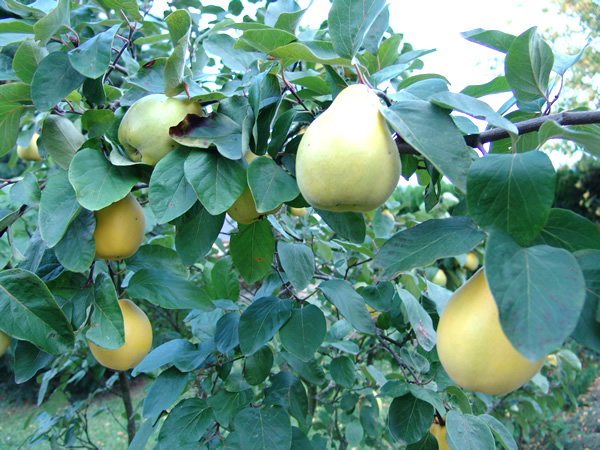 QuinceCydonia oblonga
Compare
Questions and answers
What is the scientific name of the Bitterbrush?
The scientific name of the Bitterbrush is Purshia tridentata. Written with its author, the full name is Purshia tridentata (Pursh) DC..
Which family does the Bitterbrush belong to?
Purshia tridentata belongs to the family Rosaceae, in the order Rosales and the class Magnoliopsida.
Where is the Bitterbrush found?
Checklists and occurrence records place Purshia tridentata in 2 countries: United States and Canada.
What other names does the Bitterbrush have?
Purshia tridentata is also known in English as Antelope Brush, Buck Brush and Antelope-brush.
How long do sage brush plants live?
Some individuals of bitterbrush have been found to live for more than a century.[33]
Sources
Passages the profile rests on
- Its leaves measure 4–20 millimetres long and 2–12 millimetres wide. Source passage: “Leaves 4-20mm long, 2-12mm wide” — uvu.edu
- Its leaves are wedge-shaped and have three to five teeth at their tips. Source passage: “cuneate (wedge-shaped) and 3-5 toothed apically” — uvu.edu
- The upper leaf surfaces are green, while the lower surfaces are grayish and densely hairy. Source passage: “green above and grayish tomentulose below” — uvu.edu
- Its flowers are pale yellow and have five petals measuring 6–8 millimetres. Source passage: “The flowers are pale yellow, with five petals 6–8 mm long” — English Wikipedia
- Its flowers have pale yellow, yellow, or white petals measuring 5–9 millimetres long. Source passage: “Flowers with petals pale yellow to yellow or white, 5-9 mm long” — uvu.edu
- Its fruits are obliquely ovoid achenes measuring 1–2 centimetres long. Source passage: “Fruit achenes, obliquely ovoid in shape, 1-2 cm long” — uvu.edu
- Its bark is brown and covered with dense hairs. Source passage: “bark brown, tomentose” — fieldguide.mt.gov
- The species grows on arid mountainsides and slopes. Source passage: “It grows on arid mountainsides and slopes” — English Wikipedia
- The species also occupies rocky or well-drained soils with somewhat more moisture than sagebrush steppe soils. Source passage: “rocky or drained soils with somewhat more moisture than the sagebrush steppe” — English Wikipedia
- The species occurs in antelope bitterbrush-bluebunch wheatgrass and antelope bitterbrush-Idaho fescue plant communities. Source passage: “Plant communities with antelope bitterbrush include range types such as antelope bitterbrush-bluebunch wheatgrass (Pseudoroegneria spicata), antelope bitterbrush-Idaho fescue (Festuca idahoensis)” — fs.usda.gov
- The species commonly grows as an understory plant alongside taller trees. Source passage: “Can often be found as an understory plant in association with taller growing trees” — uvu.edu
- In Utah, the species occurs in warm, dry Douglas-fir habitats and pinyon-juniper communities. Source passage: “In Utah, antelope bitterbrush appears in warm, dry Douglas-fir (Pseudotsuga menziesii) habitat types, pinyon (Pinus spp.)-juniper "breaks"” — fs.usda.gov
- In Utah, the species occurs in sagebrush-grass, mountain brush, pinyon-juniper, and ponderosa pine communities at elevations of 1,220–2,775 metres. Source passage: “found in sagebrush-grass, mountain brush, pinyon-juniper, and ponderosa pine communities at 1,220 - 2,775 meters throughout all Utah counties” — uvu.edu
- In California, the species occurs at elevations between 700 and 3,400 metres. Source passage: “In California it occurs between 700–3,400 m” — English Wikipedia
- In British Columbia, the species occurs at elevations between 320 and 1,065 metres. Source passage: “at 320–1,065 m (1,050–3,494 ft) in British Columbia” — English Wikipedia
- The shrub provides important winter forage for deer. Source passage: “The shrub is an important forage plant for many game animals, including deer, especially during the winter.” — English Wikipedia
- Antelope bitterbrush is an important browse plant for wildlife and livestock. Source passage: “Antelope bitterbrush is important browse for wildlife and livestock” — fs.usda.gov
- Pronghorn, mule deer, elk, bighorn sheep, and moose extensively consume the species. Source passage: “Pronghorn [110,174,207,215,245], mule deer [110,147,223,226,237,239], elk [121], bighorn sheep, and moose utilize antelope bitterbrush extensively” — fs.usda.gov
- Antelope bitterbrush can account for 91 percent of mule deer diets during September. Source passage: “Mule deer use of antelope bitterbrush peaks in September, when antelope bitterbrush may compose 91 percent of the diet” — fs.usda.gov
- Mule deer use of the species is greatest during periods of deep snow. Source passage: “Winter use is greatest during periods of deep snow” — fs.usda.gov
- Cattle prefer the species from mid-May through June and again during September and October. Source passage: “Cattle prefer antelope bitterbrush from mid-May through June and again in September and October” — fs.usda.gov
- The shrub provides cover for small animals and birds. Source passage: “P. tridentata provides cover for small animals and birds.” — uvu.edu
- Flowering occurs between April and June. Source passage: “Flowering occurs April - June.” — uvu.edu
- Purshia tridentata is considered apparently secure, although some populations are declining and showing poor regeneration after fires and overgrazing. Source passage: “Purshia tridentata is apparently secure. However, some populations are showing decline and lack of regeneration after fire events and overgrazing.” — uvu.edu
- The species is used extensively in land reclamation. Source passage: “the shrub can enhance succession within a community and is used extensively for land reclamation” — uvu.edu
- Paiute communities in Nevada brewed the leaves and twigs to treat colds, pneumonia, and skin problems. Source passage: “Paiute tribes in Nevada would brew leaves and twigs to treat colds, pneumonia, and skin problems.” — uvu.edu
- Paiute communities in Oregon used the shrub's bark to make moccasins. Source passage: “Paiute tribes in Oregon were found to use the bark to make moccasins” — uvu.edu
- Klamath communities in Oregon used the seed coat to produce violet dye for objects including arrows and bows. Source passage: “the Klamath tribes used the seed coat to make a vibrant violet dye for arrows, bows, and other objects.” — uvu.edu
- Navajo communities used the bark of the species to make diapers. Source passage: “Navajo tribes utilized the bark for diapers” — uvu.edu
- Purshia tridentata can resemble Purshia stansburyana and Fallugia paradoxa during vegetative and flowering stages. Source passage: “In its vegetative or flowering state, P. tridentata can resemble Purshia stansburyana, the Cliffrose, and Fallugia paradoxa, the Apache Plume.” — uvu.edu
- Unlike Purshia stansburyana and Fallugia paradoxa, Purshia tridentata lacks persistent feathery fruit appendages. Source passage: “P. tridentata lacks such an appendage” — uvu.edu
- When fruits are absent, the species can be distinguished from the two similar species by having only one or two pistils. Source passage: “When fruits are not present, P. tridentata can be distinguished from the others by having just 1 or 2 pistils” — uvu.edu
- Some individuals of the species have been found to live for more than a century. Source passage: “some plants have been discovered to be well over a century old” — uvu.edu
Data
- Catalogue of Life, 2026-10-16 XR cc by
- Global Biodiversity Information Facility CC BY 4.0
- Wikidata CC0
- GeoNames CC BY 4.0
- Wikimedia Commons per image; credit shown with each image
- Within the Catalogue of Life, this name comes from Synonymic Checklists of the Vascular Plants of the World cc by
References
- DC. (1817). Trans. Linn. Soc. London 12: 158 (1817). where the name was published
This species in other databases
- Catalogue of Life 4QKRX
- Wikidata Q3410988
- iNaturalist 67804
- World Flora Online wfo-0001014259
- GRIN 30375
Page built on 28 November 2026. See how the catalog is made and all sources and licences.
Cite this page
ScientificNames.org. (2026). Purshia tridentata (Bitterbrush). Retrieved November 28, 2026, from https://scientificnames.org/species/purshia-tridentata
“Purshia tridentata (Bitterbrush).” ScientificNames.org, 2026, scientificnames.org/species/purshia-tridentata. Accessed 28 Nov. 2026.
ScientificNames.org. “Purshia tridentata (Bitterbrush).” Accessed November 28, 2026. https://scientificnames.org/species/purshia-tridentata.
@misc{scientificnames_purshia_tridentata_bitterbrush,
  author = {{ScientificNames.org}},
  title = {Purshia tridentata (Bitterbrush)},
  year = {2026},
  url = {https://scientificnames.org/species/purshia-tridentata},
  note = {Accessed 2026-11-28}
}