Species · Flowering plants
Afghan Pear Pyrus pashia
The scientific name of the Afghan Pear is Pyrus pashia. It is a species of flowering plant in the family Rosaceae (rose family), order Rosales.
- Scientific name
- Pyrus pashia Buch.-Ham. ex D.Don
- Common name
- Afghan Pear
- Genus
- Pyrus
- Family
- Rosaceae (Rose Family)
- Order
- Rosales
- Class
- Magnoliopsida
- Red List category
- LC Least Concern
- Recorded in
- 11 countries
- Name status
- accepted in the Catalogue of Life

Overview
Pyrus pashia, the wild Himalayan pear, is a small to medium size deciduous tree of the small and oval shaped crown with ovate, finely toothed leaves, attractive white flowers with red anthers and small pear-like fruits. It is a fruit bearing tree that is native to southern Asia. Locally, it is known by many names such as batangi (Urdu), tangi (Kashmiri), mahal mol (Hindi) and passi (Nepal).
Classification of the Afghan Pear
| Kingdom | Plantae |
|---|---|
| Subkingdom | Pteridobiotina |
| Phylum | Tracheophyta |
| Class | Magnoliopsida |
| Order | Rosales |
| Family | Rosaceae (Rose Family) |
| Subfamily | Amygdaloideae |
| Tribe | Maleae |
| Subtribe | Malinae |
| Genus | Pyrus (Pear) |
| Species | Pyrus pashia Buch.-Ham. ex D.Don |
Where the Afghan Pear is found
Checklists and occurrence records place Pyrus pashia in 11 countries across Asia. GBIF holds 1,984 georeferenced records of it.
Countries
- Afghanistan 10
- Bhutan 7
- China 1,471
- India 142
- Japan 3
- Laos 63
- Myanmar 23
- Nepal 129
- Pakistan 120
- Thailand 3
- Vietnam 13
Regions and cities with the most records
- Yunnan, China 488
- Sichuan, China 362
- Guizhou, China 85
- Khyber Pakhtunkhwa, Pakistan 57
- Lijiang, China 43
- Anlong, China 33
- Kunming, China 32
- Majie, China 32
- Tibet, China 32
- Uttarakhand, India 32
- Pu'er, China 24
- Punjab, Pakistan 19
- Guangdong, China 16
- Rawalakot, Pakistan 16
- Chongqing, China 15
- Xichang, China 13
- Muzaffarābād, Pakistan 12
- Dali Old Town, China 11
- Dehradun, India 11
- Kathmandu, Nepal 11
- Longquan, China 11
- Madhyapur Thimi, Nepal 11
- Mansehra, Pakistan 11
- Pātan, Nepal 11
- Xingren, China 11
- Ki̇̄rtipur, Nepal 10
- Mengzi, China 10
- Xingyi, China 10
- Abbottabad, Pakistan 9
- Barkam, China 9
- Banepā, Nepal 8
- Chuxiong, China 8
- Dhirkot, Pakistan 8
- Nanchuan, China 8
- Tengyue, China 8
- Dali, China 7
5 more countries have a few records outside this range
These countries hold a few records of Pyrus pashia but lie outside the range the checklists give for it. Such records are often zoo or garden specimens, museum material or vagrants, so the species is not counted as occurring there.
Range as the checklists state it
Afghanistan (Kunar / Nuristan); China (Guizhou, Sichuan, Yunnan); Pakistan (Chitral, Swat, Hazara, Murree, Mirpur); Nepal; Bhutan; N-India (Jammu & Kashmir, Sikkim); Myanmar (Chin, Kachin, Mandalay, Shan); Thailand; Laos; Vietnam
A number beside a place is its count of GBIF occurrence records. A place without a number comes from a checklist alone. Records show where a species has been observed or collected, which can include escapes and vagrants.
Common names
English
- Afghan Pear
- Himalayan Pear
Names in 5 other languages
- Chinese
- chuan li
- German
- Himalaya-Birne
- Japanese
- ヒマラヤナシ
- Russian
- Груша пашиа
- Slovak
- hruška himalájska
Synonyms
12 other scientific names have been used for this species and are now treated as synonyms of Pyrus pashia.
- Aria crenata (D.Don) Decne.
- Cormus crenata (D.Don) Koehne
- Malus pashia (Buch.-Ham. ex D.Don) Wenz.
- Pyrus pashia var. semiaquatica A.Chev.
- Pyrus pashia var. trigyna Decne.
- Pyrus variolosa Wall. ex G.Don
- Sorbus variolosa (Wall. ex G.Don) S.Schauer
- Pyrus crenata D.Don ambiguous synonym
- Pyrus nepalensis Buch.-Ham. ex Hook.fil. ambiguous synonym
- Pyrus nepalensis Decne. ambiguous synonym
- Pyrus verruculosa Bertol. ambiguous synonym
- Sorbus crenata (D.Don) S.Schauer ambiguous synonym
Subspecies and varieties
- Pyrus pashia var. grandiflora variety
- Pyrus pashia var. kumaoni variety
- Pyrus pashia var. obtusata variety
- Pyrus pashia var. pashia variety
Related species
-
 Bradford PearPyrus calleryana
-
 Oriental Pear TreePyrus pyrifolia
-
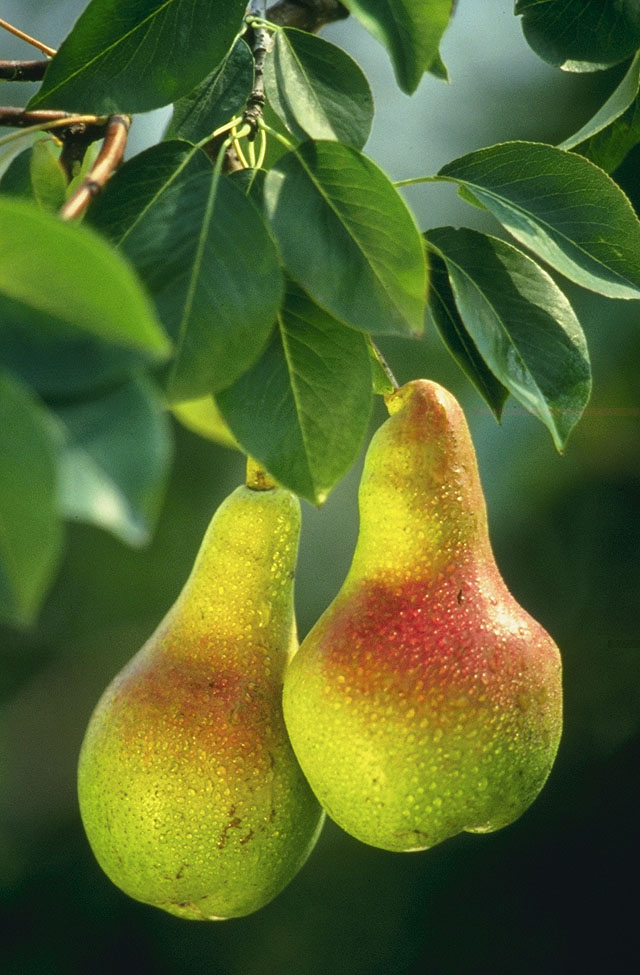 Wild PearPyrus communis
-
 Wild PearPyrus pyraster
-
 Pyrus × BretschneideriPyrus bretschneideri
-
 Snow PearPyrus nivalis
-
 Harbin PearPyrus ussuriensis
-
 Willow-leaf PearPyrus salicifolia
Compare
Questions and answers
What is the scientific name of the Afghan Pear?
The scientific name of the Afghan Pear is Pyrus pashia. Written with its author, the full name is Pyrus pashia Buch.-Ham. ex D.Don.
Which family does the Afghan Pear belong to?
Pyrus pashia belongs to the family Rosaceae, in the order Rosales and the class Magnoliopsida.
Where is the Afghan Pear found?
Checklists and occurrence records place Pyrus pashia in 11 countries, including China, India, Nepal, Pakistan, Laos and Myanmar.
What is the conservation status of the Afghan Pear?
The IUCN Red List category recorded for Pyrus pashia is Least Concern (LC).
What other names does the Afghan Pear have?
Pyrus pashia is also known in English as Himalayan Pear.
Sources
Data
- Catalogue of Life, 2026-10-16 XR cc by
- Global Biodiversity Information Facility CC BY 4.0
- Wikidata CC0
- English Wikipedia CC BY-SA 4.0
- GeoNames CC BY 4.0
- Wikimedia Commons per image; credit shown with each image
- Within the Catalogue of Life, this name comes from Synonymic Checklists of the Vascular Plants of the World cc by
References
- Buch.-Ham. ex D.Don. Prodr. Fl. Nepal. 236 (1825). where the name was published
This species in other databases
- Catalogue of Life 4QX95
- Wikidata Q5245913
- iNaturalist 698148
- World Flora Online wfo-0000992562
- GRIN 30551
Page built on 25 November 2026. See how the catalog is made and all sources and licences.
Cite this page
ScientificNames.org. (2026). Pyrus pashia (Afghan Pear). Retrieved November 25, 2026, from https://scientificnames.org/species/pyrus-pashia
“Pyrus pashia (Afghan Pear).” ScientificNames.org, 2026, scientificnames.org/species/pyrus-pashia. Accessed 25 Nov. 2026.
ScientificNames.org. “Pyrus pashia (Afghan Pear).” Accessed November 25, 2026. https://scientificnames.org/species/pyrus-pashia.
@misc{scientificnames_pyrus_pashia_afghan_pear,
  author = {{ScientificNames.org}},
  title = {Pyrus pashia (Afghan Pear)},
  year = {2026},
  url = {https://scientificnames.org/species/pyrus-pashia},
  note = {Accessed 2026-11-25}
}