Species · Flowering plants
Houston Camphor Daisy Rayjacksonia aurea
The scientific name of the Houston Camphor Daisy is Rayjacksonia aurea. It is a species of flowering plant in the family Asteraceae (composite), order Asterales.
- Scientific name
- Rayjacksonia aurea (A.Gray) R.L.Hartm. & M.A.Lane
- Common name
- Houston Camphor Daisy
- Genus
- Rayjacksonia
- Family
- Asteraceae (Composite)
- Order
- Asterales
- Class
- Magnoliopsida
- Recorded in
- 1 country
- Name status
- accepted in the Catalogue of Life
Overview
The Houston camphor daisy is an annual herb. It is endemic to Texas in the United States and is restricted to Galveston and Harris Counties. It has small narrow leaves, yellow flower heads and a scent resembling camphor.
Written 27 November 2026 from the sources listed below. Each statement was checked against the passage it cites; statements that could not be supported were removed.
Appearance
The Houston camphor daisy has small linear or lance-shaped leaves that are only a few millimeters wide. Its flower heads contain several yellow ray florets.[1][2]
The yellow ray florets can reach nearly one centimeter in length. The plant has a scent resembling camphor.[3][4]
Habitat
The Houston camphor daisy grows on the Texas coastal prairie, particularly on Mima mounds. It also occurs in open habitats such as fields and pastures.[5][6]
It prefers sandy soils or loams and typically grows in seasonally wet or poorly drained areas.[7][8]
The plant is known only from the Houston area and is restricted to Galveston and Harris Counties in Texas.[9][10]
Reproduction and life cycle
The Houston camphor daisy is an annual herb. It flowers during October and November.[11][12]
Conservation
The Houston camphor daisy is classified as imperiled, with fewer than 20 populations remaining.[13][14]
Development and expansion of the Houston metropolitan area threaten the plant and its habitat. Competition from woody vegetation and non-native grasses is also a threat.[15][16]
Classification of the Houston Camphor Daisy
| Kingdom | Plantae |
|---|---|
| Subkingdom | Pteridobiotina |
| Phylum | Tracheophyta |
| Class | Magnoliopsida |
| Order | Asterales |
| Family | Asteraceae (Composite) |
| Subfamily | Asteroideae |
| Tribe | Astereae |
| Subtribe | Machaerantherinae |
| Genus | Rayjacksonia |
| Species | Rayjacksonia aurea (A.Gray) R.L.Hartm. & M.A.Lane |
Where the Houston Camphor Daisy is found
Checklists and occurrence records place Rayjacksonia aurea in 1 country across North America. GBIF holds 176 georeferenced records of it.
Countries
Regions and cities with the most records
- Texas, United States 95
- Cypress, United States 39
- Houston, United States 23
- Humble, United States 17
- Spring, United States 17
- La Porte, United States 16
- South Houston, United States 15
- Deer Park, United States 14
- Pearland, United States 14
- Channelview, United States 13
- Friendswood, United States 13
- League City, United States 13
- Pasadena, United States 12
- The Woodlands, United States 12
- Baytown, United States 11
- Mission Bend, United States 11
- Missouri City, United States 9
- Stafford, United States 9
- Cinco Ranch, United States 8
- Sugar Land, United States 8
- Fresno, United States 7
- Katy, United States 6
- New Territory, United States 5
- Pecan Grove, United States 5
- Dickinson, United States 4
- Rosenberg, United States 3
Range as the checklists state it
USA (Texas)
A number beside a place is its count of GBIF occurrence records. A place without a number comes from a checklist alone. Records show where a species has been observed or collected, which can include escapes and vagrants.
Common names
English
- Houston Camphor Daisy
- Houston Daisy
Synonyms
4 other scientific names have been used for this species and are now treated as synonyms of Rayjacksonia aurea.
- Aster aureus (A.Gray) Kuntze
- Haplopappus aureus A.Gray
- Machaeranthera aurea (A.Gray) Shinners
- Sideranthus aureus (A.Gray) Small
Related species
- Gulf Coast Camphor DaisyRayjacksonia phyllocephala
- Viscid Camphor DaisyRayjacksonia annua
-
 Jerusalem ArtichokeHelianthus tuberosus
-
 ChicoryCichorium intybus
-
 Absinthe WormwoodArtemisia absinthium
-
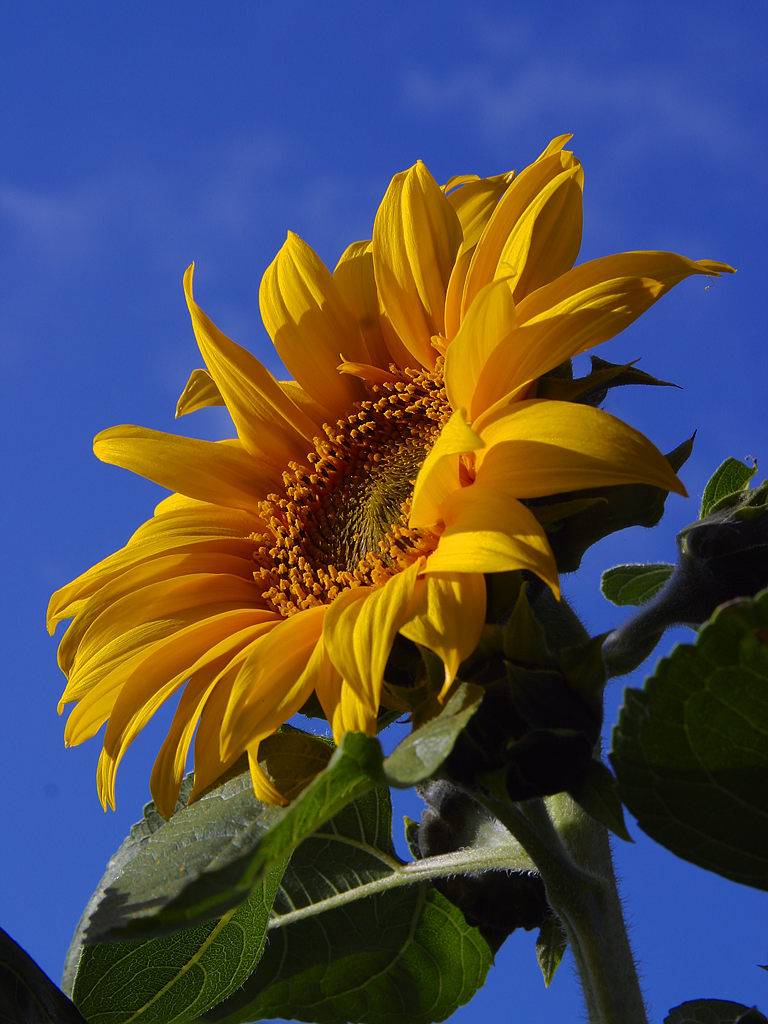 Common SunflowerHelianthus annuus
-
 Common YarrowAchillea millefolium
-
 LettuceLactuca sativa
Compare
Questions and answers
What is the scientific name of the Houston Camphor Daisy?
The scientific name of the Houston Camphor Daisy is Rayjacksonia aurea. Written with its author, the full name is Rayjacksonia aurea (A.Gray) R.L.Hartm. & M.A.Lane.
Which family does the Houston Camphor Daisy belong to?
Rayjacksonia aurea belongs to the family Asteraceae, in the order Asterales and the class Magnoliopsida.
Where is the Houston Camphor Daisy found?
Checklists and occurrence records place Rayjacksonia aurea in 1 country: United States.
What other names does the Houston Camphor Daisy have?
Rayjacksonia aurea is also known in English as Houston Daisy.
Sources
Passages the profile rests on
- Rayjacksonia aurea has small linear or lance-shaped leaves that are only a few millimeters wide. Source passage: “The small leaves are linear or lance-shaped and just a few millimeters wide.” — English Wikipedia
- Rayjacksonia aurea produces flower heads containing several yellow ray florets. Source passage: “The flower heads contain several yellow ray florets” — English Wikipedia
- Rayjacksonia aurea has a scent resembling camphor. Source passage: “The plant has a scent like camphor.” — English Wikipedia
- The yellow ray florets of Rayjacksonia aurea can reach nearly one centimeter in length. Source passage: “The flower heads contain several yellow ray florets which may reach nearly a centimeter in length.” — English Wikipedia
- Rayjacksonia aurea grows on the Texas coastal prairie, particularly on Mima mounds. Source passage: “This plant grows on the Texas coastal prairie, especially on Mima mounds” — English Wikipedia
- Rayjacksonia aurea occurs in open habitats such as fields and pastures. Source passage: “and in open areas such as fields and pastures.” — English Wikipedia
- Rayjacksonia aurea prefers sandy soils or loams. Source passage: “It prefers sandy soils or loams” — English Wikipedia
- Rayjacksonia aurea typically grows in seasonally wet or poorly drained areas. Source passage: “typically grows in areas that are seasonally wet or are poorly drained.” — English Wikipedia
- Rayjacksonia aurea is known only from the Houston area. Source passage: “where it is known only from the Houston area.” — English Wikipedia
- Rayjacksonia aurea is restricted to Galveston and Harris Counties in Texas. Source passage: “It is limited to Galveston and Harris Counties.” — English Wikipedia
- Rayjacksonia aurea is an annual herb. Source passage: “This species is an annual herb” — English Wikipedia
- Rayjacksonia aurea flowers during October and November. Source passage: “Flowering occurs in October and November.” — English Wikipedia
- Rayjacksonia aurea is classified as imperiled. Source passage: “The species is currently classified as imperiled” — English Wikipedia
- Fewer than 20 populations of Rayjacksonia aurea remain. Source passage: “fewer than 20 populations remain.” — English Wikipedia
- Development and expansion of the Houston metropolitan area threaten Rayjacksonia aurea and its habitat. Source passage: “The species and its habitat are threatened by development and expansion of the Houston metropolitan area” — English Wikipedia
- Competition from woody vegetation and non-native grasses threatens Rayjacksonia aurea. Source passage: “as well as from competition from woody vegetation and non-native grasses.” — English Wikipedia
Data
- Catalogue of Life, 2026-10-16 XR cc by
- Global Biodiversity Information Facility CC BY 4.0
- Wikidata CC0
- GeoNames CC BY 4.0
- Within the Catalogue of Life, this name comes from Synonymic Checklists of the Vascular Plants of the World cc by
References
- R.L.Hartm. & M.A.Lane. (1996). Amer. J. Bot. 83(3): 369 (1996). where the name was published
This species in other databases
- Catalogue of Life 6X4XC
- Wikidata Q7298464
- iNaturalist 338231
- World Flora Online wfo-0000059425
- GRIN 444479
Page built on 29 November 2026. See how the catalog is made and all sources and licences.
Cite this page
ScientificNames.org. (2026). Rayjacksonia aurea (Houston Camphor Daisy). Retrieved November 29, 2026, from https://scientificnames.org/species/rayjacksonia-aurea
“Rayjacksonia aurea (Houston Camphor Daisy).” ScientificNames.org, 2026, scientificnames.org/species/rayjacksonia-aurea. Accessed 29 Nov. 2026.
ScientificNames.org. “Rayjacksonia aurea (Houston Camphor Daisy).” Accessed November 29, 2026. https://scientificnames.org/species/rayjacksonia-aurea.
@misc{scientificnames_rayjacksonia_aurea_houston_camphor_daisy,
  author = {{ScientificNames.org}},
  title = {Rayjacksonia aurea (Houston Camphor Daisy)},
  year = {2026},
  url = {https://scientificnames.org/species/rayjacksonia-aurea},
  note = {Accessed 2026-11-29}
}