Species · Flowering plants
American Gooseberry Ribes hirtellum
The scientific name of the American Gooseberry is Ribes hirtellum. It is a species of flowering plant in the family Grossulariaceae (currant family), order Saxifragales.
- Scientific name
- Ribes hirtellum Michx.
- Common name
- American Gooseberry
- Genus
- Ribes
- Family
- Grossulariaceae (Currant Family)
- Order
- Saxifragales
- Class
- Magnoliopsida
- Recorded in
- 3 countries
- Name status
- accepted in the Catalogue of Life

Overview
American gooseberry is a gooseberry shrub in the family Grossulariaceae, order Saxifragales, and class Magnoliopsida. It is native to Canada and the northern United States, occurring from Alberta to Nova Scotia in Canada and extending south to West Virginia and west to Nebraska in the United States. It is smaller than European gooseberry plants and is described as more resistant to mildew.
Written 26 November 2026 from the sources listed below. Each statement was checked against the passage it cites; statements that could not be supported were removed.
Appearance
Most gooseberry plants have thorn-covered branches with arched tips.[1][2]
American gooseberry plants are smaller than European gooseberry plants.[3]
Habitat
American gooseberry grows in fens, sedge meadows, riverbottom forests, and swamps. It also occurs along stream and lake shorelines, in rocky forest openings, and along cliffs.[4][5][6]
Gooseberry plants can grow in sunny or partly shaded locations and as understory plants. They prefer well-drained soil.[7][8][9]
Reproduction and life cycle
Gooseberry flowers are self-fertile and open early in the growing season. They are pollinated by wind and insects.[10][11][12]
Each flower bud produces between one and four flowers. Flower buds develop on one-year-old wood and short spurs of older wood.[13][14]
Conservation
American gooseberry plants are described as more resistant to mildew than European gooseberry plants.[15]
Uses
American gooseberry has been used in breeding gooseberry cultivars resistant to American gooseberry mildew.[16]
Gooseberry fruits are suitable for making pies and jellies. American gooseberry cultivars generally produce smaller berries than European gooseberry cultivars and can be less flavorful.[17][18][19]
Gooseberry leaves can be eaten raw in salads or slaw. Young dried leaves can be used to prepare tea.[20][21]
Similar species
American gooseberry has been crossed with Ribes uva-crispa to produce the cultivar Houghton.[22]
Classification of the American Gooseberry
| Kingdom | Plantae |
|---|---|
| Subkingdom | Pteridobiotina |
| Phylum | Tracheophyta |
| Class | Magnoliopsida |
| Order | Saxifragales |
| Family | Grossulariaceae (Currant Family) |
| Genus | Ribes (Currant) |
| Species | Ribes hirtellum Michx. |
Where the American Gooseberry is found
Checklists and occurrence records place Ribes hirtellum in 3 countries across North America. GBIF holds 4,073 georeferenced records of it.
Countries
Regions and cities with the most records
- Quebec, Canada 550
- Wisconsin, United States 246
- Ontario, Canada 235
- Minnesota, United States 200
- Michigan, United States 158
- New Brunswick, Canada 154
- Nova Scotia, Canada 140
- Maine, United States 99
- Connecticut, United States 84
- Pennsylvania, United States 82
- Prince Edward Island, Canada 52
- Manitoba, Canada 50
- Massachusetts, United States 45
- Vermont, United States 43
- New Hampshire, United States 40
- South Dakota, United States 40
- Alberta, Canada 39
- Chambly, Canada 29
- L'Ancienne-Lorette, Canada 29
- Wallingford, United States 29
- Wallingford Center, United States 29
- Neufchâtel-Est–Lebourgneuf, Canada 28
- Cheshire, United States 27
- Ohio, United States 27
- Meriden, United States 26
- New York, United States 25
- Beloeil, Canada 24
- Brossard, Canada 24
- Greenfield Park, Canada 24
- Laflèche, Canada 24
- Saint-Augustin-de-Desmaures, Canada 24
- Candiac, Canada 23
- La Prairie, Canada 23
- Mont-Saint-Hilaire, Canada 23
- Côte-Saint-Luc, Canada 22
- Longueuil, Canada 22
1 more country has a few records outside this range
These countries hold a few records of Ribes hirtellum but lie outside the range the checklists give for it. Such records are often zoo or garden specimens, museum material or vagrants, so the species is not counted as occurring there.
Range as the checklists state it
Canada (Alberta, Labrador, Manitoba, New Brunswick, Newfoundland, Nova Scotia, Ontario, Prince Edward Isl., Québec, Saskatchewan); St. Pierre et Miquelon; USA (Connecticut, Iowa, Illinois, Indiana, Massachusetts, Maryland, Maine, Michigan, Minnesota, Montana, North Dakota, Nebraska, New Hampshire, New Jersey, New York, Ohio, Pennsylvania, Rhode Island, South Dakota, Virginia, Vermont, Wisconsin, West Virginia)
A number beside a place is its count of GBIF occurrence records. A place without a number comes from a checklist alone. Records show where a species has been observed or collected, which can include escapes and vagrants.
Common names
English
- American Gooseberry
- Hairy Gooseberry
- Hairy-stem Gooseberry
- Low Wild Gooseberry
- Northern Gooseberry
- Smooth Gooseberry
- Swamp Gooseberry
- Wedge-leaf Gooseberry
- Wedge-leaved Gooseberry
- Wild Gooseberry
Names in 9 other languages
- Arabic
- كشمش خشن الملمس
- Chinese
- 美洲醋栗, 美洲鵝莓
- Czech
- meruzalka chloupkatá
- Finnish
- itäamerikankarviainen
- French
- groseillier de marécages, groseillier hérissé, groseillier à trois fleurs
- German
- amerikanische Stachelbeere
- Japanese
- アメリカスグリ
- Spanish
- Grosella americana
- oji
- Zhaaboomin (Zhaaboominagaawanzh)
Synonyms
10 other scientific names have been used for this species and are now treated as synonyms of Ribes hirtellum.
- Grossularia hirtella (Michx.) Spach
- Grossularia saxosa (Hook.) Lunell
- Ribes hirtellum var. calcicola (Fernald) Fernald
- Ribes hirtellum var. hirtellum
- Ribes hirtellum var. inerme Smiley
- Ribes hirtellum var. saxosum (Hook.) Fernald
- Ribes oxyacanthoides var. calcicola Fernald
- Ribes oxyacanthoides var. hirtellum (Michx.) Scoggan
- Ribes oxyacanthoides var. saxosum (Hook.) Coville
- Ribes saxosum Hook.
Related species
-
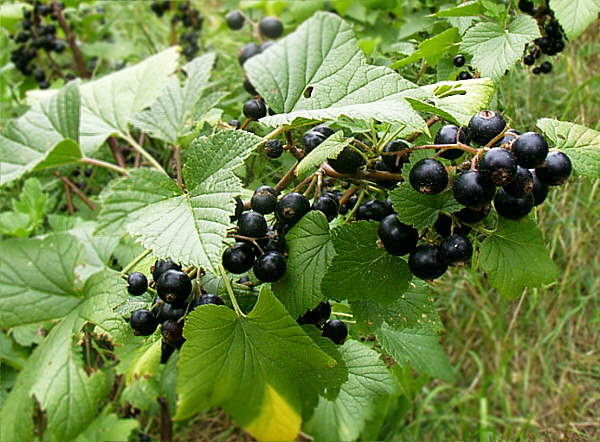 BlackcurrantRibes nigrum
-
 RedcurrantRibes rubrum
-
 GooseberryRibes uva-crispa
-
 Red-flowering CurrantRibes sanguineum
-
 Golden CurrantRibes aureum
-
 Mountain CurrantRibes alpinum
-
 Coast Black GooseberryRibes divaricatum
-
 Wild Black CurrantRibes americanum
Compare
Questions and answers
What is the scientific name of the American Gooseberry?
The scientific name of the American Gooseberry is Ribes hirtellum. Written with its author, the full name is Ribes hirtellum Michx..
Which family does the American Gooseberry belong to?
Ribes hirtellum belongs to the family Grossulariaceae, in the order Saxifragales and the class Magnoliopsida.
Where is the American Gooseberry found?
Checklists and occurrence records place Ribes hirtellum in 3 countries: United States, Canada and Saint Pierre and Miquelon.
What other names does the American Gooseberry have?
Ribes hirtellum is also known in English as Hairy Gooseberry, Hairy-stem Gooseberry, Low Wild Gooseberry, Northern Gooseberry, Smooth Gooseberry and Swamp Gooseberry.
What is the scientific name of gooseberries?
The scientific name of this species is Ribes hirtellum Michx.[23]
Sources
Passages the profile rests on
- Most gooseberry plants have thorn-covered branches. Source passage: “Although there are a few thornless or almost thornless cultivars, most gooseberry plants have branches covered with thorns.” — extension.usu.edu
- Gooseberry branches have arched tips. Source passage: “the tips of gooseberry branches are arched” — extension.usu.edu
- American gooseberry plants are smaller than European gooseberry plants. Source passage: “American gooseberry plants are smaller and are more resistant to mildew than the European gooseberry.” — extension.usu.edu
- The species grows in fens, sedge meadows, riverbottom forests, and swamps. Source passage: “including wetlands such as fens, sedge meadows, riverbottom forests, and swamps” — English Wikipedia
- The species also grows along stream and lake shorelines. Source passage: “shorelines of streams and lakes” — English Wikipedia
- The species occurs in rocky forest openings and along cliffs. Source passage: “rocky openings in forests and along cliffs.” — English Wikipedia
- Gooseberry plants can grow in sunny or partly shaded locations. Source passage: “Select a sunny to partly shady location” — extension.usu.edu
- Gooseberry plants can grow as understory plants. Source passage: “Gooseberries also do well as an understory plant.” — extension.usu.edu
- Gooseberries prefer well-drained soil. Source passage: “Gooseberries prefer a well-drained soil” — extension.usu.edu
- The flowers of gooseberry plants are self-fertile. Source passage: “They have inconspicuous small green and pink flowers that are self-fertile” — extension.usu.edu
- Gooseberry flowers open early in the growing season. Source passage: “are self-fertile and open early in the season.” — extension.usu.edu
- Gooseberry flowers are pollinated by wind and insects. Source passage: “The flowers are self-fertile and are pollinated by wind and insects.” — extension.usu.edu
- Each flower bud produces between one and four flowers. Source passage: “Each bud opens to yield one to four flowers.” — extension.usu.edu
- Gooseberry flower buds develop on one-year-old wood and short spurs of older wood. Source passage: “Flower buds form on 1-year-old wood and on short spurs of older wood.” — extension.usu.edu
- American gooseberry plants are described as more resistant to mildew than European gooseberry plants. Source passage: “American gooseberry plants are smaller and are more resistant to mildew than the European gooseberry.” — extension.usu.edu
- The species has been used in breeding gooseberry cultivars resistant to American gooseberry mildew. Source passage: “Ribes hirtellum is resistant. It is one of four American species that have been interbred with R. uva-crispa to produce resistant cultivars” — English Wikipedia
- Gooseberry fruits are suitable for making pies and jellies. Source passage: “yield rewarding, tart berries perfect for pies and jellies.” — extension.usu.edu
- American gooseberry cultivars generally produce smaller berries than European gooseberry cultivars. Source passage: “the American cultivars usually have smaller berries” — extension.usu.edu
- American gooseberry cultivars can be less flavorful than European cultivars. Source passage: “and can be less flavorful.” — extension.usu.edu
- Gooseberry leaves can be eaten raw in salads or slaw. Source passage: “Gooseberry leaves may be used raw, in a tossed salad or in slaw” — mdc.mo.gov
- Young dried gooseberry leaves can be used to prepare tea. Source passage: “the young dried leaves may be used for making tea.” — mdc.mo.gov
- The species has been crossed with Ribes uva-crispa to produce the cultivar Houghton. Source passage: “The cultivar 'Houghton' is one of those obtained by crossing R. uva-crispa with R. hirtellum.” — English Wikipedia
- The species is a gooseberry shrub. Source passage: “Ribes hirtellum is a species of gooseberry commonly known as wild gooseberry or swamp gooseberry.” — English Wikipedia
Data
- Catalogue of Life, 2026-10-16 XR cc by
- Global Biodiversity Information Facility CC BY 4.0
- Wikidata CC0
- GeoNames CC BY 4.0
- Wikimedia Commons per image; credit shown with each image
- Within the Catalogue of Life, this name comes from Synonymic Checklists of the Vascular Plants of the World cc by
References
- Michx. (1803). Fl. Bor.-Amer. [Michaux] 1: 111 (1803). where the name was published
This species in other databases
- Catalogue of Life 4SYCG
- Wikidata Q15441429
- iNaturalist 136605
- World Flora Online wfo-0000405270
- GRIN 31817
Page built on 29 November 2026. See how the catalog is made and all sources and licences.
Cite this page
ScientificNames.org. (2026). Ribes hirtellum (American Gooseberry). Retrieved November 29, 2026, from https://scientificnames.org/species/ribes-hirtellum
“Ribes hirtellum (American Gooseberry).” ScientificNames.org, 2026, scientificnames.org/species/ribes-hirtellum. Accessed 29 Nov. 2026.
ScientificNames.org. “Ribes hirtellum (American Gooseberry).” Accessed November 29, 2026. https://scientificnames.org/species/ribes-hirtellum.
@misc{scientificnames_ribes_hirtellum_american_gooseberry,
  author = {{ScientificNames.org}},
  title = {Ribes hirtellum (American Gooseberry)},
  year = {2026},
  url = {https://scientificnames.org/species/ribes-hirtellum},
  note = {Accessed 2026-11-29}
}