Species · Flowering plants
Spike Centaury Schenkia australis
The scientific name of the Spike Centaury is Schenkia australis. It is a species of flowering plant in the family Gentianaceae (gentian family), order Gentianales.
- Scientific name
- Schenkia australis (R.Br.) G.Mans.
- Common name
- Spike Centaury
- Genus
- Schenkia
- Family
- Gentianaceae (Gentian Family)
- Order
- Gentianales
- Class
- Magnoliopsida
- Recorded in
- 2 countries
- Name status
- accepted in the Catalogue of Life

Overview
Schenkia australis is endemic to Australia and occurs in every mainland Australian state. It lacks a basal leaf rosette and has a more open flower head than Spiked Centaury.
Written 27 November 2026 from the sources listed below. Each statement was checked against the passage it cites; statements that could not be supported were removed.
Appearance
Spike Centaury typically grows between 2 and 30 centimetres tall. It is also described as mostly 25–40 centimetres tall.[1][2]
The basal stems are four-angled and moderately branched above. The plant does not develop a basal leaf rosette.[3][4]
The leaves are mostly elliptic, lanceolate or oblanceolate, measuring 1–3 centimetres long and 2–20 millimetres wide.[5][6][7]
The compound cymes occur singly or in small numbers on the stem. Flower stalks measure 2–5 millimetres long, although some flowers are nearly stalkless.[8][9]
The corolla measures 9–12 millimetres long and is pink. The flowers can be pink, red or yellow.[10][11][12]
The fruit is a capsule measuring 7–10 millimetres long. The capsule is enclosed within the calyx.[13][14][15]
Habitat
Spike Centaury prefers damp sandy soils. It grows in a variety of plant communities, mostly in open sites.[16][17]
Reproduction and life cycle
Spike Centaury flowers during spring and summer.[18]
Similar species
Spike Centaury is distinguished from Spiked Centaury by having no basal leaves and a more open flower head.[19]
The name Spike Centaury was historically applied to Schenkia australis because Australian specimens were previously classified as Centaurium spicatum.[20]
Conservation
Spike Centaury is identified as a threatened species in the Tasmanian threatened species resource.[21]
Classification of the Spike Centaury
| Kingdom | Plantae |
|---|---|
| Subkingdom | Pteridobiotina |
| Phylum | Tracheophyta |
| Class | Magnoliopsida |
| Order | Gentianales |
| Family | Gentianaceae (Gentian Family) |
| Tribe | Chironieae |
| Subtribe | Chironiinae |
| Genus | Schenkia |
| Species | Schenkia australis (R.Br.) G.Mans. |
Where the Spike Centaury is found
Checklists and occurrence records place Schenkia australis in 2 countries across Oceania. GBIF holds 2,320 georeferenced records of it.
Countries
Regions and cities with the most records
- South Australia, Australia 468
- Victoria, Australia 391
- New South Wales, Australia 313
- Queensland, Australia 262
- Northern Territory, Australia 217
- Western Australia, Australia 216
- Tasmania, Australia 105
- Dumbéa, New Caledonia 19
- Mont-Dore, New Caledonia 19
- Nouméa, New Caledonia 19
- Adelaide Hills, Australia 17
- Adelaide, Australia 16
- Parramatta, Australia 15
- Liverpool, Australia 14
- Ballarat, Australia 11
- Mount Barker, Australia 11
- Brisbane, Australia 10
- Gawler, Australia 8
- Armidale, Australia 7
- Capalaba, Australia 7
- Albany, Australia 6
- Geelong, Australia 6
- Logan City, Australia 6
- Torquay, Australia 6
- Alice Springs, Australia 5
- Bacchus Marsh, Australia 5
- Gladstone, Australia 5
- Loyalty Islands, New Caledonia 5
- Mackay, Australia 4
- Townsville, Australia 4
- Gold Coast, Australia 3
- Launceston, Australia 3
- Mildura, Australia 3
- Shepparton, Australia 3
Range as the checklists state it
Australia (Tasmania)
A number beside a place is its count of GBIF occurrence records. A place without a number comes from a checklist alone. Records show where a species has been observed or collected, which can include escapes and vagrants.
Common names
English
- Spike Centaury
Synonyms
6 other scientific names have been used for this species and are now treated as synonyms of Schenkia australis.
- Centaurium australe (R.Br.) Druce
- Centaurium spicatum var. pseudocaspicum Hochr.
- Centaurium spicatum var. racemosum Hochr.
- Erythraea australis R.Br.
- Erythraea australis var. alba Guilf.
- Erythraea spicata var. australis (R.Br.) Domin
Related species
-
 Spiked CentaurySchenkia spicata
-
 Schenkia sebaeoides
- Schenkia japonica
- Schenkia clementii
-
 Great Yellow GentianGentiana lutea
-
 Japanese GentianGentiana scabra
-
 Common CentauryCentaurium erythraea
-
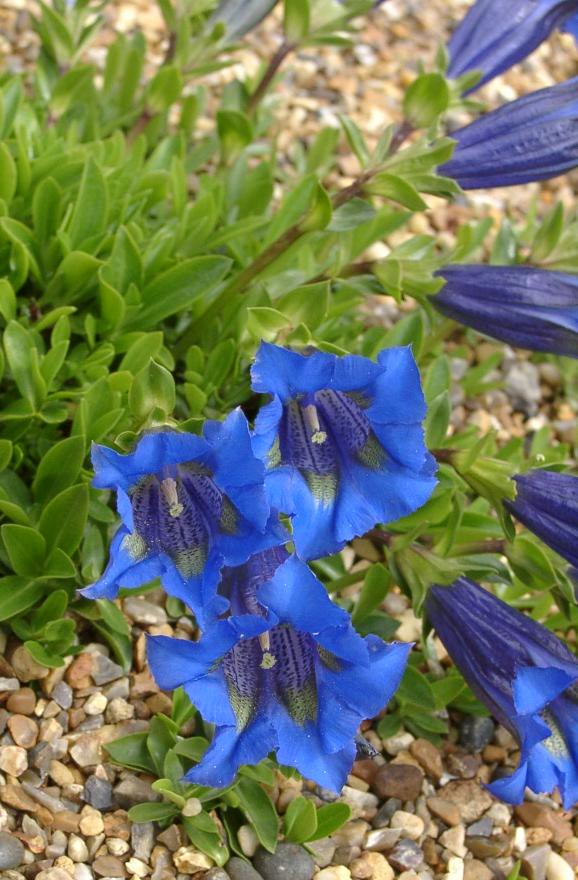 Stemless GentianGentiana acaulis
Compare
Questions and answers
What is the scientific name of the Spike Centaury?
The scientific name of the Spike Centaury is Schenkia australis. Written with its author, the full name is Schenkia australis (R.Br.) G.Mans..
Which family does the Spike Centaury belong to?
Schenkia australis belongs to the family Gentianaceae, in the order Gentianales and the class Magnoliopsida.
Where is the Spike Centaury found?
Checklists and occurrence records place Schenkia australis in 2 countries: Australia and New Caledonia.
Sources
Passages the profile rests on
- Schenkia australis typically grows between 2 and 30 centimetres tall. Source passage: “from 2 to 30 centimetres high.” — English Wikipedia
- Schenkia australis is mostly 25–40 centimetres tall. Source passage: “Annual or rarely biennial herb, mostly 25–40 cm high.” — plantnet.rbgsyd.nsw.gov.au
- The basal stems of Schenkia australis are four-angled and moderately branched above. Source passage: “Basal stems 4-angular, moderately branched above.” — plantnet.rbgsyd.nsw.gov.au
- Schenkia australis does not develop a basal leaf rosette. Source passage: “Schenkia australis does not have a basal rosette” — plantnet.rbgsyd.nsw.gov.au
- The leaves of Schenkia australis are mostly elliptic, lanceolate or oblanceolate. Source passage: “Leaves mostly elliptic to lanceolate or oblanceolate” — plantnet.rbgsyd.nsw.gov.au
- The leaves of Schenkia australis are 1–3 centimetres long. Source passage: “1–3 cm long, 2–20 mm wide” — plantnet.rbgsyd.nsw.gov.au
- The leaves of Schenkia australis are 2–20 millimetres wide. Source passage: “1–3 cm long, 2–20 mm wide” — plantnet.rbgsyd.nsw.gov.au
- The compound cymes of Schenkia australis occur singly or in small numbers on the stem. Source passage: “Compound cymes solitary or few on the stem;” — plantnet.rbgsyd.nsw.gov.au
- The flower stalks of Schenkia australis measure 2–5 millimetres long, although some flowers are nearly stalkless. Source passage: “pedicels 2–5 mm long, or flowers nearly sessile.” — plantnet.rbgsyd.nsw.gov.au
- The flowers of Schenkia australis can be pink, red or yellow. Source passage: “Flowers are pink, red or yellow.” — English Wikipedia
- The corolla of Schenkia australis measures 9–12 millimetres long. Source passage: “Corolla 9–12 mm long, pink;” — plantnet.rbgsyd.nsw.gov.au
- The corolla of Schenkia australis is pink. Source passage: “Corolla 9–12 mm long, pink;” — plantnet.rbgsyd.nsw.gov.au
- The fruit of Schenkia australis is a capsule. Source passage: “Capsule 7–10 mm long, enclosed in calyx.” — plantnet.rbgsyd.nsw.gov.au
- The capsule of Schenkia australis measures 7–10 millimetres long. Source passage: “Capsule 7–10 mm long, enclosed in calyx.” — plantnet.rbgsyd.nsw.gov.au
- The capsule of Schenkia australis is enclosed within the calyx. Source passage: “Capsule 7–10 mm long, enclosed in calyx.” — plantnet.rbgsyd.nsw.gov.au
- Schenkia australis prefers damp sandy soils. Source passage: “It prefers damp sandy soils.” — English Wikipedia
- Schenkia australis grows in a variety of plant communities, mostly in open sites. Source passage: “Grows in a variety of communities, mostly in open site; widespread.” — plantnet.rbgsyd.nsw.gov.au
- Schenkia australis flowers during spring and summer. Source passage: “Flowering: spring – summer.” — plantnet.rbgsyd.nsw.gov.au
- Schenkia australis is distinguished from Spiked Centaury by having no basal leaves and a more open flower head. Source passage: “which differs in having no basal leaves and a more open flower-head.” — soilhealth.ccmaknowledgebase.vic.gov.au
- Spike Centaury was historically applied to Schenkia australis because Australian specimens were previously classified as Centaurium spicatum. Source passage: “Since Australian specimens were previously ascribed to Centaurium spicatum, they were referred to by that species' common name, Spike Centaury.” — English Wikipedia
- Schenkia australis is identified as a threatened species in the Tasmanian threatened species resource. Source passage: “Status: Threatened Species” — threatenedspecieslink.tas.gov.au
Data
- Catalogue of Life, 2026-10-16 XR cc by
- Global Biodiversity Information Facility CC BY 4.0
- Wikidata CC0
- GeoNames CC BY 4.0
- Wikimedia Commons per image; credit shown with each image
- Within the Catalogue of Life, this name comes from Synonymic Checklists of the Vascular Plants of the World cc by
References
- G.Mans. (2004). Taxon 53(3): 725 (2004). where the name was published
This species in other databases
Page built on 29 November 2026. See how the catalog is made and all sources and licences.
Cite this page
ScientificNames.org. (2026). Schenkia australis (Spike Centaury). Retrieved November 29, 2026, from https://scientificnames.org/species/schenkia-australis
“Schenkia australis (Spike Centaury).” ScientificNames.org, 2026, scientificnames.org/species/schenkia-australis. Accessed 29 Nov. 2026.
ScientificNames.org. “Schenkia australis (Spike Centaury).” Accessed November 29, 2026. https://scientificnames.org/species/schenkia-australis.
@misc{scientificnames_schenkia_australis_spike_centaury,
  author = {{ScientificNames.org}},
  title = {Schenkia australis (Spike Centaury)},
  year = {2026},
  url = {https://scientificnames.org/species/schenkia-australis},
  note = {Accessed 2026-11-29}
}