Species · Flowering plants
Schenkia sebaeoides
Schenkia sebaeoides has no English name on record in the checklists used here. It is a species of flowering plant in the family Gentianaceae (gentian family), order Gentianales.
- Scientific name
- Schenkia sebaeoides Griseb.
- Genus
- Schenkia
- Family
- Gentianaceae (Gentian Family)
- Order
- Gentianales
- Class
- Magnoliopsida
- Recorded in
- 1 country
- Name status
- accepted in the Catalogue of Life

Overview
Schenkia sebaeoides Griseb. is an annual flowering herb in the family Gentianaceae, order Gentianales, and class Magnoliopsida. It is endemic to the Hawaiian Islands in the United States, where it grows in low shrublands and drier coastal areas. It commonly produces white flowers, although pink flowers also occur.
Written 27 November 2026 from the sources listed below. Each statement was checked against the passage it cites; statements that could not be supported were removed.
Appearance
Schenkia sebaeoides is an annual herb. It commonly produces white flowers, although pink flowers also occur.[1][2]
Habitat
Schenkia sebaeoides grows in low shrublands in Hawaii. It occurs in sand, volcanic soil, and clay soil.[3][4]
It inhabits bluffs and dunes in drier coastal areas.[5]
Similar species
Schenkia sebaeoides resembles scarlet pimpernel (Anagallis arvensis) and bitter herb (Centaurium erythraea).[6][7]
Reproduction and life cycle
Schenkia sebaeoides has an annual life cycle and likely maintains a substantial soil seed bank. Higher rainfall is associated with greater seed germination.[8][9][10]
Some populations may persist for only one season before disappearing.[11]
Conservation
Schenkia sebaeoides was added to the United States endangered species list in 1991. At the time of listing, it was known from seven populations containing fewer than 1,000 individuals.[12][13]
Habitat loss and invasion by introduced plant species threaten Schenkia sebaeoides. Threatening introduced plants include Casuarina equisetifolia, Casuarina glauca, Prosopis pallida, and Bryophyllum pinnatum.[14][15][16]
Casuarina species grow densely and outcompete smaller plants. Livestock grazing and movement degrade parts of the habitat, while cattle and goats threaten the plant by trampling and compacting the soil.[17][18][19]
Off-road vehicles contribute to habitat degradation. Damage from livestock and off-road vehicles can cause erosion in occupied areas, and hikers may trample plants growing near trails.[20][21][22]
Fire threatens some populations. The estimated global population reaches approximately 6,000 individuals during wet years.[23][24]
Classification of Schenkia sebaeoides
| Kingdom | Plantae |
|---|---|
| Subkingdom | Pteridobiotina |
| Phylum | Tracheophyta |
| Class | Magnoliopsida |
| Order | Gentianales |
| Family | Gentianaceae (Gentian Family) |
| Tribe | Chironieae |
| Subtribe | Chironiinae |
| Genus | Schenkia |
| Species | Schenkia sebaeoides Griseb. |
Where Schenkia sebaeoides is found
Checklists and occurrence records place Schenkia sebaeoides in 1 country across North America. GBIF holds 113 georeferenced records of it.
Countries
Regions and cities with the most records
Range as the checklists state it
Hawaii (Kauai, +Oahu, Molokai, Lanai, West Maui)
A number beside a place is its count of GBIF occurrence records. A place without a number comes from a checklist alone. Records show where a species has been observed or collected, which can include escapes and vagrants.
Common names
Names in 1 other language
- Hawaiian
- awiwi
Synonyms
2 other scientific names have been used for this species and are now treated as synonyms of Schenkia sebaeoides.
- Centaurium sebaeoides (Griseb.) Druce
- Erythraea sebaeoides (Griseb.) A.Gray
Related species
-
 Spike CentaurySchenkia australis
-
 Spiked CentaurySchenkia spicata
- Schenkia japonica
- Schenkia clementii
-
 Great Yellow GentianGentiana lutea
-
 Japanese GentianGentiana scabra
-
 Common CentauryCentaurium erythraea
-
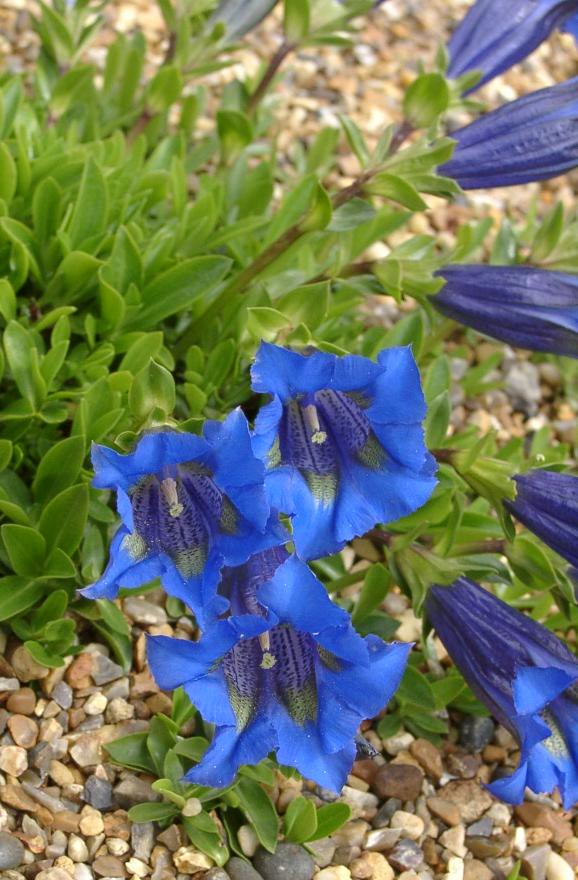 Stemless GentianGentiana acaulis
Compare
Questions and answers
Where is Schenkia sebaeoides found?
It is endemic to the Hawaiian Islands in the United States and occurs on Kauai, Oahu, Lanai, Molokai, and Maui.[25][26]
How many populations were recorded on the Hawaiian Islands in 2010?
Kauai had three recorded populations containing up to 52 plants in total. Oahu had two populations containing up to 130 plants, Molokai had four populations containing several thousand plants, Maui had seven or eight populations containing several thousand individuals, and Lanai had a single population containing only a few plants.[27][28][29][30][31]
What threatens Schenkia sebaeoides?
Threats include habitat loss, introduced plants, livestock grazing and movement, trampling by cattle, goats and hikers, soil compaction, off-road vehicles, erosion, and fire.[14][15][18][19][20][21][22][23]
How does rainfall affect reproduction?
Higher rainfall is associated with greater seed germination in Schenkia sebaeoides.[10]
How large can the global population become?
The estimated global population reaches approximately 6,000 individuals during wet years.[24]
What was its former classification?
Schenkia sebaeoides was formerly classified in the genus Centaurium until 2004.[32]
Is Schenkia sebaeoides the only Hawaiian native plant in its family?
Yes. It is the only plant in the Gentianaceae family native to Hawaii.[33]
Sources
Passages the profile rests on
- Schenkia sebaeoides commonly produces white flowers, although pink flowers also occur. Source passage: “It often bears white flowers, but pink flowers are not uncommon.” — English Wikipedia
- Schenkia sebaeoides is an annual herb. Source passage: “This is an annual herb” — English Wikipedia
- Schenkia sebaeoides grows in low shrublands in Hawaii. Source passage: “It is endemic to low shrublands in the state of Hawaiʻi in the United States.” — English Wikipedia
- Schenkia sebaeoides occurs in sand, volcanic soil, and clay soil. Source passage: “This plant occurs in sand and volcanic and clay soils” — English Wikipedia
- Schenkia sebaeoides inhabits bluffs and dunes in drier coastal areas. Source passage: “on bluffs and dunes in drier coastal areas.” — English Wikipedia
- Schenkia sebaeoides resembles scarlet pimpernel (Anagallis arvensis). Source passage: “resembles two species of common weeds, scarlet pimpernel (Anagallis arvensis)” — English Wikipedia
- Schenkia sebaeoides resembles bitter herb (Centaurium erythraea). Source passage: “and bitter herb (Centaurium erythraea)” — English Wikipedia
- Schenkia sebaeoides has an annual life cycle. Source passage: “This is an annual herb, one of only 3% of Hawaiian flora that have annual life cycles.” — English Wikipedia
- Schenkia sebaeoides likely maintains a substantial soil seed bank. Source passage: “The species likely has a large soil seed bank” — English Wikipedia
- Higher rainfall is associated with greater seed germination in Schenkia sebaeoides. Source passage: “when an area gets higher rainfall there is a greater germination rate.” — English Wikipedia
- Some populations of Schenkia sebaeoides may persist for only one season before disappearing. Source passage: “there may be unknown small, ephemeral populations that exist for a season and then die away.” — English Wikipedia
- Schenkia sebaeoides was added to the United States endangered species list in 1991. Source passage: “At the time it was added to the endangered species list of the United States in 1991” — English Wikipedia
- At the time of its endangered listing in 1991, Schenkia sebaeoides was known from seven populations containing fewer than 1,000 individuals. Source passage: “it was known from seven populations for a total of fewer than 1,000 individuals.” — English Wikipedia
- Habitat loss threatens Schenkia sebaeoides. Source passage: “It is threatened by habitat loss.” — English Wikipedia
- Introduced plant species threaten Schenkia sebaeoides through invasion of its habitat. Source passage: “A major threat to the species is the invasion of introduced plant species” — English Wikipedia
- Casuarina equisetifolia, Casuarina glauca, Prosopis pallida, and Bryophyllum pinnatum are among the introduced plants threatening Schenkia sebaeoides. Source passage: “such as Casuarina equisetifolia, C. glauca, Prosopis pallida, and Bryophyllum pinnatum.” — English Wikipedia
- Casuarina species threaten Schenkia sebaeoides by growing densely and outcompeting smaller plants. Source passage: “Casuarina species are among the worst offenders because they spread so thickly they outcompete smaller plants.” — English Wikipedia
- Livestock grazing and movement degrade parts of the habitat of Schenkia sebaeoides. Source passage: “Many parts of its habitat are degraded by livestock including cattle and goats” — English Wikipedia
- Cattle and goats threaten Schenkia sebaeoides by trampling and compacting its habitat soil. Source passage: “which trample and compact the soil” — English Wikipedia
- Off-road vehicles contribute to habitat degradation affecting Schenkia sebaeoides. Source passage: “and by off-road vehicles.” — English Wikipedia
- Habitat damage from livestock and off-road vehicles can cause erosion in areas occupied by Schenkia sebaeoides. Source passage: “This damage can lead to erosion.” — English Wikipedia
- Hikers may trample Schenkia sebaeoides plants growing near trails. Source passage: “Plants occurring near trails may be trampled by hikers.” — English Wikipedia
- Fire threatens some populations of Schenkia sebaeoides. Source passage: “Fire is a threat to some populations.” — English Wikipedia
- The estimated global population of Schenkia sebaeoides reaches approximately 6,000 individuals during wet years. Source passage: “The global population is estimated at 6,000 during wet years.” — English Wikipedia
- Schenkia sebaeoides is endemic to the Hawaiian Islands in the United States. Source passage: “It is endemic to low shrublands in the state of Hawaiʻi in the United States.” — English Wikipedia
- Schenkia sebaeoides occurs on Kauai, Oahu, Lanai, Molokai, and Maui. Source passage: “It is present on the islands of Kauai, Oahu, Lanai, Molokai, and Maui.” — English Wikipedia
- In 2010, Kauai had three recorded populations containing up to 52 plants in total. Source passage: “three populations on Kauai with up to 52 plants total” — English Wikipedia
- In 2010, Molokai had four recorded populations containing several thousand plants. Source passage: “four populations on Molokai with several thousand plants” — English Wikipedia
- In 2010, Oahu had two recorded populations containing up to 130 plants. Source passage: “two populations on Oahu with up to 130 plants” — English Wikipedia
- In 2010, Maui had seven or eight recorded populations containing several thousand individuals. Source passage: “seven or eight populations on Maui with several thousand individuals” — English Wikipedia
- In 2010, Lanai had a single recorded population containing only a few plants. Source passage: “only a few plants on Lanai in a single population.” — English Wikipedia
- Schenkia sebaeoides was formerly classified in the genus Centaurium until 2004. Source passage: “Until 2004, it was a member of genus Centaurium” — English Wikipedia
- Schenkia sebaeoides is the only plant in the Gentianaceae family native to Hawaii. Source passage: “This is the only plant in the gentian family, Gentianaceae, that is native to Hawaii.” — English Wikipedia
Data
- Catalogue of Life, 2026-10-16 XR cc by
- Global Biodiversity Information Facility CC BY 4.0
- Wikidata CC0
- GeoNames CC BY 4.0
- Wikimedia Commons per image; credit shown with each image
- Within the Catalogue of Life, this name comes from Synonymic Checklists of the Vascular Plants of the World cc by
References
- Griseb. (1853). Bonplandia (Hannover) 1: 226 (1853). where the name was published
This species in other databases
- Catalogue of Life 4V7SM
- Wikidata Q279618
- iNaturalist 520079
- World Flora Online wfo-0001274097
- GRIN 320038
Page built on 29 November 2026. See how the catalog is made and all sources and licences.
Cite this page
ScientificNames.org. (2026). Schenkia sebaeoides. Retrieved November 29, 2026, from https://scientificnames.org/species/schenkia-sebaeoides
“Schenkia sebaeoides.” ScientificNames.org, 2026, scientificnames.org/species/schenkia-sebaeoides. Accessed 29 Nov. 2026.
ScientificNames.org. “Schenkia sebaeoides.” Accessed November 29, 2026. https://scientificnames.org/species/schenkia-sebaeoides.
@misc{scientificnames_schenkia_sebaeoides,
  author = {{ScientificNames.org}},
  title = {Schenkia sebaeoides},
  year = {2026},
  url = {https://scientificnames.org/species/schenkia-sebaeoides},
  note = {Accessed 2026-11-29}
}