Species · Other invertebrates
Schistosoma indicum
Schistosoma indicum has no English name on record in the checklists used here. It is a species of animal in the family Schistosomatidae (bilharzia flukes), order Diplostomida. The name dates from 1906.
- Scientific name
- Schistosoma indicum Montgomery, 1906
- Genus
- Schistosoma
- Family
- Schistosomatidae (Bilharzia Flukes)
- Order
- Diplostomida
- Class
- Trematoda
- Environment
- freshwater, terrestrial
- Recorded in
- 4 countries
- Name status
- accepted in the Catalogue of Life
Overview
Schistosoma indicum uses the freshwater snail Indoplanorbis exustus as its sole natural intermediate host in the Indian subcontinent.
Written 27 November 2026 from the sources listed below. Each statement was checked against the passage it cites; statements that could not be supported were removed.
Reproduction and life cycle
The parasite uses the freshwater snail Indoplanorbis exustus as its sole natural intermediate host in the Indian subcontinent.[1]
It was previously associated with Lymnaea luteola as an intermediate host, but subsequent research rejected this association.[2]
Similar species
Schistosoma indicum is more widely distributed than Schistosoma spindale.[3]
Classification of Schistosoma indicum
| Kingdom | Animalia |
|---|---|
| Phylum | Platyhelminthes |
| Subphylum | Rhabditophora |
| Class | Trematoda |
| Subclass | Digenea |
| Order | Diplostomida |
| Suborder | Diplostomata |
| Superfamily | Schistosomatoidea |
| Family | Schistosomatidae (Bilharzia Flukes) |
| Subfamily | Schistosomatinae |
| Genus | Schistosoma (Blood-flukes) |
| Species | Schistosoma indicum Montgomery, 1906 |
Where Schistosoma indicum is found
Checklists and occurrence records place Schistosoma indicum in 4 countries. GBIF holds 19 georeferenced records of it.
Countries
Regions and cities with the most records
A number beside a place is its count of GBIF occurrence records. A place without a number comes from a checklist alone. Records show where a species has been observed or collected, which can include escapes and vagrants.
Related species
-
 Schistosoma haematobium
-
 Intestinal Bilharzia FlukeSchistosoma mansoni
-
 Japanese Bilharzia FlukeSchistosoma japonicum
-
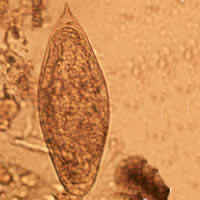 Schistosoma intercalatum
-
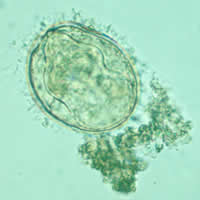 Schistosoma mekongi
- Schistosoma spindale
- Schistosoma nasale
- Schistosoma malayensis
Compare
Questions and answers
What do schistosomiasis eggs look like?
Terminal-spined eggs resembling those of Schistosoma indicum have been detected in human stool samples.[4]
Sources
Passages the profile rests on
- The parasite uses the freshwater snail Indoplanorbis exustus as its sole natural intermediate host in the Indian subcontinent. Source passage: “that is the sole natural intermediate host for S. indicum (and other two Schistosoma species) on the Indian sub-continent.” — English Wikipedia
- The species was previously associated with Lymnaea luteola as an intermediate host, but subsequent research rejected this association. Source passage: “Earlier another snail (Lymnaea luteola) was also implicated in transmission of S. indicum, but subsequent research refuted that possibility.” — English Wikipedia
- Schistosoma indicum is more widely distributed than Schistosoma spindale. Source passage: “and is more widespread than Schistosoma spindale.” — English Wikipedia
- Terminal-spined eggs resembling those of Schistosoma indicum have been detected in human stool samples. Source passage: “Terminal-spined S. indicum-like eggs have been detected in human stools.” — English Wikipedia
Data
- Catalogue of Life, 2026-10-16 XR cc by
- Global Biodiversity Information Facility CC BY 4.0
- Wikidata CC0
- GeoNames CC BY 4.0
- Within the Catalogue of Life, this name comes from World Register of Marine Species cc by
References
- Montgomery, R. E. (1906). Observations on bilharziosis among animals in India. 1. Journal of Tropical Veterinary Science, 1 (1): 15–45. where the name was published
This species in other databases
Page built on 29 November 2026. See how the catalog is made and all sources and licences.
Cite this page
ScientificNames.org. (2026). Schistosoma indicum. Retrieved November 29, 2026, from https://scientificnames.org/species/schistosoma-indicum
“Schistosoma indicum.” ScientificNames.org, 2026, scientificnames.org/species/schistosoma-indicum. Accessed 29 Nov. 2026.
ScientificNames.org. “Schistosoma indicum.” Accessed November 29, 2026. https://scientificnames.org/species/schistosoma-indicum.
@misc{scientificnames_schistosoma_indicum,
  author = {{ScientificNames.org}},
  title = {Schistosoma indicum},
  year = {2026},
  url = {https://scientificnames.org/species/schistosoma-indicum},
  note = {Accessed 2026-11-29}
}