Species · Flowering plants
Spotted Golden Thistle Scolymus maculatus
The scientific name of the Spotted Golden Thistle is Scolymus maculatus. It is a species of flowering plant in the family Asteraceae (composite), order Asterales.
- Scientific name
- Scolymus maculatus L.
- Common name
- Spotted Golden Thistle
- Genus
- Scolymus
- Family
- Asteraceae (Composite)
- Order
- Asterales
- Class
- Magnoliopsida
- Recorded in
- 32 countries
- Name status
- accepted in the Catalogue of Life

Overview
Spotted Golden Thistle is an annual, biennial or perennial herb and a flowering plant in the family Asteraceae. It is native to the Mediterranean region, including southern Europe, southwest Asia and northern Africa, as well as the Canary Islands and Madeira. It is distinguished by prickly leaves with prominent white veins, prickly stem wings and yellow flower heads.
Written 27 November 2026 from the sources listed below. Each statement was checked against the passage it cites; statements that could not be supported were removed.
Appearance
Its yellow, roundish flower heads occur singly or in small groups at the ends of stems. Each head is surrounded by more than five leaflike bracts arranged in several rows, with spine-tipped ends.[1][2][3][4]
The yellow corollas are strap-shaped, terminate in five teeth and measure 17–24 millimetres in length. The yellow florets have black hairs on their corolla tubes. The plant contains milky latex.[5][6][7][8]
Its cypselas are dorsally compressed and individually enclosed by paleae. They lack pappus bristles.[9][10]
The plant can reach a height of 1.5 metres, and its leaves are generally 9–14 centimetres long. Its flower-head bracts measure 11–18 millimetres in length, while the common floral receptacle measures 7–11 millimetres in diameter.[11][12][13][14]
Habitat
The species prefers deep, fertile clay soils in disturbed locations and grows in sunny or lightly shaded environments. Recorded habitats include fallowed or abandoned fields, ditches and roadsides. It generally occurs below 700 metres in elevation.[15][16][17][18]
In Israel, the species occurs in woodlands, shrublands, steppes and deserts. It has also been recorded in montane vegetation on Mount Hermon.[19][20]
Behaviour
The species is nitrophilous and favours nutrient-rich growing conditions.[21]
Dense patches of the plant can prevent livestock from passing through them. Its relatively sparse aerial growth is unlikely to shade out the ground flora beneath it, although it may compete with low shrubs and ground-layer vegetation for space, water and nutrients.[22][23][24]
Reproduction and life cycle
The species has hermaphrodite flowers that are pollinated by insects. Each fruit develops a single seed. Its diploid chromosome count is twenty.[25][26][27]
The species flowers between May and August. Its seeds can be dispersed when spiny seed heads become caught in wool or contaminate fodder.[28][29]
Classification of the Spotted Golden Thistle
| Kingdom | Plantae |
|---|---|
| Subkingdom | Pteridobiotina |
| Phylum | Tracheophyta |
| Class | Magnoliopsida |
| Order | Asterales |
| Family | Asteraceae (Composite) |
| Subfamily | Cichorioideae |
| Tribe | Cichorieae |
| Subtribe | Scolyminae |
| Genus | Scolymus (Golden Thistle) |
| Species | Scolymus maculatus L. |
Where the Spotted Golden Thistle is found
Checklists and occurrence records place Scolymus maculatus in 32 countries across Africa, Asia, Europe, North America and Oceania. GBIF holds 5,885 georeferenced records of it.
Countries where it is native or its origin is not stated
- Algeria 27
- Belgium 9
- Bulgaria 2
- Croatia 7
- Cyprus 20
- Egypt 12
- Eritrea 1
- Ethiopia 2
- France 960
- Gibraltar 1
- Greece 32
- Iraq 20
- Israel 2,563
- Italy 108
- Jordan 11
- Lebanon 13
- Malta 2
- Morocco 81
- Palestinian Territory 80
- Portugal 694
- Spain 1,084
- Sudan
- Sweden 5
- Syria 41
- The Netherlands 12
- Tunisia 2
- Turkey 32
- United Kingdom 7
Countries where it has been introduced
Regions and cities with the most records
- Northern District, Israel 1,215
- Occitanie, France 731
- Kafr Mandā, Israel 689
- Sakhnīn, Israel 650
- Karmi’el, Israel 603
- Tamra, Israel 594
- Kafr Kannā, Israel 580
- Ar Rayna, Israel 577
- Majd el Kurūm, Israel 575
- Naẕerat ‘Illit, Israel 570
- Shefar‘am, Israel 569
- Nazareth, Israel 554
- Yāfā, Israel 549
- Migdal Ha‘Emeq, Israel 507
- Qiryat Ata, Israel 500
- Qiryat Bialik, Israel 457
- Qiryat Tiv‘on, Israel 451
- Rekhasim, Israel 443
- Qiryat Motsqin, Israel 437
- Judeida Makr, Israel 426
- Maghār, Israel 424
- Yirkā, Israel 421
- Qiryat Yam, Israel 413
- Tiberias, Israel 399
- Nesher, Israel 398
- Afula, Israel 390
- Lod, Israel 383
- Central District, Israel 371
- Yoqne‘am ‘Illit, Israel 368
- Haifa, Israel 367
- Daliyat al Karmel, Israel 366
- Acre, Israel 360
- Narbonne, France 360
- Shoham, Israel 347
- Be’er Ya‘aqov, Israel 344
- Haifa, Israel 342
Range as the checklists state it
Belgium; Germany [I]; Portugal; Spain; Gibraltar; Baleares (Mallorca, Menorca); France; Sardinia; Italy; Sicily; Isole Pelagie (Lampedusa); Malta; Bulgaria; European Turkey; Greece (rare, incl. Samothraki, Lemnos); W-Crete (rare); Morocco; Algeria; Tunisia; Egypt (Desert Oases, Great Southwestern Desert, Nile Delta); Madeira (Madeira Isl., Porto Santo Isl.); Canary Isl. (Lanzarote, Fuerteventura, Gran Canaria, Tenerife, La Gomera, Hierro, La Palma); Sudan; Ethiopia; Eritrea; East Aegaean Isl. (Lesvos, Chios, Samos, Kos, Kalymnos, Rhodos); Turkey (N-Anatolia, NW-Anatolia: Bithynia, S-Anatolia, SSW-Anatolia, W-Anatolia); Iraq (NE-Iraq, NW-Iraq, SE-Iraq: Mesopotamia); Cyprus (C-Mountains, E-Cyprus, N-Cyprus, S-Cyprus, W-Cyprus); Lebanon (C-Lebanon, coastal W-Lebanon); Syria (coastal W-Syria, Jbel Druze); Israel (coastal W-Israel, Rift Valley, N-Israel); Bahrain [I]; Australia [I] (Queensland [I], New South Wales [I]); USA [I] (North Carolina [I])
A number beside a place is its count of GBIF occurrence records. A place without a number comes from a checklist alone. Records show where a species has been observed or collected, which can include escapes and vagrants.
Common names
English
- Spotted Golden Thistle
- Spotted Oyster Thistle
- Spotted Thistle
Names in 14 other languages
- Arabic
- سكوليمس مبقع, شوك ذهبي مرقط
- Czech
- ostnatec skvrnitý
- Finnish
- kaljukultaohdake
- French
- scolyme maculé, scolyme taché
- German
- Gefleckte Golddistel
- Hebrew
- חוח עקוד
- Italian
- cardogna macchiata
- Polish
- Osociec plamisty, Skolymus plamisty
- Portuguese
- cardo-dourado-manchado, escólimo-malhado
- Russian
- Сколимус пятнистый
- Slovak
- zlatokvet škvrnitý
- Spanish
- Cardo de leche
- Swedish
- taggfibbla
- Turkish
- Altındikeni, Çizgili Şevketibostan
Synonyms
6 other scientific names have been used for this species and are now treated as synonyms of Scolymus maculatus.
- Scolymus annuus Gérard
- Scolymus annuus Gérard ex Steud.
- Scolymus clusii Bubani
- Scolymus gymnospermus Gaertn.
- Scolymus paniculatus Ucria
- Scolymus pectinatus Cass.
Related species
-
 Golden ThistleScolymus hispanicus
-
 Large-flowered Golden ThistleScolymus grandiflorus
- Scolymus × castaneus
-
 Jerusalem ArtichokeHelianthus tuberosus
-
 ChicoryCichorium intybus
-
 Absinthe WormwoodArtemisia absinthium
-
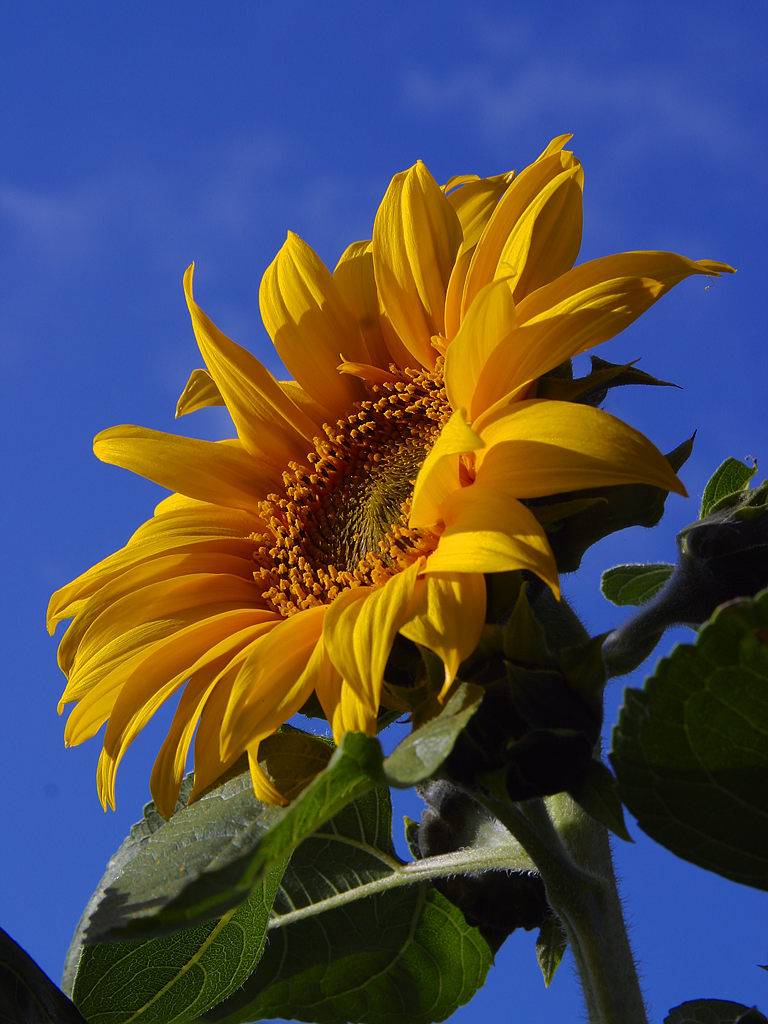 Common SunflowerHelianthus annuus
-
 Common YarrowAchillea millefolium
Compare
Questions and answers
What is the scientific name of the Spotted Golden Thistle?
The scientific name of the Spotted Golden Thistle is Scolymus maculatus. Written with its author, the full name is Scolymus maculatus L..
Which family does the Spotted Golden Thistle belong to?
Scolymus maculatus belongs to the family Asteraceae, in the order Asterales and the class Magnoliopsida.
Where is the Spotted Golden Thistle found?
Checklists and occurrence records place Scolymus maculatus in 32 countries, including Israel, Spain, France, Portugal, Italy and Morocco.
What other names does the Spotted Golden Thistle have?
Scolymus maculatus is also known in English as Spotted Oyster Thistle and Spotted Thistle.
Sources
Passages the profile rests on
- Its flower heads are yellow and occur singly or in small groups at the ends of stems. Source passage: “The yellow flower heads stand solitary or with a few together at the tip to the stems” — English Wikipedia
- Each flower head is surrounded by more than five leaflike bracts. Source passage: “subtended by more than five leaflike bracts.” — English Wikipedia
- The flower heads are roundish and positioned at the ends of the stems. Source passage: “The roundish flower heads are seated at the end of the stem.” — English Wikipedia
- The flower-head bracts have spine-tipped ends and are arranged in several rows. Source passage: “more than five spine-tipped bracts between 11 and 18 millimetres (3⁄8 and 3⁄4 in) long, arranged in several rows.” — English Wikipedia
- Its yellow corollas are strap-shaped and terminate in five teeth. Source passage: “The yellow, strap-like corolla is 17–24 mm (5⁄8–1 in) long, ends in five teeth” — English Wikipedia
- The yellow florets have black hairs on their corolla tubes. Source passage: “carries some black hairs on the tube.” — English Wikipedia
- The plant contains milky latex. Source passage: “The plant contains a milky latex” — English Wikipedia
- Its yellow corollas measure 17–24 millimetres in length. Source passage: “The yellow, strap-like corolla is 17–24 mm (5⁄8–1 in) long” — English Wikipedia
- Its cypselas are dorsally compressed and enclosed individually by paleae. Source passage: “Implanted are dorsally compressed cypselas, each enclosed by a palea” — English Wikipedia
- The cypselas lack pappus bristles. Source passage: “There are no pappus bristles on top of the cypselas.” — English Wikipedia
- The plant can reach a height of 1.5 metres. Source passage: “up to 1.5 metres (5 ft) high.” — English Wikipedia
- Its leaves are generally 9–14 centimetres long. Source passage: “mostly 9–14 centimetres (3+1⁄2–5+1⁄2 in) long” — English Wikipedia
- Its flower-head bracts measure 11–18 millimetres in length. Source passage: “bracts between 11 and 18 millimetres (3⁄8 and 3⁄4 in) long” — English Wikipedia
- The common floral receptacle measures 7–11 millimetres in diameter. Source passage: “The common floral base (or receptacle) is 7–11 mm (1⁄4–3⁄8 in) in diameter” — English Wikipedia
- The species prefers deep, fertile clay soils in disturbed locations. Source passage: “prefers deep, rich, but disturbed clayey soils” — English Wikipedia
- It grows in sunny or lightly shaded environments. Source passage: “in sunny or lightly shaded positions” — English Wikipedia
- Its recorded habitats include fallowed or abandoned fields, ditches and roadsides. Source passage: “such as fallowed or abandoned fields, ditches and roadsides.” — English Wikipedia
- The species generally occurs below 700 metres in elevation. Source passage: “It generally only occurs below 700 m (2,300 ft) altitude” — English Wikipedia
- In Israel, the species occurs in woodlands, shrublands, steppes and deserts. Source passage: “In Israel it occurs in woodlands and shrublands, steppes, and desert” — English Wikipedia
- The species has also been recorded in montane vegetation on Mount Hermon. Source passage: “but also in the montane vegetation on Mount Hermon.” — English Wikipedia
- The species is nitrophilous and favours nutrient-rich growing conditions. Source passage: “Scolymus maculatus is nitrophilous plant” — English Wikipedia
- Dense patches of the plant can prevent livestock from passing through them. Source passage: “Because of its spininess, dense patches of this weed become impenetrable to stock.” — soilhealth.ccmaknowledgebase.vic.gov.au
- The plant's relatively sparse aerial growth is unlikely to shade out the ground flora beneath it. Source passage: “This plant has relatively sparse aerial growth that does not appear to shade out ground flora beneath its canopy” — soilhealth.ccmaknowledgebase.vic.gov.au
- The plant may compete with low shrubs and ground-layer vegetation for space, water and nutrients. Source passage: “its rapid growth may compete with low shrub and ground layer vegetation for space, water and nutrients.” — soilhealth.ccmaknowledgebase.vic.gov.au
- The species has hermaphrodite flowers that are pollinated by insects. Source passage: “The hermaphrodite flowers are pollinated by insects.” — English Wikipedia
- Each fruit develops a single seed. Source passage: “grows into an indehiscent fruit in which only one seed develops” — English Wikipedia
- The species has twenty chromosomes in its diploid chromosome count. Source passage: “has twenty chromosomes (2n=20).” — English Wikipedia
- The species flowers between May and August. Source passage: “Flowers are present between May and August.” — English Wikipedia
- Its seeds can be dispersed when spiny seed heads become caught in wool or contaminate fodder. Source passage: “Spiny seed head catches in wool or contaminates fodder” — soilhealth.ccmaknowledgebase.vic.gov.au
Data
- Catalogue of Life, 2026-10-16 XR cc by
- Global Biodiversity Information Facility CC BY 4.0
- Wikidata CC0
- GeoNames CC BY 4.0
- Wikimedia Commons per image; credit shown with each image
- Within the Catalogue of Life, this name comes from Synonymic Checklists of the Vascular Plants of the World cc by
References
- L. (1753). Sp. Pl. [Linnaeus] 2: 813 (1753). where the name was published
This species in other databases
- Catalogue of Life 4VSZD
- Wikidata Q310455
- iNaturalist 168688
- World Flora Online wfo-0000091946
- GRIN 33400
Page built on 29 November 2026. See how the catalog is made and all sources and licences.
Cite this page
ScientificNames.org. (2026). Scolymus maculatus (Spotted Golden Thistle). Retrieved November 29, 2026, from https://scientificnames.org/species/scolymus-maculatus
“Scolymus maculatus (Spotted Golden Thistle).” ScientificNames.org, 2026, scientificnames.org/species/scolymus-maculatus. Accessed 29 Nov. 2026.
ScientificNames.org. “Scolymus maculatus (Spotted Golden Thistle).” Accessed November 29, 2026. https://scientificnames.org/species/scolymus-maculatus.
@misc{scientificnames_scolymus_maculatus_spotted_golden_thistle,
  author = {{ScientificNames.org}},
  title = {Scolymus maculatus (Spotted Golden Thistle)},
  year = {2026},
  url = {https://scientificnames.org/species/scolymus-maculatus},
  note = {Accessed 2026-11-29}
}