Species · Flowering plants
Fork-leaved Cinquefoil Sibbaldianthe bifurca
The scientific name of the Fork-leaved Cinquefoil is Sibbaldianthe bifurca. It is a species of flowering plant in the family Rosaceae (rose family), order Rosales.
- Scientific name
- Sibbaldianthe bifurca (L.) Kurtto & T.Erikss.
- Common name
- Fork-leaved Cinquefoil
- Genus
- Sibbaldianthe
- Family
- Rosaceae (Rose Family)
- Order
- Rosales
- Class
- Magnoliopsida
- Recorded in
- 27 countries
- Name status
- accepted in the Catalogue of Life

Overview
Sibbaldianthe bifurca occurs in Russia, Korea, Mongolia, North and Northeast China. It has leaves with 3–8 pairs of sessile leaflets and yellow flowers with obovate petals.
Written 27 November 2026 from the sources listed below. Each statement was checked against the passage it cites; statements that could not be supported were removed.
Appearance
Fork-leaved Cinquefoil has leaves bearing 3–8 pairs of leaflets. The leaflets are elliptic, ovate, or obovate, and are sessile.[1][2][3]
The species has membranous brown stipules. Its flowers have yellow, obovate petals with rounded apexes, while the sepals are ovate with acute apexes.[4][5][6]
The ovary is pilose and the achenes are smooth.[7]
The plants grow between 5 and 20 centimetres tall. Their leaves measure 3–8 centimetres long, and their leaflets measure 5–15 millimetres long and 4–8 millimetres wide.[8][9][10]
The flowers measure up to 0.7–1.5 centimetres across.[11]
Habitat
Fork-leaved Cinquefoil occurs in steppes and grasslands and grows on various slopes. It is also found on sandy coasts in North and Northeast China.[12][13][14]
The species occurs at elevations between 400 and 4,000 metres.[15]
Reproduction and life cycle
Fork-leaved Cinquefoil produces flowers and fruits between May and October.[16]
Classification of the Fork-leaved Cinquefoil
| Kingdom | Plantae |
|---|---|
| Subkingdom | Pteridobiotina |
| Phylum | Tracheophyta |
| Class | Magnoliopsida |
| Order | Rosales |
| Family | Rosaceae (Rose Family) |
| Subfamily | Rosoideae |
| Tribe | Potentilleae |
| Subtribe | Fragariinae |
| Genus | Sibbaldianthe |
| Species | Sibbaldianthe bifurca (L.) Kurtto & T.Erikss. |
Where the Fork-leaved Cinquefoil is found
Checklists and occurrence records place Sibbaldianthe bifurca in 27 countries across Asia and Europe. GBIF holds 6,019 georeferenced records of it.
Countries where it is native or its origin is not stated
- Afghanistan 15
- Armenia 17
- Azerbaijan 7
- Belarus 1
- China 1,119
- Denmark 6
- Estonia 6
- Finland 76
- India 55
- Iran 20
- Kazakhstan 449
- Kyrgyzstan 9
- Latvia 11
- Lithuania
- Mongolia 453
- Nepal 42
- North Korea 18
- Norway 7
- Pakistan 4
- Poland 7
- Russia 3,116
- Tajikistan 10
- Turkey 52
- Ukraine 35
- Uzbekistan 9
Countries where it has been introduced
Regions and cities with the most records
- Irkutsk Oblast, Russia 761
- Buryatiya Republic, Russia 223
- Karaganda, Kazakhstan 220
- Usol’ye-Sibirskoye, Russia 169
- Krasnoyarsk Krai, Russia 157
- Stockholm, Sweden 156
- Danderyd, Sweden 150
- Gustavsberg, Sweden 150
- Huddinge, Sweden 150
- Jakobsberg, Sweden 150
- Lidingö, Sweden 150
- Nacka, Sweden 150
- Rinkeby, Sweden 150
- Sollentuna, Sweden 150
- Solna, Sweden 150
- Stockholm, Sweden 150
- Sundbyberg, Sweden 150
- Trångsund, Sweden 150
- Täby, Sweden 150
- Gansu, China 140
- Saratov Oblast, Russia 134
- Åkersberga, Sweden 126
- Haninge, Sweden 116
- Tibet, China 105
- Novosibirsk Oblast, Russia 102
- Ulaanbaatar, Mongolia 96
- Omsk Oblast, Russia 94
- Qinghai, China 91
- Volgograd Oblast, Russia 83
- Kalmar, Sweden 81
- Kalmar, Sweden 80
- Karagandy, Kazakhstan 80
- Ulan Bator, Mongolia 77
- Shanxi, China 76
- Irkutsk, Russia 74
- Saratov, Russia 70
Range as the checklists state it
Sweden [I]; Germany [I]; Estonia; Latvia; Lithuania; Belarus; C-European Russia; E-European Russia; Ukraine; Siberia (Altay, Chita, Irkutsk, Krasnoyarsk, Tuva, W-Siberia, NW-Siberia, SW-Siberia, N-Yakutia); Russian Far East (Upper Amur, Khabarovsk, Primorye, ?Chukotka, ?Kamchatka); Kazakhstan; Turkey (E-Anatolia, Inner Anatolia, N-Anatolia, NE-Anatolia, S-Anatolia, SE-Anatolia); Iran (N-Iran, Iranian Aserbaijan, W-Iran); Afghanistan (Badakshan, Wakhan, Baghlan, Bamyan, Kunar / Nuristan, Laghman, Parwan); China (Gansu, Hebei, Heilongjiang, Jilin, Nei Mongol, Shaanxi, Shanxi, Xinjiang); Mongolia; North Korea
A number beside a place is its count of GBIF occurrence records. A place without a number comes from a checklist alone. Records show where a species has been observed or collected, which can include escapes and vagrants.
Common names
English
- Fork-leaved Cinquefoil
Names in 7 other languages
- Danish
- Gaffel-potentil
- Finnish
- pihtihanhio
- Japanese
- クサキンロウバイ
- Korean
- 물싸리풀
- Norwegian Bokmål
- gaffelmure
- Russian
- Лапчатка вильчатая
- Swedish
- spetsfingerört, tvåspetsad fingerört
Synonyms
16 other scientific names have been used for this species and are now treated as synonyms of Sibbaldianthe bifurca.
- Fragaria bifurca (L.) Crantz
- Potentilla bifida Pall.
- Potentilla bifurca L.
- Potentilla bifurca f. monstrosa (Fisch. ex Ser.) Th.Wolf
- Potentilla bifurca subsp. bifurca
- Potentilla bifurca var. deserticola Schischk.
- Potentilla bifurca var. minor Ledeb.
- Potentilla bifurca var. misera Soják
- Potentilla bifurca var. monstruosa Fisch. ex Ser.
- Potentilla bifurca var. pygmaea Kitag.
- Potentilla bifurca var. subsericea Ser.
- Potentilla bifurca var. typica Th.Wolf
- Schistophyllidium bifurcum (L.) Ikonn.
- Schistophyllidium bifurcum subsp. bifurcum
- Sibbaldianthe bifurca subsp. bifurca
- Potentilla bifurcata L. ex Poir. ambiguous synonym
Related species
- Sibbaldianthe orientalis
- Sibbaldianthe semiglabra
- Sibbaldianthe moorcroftii
- Sibbaldianthe adpressa
- Sibbaldianthe imbricata
- Sibbaldianthe sericea
-
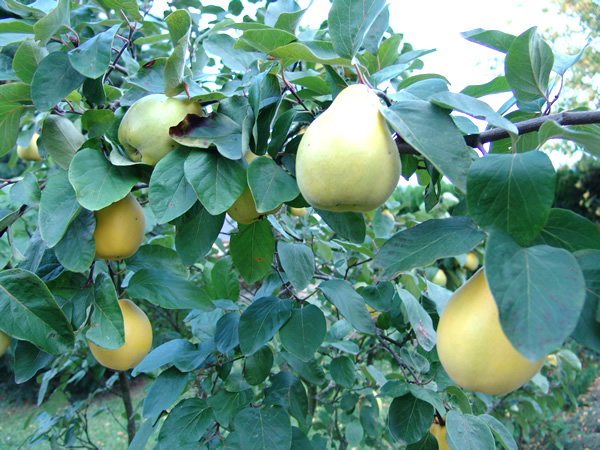 QuinceCydonia oblonga
-
 LoquatEriobotrya japonica
Compare
Questions and answers
What is the scientific name of the Fork-leaved Cinquefoil?
The scientific name of the Fork-leaved Cinquefoil is Sibbaldianthe bifurca. Written with its author, the full name is Sibbaldianthe bifurca (L.) Kurtto & T.Erikss..
Which family does the Fork-leaved Cinquefoil belong to?
Sibbaldianthe bifurca belongs to the family Rosaceae, in the order Rosales and the class Magnoliopsida.
Where is the Fork-leaved Cinquefoil found?
Checklists and occurrence records place Sibbaldianthe bifurca in 27 countries, including Russia, China, Mongolia, Kazakhstan, Finland and India.
What is another name for cinquefoil?
Fork-leaved Cinquefoil is also referred to by the scientific name Potentilla bifurca.[17]
Sources
Passages the profile rests on
- The species has leaves bearing 3–8 pairs of leaflets. Source passage: “Each leaf has 3–8 pairs of leaflets” — English Wikipedia
- Its leaflets are elliptic, ovate, or obovate in shape. Source passage: “which are elliptic to ovate or obovate” — English Wikipedia
- The leaflets are sessile. Source passage: “elliptic to ovate or obovate, sessile” — English Wikipedia
- The species has membranous brown stipules. Source passage: “with membranous brown stipules” — English Wikipedia
- Its flowers have yellow, obovate petals with rounded apexes. Source passage: “the petals are yellow and obovate with rounded apexes.” — English Wikipedia
- The sepals are ovate and have acute apexes. Source passage: “The sepals are ovate, with acute apexes” — English Wikipedia
- The species has a pilose ovary and smooth achenes. Source passage: “The ovary is pilose but the achenes are smooth.” — English Wikipedia
- The plants grow between 5 and 20 centimetres tall. Source passage: “Plants are 5–20 centimetres (2–8 in) tall.” — English Wikipedia
- Its leaflets measure 5–15 millimetres long and 4–8 millimetres wide. Source passage: “5–15 × 4–8 mm (0.2–0.6 × 0.2–0.3 in).” — English Wikipedia
- Its leaves measure 3–8 centimetres long. Source passage: “The leaves are 3–8 cm (1.2–3.1 in) long” — English Wikipedia
- Its flowers measure up to 0.7–1.5 centimetres across. Source passage: “Flowers up to 0.7–1.5 cm (0.3–0.6 in) across.” — English Wikipedia
- The species occurs in steppes and grasslands. Source passage: “in the steppes, grasslands and various slopes” — English Wikipedia
- The species grows on various slopes. Source passage: “grasslands and various slopes” — English Wikipedia
- The species is found on sandy coasts in North and Northeast China. Source passage: “It is also found on sandy coasts of North and Northeast China.” — English Wikipedia
- The species occurs at elevations between 400 and 4,000 metres. Source passage: “at an elevation of 400–4,000 metres (1,300–13,100 ft).” — English Wikipedia
- The species produces flowers and fruits between May and October. Source passage: “Both flowers and fruits appear from May to October.” — English Wikipedia
- The species is also referred to by the scientific name Potentilla bifurca. Source passage: “Sibbaldianthe bifurca or Potentilla bifurca.” — inaturalist.org
Data
- Catalogue of Life, 2026-10-16 XR cc by
- Global Biodiversity Information Facility CC BY 4.0
- Wikidata CC0
- GeoNames CC BY 4.0
- Wikimedia Commons per image; credit shown with each image
- Within the Catalogue of Life, this name comes from Synonymic Checklists of the Vascular Plants of the World cc by
References
- Kurtto & T.Erikss. (2003). Ann. Bot. Fenn. 40(2): 139 (2003). where the name was published
This species in other databases
Page built on 29 November 2026. See how the catalog is made and all sources and licences.
Cite this page
ScientificNames.org. (2026). Sibbaldianthe bifurca (Fork-leaved Cinquefoil). Retrieved November 29, 2026, from https://scientificnames.org/species/sibbaldianthe-bifurca
“Sibbaldianthe bifurca (Fork-leaved Cinquefoil).” ScientificNames.org, 2026, scientificnames.org/species/sibbaldianthe-bifurca. Accessed 29 Nov. 2026.
ScientificNames.org. “Sibbaldianthe bifurca (Fork-leaved Cinquefoil).” Accessed November 29, 2026. https://scientificnames.org/species/sibbaldianthe-bifurca.
@misc{scientificnames_sibbaldianthe_bifurca_fork_leaved_cinquefoil,
  author = {{ScientificNames.org}},
  title = {Sibbaldianthe bifurca (Fork-leaved Cinquefoil)},
  year = {2026},
  url = {https://scientificnames.org/species/sibbaldianthe-bifurca},
  note = {Accessed 2026-11-29}
}