Species · Fishes
Samurai Chocolate Gourami Sphaerichthys vaillanti
The scientific name of the Samurai Chocolate Gourami is Sphaerichthys vaillanti. It is a species of fish in the family Osphronemidae (gourami), order Anabantiformes. The name dates from 1930.
- Scientific name
- Sphaerichthys vaillanti Pellegrin, 1930
- Common name
- Samurai Chocolate Gourami
- Genus
- Sphaerichthys
- Family
- Osphronemidae (Gourami)
- Order
- Anabantiformes
- Class
- Teleostei
- Red List category
- EN Endangered
- Environment
- freshwater
- Recorded in
- 1 country
- Name status
- accepted in the Catalogue of Life

Overview
The species is native to Asia and occurs mainly in the Kapuas River region of West Kalimantan, Borneo, Indonesia. The species mimics dead leaves as a camouflage strategy.
Written 26 November 2026 from the sources listed below. Each statement was checked against the passage it cites; statements that could not be supported were removed.
Habitat
The species is generally found in pairs in small creeks and drainage areas containing abundant wood debris.[1]
Appearance
Females have bright red coloration with predominantly green areas and dark vertical stripes. Males have dull reddish-brown coloration with several vertical and horizontal white lines.[2][3]
Juveniles are brown, with transparent caudal fins and white markings across their bodies.[4]
The species reaches approximately 6 cm in standard length. Its coloration resembles dead leaf litter and debris in its natural environment.[5][6]
Behaviour
The species mimics dead leaves as a camouflage strategy and is capable of facultative air-breathing.[7][8]
In aquarium conditions, the species is described as peaceful and inquisitive. It is sensitive to ammonia, nitrites and nitrates in aquarium water and is susceptible to disease.[9][10][11]
Reproduction and life cycle
Females initiate courtship behaviour, and the partners remain upright for many hours during reproduction. Females lay approximately 10–40 eggs.[12][13]
Males collect the eggs in their mouths and hide while females guard the surrounding area.[14]
Diet
In aquarium conditions, the species eats plant matter, algae, daphnia and worms.[15]
Juveniles can use diatoms from decaying plant matter as a secondary food source.[16]
Conservation
The species is threatened by collection for the aquarium trade. Habitat destruction and pollution associated with illegal gold mining are additional threats.[17][18]
Uses
The species is traded in the aquarium industry, although it is rarely encountered in that trade.[19]
Classification of the Samurai Chocolate Gourami
| Kingdom | Animalia |
|---|---|
| Phylum | Chordata |
| Subphylum | Vertebrata |
| Infraphylum | Gnathostomata |
| Parvphylum | Osteichthyes |
| Gigaclass | Actinopterygii |
| Superclass | Actinopteri |
| Class | Teleostei (Teleost) |
| Order | Anabantiformes |
| Suborder | Anabantoidei |
| Family | Osphronemidae (Gourami) |
| Subfamily | Luciocephalinae |
| Genus | Sphaerichthys (Chocolate Gouramis) |
| Species | Sphaerichthys vaillanti Pellegrin, 1930 |
Where the Samurai Chocolate Gourami is found
Checklists and occurrence records place Sphaerichthys vaillanti in 1 country. GBIF holds 25 georeferenced records of it.
Countries
A number beside a place is its count of GBIF occurrence records. A place without a number comes from a checklist alone. Records show where a species has been observed or collected, which can include escapes and vagrants.
Common names
English
- Samurai Chocolate Gourami
- Samurai Gourami
- Valliant's Chocolate Gourami
Names in 4 other languages
- Czech
- čichavec Vaillantův
- Malay
- Ensepat
- Portuguese
- Gourami-samurai
- Russian
- Гурами Вейланта
Related species
-
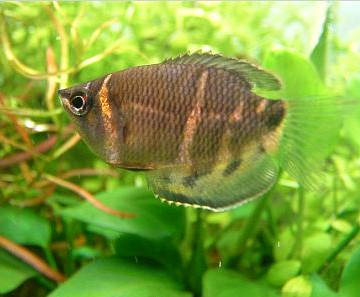 Chocolate GouramiSphaerichthys osphromenoides
- Crossband Chocolate GouramiSphaerichthys selatanensis
- Giant Chocolate GouramiSphaerichthys acrostoma
-
 Siamese Fighting FishBetta splendens
-
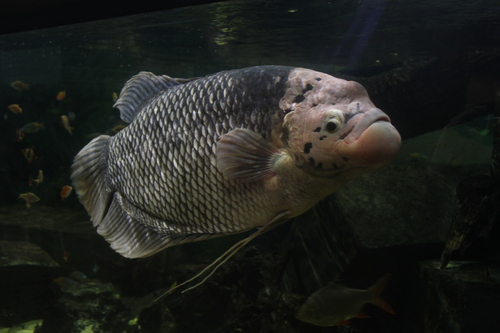 Giant GouramiOsphronemus goramy
-
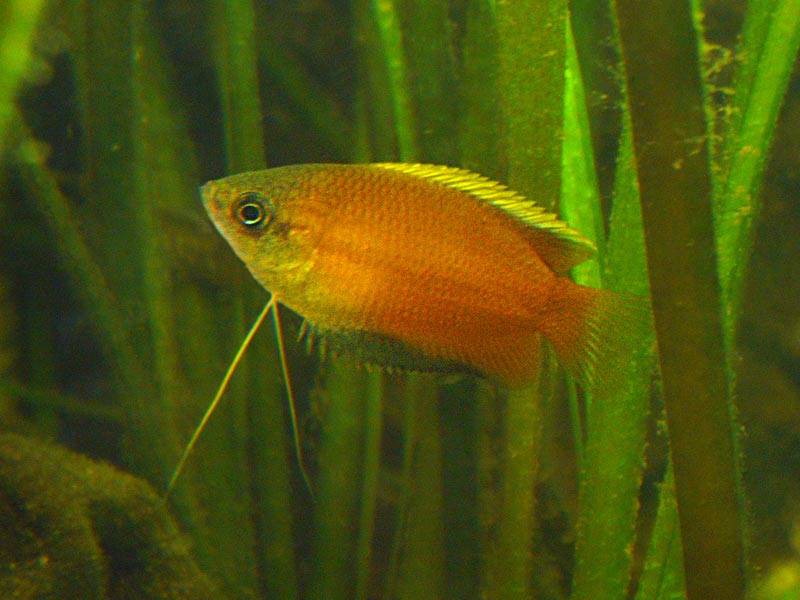 Honey GouramiTrichogaster chuna
-
 Paradise FishMacropodus opercularis
-
 Dwarf GouramiTrichogaster lalius
Compare
Questions and answers
What is the scientific name of the Samurai Chocolate Gourami?
The scientific name of the Samurai Chocolate Gourami is Sphaerichthys vaillanti. Written with its author, the full name is Sphaerichthys vaillanti Pellegrin, 1930.
Which family does the Samurai Chocolate Gourami belong to?
Sphaerichthys vaillanti belongs to the family Osphronemidae, in the order Anabantiformes and the class Teleostei.
Where is the Samurai Chocolate Gourami found?
Checklists and occurrence records place Sphaerichthys vaillanti in 1 country: Indonesia.
What is the conservation status of the Samurai Chocolate Gourami?
The IUCN Red List category recorded for Sphaerichthys vaillanti is Endangered (EN).
What other names does the Samurai Chocolate Gourami have?
Sphaerichthys vaillanti is also known in English as Samurai Gourami and Valliant's Chocolate Gourami.
How big do samurai gourami get?
The Samurai Chocolate Gourami reaches approximately 6 cm in standard length.[5]
Sources
Passages the profile rests on
- The species is generally found in pairs in small creeks and drainage areas containing abundant wood debris. Source passage: “It is generally seen in pairs in small creeks or drainage where wood debris is abundant.” — English Wikipedia
- Females have bright red coloration with predominantly green areas and dark vertical stripes. Source passage: “the females are brightly colored red with a predominant green and dark vertical stripes.” — English Wikipedia
- Males have dull reddish-brown coloration with several vertical and horizontal white lines. Source passage: “The males are much simpler with a dull reddish brown with a few vertical and horizontal white lines.” — English Wikipedia
- Juveniles are brown, with transparent caudal fins and white markings across their bodies. Source passage: “Juveniles are brown with clear caudal tails and white markings throughout.” — English Wikipedia
- The species reaches approximately 6 cm in standard length. Source passage: “The species reaches about 6 cm (2.5 inches) in standard length” — English Wikipedia
- The species' coloration resembles dead leaf litter and debris in its natural environment. Source passage: “All of the coloring that these anabantoids have are to resemble the dead leaf litter and debris that is found naturally in their environment.” — English Wikipedia
- The species mimics dead leaves as a camouflage strategy. Source passage: “It is known to mimic dead leaves as a form of camouflage.” — English Wikipedia
- The species is capable of facultative air-breathing. Source passage: “is known to be a facultative air-breather.” — English Wikipedia
- The species is described as peaceful and inquisitive in aquarium conditions. Source passage: “These intelligent fish are very peaceful and inquisitive at their surroundings.” — English Wikipedia
- The species is sensitive to ammonia, nitrites and nitrates in aquarium water. Source passage: “This species is somewhat sensitive to ammonia, nitrites, and nitrates” — English Wikipedia
- The species is susceptible to disease. Source passage: “This species however, is susceptible to disease.” — English Wikipedia
- Females initiate courtship behaviour, and the partners remain upright for many hours during reproduction. Source passage: “the female of these mouthbrooders actually initiates the courting behavior, and during this time, they will remain upright for many hours during reproduction.” — English Wikipedia
- Females lay approximately 10–40 eggs during reproduction. Source passage: “The female will then lay the eggs, about 10–40, and the male will gather them in his mouth.” — English Wikipedia
- Males collect the eggs in their mouths and hide while females guard the surrounding area. Source passage: “the male will gather them in his mouth. He will then hide while the female guards the area to protect the eggs.” — English Wikipedia
- In aquarium conditions, the species eats plant matter, algae, daphnia and worms. Source passage: “It is an omnivore eating plant and algae matter along with small creatures such as daphnia and worms.” — English Wikipedia
- Juveniles can use diatoms from decaying plant matter as a secondary food source. Source passage: “The fry can use the diatoms from the decay of plant matter as a secondary food source.” — English Wikipedia
- The species is threatened by collection for the aquarium trade. Source passage: “It is very sought after in the aquarium trade, making it vulnerable to going extinct due to mass collection.” — English Wikipedia
- Habitat destruction and pollution associated with illegal gold mining are threats to the species. Source passage: “Habitat destruction and pollution from illegal gold mining also threaten this gourami” — English Wikipedia
- The species is traded in the aquarium industry, although it is rarely encountered in that trade. Source passage: “This species is rarely seen in the aquarium trade, and is usually stocked from specialist breeders or in smaller local fish stores.” — English Wikipedia
Data
- Catalogue of Life, 2026-10-16 XR cc by
- Global Biodiversity Information Facility CC BY 4.0
- Wikidata CC0
- GeoNames CC BY 4.0
- Wikimedia Commons per image; credit shown with each image
- Within the Catalogue of Life, this name comes from World Register of Marine Species cc by
References
- Pellegrin, J. (1930). Description d’un Anabantidé nouveau de Borneo appartenant au genre Sphaerichthys. Bulletin de La Société Zoologique de France, v. 55: 242–244. where the name was published
This species in other databases
- Catalogue of Life 4YP2V
- Wikidata Q5644142
- iNaturalist 112893
- WoRMS urn:lsid:marinespecies.org:taxname:1015863
- ITIS 638781
Page built on 29 November 2026. See how the catalog is made and all sources and licences.
Cite this page
ScientificNames.org. (2026). Sphaerichthys vaillanti (Samurai Chocolate Gourami). Retrieved November 29, 2026, from https://scientificnames.org/species/sphaerichthys-vaillanti
“Sphaerichthys vaillanti (Samurai Chocolate Gourami).” ScientificNames.org, 2026, scientificnames.org/species/sphaerichthys-vaillanti. Accessed 29 Nov. 2026.
ScientificNames.org. “Sphaerichthys vaillanti (Samurai Chocolate Gourami).” Accessed November 29, 2026. https://scientificnames.org/species/sphaerichthys-vaillanti.
@misc{scientificnames_sphaerichthys_vaillanti_samurai_chocolate_gourami,
  author = {{ScientificNames.org}},
  title = {Sphaerichthys vaillanti (Samurai Chocolate Gourami)},
  year = {2026},
  url = {https://scientificnames.org/species/sphaerichthys-vaillanti},
  note = {Accessed 2026-11-29}
}