Species · Mammals
Striped Dolphin Stenella coeruleoalba
The scientific name of the Striped Dolphin is Stenella coeruleoalba. It is a species of mammal in the family Delphinidae (oceanic dolphin), order Cetacea. The name dates from 1833.
- Scientific name
- Stenella coeruleoalba (Meyen, 1833)
- Common name
- Striped Dolphin
- Genus
- Stenella
- Family
- Delphinidae (Oceanic Dolphin)
- Order
- Cetacea
- Class
- Mammalia
- Red List category
- LC Least Concern
- Environment
- marine
- Recorded in
- 33 countries
- Name status
- accepted in the Catalogue of Life

Overview
The Striped Dolphin inhabits offshore and inshore warm-temperate and tropical waters, including continental slopes and oceanic waters. It is typically bluish-gray, with a dark dorsal cape, a light underside, and distinctive black stripes extending from its eyes and behind its ears.
Written 26 November 2026 from the sources listed below. Each statement was checked against the passage it cites; statements that could not be supported were removed.
Appearance
The Striped Dolphin typically has bluish-gray coloration, a dark dorsal cape, and a light underside that is usually white. Its underside may also be blue or pink, and its flanks above the stripes are light blue or grey.[1][2][3]
Habitat
The Striped Dolphin inhabits offshore and inshore warm-temperate and tropical waters. Its habitat includes continental slopes and oceanic waters, and it appears to avoid sea surface temperatures below 20 degrees Celsius.[4][5][6][7]
It primarily feeds in pelagic or benthopelagic ocean zones, often near continental slopes.[8]
Diet
Adult Striped Dolphins consume fish, squid, octopus, krill, and other crustaceans. They exhibit opportunistic feeding habits.[9][10]
Mediterranean Striped Dolphins primarily prey on hake, sardines, and cephalopods. Cephalopods account for approximately 50–100% of their stomach contents.[11][12]
Northeastern Atlantic Striped Dolphins frequently consume lantern fish and prey on cod.[13][14]
Behaviour
Striped Dolphins commonly form groups ranging from a few individuals to more than one thousand, with most groups containing 100–500 dolphins. Groups may associate with common dolphins.[15][16][17]
Schools may consist of juveniles, breeding adults, or non-breeding adults. Calves generally join juvenile schools one or two years after weaning.[18][19]
Striped Dolphins commonly produce clicks and whistles that are presumed to serve communication functions.[20]
Reproduction and life cycle
Male Striped Dolphins reach sexual maturity between seven and fifteen years of age. Female sexual maturity ranges from five to thirteen years, while Mediterranean females reach sexual maturity at approximately 12 years. One reported study places sexual maturity in Pacific Striped Dolphins between seven and nine years.[21][22][23][24]
Gestation lasts approximately 12–13 months, and females typically have a calving interval of approximately four years.[25][26]
Newborn calves measure approximately 90–100 cm in length and weigh approximately 11.3 kg. They nurse for almost sixteen months.[27][28][29]
The mating season occurs in winter and early summer in the western North Pacific and in autumn in the Mediterranean.[30][31]
Conservation
The Striped Dolphin is classified as Least Concern on the IUCN Red List. Its subpopulation experienced a 30% reduction over the last three generations.[32][33]
The eastern tropical Pacific and Mediterranean populations are listed in Appendix II of the Convention on the Conservation of Migratory Species of Wild Animals.[34]
Uses
Striped Dolphins are sometimes hunted for their meat. Their aerial movements alongside vessels provide entertainment to sailors and travelers.[35][36]
The species may serve as an indicator for long-term monitoring of heavy metal accumulation in marine environments.[37]
Similar species
The Clymene dolphin, common dolphins, Atlantic spotted dolphin, and Indo-Pacific bottlenose dolphin are identified as close relatives of the Striped Dolphin.[38]
Classification of the Striped Dolphin
| Kingdom | Animalia |
|---|---|
| Phylum | Chordata |
| Subphylum | Vertebrata |
| Infraphylum | Gnathostomata |
| Parvphylum | Osteichthyes |
| Megaclass | Tetrapoda |
| Class | Mammalia (Mammal) |
| Subclass | Theria |
| Infraclass | Eutheria |
| Order | Cetacea (Cetacean) |
| Suborder | Odontoceti (Toothed Whales) |
| Family | Delphinidae (Oceanic Dolphin) |
| Genus | Stenella (Spinner Dolphins) |
| Species | Stenella coeruleoalba (Meyen, 1833) |
Where the Striped Dolphin is found
Checklists and occurrence records place Stenella coeruleoalba in 33 countries. GBIF holds 36,197 georeferenced records of it.
Countries
- Albania 20
- Belgium 5
- Canada 276
- Costa Rica 159
- Croatia 44
- Cyprus 6
- Denmark 4
- El Salvador 52
- France 17,448
- Gibraltar 26
- Greece 419
- Guadeloupe 23
- Guatemala 25
- Guernsey 5
- Ireland 50
- Italy 4,834
- Japan 492
- Jersey 5
- Malta 3
- Martinique 10
- Mexico 618
- Monaco 93
- Nicaragua 26
- Norway 44
- Panama 58
- Portugal 5,114
- Russia 3
- Saint Pierre and Miquelon 5
- Spain 3,809
- Sweden 16
- The Netherlands 107
- United Kingdom 349
- United States 2,049
Regions and cities with the most records
- Provence-Alpes-Côte d'Azur, France 1,775
- Antibes, France 696
- Juan-les-Pins, France 691
- La Garde, France 656
- La Valette-du-Var, France 639
- Nice, France 632
- Cagnes-sur-Mer, France 608
- Occitanie, France 599
- Monaco, Monaco 595
- Saint-Laurent-du-Var, France 559
- Sanremo, Italy 544
- Six-Fours-les-Plages, France 535
- Hyères, France 533
- La Seyne-sur-Mer, France 533
- Vallauris, France 515
- Cannes, France 514
- La Crau, France 509
- Ventimiglia, Italy 497
- Toulon, France 493
- Sanary-sur-Mer, France 483
- Mandelieu-la-Napoule, France 481
- Menton, France 467
- Le Cannet, France 465
- Ponta Delgada, Portugal 448
- Mougins, France 412
- Saint-Raphaël, France 390
- Corsica, France 378
- Fréjus, France 356
- Pays de la Loire, France 350
- Vence, France 338
- La Ciotat, France 311
- Grasse, France 297
- Biarritz, France 293
- Anglet, France 291
- Bayonne, France 290
- Tarifa, Spain 274
36 more countries have a few records outside this range
These countries hold a few records of Stenella coeruleoalba but lie outside the range the checklists give for it. Such records are often zoo or garden specimens, museum material or vagrants, so the species is not counted as occurring there.
- Algeria 40
- Angola 15
- Argentina 14
- Australia 198
- Brazil 22
- Cabo Verde 31
- Chile 5
- Colombia 89
- Ecuador 249
- French Polynesia 5
- French Southern Territories 14
- Guam 5
- Israel 18
- Ivory Coast 9
- Libya 5
- Mauritania 8
- Mayotte 17
- Morocco 142
- New Caledonia 10
- Northern Mariana Islands 10
- Oman 3
- Reunion 17
- Saint Helena 12
- Saudi Arabia 6
- Senegal 6
- Seychelles 3
- Solomon Islands 6
- South Africa 59
- Sri Lanka 3
- Thailand 6
- Tunisia 8
- Turkey 45
- Uruguay 5
- Vietnam 5
- Western Sahara 56
- Yemen 4
Range as the checklists state it
Eastern Atlantic Ocean
Western Atlantic Ocean
Indo-West Pacific
East Pacific
A number beside a place is its count of GBIF occurrence records. A place without a number comes from a checklist alone. Records show where a species has been observed or collected, which can include escapes and vagrants.
Common names
English
- Striped Dolphin
- Euphrosyne Dolphin
- Gray's Dolphin
- Meyen's Dolphin
- Blue Dolphin
- Blue-white Dolphin
- Streaker Porpoise
Names in 37 other languages
- Afrikaans
- Euphrosyne Dolfyn, streepdolfyn
- Albanian
- delfini me shirita
- Arabic
- delfin azrak wa abyad, دلفين أزرق أبيض, دلفين مخطط, دلفين يوفروسيني
- Asturian
- Tolinha raxona
- Basque
- Izurde zerrendatua
- Catalan
- Dofí llistat, dofí listat, dofí ratllat
- Chinese
- 条纹原海豚, 條紋原海豚, 條紋海豚
- Croatian
- prugasti dupin
- Czech
- delfín pruhovaný
- Danish
- stribet delfin
- Dutch
- dolfijn van Gray, gestreepte dolfijn
- Finnish
- raitadelfiini
- French
- Dauphin bleu-et-blanc, Dauphin rayé, dauphin bleu, dauphin bleu et blanc
- Galician
- Golfiño riscado
- German
- Blau-weisser Delfin, Streifendelfin, Streifendelphin, blauweißer Delfin
- Greek
- zónodelfino, Ζωνοδέλφινο, Ζωνοδέλφινο (Zónodelfino)
- Hebrew
- stenella mefuspeset, סטנלה מפוספסת
- Hungarian
- csíkos delfin
- Icelandic
- Rákahöfrungur, Rákaskoppari
- Indonesian
- lumba-lumba strip
- Italian
- delfino dalle briglie, delfino eufrosine, delfino striato, prodelfino bianco-ceruleo, stenella striata
- Japanese
- suji iruka, スジイルカ
- Korean
- julbagi-dolgorae, 줄무늬돌고래
- Lithuanian
- dryžuotasis prodelfinas
- Malagasy
- lambondriaka mitsoridriaka
- Norwegian Bokmål
- stripedelfin
- Polish
- Delfin pręgoboki, Delfinek pręgoboki, stenella pręgoboka
- Portuguese
- Golfinho riscado, Golfinho-risacado, golfinho-listrado, golfinho-riscado, toninha-riscada
- Russian
- polosatyi delfin, polosatyi prodelfin, stenella, Полосатый дельфин, Полосатый продельфин
- Slovenian
- navadni progasti delfin, progasti delfin
- Spanish
- Delfín blanco y azul, Delfín listado, Delfín rayado, delfin a rayas, delfin blanco, delfin blanco y azul, delfin de betas, delfín azul
- Swedish
- strimmig delfin
- Thai
- plaloma thaep, โลมาลายแถบ
- Turkish
- Cizgili Vunus, cizgili yunus, çizgili yunus
- Ukrainian
- Продельфін смугастий, смугастий дельфін
- Welsh
- Dolffiniaid Rhesog, dolffin rhesog
- hbs
- Prugasti delfin / Пругасти делфин
Synonyms
55 other scientific names have been used for this species and are now treated as synonyms of Stenella coeruleoalba.
- Clymene dorides Gray, 1866
- Clymene euphrosyne Gray, 1866
- Clymenia aesthenops Dall in Scammon, 1874
- Clymenia burmeisteri Malm, 1871
- Clymenia crotaphisca Dall in Scammon, 1874
- Clymenia crotaphiscus Gray, 1871
- Clymenia dorides Gray, 1868
- Clymenia esthenops Gray, 1871
- Clymenia euphrosyne Gray, 1868
- Clymenia euphrosynoides Gray, 1868
- Clymenia novaezelandiae Hector, 1873
- Clymenia styx Gray, 1868
- Delphinus amphitriteus Philippi, 1893
- Delphinus asthenops Cope, 1865
- Delphinus coeruleoalbus Meyen, 1833
- Delphinus crotaphiscus Cope, 1865
- Delphinus delphis mediterranea Nobre, 1900
- Delphinus euphrosyne Gray, 1846
- Delphinus holbolli Eschricht, 1847
- Delphinus lateralis Peale, 1848
- Delphinus marginatus Desmarest, 1856
- Delphinus mediterraneus Loche, 1860
- Delphinus styx Gray, 1846
- Delphinus tethyos Gervais, 1853
- Lagenorhynchus caeruleoalbus Gray, 1850
- Lagenorhynchus lateralis Cassin, 1858
- Lagenorrhynchus caeruleoalbus Burmeister, 1867
- Orca tethyos Gerrard, 1865
- Prodelphinus amphitriteus True, 1903
- Prodelphinus burmeisteri Trouessart, 1904
- Prodelphinus coeruleo-albus (Meyen, 1833) Kuroda, 1938
- Prodelphinus coeruleoalbus True, 1889
- Prodelphinus coeruleoalbus euphrosyne Bobrinski, 1944
- Prodelphinus crotaphiscus Trouessart, 1898
- Prodelphinus doreides Trouessart, 1898
- Prodelphinus euphrosine Trouessart, 1898
- Prodelphinus euphrosinoides Trouessart, 1898
- Prodelphinus euphrosyne Flower, 1885
- Prodelphinus lateralis True, 1889
- Prodelphinus marginatus Desmarest, 1856
Showing 40 of 55.
Related species
-
 Spinner DolphinStenella longirostris
-
 Pantropical Spotted DolphinStenella attenuata
-
 Atlantic Spotted DolphinStenella frontalis
-
 Clymene DolphinStenella clymene
-
 Killer WhaleOrcinus orca
-
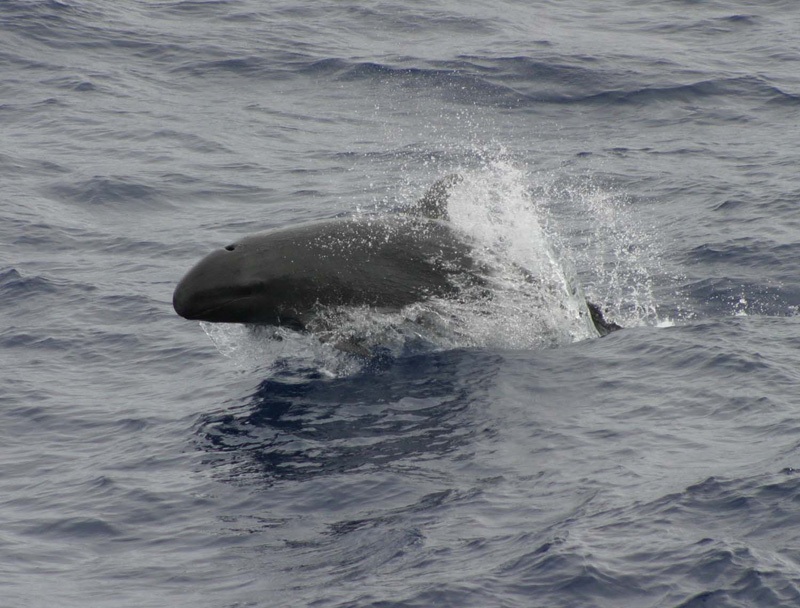 False Killer WhalePseudorca crassidens
-
 Common Bottlenose DolphinTursiops truncatus
-
 Irrawaddy DolphinOrcaella brevirostris
Compare
Questions and answers
What is the scientific name of the Striped Dolphin?
The scientific name of the Striped Dolphin is Stenella coeruleoalba. Written with its author, the full name is Stenella coeruleoalba (Meyen, 1833).
Which family does the Striped Dolphin belong to?
Stenella coeruleoalba belongs to the family Delphinidae, in the order Cetacea and the class Mammalia.
Where is the Striped Dolphin found?
Checklists and occurrence records place Stenella coeruleoalba in 33 countries, including France, Portugal, Italy, Spain, United States and Mexico.
What is the conservation status of the Striped Dolphin?
The IUCN Red List category recorded for Stenella coeruleoalba is Least Concern (LC).
What other names does the Striped Dolphin have?
Stenella coeruleoalba is also known in English as Euphrosyne Dolphin, Gray's Dolphin, Meyen's Dolphin, Blue Dolphin, Blue-white Dolphin and Streaker Porpoise.
Are striped dolphins rare?
The Striped Dolphin is classified as Least Concern on the IUCN Red List. Its subpopulation experienced a 30% reduction over the last three generations.[32][33]
What is a spotted dolphin called?
The Atlantic spotted dolphin is identified as a close relative of the Striped Dolphin.[38]
What is a striped dolphin's habitat?
Striped Dolphins inhabit offshore and inshore warm-temperate and tropical waters, including continental slopes and oceanic waters. They appear to avoid sea surface temperatures below 20 degrees Celsius.[5][6][7]
What does the striped dolphin eat?
Striped Dolphins consume fish, squid, octopus, krill, and other crustaceans. Mediterranean individuals primarily prey on hake, sardines, and cephalopods, while northeastern Atlantic individuals frequently consume lantern fish and cod.[9][11][13][14]
Sources
Passages the profile rests on
- The striped dolphin has a blue, white, or pink underside. Source passage: “The underside is blue, white, or pink.” — English Wikipedia
- The dolphin's flanks above the stripes are light blue or grey. Source passage: “Above these stripes, the dolphin's flanks are coloured light blue or grey.” — English Wikipedia
- The species typically has bluish-gray coloration, a dark dorsal cape, and a light, usually white, underside. Source passage: “Striped dolphins are typically bluish-gray in color with a dark dorsal cape and light (usually white) ventral coloration.” — animaldiversity.org
- Striped dolphins inhabit offshore waters in temperate and tropical regions. Source passage: “The striped dolphin inhabits temperate or tropical, off-shore waters.” — English Wikipedia
- The species occupies both offshore and inshore warm-temperate and tropical waters. Source passage: “Striped dolphins occupy both offshore and inshore warm-temperate and tropical waters.” — animaldiversity.org
- The species appears to avoid sea surface temperatures below 20 degrees Celsius. Source passage: “S. coeruleoalba appears to avoid sea surface temperatures of less than 20 degrees C” — animaldiversity.org
- Its habitat includes continental slopes and oceanic waters. Source passage: “The habitat of striped dolphins include the continental slope and oceanic waters.” — seamap.env.duke.edu
- Striped dolphins primarily feed in pelagic or benthopelagic ocean zones, often near continental slopes. Source passage: “The ranges of observed prey indicate that striped dolphins primarily feed in pelagic or benthopelagic zones of the ocean, often along the continental slope” — animaldiversity.org
- Adult striped dolphins consume fish, squid, octopus, krill, and other crustaceans. Source passage: “The adult striped dolphin eats fish, squid, octopus, krill, and other crustaceans.” — English Wikipedia
- Striped dolphins exhibit opportunistic feeding habits. Source passage: “S. coeruleoalba seems to have an opportunistic feeding habit.” — animaldiversity.org
- Mediterranean striped dolphins primarily prey on hake, sardines, and cephalopods. Source passage: “Mediterranean striped dolphins seem to prey primarily on hake, sardine and cephalopods” — English Wikipedia
- Mediterranean striped dolphins obtain approximately 50–100% of their stomach contents from cephalopods. Source passage: “Mediterranean striped dolphins seem to prey primarily on cephalopods (50-100% of stomach contents)” — animaldiversity.org
- Northeastern Atlantic striped dolphins frequently consume lantern fish. Source passage: “while northeastern Atlantic striped dolphins most often prey on fish, frequently lantern fish.” — English Wikipedia
- Northeastern Atlantic striped dolphins frequently prey on cod. Source passage: “while northeastern Atlantic striped dolphins most often prey on fish, frequently cod” — animaldiversity.org
- Striped dolphins commonly form large groups that can contain thousands of individuals. Source passage: “the striped dolphin moves in large groups — usually up to thousands of individuals in number.” — English Wikipedia
- Groups of striped dolphins may associate with common dolphins. Source passage: “They may also mix with common dolphins.” — English Wikipedia
- Groups of the species range from a few individuals to more than one thousand, with most containing 100–500 dolphins. Source passage: “Group size in S. coeruleoalba ranges from a few individuals to over one-thousand individuals, but most schools consist of 100-500 dolphins.” — animaldiversity.org
- Striped dolphin schools may consist of juveniles, breeding adults, or non-breeding adults. Source passage: “Three different kinds of schools often occur: juvenile, breeding adults, and non-breeding adults.” — animaldiversity.org
- Calves generally join juvenile schools one or two years after weaning. Source passage: “Calves do not usually join the juvenile school until one or two years after weaning” — animaldiversity.org
- Striped dolphins commonly produce clicks and whistles that are presumed to serve communication functions. Source passage: “Like other delphinids, striped dolphins often vocalize with clicks and whistles, which presumably function in communication.” — animaldiversity.org
- Mediterranean females reach sexual maturity at approximately 12 years of age. Source passage: “Research suggested sexual maturity was reached at 12 years in Mediterranean females” — English Wikipedia
- Pacific striped dolphins reach sexual maturity between seven and nine years of age according to one reported study. Source passage: “and in the Pacific at between seven and 9 years.” — English Wikipedia
- Male striped dolphins reach sexual maturity between seven and fifteen years of age. Source passage: “Males reach sexual maturity between the ages of 7 and 15” — animaldiversity.org
- Female striped dolphins reach sexual maturity between five and thirteen years of age. Source passage: “and females become sexually mature between 5 and 13 years of age.” — animaldiversity.org
- Gestation lasts approximately 12–13 months. Source passage: “The gestation period of striped dolphins lasts 12-13 months.” — animaldiversity.org
- Females typically have a calving interval of approximately four years. Source passage: “Females typically have a four year calving interval” — animaldiversity.org
- Newborn striped dolphins measure approximately 90–100 cm in length. Source passage: “At birth, striped dolphins are 90-100cm long (differing slightly between ranges)” — animaldiversity.org
- Newborn calves weigh approximately 11.3 kg. Source passage: “and weigh approximately 11.3kg” — animaldiversity.org
- Striped dolphin calves nurse for almost sixteen months. Source passage: “Young calves then nurse for almost 16 months.” — animaldiversity.org
- The mating season occurs in winter and early summer in the western North Pacific. Source passage: “The mating season of the striped dolphin is in the winter and early summer in the western north Pacific” — animaldiversity.org
- The mating season occurs in autumn in the Mediterranean. Source passage: “while it occurs in the fall in the Mediterranean” — animaldiversity.org
- The striped dolphin is classified as Least Concern on the IUCN Red List. Source passage: “On the IUCN Red List the striped dolphin classifies as Least Concern” — English Wikipedia
- The species experienced a 30% reduction in its subpopulation over the last three generations. Source passage: “despite a 30% reduction in its subpopulation over the last three generations.” — English Wikipedia
- The eastern tropical Pacific and Mediterranean populations are listed in Appendix II of the Convention on the Conservation of Migratory Species of Wild Animals. Source passage: “The eastern tropical Pacific and Mediterranean populations of the striped dolphin are listed on Appendix II of the Convention on the Conservation of Migratory Species of Wild Animals (CMS)” — English Wikipedia
- Striped dolphins are sometimes hunted for their meat. Source passage: “In addition, they are sometimes hunted for meat.” — animaldiversity.org
- Striped dolphins provide entertainment to sailors and travelers through their aerial movements alongside vessels. Source passage: “Striped dolphins provide much entertainment to sailors and travelers, as they flip, twist, and breach alongside the waves created by ships and boats.” — animaldiversity.org
- The species may serve as an indicator for long-term monitoring of heavy metal accumulation in marine environments. Source passage: “These dolphins may also be an indicator species for long-term monitoring of heavy metal accumulation in the marine environment” — English Wikipedia
- The Clymene dolphin, common dolphins, Atlantic spotted dolphin, and Indo-Pacific bottlenose dolphin are identified as close relatives of the striped dolphin. Source passage: “the closest relatives of the striped dolphin are the Clymene dolphin, the common dolphins, the Atlantic spotted dolphin, and Indo-Pacific bottlenose dolphin” — English Wikipedia
Data
- Catalogue of Life, 2026-10-16 XR cc by
- Global Biodiversity Information Facility CC BY 4.0
- Wikidata CC0
- GeoNames CC BY 4.0
- Wikimedia Commons per image; credit shown with each image
- Within the Catalogue of Life, this name comes from The Integrated Taxonomic Information System cc0
References
- Nova Acta Acad. Caes. Nat. Curios. vol.16 2 p.609, pl. 43 where the name was published
- Banks, R. C., R. W. McDiarmid, and A. L. Gardner. (1987). Checklist of Vertebrates of the United States, the U.S. Territories, and Canada. Resource Publication, No. 166.
- Wilson, Don E., and DeeAnn M. Reeder, eds. (1993). Mammal Species of the World: A Taxonomic and Geographic Reference, 2nd Ed., 3rd Printing.
- Rice, Dale W. (1998). Marine Mammals of the World: Systematics and Distribution. Special Publications of the Society for Marine Mammals, No. 4.
- Archer, Frederick I. II, and William F. Perrin. (1999). Stenella coeruleoalba. Mammalian Species, No. 603.
- Wilson, Don E., and Sue Ruff, eds. (1999). The Smithsonian Book of North American Mammals.
- Wilson, Don E., and F. Russell Cole. (2000). Common Names of Mammals of the World.
- Mead, James G., and Robert L. Brownell, Jr. / Wilson, Don E., and DeeAnn M. Reeder, eds. (2005). Order Cetacea. Mammal Species of the World: A Taxonomic and Geographic Reference, 3rd Ed., Vol. 1.
- Würsig, Bernd, J. G. M. Thewissen, and Kit M. Kovacs, eds. (2018). Encyclopedia of Marine Mammals, 3rd Edition.
This species in other databases
- Catalogue of Life 6ZJDC
- Wikidata Q215332
- iNaturalist 41494
- WoRMS urn:lsid:marinespecies.org:taxname:137107
Page built on 28 November 2026. See how the catalog is made and all sources and licences.
Cite this page
ScientificNames.org. (2026). Stenella coeruleoalba (Striped Dolphin). Retrieved November 28, 2026, from https://scientificnames.org/species/stenella-coeruleoalba
“Stenella coeruleoalba (Striped Dolphin).” ScientificNames.org, 2026, scientificnames.org/species/stenella-coeruleoalba. Accessed 28 Nov. 2026.
ScientificNames.org. “Stenella coeruleoalba (Striped Dolphin).” Accessed November 28, 2026. https://scientificnames.org/species/stenella-coeruleoalba.
@misc{scientificnames_stenella_coeruleoalba_striped_dolphin,
  author = {{ScientificNames.org}},
  title = {Stenella coeruleoalba (Striped Dolphin)},
  year = {2026},
  url = {https://scientificnames.org/species/stenella-coeruleoalba},
  note = {Accessed 2026-11-28}
}