Species · Flowering plants
Strychninebush Strychnos lucida
The scientific name of the Strychninebush is Strychnos lucida. It is a species of flowering plant in the family Loganiaceae (logania family), order Gentianales.
- Scientific name
- Strychnos lucida R.Br.
- Common name
- Strychninebush
- Genus
- Strychnos
- Family
- Loganiaceae (Logania Family)
- Order
- Gentianales
- Class
- Magnoliopsida
- Red List category
- LC Least Concern
- Recorded in
- 6 countries
- Name status
- accepted in the Catalogue of Life
Overview
Wikidata describes Strychnos lucida as “species of plant”.
Classification of the Strychninebush
| Kingdom | Plantae |
|---|---|
| Subkingdom | Pteridobiotina |
| Phylum | Tracheophyta |
| Class | Magnoliopsida |
| Order | Gentianales |
| Family | Loganiaceae (Logania Family) |
| Tribe | Strychneae |
| Genus | Strychnos (Curare and Strychnine Plants) |
| Species | Strychnos lucida R.Br. |
Where the Strychninebush is found
Checklists and occurrence records place Strychnos lucida in 6 countries across Asia and Oceania. GBIF holds 2,485 georeferenced records of it.
Countries where it is native or its origin is not stated
Countries where it has been introduced
Regions and cities with the most records
- Northern Territory, Australia 1,770
- Queensland, Australia 326
- Western Australia, Australia 196
- Darwin, Australia 101
- Nakhon Ratchasima, Thailand 4
- Hainan, China
Range as the checklists state it
China [I] (Hainan [I]); Thailand; Vietnam; Jawa; Lesser Sunda Isl. (Bali, to, Timor); Moluccas (Tanimbar); Australia (Western Australia, Northern Territory, Queensland)
A number beside a place is its count of GBIF occurrence records. A place without a number comes from a checklist alone. Records show where a species has been observed or collected, which can include escapes and vagrants.
Common names
English
- Strychninebush
- Strychninetree
Names in 1 other language
- Chinese
- xian ye ma qian, 亮叶马钱, 腺叶马钱
Synonyms
4 other scientific names have been used for this species and are now treated as synonyms of Strychnos lucida.
- Strychnos muricata Kostel.
- Strychnos nux-vomica f. depauperata Miq.
- Strychnos roborans A.W.Hill
- Strychnos ligustrina Blume ambiguous synonym
Related species
-
 Nux-vomicaStrychnos nux-vomica
-
 Spiny Monkey OrangeStrychnos spinosa
-
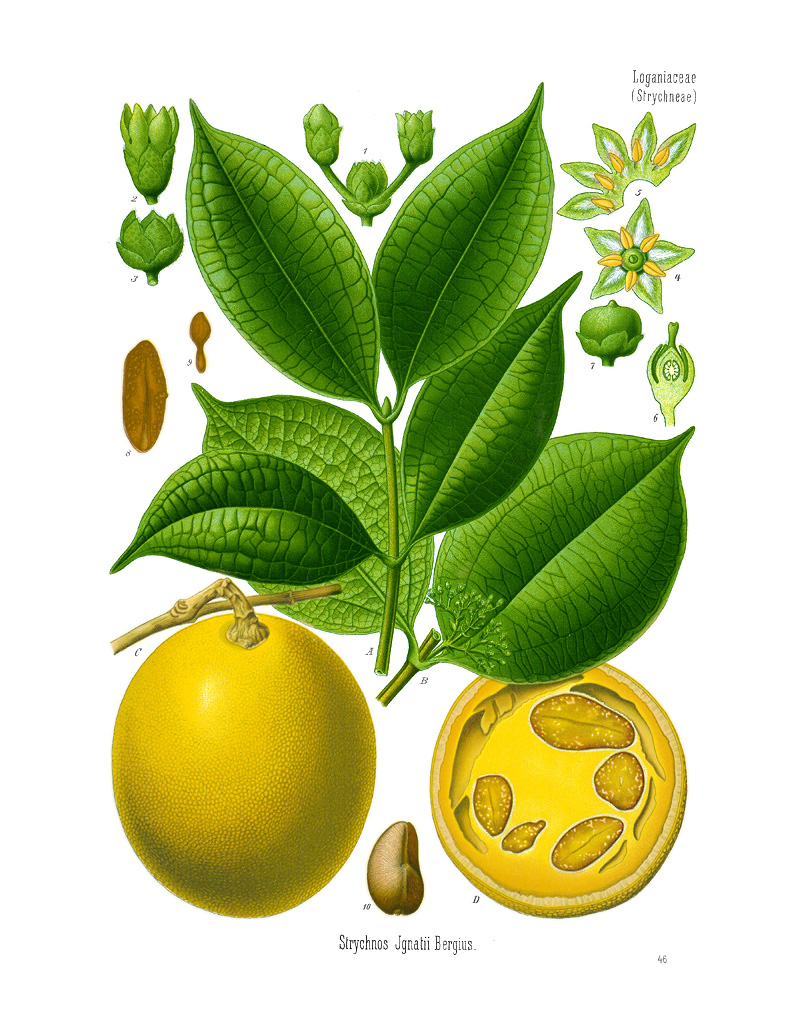 St. Ignatius' BeanStrychnos ignatii
-
 Clearing-nut-treeStrychnos potatorum
-
 Hairy-leaved Monkey-orangeStrychnos madagascariensis
-
 Klapper-AppleStrychnos pungens
- Corky-bark Monkey-orangeStrychnos cocculoides
- Strychnine TreeStrychnos psilosperma
Compare
Questions and answers
What is the scientific name of the Strychninebush?
The scientific name of the Strychninebush is Strychnos lucida. Written with its author, the full name is Strychnos lucida R.Br..
Which family does the Strychninebush belong to?
Strychnos lucida belongs to the family Loganiaceae, in the order Gentianales and the class Magnoliopsida.
Where is the Strychninebush found?
Checklists and occurrence records place Strychnos lucida in 6 countries, including Australia, Indonesia, Thailand, Timor Leste and Vietnam.
What is the conservation status of the Strychninebush?
The IUCN Red List category recorded for Strychnos lucida is Least Concern (LC).
What other names does the Strychninebush have?
Strychnos lucida is also known in English as Strychninetree.
Sources
Data
- Catalogue of Life, 2026-10-16 XR cc by
- Global Biodiversity Information Facility CC BY 4.0
- Wikidata CC0
- GeoNames CC BY 4.0
- Within the Catalogue of Life, this name comes from Synonymic Checklists of the Vascular Plants of the World cc by
References
- R.Br. Prodr. Fl. Nov. Holland. 469 (1810). where the name was published
This species in other databases
Page built on 25 November 2026. See how the catalog is made and all sources and licences.
Cite this page
ScientificNames.org. (2026). Strychnos lucida (Strychninebush). Retrieved November 25, 2026, from https://scientificnames.org/species/strychnos-lucida
“Strychnos lucida (Strychninebush).” ScientificNames.org, 2026, scientificnames.org/species/strychnos-lucida. Accessed 25 Nov. 2026.
ScientificNames.org. “Strychnos lucida (Strychninebush).” Accessed November 25, 2026. https://scientificnames.org/species/strychnos-lucida.
@misc{scientificnames_strychnos_lucida_strychninebush,
  author = {{ScientificNames.org}},
  title = {Strychnos lucida (Strychninebush)},
  year = {2026},
  url = {https://scientificnames.org/species/strychnos-lucida},
  note = {Accessed 2026-11-25}
}