Species · Insects
Dark Grass-dart Suniana lascivia
The scientific name of the Dark Grass-dart is Suniana lascivia. It is a species of insect in the family Hesperiidae (skipper), order Lepidoptera. The name dates from 1885.
- Scientific name
- Suniana lascivia (Rosenstock, 1885)
- Common name
- Dark Grass-dart
- Genus
- Suniana
- Family
- Hesperiidae (Skipper)
- Order
- Lepidoptera
- Class
- Insecta
- Recorded in
- 1 country
- Name status
- accepted in the Catalogue of Life

Overview
The Dark Grass-dart is a butterfly belonging to the family Hesperiidae. It occurs in Australia, Papua New Guinea and Indonesia. Its wingspan is approximately 20 mm.
Written 27 November 2026 from the sources listed below. Each statement was checked against the passage it cites; statements that could not be supported were removed.
Appearance
The Dark Grass-dart is a butterfly in the family Hesperiidae. Its wingspan is approximately 20 mm.[1][2]
Habitat
The species occurs in Australia, including New South Wales, Northern Territory, Queensland, Victoria and Western Australia. It is also recorded from Papua New Guinea and Indonesia.[3][4]
Diet
The larvae feed on Panicum maximum and species of Imperata cylindrica.[5]
Classification of the Dark Grass-dart
| Kingdom | Animalia |
|---|---|
| Phylum | Arthropoda |
| Subphylum | Hexapoda |
| Class | Insecta (Insect) |
| Order | Lepidoptera |
| Superfamily | Papilionoidea |
| Family | Hesperiidae (Skipper) |
| Genus | Suniana |
| Species | Suniana lascivia (Rosenstock, 1885) |
Where the Dark Grass-dart is found
Checklists and occurrence records place Suniana lascivia in 1 country. GBIF holds 753 georeferenced records of it.
Countries
Regions and cities with the most records
- Queensland, Australia 281
- New South Wales, Australia 267
- Sydney, Australia 127
- Victoria, Australia 102
- Parramatta, Australia 95
- Northern Territory, Australia 44
- Hornsby, Australia 41
- Burwood, Australia 31
- Western Australia, Australia 31
- Palmerston, Australia 21
- Darwin, Australia 18
- Cairns, Australia 14
- Newcastle, Australia 12
- Gold Coast, Australia 10
- Narangba, Australia 9
- Port Macquarie, Australia 9
- Sunshine Coast, Australia 9
- Capalaba, Australia 6
- Frankston East, Australia 6
- Logan City, Australia 6
- Caloundra, Australia 4
- Coffs Harbour, Australia 4
- Maryborough, Australia 3
- Toowoomba, Australia 3
A number beside a place is its count of GBIF occurrence records. A place without a number comes from a checklist alone. Records show where a species has been observed or collected, which can include escapes and vagrants.
Common names
English
- Dark Grass-dart
- Dingy Dart
Synonyms
4 other scientific names have been used for this species and are now treated as synonyms of Suniana lascivia.
- Pamphila lascivia Rosenstock, 1885
- Pamphila neocles Mabille, 1891
- Suniana larrakia Couchman, 1951
- Suniana lasus Waterhouse, 1937
Subspecies and varieties
- Suniana lascivia pola subspecies
- Suniana lascivia tenuis subspecies
Related species
-
 Wide-brand Grass-dartSuniana sunias
- Suniana subfasciata
-
 Long-tailed SkipperUrbanus proteus
-
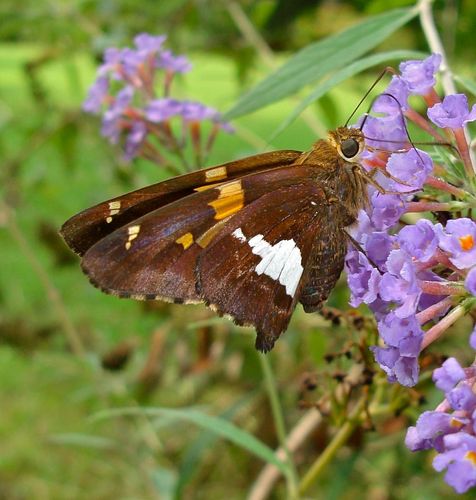 Silver-spotted SkipperEpargyreus clarus
-
 Field SkipperAtalopedes campestris
-
 Common Checkered SkipperBurnsius communis
-
 Common Branded SkipperHesperia comma
-
 Arctic SkipperCarterocephalus palaemon
Compare
Questions and answers
What is the scientific name of the Dark Grass-dart?
The scientific name of the Dark Grass-dart is Suniana lascivia. Written with its author, the full name is Suniana lascivia (Rosenstock, 1885).
Which family does the Dark Grass-dart belong to?
Suniana lascivia belongs to the family Hesperiidae, in the order Lepidoptera and the class Insecta.
Where is the Dark Grass-dart found?
Checklists and occurrence records place Suniana lascivia in 1 country: Australia.
What other names does the Dark Grass-dart have?
Suniana lascivia is also known in English as Dingy Dart.
Sources
Passages the profile rests on
- Suniana lascivia is a butterfly belonging to the family Hesperiidae. Source passage: “Suniana lascivia, the dingy grass-dart or dingy dart, is a butterfly of the family Hesperiidae.” — English Wikipedia
- The wingspan of this species is approximately 20 mm. Source passage: “The wingspan is about 20 mm.” — English Wikipedia
- This species occurs in Australia, including New South Wales, Northern Territory, Queensland, Victoria and Western Australia. Source passage: “It is found in Australia (New South Wales, Northern Territory, Queensland, Victoria, Western Australia), Papua New Guinea and Indonesia.” — English Wikipedia
- The species is also recorded from Papua New Guinea and Indonesia. Source passage: “Papua New Guinea and Indonesia.” — English Wikipedia
- The larvae feed on Panicum maximum and species of Imperata cylindrica. Source passage: “The larvae feed on Panicum maximum and Imperata cylindrica species.” — English Wikipedia
Data
- Catalogue of Life, 2026-10-16 XR cc by
- Global Biodiversity Information Facility CC BY 4.0
- Wikidata CC0
- GeoNames CC BY 4.0
- Wikimedia Commons per image; credit shown with each image
- Within the Catalogue of Life, this name comes from Global Lepidoptera Index cc by
References
- Rosenstock. (1885). Annals and Magazine of Natural History. 16. http://www.biodiversitylibrary.org/item/94955#page/406/mode/2up Link where the name was published
This species in other databases
Page built on 28 November 2026. See how the catalog is made and all sources and licences.
Cite this page
ScientificNames.org. (2026). Suniana lascivia (Dark Grass-dart). Retrieved November 28, 2026, from https://scientificnames.org/species/suniana-lascivia
“Suniana lascivia (Dark Grass-dart).” ScientificNames.org, 2026, scientificnames.org/species/suniana-lascivia. Accessed 28 Nov. 2026.
ScientificNames.org. “Suniana lascivia (Dark Grass-dart).” Accessed November 28, 2026. https://scientificnames.org/species/suniana-lascivia.
@misc{scientificnames_suniana_lascivia_dark_grass_dart,
  author = {{ScientificNames.org}},
  title = {Suniana lascivia (Dark Grass-dart)},
  year = {2026},
  url = {https://scientificnames.org/species/suniana-lascivia},
  note = {Accessed 2026-11-28}
}