Species · Flowering plants
Squarebud Daisy Tetragonotheca texana
The scientific name of the Squarebud Daisy is Tetragonotheca texana. It is a species of flowering plant in the family Asteraceae (composite), order Asterales.
- Scientific name
- Tetragonotheca texana (A.Gray) Engelm. & A.Gray
- Common name
- Squarebud Daisy
- Genus
- Tetragonotheca
- Family
- Asteraceae (Composite)
- Order
- Asterales
- Class
- Magnoliopsida
- Recorded in
- 2 countries
- Name status
- accepted in the Catalogue of Life
Overview
Squarebud daisy is a herbaceous perennial flowering plant in the family Asteraceae. It occurs in southwestern Texas in the United States and northeastern Mexico, including Coahuila, Nuevo León and Tamaulipas. Its flowering heads have four involucral bracts fused into a square collar and between 8 and 13 petal-like ray florets.
Written 28 November 2026 from the sources listed below. Each statement was checked against the passage it cites; statements that could not be supported were removed.
Appearance
Squarebud daisy is a herbaceous perennial plant that can grow to approximately 1.2 metres tall. Its leaves are arranged along the stem and are moderately to narrowly egg-shaped, reaching 7 cm in length and 3 cm in width.[1][2][3][4][5]
The leaf margins range from nearly entire to deeply cut or irregularly pinnatifid. The stems are hairless or sparsely covered with short, matted, woolly hairs.[6][7]
Each flowering head has between 8 and 13 petal-like ray florets with flat corollas, which can reach 18 mm in length. Four involucral bracts at the bottom of each head are fused into a square collar.[8][9][10]
The disc florets grow on top of a conical receptacle, and each is accompanied by a conspicuous, sharp-tipped, scale-like palea. The reduced florets have between zero and ten sharply pointed pappus scales at the base of their corollas.[11][12][13]
Habitat
Squarebud daisy grows in well-drained, dry, sandy and rocky soil over limestone. It often grows alongside Mesquite.[14][15]
The species prefers sunny, dry growing locations and survives with minimal watering.[16][17]
Reproduction and life cycle
In Texas, squarebud daisy flowers from April through September. Its flowers provide nectar for various species.[18][19]
Conservation
Squarebud daisy is vulnerable to deer.[20]
Uses
Gardeners appreciate squarebud daisy for its conspicuous and fragrant flowers.[21]
Classification of the Squarebud Daisy
| Kingdom | Plantae |
|---|---|
| Subkingdom | Pteridobiotina |
| Phylum | Tracheophyta |
| Class | Magnoliopsida |
| Order | Asterales |
| Family | Asteraceae (Composite) |
| Subfamily | Asteroideae |
| Tribe | Millerieae |
| Subtribe | Dyscritothamninae |
| Genus | Tetragonotheca (Nerveray) |
| Species | Tetragonotheca texana (A.Gray) Engelm. & A.Gray |
Where the Squarebud Daisy is found
Checklists and occurrence records place Tetragonotheca texana in 2 countries across North America. GBIF holds 1,245 georeferenced records of it.
Countries
Regions and cities with the most records
- Texas, United States 918
- Austin, United States 310
- Canyon Lake, United States 114
- Cedar Park, United States 111
- New Braunfels, United States 71
- Nuevo León, Mexico 65
- Brushy Creek, United States 59
- Kyle, United States 50
- Pflugerville, United States 46
- Kerrville, United States 45
- Round Rock, United States 44
- San Marcos, United States 43
- Leander, United States 42
- Guadalupe, Mexico 36
- Jardines de la Silla, Mexico 34
- Live Oak, United States 33
- Cibolo, United States 32
- Schertz, United States 32
- Ciudad Benito Juárez, Mexico 31
- Monterrey, Mexico 31
- Universal City, United States 31
- Coahuila, Mexico 27
- Converse, United States 27
- San Nicolás de los Garza, Mexico 23
- Ciudad Apodaca, Mexico 20
- Santiago, Mexico 19
- San Pedro Garza García, Mexico 17
- Ciudad General Escobedo, Mexico 15
- Ciudad de Allende, Mexico 14
- Cadereyta, Mexico 12
- Cadereyta Jiménez, Mexico 12
- Montemorelos, Mexico 10
- Tamaulipas, Mexico 10
- Ciudad Melchor Múzquiz, Mexico 8
- Mitras Poniente, Mexico 6
- Parque Industrial Ciudad Mitras, Mexico 6
Range as the checklists state it
USA (Texas); Mexico (Chihuahua, Coahuila, Nuevo León, Tamaulipas)
A number beside a place is its count of GBIF occurrence records. A place without a number comes from a checklist alone. Records show where a species has been observed or collected, which can include escapes and vagrants.
Common names
English
- Squarebud Daisy
- Nerve-ray
Synonyms
2 other scientific names have been used for this species and are now treated as synonyms of Tetragonotheca texana.
- Halea texana A.Gray
- Tetragonosperma lyratifolium Scheele
Related species
- Pineland NerverayTetragonotheca helianthoides
- Louisiana NerverayTetragonotheca ludoviciana
- Showy NerverayTetragonotheca repanda
-
 Jerusalem ArtichokeHelianthus tuberosus
-
 ChicoryCichorium intybus
-
 Absinthe WormwoodArtemisia absinthium
-
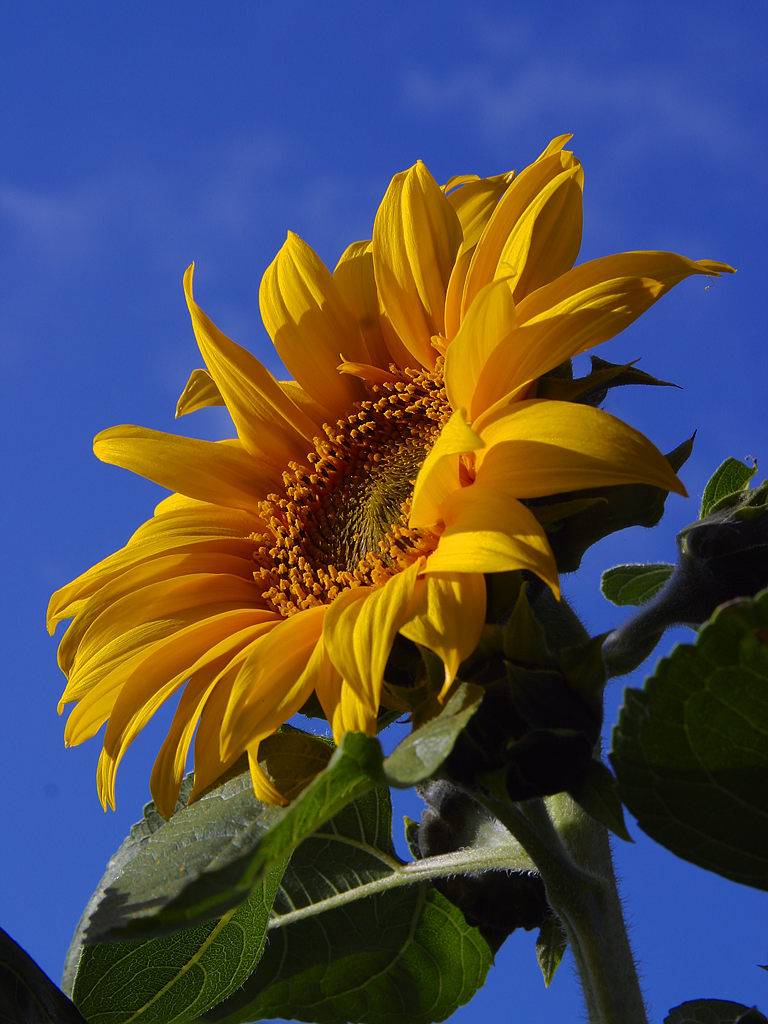 Common SunflowerHelianthus annuus
-
 Common YarrowAchillea millefolium
Compare
Questions and answers
What is the scientific name of the Squarebud Daisy?
The scientific name of the Squarebud Daisy is Tetragonotheca texana. Written with its author, the full name is Tetragonotheca texana (A.Gray) Engelm. & A.Gray.
Which family does the Squarebud Daisy belong to?
Tetragonotheca texana belongs to the family Asteraceae, in the order Asterales and the class Magnoliopsida.
Where is the Squarebud Daisy found?
Checklists and occurrence records place Tetragonotheca texana in 2 countries: United States and Mexico.
What other names does the Squarebud Daisy have?
Tetragonotheca texana is also known in English as Nerve-ray.
Sources
Passages the profile rests on
- Tetragonotheca texana is a herbaceous perennial plant. Source passage: “is an herbaceous, perennial plant belonging to the family Asteraceae.” — English Wikipedia
- The plant can grow to approximately 1.2 metres tall. Source passage: “The plant grows up to about 1.2 meters tall (4 feet).” — English Wikipedia
- The leaves are arranged along the stem rather than concentrated at the plant's base. Source passage: “Leaves are arranged along the stem, not at the base.” — English Wikipedia
- The leaves are moderately to narrowly egg-shaped. Source passage: “Leaves are moderately to narrowly egg-shaped in outline” — English Wikipedia
- The leaves can reach 7 cm in length and 3 cm in width. Source passage: “up to 7 cm long and 3 cm wide” — English Wikipedia
- The leaf margins range from nearly entire to deeply cut or irregularly pinnatifid. Source passage: “Leaf margins vary from having no significant indentations or teeth to being fairly deeply cut or irregularly pinnatifid.” — English Wikipedia
- The stems are hairless or sparsely covered with short, matted, woolly hairs. Source passage: “The stems are hairless or only sparsely covered with short, matted, woolly hairs.” — English Wikipedia
- Four involucral bracts at the bottom of each flowering head are fused into a square collar. Source passage: “four of the head's several involucral bracts are fused together to form something like an oversized, square collar.” — English Wikipedia
- Each flowering head has between 8 and 13 petal-like ray florets with flat corollas. Source passage: “Petal-like ray florets with flat corollas, numbering 8-13” — English Wikipedia
- The ray florets can reach 18 mm in length. Source passage: “are up to 18mm long (~7⁄8 inch).” — English Wikipedia
- Each disc floret is accompanied by a conspicuous, sharp-tipped, scale-like palea. Source passage: “Beside each disc floret there's a conspicuous, sharp-tipped, scale-like bract, a palea.” — English Wikipedia
- The disc florets grow on top of a conical receptacle. Source passage: “Disc florets arise atop a conical platform, the receptacle.” — English Wikipedia
- The reduced florets have between zero and ten sharply pointed pappus scales at the base of their corollas. Source passage: “there are zero or up to ten sharply pointed scales forming the pappus.” — English Wikipedia
- The species grows in well-drained, dry, sandy and rocky soil over limestone. Source passage: “lives in well drained, dry, sandy, rocky soil atop limestone.” — English Wikipedia
- The species often grows alongside Mesquite. Source passage: “Often it grows with Mesquite.” — English Wikipedia
- The species prefers sunny, dry growing locations. Source passage: “It prefers sunny, dry locations” — English Wikipedia
- The species survives with minimal watering. Source passage: “survives with minimum watering.” — English Wikipedia
- The flowers provide nectar for various species. Source passage: “which are a nectar source for various species.” — English Wikipedia
- In Texas, the species flowers from April through September. Source passage: “In Texas it flowers from April into September.” — English Wikipedia
- The species is vulnerable to deer. Source passage: “However, the species is vulnerable to deer.” — English Wikipedia
- Gardeners appreciate the species for its conspicuous and fragrant flowers. Source passage: “Squarebud daisy is appreciated by gardeners for its conspicuous, fragrant flowers” — English Wikipedia
Data
- Catalogue of Life, 2026-10-16 XR cc by
- Global Biodiversity Information Facility CC BY 4.0
- Wikidata CC0
- GeoNames CC BY 4.0
- Within the Catalogue of Life, this name comes from Synonymic Checklists of the Vascular Plants of the World cc by
References
- Engelm. & A.Gray. (1848). Proc. Amer. Acad. Arts 1: 48 (1848). where the name was published
This species in other databases
- Catalogue of Life 55NBT
- Wikidata Q15557998
- iNaturalist 169610
- World Flora Online wfo-0000117110
- GRIN 413454
Page built on 29 November 2026. See how the catalog is made and all sources and licences.
Cite this page
ScientificNames.org. (2026). Tetragonotheca texana (Squarebud Daisy). Retrieved November 29, 2026, from https://scientificnames.org/species/tetragonotheca-texana
“Tetragonotheca texana (Squarebud Daisy).” ScientificNames.org, 2026, scientificnames.org/species/tetragonotheca-texana. Accessed 29 Nov. 2026.
ScientificNames.org. “Tetragonotheca texana (Squarebud Daisy).” Accessed November 29, 2026. https://scientificnames.org/species/tetragonotheca-texana.
@misc{scientificnames_tetragonotheca_texana_squarebud_daisy,
  author = {{ScientificNames.org}},
  title = {Tetragonotheca texana (Squarebud Daisy)},
  year = {2026},
  url = {https://scientificnames.org/species/tetragonotheca-texana},
  note = {Accessed 2026-11-29}
}