Species · Birds
Uniform Antshrike Thamnophilus unicolor
The scientific name of the Uniform Antshrike is Thamnophilus unicolor. It is a species of bird in the family Thamnophilidae (antbird), order Passeriformes. The name dates from 1859.
- Scientific name
- Thamnophilus unicolor (P. L. Sclater, 1859)
- Common name
- Uniform Antshrike
- Genus
- Thamnophilus
- Family
- Thamnophilidae (Antbird)
- Order
- Passeriformes
- Class
- Aves
- Red List category
- LC Least Concern
- Recorded in
- 4 countries
- Name status
- accepted in the Catalogue of Life

Overview
Thamnophilus unicolor occurs in Colombia, Ecuador, and Peru, inhabiting the understory of humid montane forests in the Andes. Males are predominantly deep gray or blackish gray, while females have rufous and gray plumage.
Written 27 November 2026 from the sources listed below. Each statement was checked against the passage it cites; statements that could not be supported were removed.
Appearance
Adult males of the nominate subspecies are predominantly deep gray or blackish gray. Males are described as uniformly dark gray without distinctive markings, although they occasionally have white tips on their outer tail feathers.[1][2][3]
Adult females have a rufous crown, gray face, rufous-brown upperparts, and pale rufous-brown underparts. Females of the caudatus subspecies are darker and more rufous than females of the other two subspecies.[4][5]
Immature birds of both sexes resemble adult females. Both sexes have gray-white to whitish-gray irises, black bills, and gray or blue-gray legs and feet.[6][7]
The species measures between 14.5 and 17 cm in length and weighs approximately 24 grams.[8][9]
Habitat
The Uniform Antshrike inhabits the understory of humid montane forests, including subtropical or tropical moist montane forests. It occupies the understory of subtropical forests in the Andes.[10][11][12]
It favors forest edges and gaps created by fallen trees over the forest interior.[13]
Diet
Its diet consists mainly of insects and other arthropods, although seeds are also consumed.[14]
Behaviour
The species generally forages alone or in pairs and seldom participates in mixed-species feeding flocks.[15][16]
It generally forages close to the ground but occasionally feeds at heights of up to 8 metres. While foraging, it hops between branches and gleans prey from leaves, stems, vines, and branches.[17][18]
The species is presumed to remain in its range throughout the year.[19]
Reproduction and life cycle
The species is believed to have a monogamous mating system. Its breeding season in Colombia appears to extend from February through June.[20][21]
It constructs a deep cup-shaped nest from plant fibers, usually with moss hanging beneath the cup.[22]
Conservation
The Uniform Antshrike is classified as Least Concern by the IUCN. Its population is believed to be decreasing, although its total population size is unknown.[23][24]
No immediate threats to the species have been identified. The species has a high dependency on forest habitat.[25][26]
The species is considered fairly common in Colombia. It is considered uncommon in Ecuador, although it is more numerous in the western part of the country.[27][28]
Its abundance in Peru ranges from uncommon to fairly common.[29]
Classification of the Uniform Antshrike
| Kingdom | Animalia |
|---|---|
| Phylum | Chordata |
| Subphylum | Vertebrata |
| Infraphylum | Gnathostomata |
| Parvphylum | Osteichthyes |
| Megaclass | Tetrapoda |
| Class | Aves (Bird) |
| Order | Passeriformes (Passerine) |
| Family | Thamnophilidae (Antbird) |
| Genus | Thamnophilus (Antshrikes) |
| Species | Thamnophilus unicolor (P. L. Sclater, 1859) |
Where the Uniform Antshrike is found
Checklists and occurrence records place Thamnophilus unicolor in 4 countries across South America. GBIF holds 11,287 georeferenced records of it.
Countries
Regions and cities with the most records
- Pichincha, Ecuador 3,006
- Valle del Cauca Department, Colombia 1,498
- Risaralda Department, Colombia 1,469
- Cali, Colombia 1,112
- Antioquia, Colombia 1,096
- Yumbo, Colombia 997
- Chocó, Colombia 824
- Ciudad Bolívar, Colombia 787
- Nariño, Colombia 427
- Belén de Umbría, Colombia 403
- Santander Department, Colombia 348
- Huila Department, Colombia 309
- Amazonas, Peru 302
- Anserma, Colombia 269
- Quinchía, Colombia 251
- El Oro, Ecuador 247
- Piñas, Ecuador 245
- La Ceja, Colombia 210
- Retiro, Colombia 204
- La Unión, Colombia 203
- Zamora Chinchipe, Ecuador 177
- Carmen de Viboral, Colombia 170
- Caldas, Colombia 150
- Cuzco Department, Peru 150
- Envigado, Colombia 150
- Itagüí, Colombia 150
- Darien, Colombia 149
- La Estrella, Colombia 147
- Cundinamarca, Colombia 146
- Caquetá, Colombia 133
- Circasia, Colombia 118
- Rionegro, Colombia 115
- Pereira, Colombia 104
- Dosquebradas, Colombia 103
- Santa Rosa de Cabal, Colombia 100
- Huánuco Department, Peru 95
Range as the checklists state it
South America
A number beside a place is its count of GBIF occurrence records. A place without a number comes from a checklist alone. Records show where a species has been observed or collected, which can include escapes and vagrants.
Common names
English
- Uniform Antshrike
Names in 24 other languages
- Catalan
- batarà unicolor
- Chinese
- 純色蟻鵙, 纯色蚁鵙
- Croatian
- planinska mravarica
- Czech
- mravenčík jednobarvý
- Danish
- Ensfarvet Myretornskade
- Dutch
- Eenkleurige Mierklauwier
- Esperanto
- unuforma formikulo
- Finnish
- tuhkapuumuura
- French
- Batara unicolore
- German
- Einfarbameisenwürger, Einfarbwollrücken
- Italian
- Averla formichiera uniforme
- Japanese
- ムジアリモズ
- Lithuanian
- paprastoji medšarkinė skruzdlesė
- Norwegian
- gråøyemaurvarsler
- Polish
- chronka jednobarwna
- Portuguese
- choca-unicolor, formigueiro-unicolor
- Russian
- Одноцветная сорокопутовая муравьеловка, Одноцветный колючник
- Serbian
- Jednobojni mravlji svračak
- Slovak
- batara jednofarebná
- Spanish
- Batará unicolor
- Swedish
- enfärgad myrtörnskata
- Turkish
- Tek Renkli Karıncaavcısı
- Ukrainian
- сорокуш жовтоокий
- Welsh
- morgrugydd unlliw
Synonyms
One other scientific name has been used for this species and is now treated as a synonym of Thamnophilus unicolor.
- Dysithamnus unicolor P. L. Sclater, 1859
Subspecies and varieties
- Thamnophilus unicolor caudatus subspecies
- Thamnophilus unicolor grandior subspecies
- Thamnophilus unicolor unicolor subspecies
Related species
-
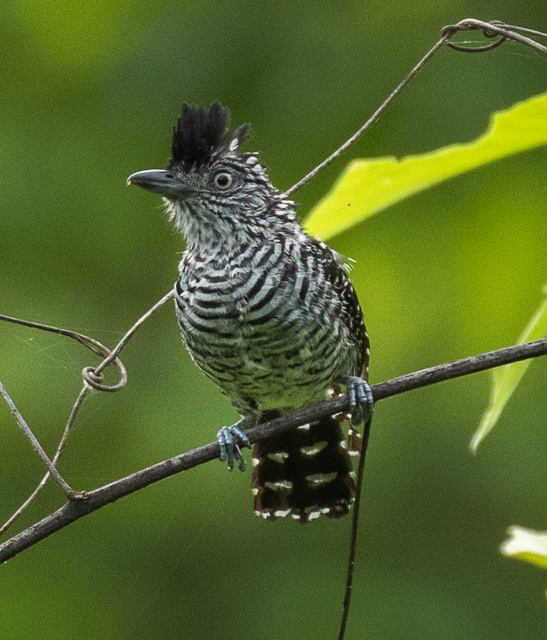 Barred AntshrikeThamnophilus doliatus
-
 Black-crowned AntshrikeThamnophilus atrinucha
-
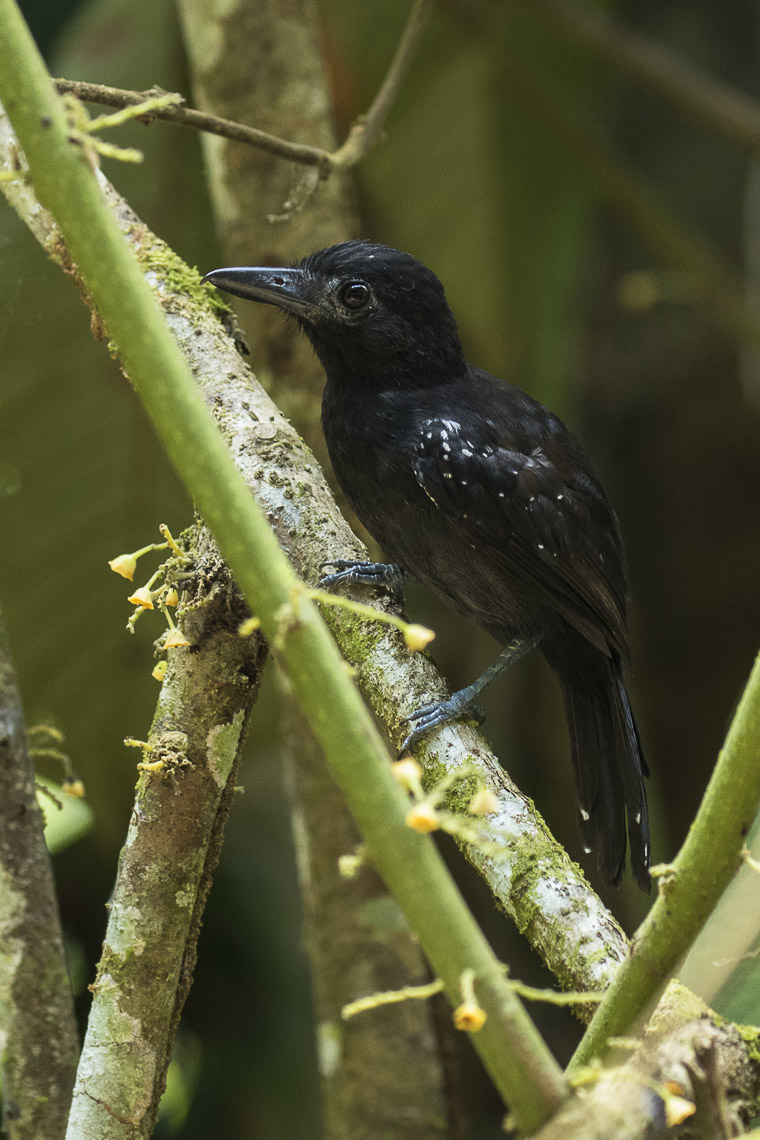 Black-hooded AntshrikeThamnophilus bridgesi
-
 Variable AntshrikeThamnophilus caerulescens
-
 Bar-crested AntshrikeThamnophilus multistriatus
-
 Acre AntshrikeThamnophilus divisorius
-
 Amazonian AntshrikeThamnophilus amazonicus
-
 Rufous-capped AntshrikeThamnophilus ruficapillus
Compare
Questions and answers
What is the scientific name of the Uniform Antshrike?
The scientific name of the Uniform Antshrike is Thamnophilus unicolor. Written with its author, the full name is Thamnophilus unicolor (P. L. Sclater, 1859).
Which family does the Uniform Antshrike belong to?
Thamnophilus unicolor belongs to the family Thamnophilidae, in the order Passeriformes and the class Aves.
Where is the Uniform Antshrike found?
Checklists and occurrence records place Thamnophilus unicolor in 4 countries: Colombia, Ecuador, Peru and Brazil.
What is the conservation status of the Uniform Antshrike?
The IUCN Red List category recorded for Thamnophilus unicolor is Least Concern (LC).
Where does the Uniform Antshrike occur?
It occurs in Colombia, Ecuador, and Peru. The nominate subspecies occurs along nearly the entire Pacific slope of the Andes in Ecuador, while grandior occurs throughout all three ranges of the Colombian Andes and along the eastern Andes from southeastern Ecuador into northern Peru, reaching northern San Martín Department. The caudatus subspecies occurs on the eastern Andean slope from southern San Martín southward to Cuzco Department.[30][31][32][33][34]
Sources
Passages the profile rests on
- Adult males of the nominate subspecies are predominantly deep gray or blackish gray. Source passage: “Adult males of the nominate subspecies are mostly deep gray or blackish gray.” — English Wikipedia
- Males occasionally have white tips on their outer tail feathers. Source passage: “They sometimes have white tips on their outer tail feathers.” — English Wikipedia
- Males are described as uniformly dark gray without distinctive markings. Source passage: “Male is uniform dark gray with no distinguishing features;” — ebird.org
- Adult females have a rufous crown, gray face, rufous-brown upperparts, and pale rufous-brown underparts. Source passage: “Adult females have a rufous crown and a gray face. Their upperparts are rufous brown and their underparts pale rufous brown.” — English Wikipedia
- Females of the caudatus subspecies are darker and more rufous than females of the other two subspecies. Source passage: “Females are darker and more rufous than the nominate and grandior females.” — English Wikipedia
- Immature birds of both sexes resemble adult females. Source passage: “Immatures of both sexes are similar to adult females.” — English Wikipedia
- Both sexes have gray-white to whitish-gray irises, black bills, and gray or blue-gray legs and feet. Source passage: “Both sexes have a gray-white to whitish gray iris, a black bill, and gray or blue-gray legs and feet.” — English Wikipedia
- The species measures between 14.5 and 17 cm in length. Source passage: “The uniform antshrike is 14.5 to 17 cm (5.7 to 6.7 in) long” — English Wikipedia
- The species weighs approximately 24 grams. Source passage: “weighs about 24 g (0.85 oz).” — English Wikipedia
- The species inhabits the understory of humid montane forests. Source passage: “The species inhabits the understorey of humid montane forest.” — English Wikipedia
- Its natural habitat includes subtropical or tropical moist montane forests. Source passage: “Its natural habitat is subtropical or tropical moist montane forests.” — inaturalist.org
- The species occupies the understory of subtropical forests in the Andes. Source passage: “A well-named antshrike of subtropical forest understory in the Andes.” — ebird.org
- The species favors forest edges and gaps created by fallen trees over the forest interior. Source passage: “Though it does occur in the forest interior it favors the forest's edges and gaps caused by fallen trees.” — English Wikipedia
- Its diet consists mainly of insects and other arthropods, although seeds are also consumed. Source passage: “is thought to be mostly insects and other arthropods; seeds are also eaten.” — English Wikipedia
- The species generally forages alone or in pairs. Source passage: “It usually forages singly or in pairs” — English Wikipedia
- It seldom participates in mixed-species feeding flocks. Source passage: “It seldom joins mixed-species feeding flocks.” — English Wikipedia
- It generally forages close to the ground but occasionally feeds at heights of up to 8 metres. Source passage: “It usually forages very low to the ground but does occasionally feed as high as 8 m (26 ft) above it.” — English Wikipedia
- While foraging, it hops between branches and gleans prey from leaves, stems, vines, and branches. Source passage: “It forages while hopping among branches, commonly reaching from a perch to glean prey from leaves, stems, vines, and branches.” — English Wikipedia
- The species is presumed to remain in its range throughout the year. Source passage: “The uniform antshrike is presumed to be a year-round resident throughout its range.” — English Wikipedia
- The species is believed to have a monogamous mating system. Source passage: “The uniform antshrike is believed to be monogamous.” — English Wikipedia
- Its breeding season in Colombia appears to extend from February through June. Source passage: “but appears to span from February to June in Colombia.” — English Wikipedia
- It constructs a deep cup-shaped nest from plant fibers, usually with moss hanging beneath the cup. Source passage: “It makes a deep cup nest of plant fibers, usually covered with moss that dangles below the cup.” — English Wikipedia
- The species is classified as Least Concern by the IUCN. Source passage: “The IUCN has assessed the uniform antshrike as being of Least Concern.” — English Wikipedia
- Its population is believed to be decreasing, although its total population size is unknown. Source passage: “its population size is not known and is believed to be decreasing.” — English Wikipedia
- No immediate threats to the species have been identified. Source passage: “No immediate threats have been identified.” — English Wikipedia
- The species has a high dependency on forest habitat. Source passage: “This species is considered to have a high dependency on forest habitat,” — datazone.birdlife.org
- The species is considered fairly common in Colombia. Source passage: “It is considered fairly common in Colombia” — English Wikipedia
- The species is considered uncommon in Ecuador, although it is more numerous in the western part of the country. Source passage: “uncommon in Ecuador though more numerous in the west” — English Wikipedia
- Its abundance in Peru ranges from uncommon to fairly common. Source passage: “and uncommon to fairly common in Peru.” — English Wikipedia
- The species occurs in Colombia, Ecuador, and Peru. Source passage: “It is found in Colombia, Ecuador, and Peru.” — English Wikipedia
- The nominate subspecies occurs along nearly the entire Pacific slope of the Andes in Ecuador. Source passage: “The nominate subspecies is found on the Pacific slope of the Andes for almost their entire length in Ecuador.” — English Wikipedia
- The grandior subspecies occurs throughout all three ranges of the Colombian Andes. Source passage: “Subspecies T. u. grandior is found in all three ranges of the Colombian Andes” — English Wikipedia
- The grandior subspecies also occurs along the eastern Andes from southeastern Ecuador into northern Peru, reaching northern San Martín Department. Source passage: “from southern Morona-Santiago Province in southeastern Ecuador south into northern Peru as far as northern San Martín Department.” — English Wikipedia
- The caudatus subspecies occurs on the eastern Andean slope from southern San Martín southward to Cuzco Department. Source passage: “T. u. caudatus is found on the eastern slope of the Andes from southern San Martín south locally to Cuzco Department.” — English Wikipedia
- In Colombia, the species occurs at elevations between 1,200 and 2,200 metres. Source passage: “between 1,200 and 2,200 m (3,900 and 7,200 ft) in Colombia” — English Wikipedia
- In Ecuador, the species generally occurs at elevations between 1,000 and 2,000 metres. Source passage: “mostly between 1,000 and 2,000 m (3,300 and 6,600 ft) in Ecuador” — English Wikipedia
- In Peru, the species occurs at elevations between 1,250 and 2,300 metres. Source passage: “between 1,250 and 2,300 m (4,100 and 7,500 ft) in Peru.” — English Wikipedia
Data
- Catalogue of Life, 2026-10-16 XR cc by
- Global Biodiversity Information Facility CC BY 4.0
- Wikidata CC0
- GeoNames CC BY 4.0
- Wikimedia Commons per image; credit shown with each image
- Within the Catalogue of Life, this name comes from The Integrated Taxonomic Information System cc0
References
- Gill, Frank, & and Minturn Wright. (2006). Birds of the World: Recommended English Names.
This species in other databases
Page built on 27 November 2026. See how the catalog is made and all sources and licences.
Cite this page
ScientificNames.org. (2026). Thamnophilus unicolor (Uniform Antshrike). Retrieved November 27, 2026, from https://scientificnames.org/species/thamnophilus-unicolor
“Thamnophilus unicolor (Uniform Antshrike).” ScientificNames.org, 2026, scientificnames.org/species/thamnophilus-unicolor. Accessed 27 Nov. 2026.
ScientificNames.org. “Thamnophilus unicolor (Uniform Antshrike).” Accessed November 27, 2026. https://scientificnames.org/species/thamnophilus-unicolor.
@misc{scientificnames_thamnophilus_unicolor_uniform_antshrike,
  author = {{ScientificNames.org}},
  title = {Thamnophilus unicolor (Uniform Antshrike)},
  year = {2026},
  url = {https://scientificnames.org/species/thamnophilus-unicolor},
  note = {Accessed 2026-11-27}
}