Species · Mammals
Mazama Pocket Gopher Thomomys mazama
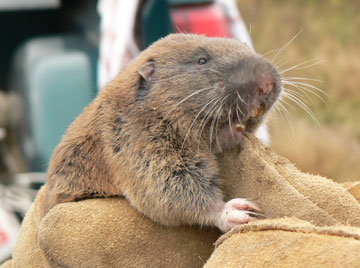
The scientific name of the Mazama Pocket Gopher is Thomomys mazama. It is a species of mammal in the family Geomyidae (pocket gophers), order Rodentia. The name dates from 1897.
Overview
Thomomys mazama occurs in Washington, Oregon, and California.
Written 26 November 2026 from the sources listed below. Each statement was checked against the passage it cites; statements that could not be supported were removed.
Appearance
Adult individuals are reported to measure 13–15 cm in length. Average total length is 204 mm for females and 213 mm for males, and average tail length is 62 mm in females and 64.5 mm in males.[1][2][3]
Male individuals are generally larger than females.[4]
Habitat
The Mazama Pocket Gopher inhabits prairies, meadows, orchards, abandoned farms, grasslands, pastures, and subalpine meadows. It also occupies glacial outwash prairies and occasionally clearcuts and Christmas tree farms.[5][6]
The species is not frequently found in dense forests. It requires well-drained soil for burrowing and is most abundant in loamy sand soils, while it is absent from areas with clay soil or seasonal flooding.[7][8][9]
Common vegetation in its habitats includes bracken fern, Douglas fir, perennial grasses, red sorrel, and western strawberry.[10]
The species occurs in Washington, Oregon, and California, in the Pacific Northwest of the United States. In Washington, it occurs west of the Cascade Range in Thurston, Pierce, Mason, and Clallam counties; other populations occur in western Oregon and northern California.[11][12][13][14]
Diet
The Mazama Pocket Gopher is herbivorous and consumes roots and above-ground plant material. Grasses constitute the largest portion of its annual diet, while perennial forbs are preferred over grasses when multiple food sources are available.[15][16][17][18]
Camas roots and bulbs are important foods when green vegetation is unavailable. The species also consumes fungi and disperses their spores.[19][20]
Woody plants such as ponderosa pine are consumed mainly during winter. Roots are consumed mainly during autumn and spring.[21][22]
Behaviour
The Mazama Pocket Gopher spends most of its time in underground burrow systems. Individuals are generally solitary and share burrows during the mating season.[23][24]
Burrow systems contain foraging tunnels and chambers used for nesting and food storage. Burrows are generally 3.8–4.4 cm in diameter and lie 10–15 cm below the surface.[25][26]
Average home ranges measure 97 square meters for females and 108 square meters for males.[27]
Reproduction and life cycle
The breeding season extends from October through June. Females produce one litter per year, with an average litter size of five young.[28][29][30]
Gestation lasts approximately one month and varies with environmental conditions. Female offspring often establish nearby burrow systems after weaning, whereas male offspring disperse.[31][32]
Conservation
All Washington subspecies are listed as state threatened. Habitat loss caused by development, agriculture, and tree planting has reduced the species' historical distribution on south Puget Sound prairies.[33][34]
Population trends are declining for subspecies in Thurston and Pierce counties. High-density development likely causes local extirpation.[35][36]
Uses
The Mazama Pocket Gopher contributes to soil aeration, mixing, and drainage. Its burrows provide refuge for amphibians, reptiles, and invertebrates and are used by other animal species.[37][38][39]
Similar species
The Mazama Pocket Gopher is frequently confused with moles. Moles lack prominent teeth and produce dome-shaped soil mounds.[40]
The species differs from the northern pocket gopher in fur color, tooth and skeletal characteristics, and the dark patch behind the ears.[41]
Classification of the Mazama Pocket Gopher
| Kingdom | Animalia |
|---|---|
| Phylum | Chordata |
| Subphylum | Vertebrata |
| Infraphylum | Gnathostomata |
| Parvphylum | Osteichthyes |
| Megaclass | Tetrapoda |
| Class | Mammalia (Mammal) |
| Subclass | Theria |
| Infraclass | Eutheria |
| Order | Rodentia (Rodent) |
| Suborder | Castorimorpha |
| Family | Geomyidae (Pocket Gophers) |
| Subfamily | Geomyinae |
| Tribe | Thomomyini (Smooth-toothed Pocket Gophers) |
| Genus | Thomomys (Western Pocket Gophers) |
| Species | Thomomys mazama Merriam, 1897 |
Where the Mazama Pocket Gopher is found
Checklists and occurrence records place Thomomys mazama in 1 country across North America. GBIF holds 3,181 georeferenced records of it.
Countries
Regions and cities with the most records
- Oregon, United States 602
- Washington, United States 551
- California, United States 499
- Tumwater, United States 216
- Lacey, United States 207
- Spanaway, United States 205
- Frederickson, United States 187
- Olympia, United States 162
- Lakewood, United States 161
- Parkland, United States 161
- Tacoma, United States 156
- University Place, United States 156
- Puyallup, United States 153
- South Hill, United States 137
- Federal Way, United States 126
- Des Moines, United States 124
- Auburn, United States 122
- Centralia, United States 68
- McMinnville, United States 18
- Bend, United States 14
- Graham, United States 13
- Canby, United States 12
- Sherwood, United States 12
- Tigard, United States 12
- Tualatin, United States 12
- Wilsonville, United States 12
- Newberg, United States 11
- Woodburn, United States 11
- Hazel Dell, United States 9
- Lake Oswego, United States 9
- Milwaukie, United States 9
- Oak Grove, United States 9
- Oregon City, United States 9
- Salmon Creek, United States 9
- West Linn, United States 9
- Beaverton, United States 8
Range as the checklists state it
North America
A number beside a place is its count of GBIF occurrence records. A place without a number comes from a checklist alone. Records show where a species has been observed or collected, which can include escapes and vagrants.
Common names
English
- Mazama Pocket Gopher
- Puget Sound Pocket Gopher
- Western Pocket Gopher
- Western Pocket Gopher.
Names in 7 other languages
- Czech
- pytlonoš západní
- Dutch
- Mazamagoffer
- Finnish
- lännentaskurotta
- German
- Mazama-Taschenratte
- Polish
- goffernik preriowy
- Russian
- Западный гофер
- Spanish
- Tuza del noroeste
Subspecies and varieties
- Thomomys mazama couchi (Shelton Pocket Gopher) subspecies
- Thomomys mazama glacialis (Roy Prairie Pocket Gopher) subspecies
- Thomomys mazama helleri (Goldbeach Western Pocket Gopher) subspecies
- Thomomys mazama hesperus subspecies
- Thomomys mazama louiei (Cathlamet Pocket Gopher) subspecies
- Thomomys mazama mazama subspecies
- Thomomys mazama melanops (Olympic Pocket Gopher) subspecies
- Thomomys mazama nasicus subspecies
- Thomomys mazama niger subspecies
- Thomomys mazama oregonus subspecies
- Thomomys mazama premaxillaris subspecies
- Thomomys mazama pugetensis (Olympia Pocket Gopher) subspecies
- Thomomys mazama tacomensis (Tacoma Pocket Gopher) subspecies
- Thomomys mazama tumuli (Tenino Pocket Gopher) subspecies
- Thomomys mazama yelmensis (Yelm Pocket Gopher) subspecies
Related species
-
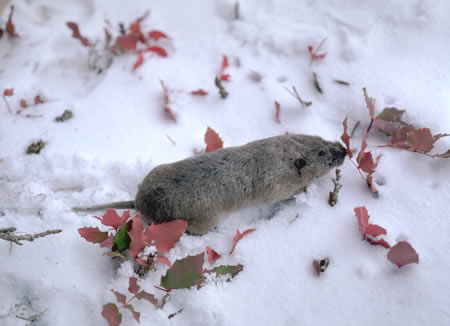 Northern Pocket GopherThomomys talpoides
-
 Mountain Pocket GopherThomomys monticola
- Idaho Pocket GopherThomomys idahoensis
-
 Wyoming Pocket GopherThomomys clusius
-
 Plains Pocket GopherGeomys bursarius
-
 Southeastern Pocket GopherGeomys pinetis
-
 Yellow-faced Pocket GopherCratogeomys castanops
-
 Texas Pocket GopherGeomys personatus
Compare
Questions and answers
What is the scientific name of the Mazama Pocket Gopher?
The scientific name of the Mazama Pocket Gopher is Thomomys mazama. Written with its author, the full name is Thomomys mazama Merriam, 1897.
Which family does the Mazama Pocket Gopher belong to?
Thomomys mazama belongs to the family Geomyidae, in the order Rodentia and the class Mammalia.
Where is the Mazama Pocket Gopher found?
Checklists and occurrence records place Thomomys mazama in 1 country: United States.
What is the conservation status of the Mazama Pocket Gopher?
The IUCN Red List category recorded for Thomomys mazama is Least Concern (LC).
What other names does the Mazama Pocket Gopher have?
Thomomys mazama is also known in English as Puget Sound Pocket Gopher, Western Pocket Gopher and Western Pocket Gopher..
What do pocket gophers eat?
The Mazama Pocket Gopher is herbivorous and consumes roots and above-ground plant material. Grasses constitute the largest portion of its annual diet, while perennial forbs are preferred when multiple food sources are available. It also consumes camas roots and bulbs, fungi, and woody plants such as ponderosa pine.[15][16][19][20][17][21][18]
Sources
Passages the profile rests on
- Adult individuals are reported to measure 13–15 cm in length. Source passage: “adults ranging in size from 5 to 6 inches (13 to 15 cm) in length.” — English Wikipedia
- Average total length is 204 mm for females and 213 mm for males. Source passage: “The total average length of T. mazama is 204 mm for females and 213 mm for males.” — animaldiversity.org
- Average tail length is 62 mm in females and 64.5 mm in males. Source passage: “The average tail length is 62 mm for females and 64.5 mm for males.” — animaldiversity.org
- Male individuals are generally larger than females. Source passage: “Male T. mazama are generally larger than females.” — animaldiversity.org
- The species inhabits prairies, meadows, orchards, and abandoned farms. Source passage: “Thomomys mazama is found in a variety of soil types in prairies, meadows, orchards, and abandoned farms.” — animaldiversity.org
- The species occupies grasslands, glacial outwash prairies, pastures, subalpine meadows, and occasionally clearcuts and Christmas tree farms. Source passage: “This species occurs in grasslands, including glacial outwash prairies, pastures, subalpine meadows, and occasionally clearcuts or Christmas tree farms.” — wdfw.wa.gov
- The species is not frequently found in dense forests. Source passage: “They are not frequently found in dense forest.” — animaldiversity.org
- The species requires well-drained soil for burrowing and is most abundant in loamy sand soils. Source passage: “Requires well-drained soil for burrowing and appears to be most abundant in loamy sand soil types.” — wdfw.wa.gov
- The species is absent from areas with clay soil or seasonal flooding. Source passage: “It is absent from areas with clay soil or seasonal flooding.” — wdfw.wa.gov
- Common vegetation in its habitats includes bracken fern, Douglas fir, perennial grasses, red sorrel, and western strawberry. Source passage: “Common vegetation in the habitats of T. mazama includes bracken fern, Douglas fir, perennial grasses, red sorrel, and western strawberry.” — animaldiversity.org
- The species occurs in Washington, Oregon, and California. Source passage: “Populations occur in Washington, Oregon, and California” — animaldiversity.org
- The species occurs in the Pacific Northwest of the United States. Source passage: “Thomomys mazama is found in the Pacific Northwest of the United States.” — animaldiversity.org
- In Washington, the species occurs west of the Cascade Range in Thurston, Pierce, Mason, and Clallam counties. Source passage: “In Washington, the Mazama pocket gopher is only found west of the Cascades -- in Thurston, Pierce, Mason, and Clallam counties.” — wdfw.wa.gov
- Other populations occur in western Oregon and northern California. Source passage: “Other subspecies of Mazama pocket gopher occur in western Oregon and northern California.” — wdfw.wa.gov
- The species is herbivorous and consumes roots and above-ground plant material. Source passage: “They eat a wide variety of roots and above-ground plant parts.” — wdfw.wa.gov
- Perennial forbs are preferred over grasses. Source passage: “Perennial forbs are preferred over grasses” — wdfw.wa.gov
- Grasses constitute the largest portion of the species' annual diet. Source passage: “Grasses compose the largest portion of the diet of T. mazama annually.” — animaldiversity.org
- Forbs are preferred when multiple food sources are available. Source passage: “Forbs are preferred when many food sources are available.” — animaldiversity.org
- Camas roots and bulbs are important foods when green vegetation is unavailable. Source passage: “fleshy roots and bulbs, such as camas (Camasia spp.) are important when green vegetation is not available.” — wdfw.wa.gov
- The species also consumes fungi and disperses their spores. Source passage: “Gophers also eat fungi and disseminate the spores of species that have an important role in facilitating plant growth.” — wdfw.wa.gov
- Woody plants such as ponderosa pine are consumed mainly during winter. Source passage: “Woody plants such as Ponderosa pine were consumed mostly in the winter.” — animaldiversity.org
- Roots are consumed mainly during autumn and spring. Source passage: “Roots were eaten mostly in the autumn and spring and compose a large portion of the diet during these periods.” — animaldiversity.org
- The species spends most of its time in underground burrow systems. Source passage: “Thomomys mazama leads a fossorial life, spending most of its time in burrow systems it constructs or finds unoccupied.” — animaldiversity.org
- Individuals are generally solitary and share burrows during the mating season. Source passage: “Individuals are generally solitary and are found together in burrows only during mating season.” — animaldiversity.org
- Burrow systems contain foraging tunnels and chambers used for nesting and food storage. Source passage: “Burrows include foraging tunnels and chambers for nesting and caching of food.” — wdfw.wa.gov
- Burrows are generally 3.8–4.4 cm in diameter and lie 10–15 cm below the surface. Source passage: “These burrows are 3.8-4.4 cm in diameter and are generally 10-15 cm below the surface.” — animaldiversity.org
- Average home ranges measure 97 square meters for females and 108 square meters for males. Source passage: “The average home ranges of T. mazama are 97 square meters for females and 108 square meters for males” — animaldiversity.org
- Females produce one litter per year. Source passage: “Mazama pocket gophers produce one litter per year” — wdfw.wa.gov
- The average litter size is five young. Source passage: “with an average litter size of five young.” — wdfw.wa.gov
- The breeding season extends from October through June. Source passage: “The females produce one litter per year during the October to June breeding season.” — animaldiversity.org
- Gestation lasts approximately one month and varies with environmental conditions. Source passage: “The average litter size is five. The period of gestation is about one month and depends on environmental factors.” — animaldiversity.org
- Female offspring often establish nearby burrow systems after weaning, whereas male offspring disperse. Source passage: “After weaning, female offspring often establish a burrow system nearby, but male offspring disperse.” — wdfw.wa.gov
- All Washington subspecies are listed as state threatened. Source passage: “Four subspecies are listed as federally threatened (Roy Prairie, Olympia, Tenino, and Yelm); all subspecies are state threatened.” — wdfw.wa.gov
- Habitat loss caused by development, agriculture, and tree planting has reduced the species' historical distribution on south Puget Sound prairies. Source passage: “Historically, the species was more widespread on south Puget Sound prairies, but was reduced by habitat loss caused by development, agriculture, and succession or planting of trees and shrubs.” — wdfw.wa.gov
- Population trends are declining for subspecies in Thurston and Pierce counties. Source passage: “Population sizes for the different subspecies are unknown, but trends are declining for those in Thurston and Pierce Counties.” — wdfw.wa.gov
- High-density development likely causes local extirpation. Source passage: “Species existence is compatible with some levels of development, but high-density development likely leads to extirpation.” — wdfw.wa.gov
- The species' burrows provide refuge for amphibians, reptiles, and invertebrates. Source passage: “their burrows are a retreat for amphibians, reptiles, and many invertebrates.” — wdfw.wa.gov
- The species contributes to soil aeration, mixing, and drainage. Source passage: “Thomomys mazama may play an important role in the aeration, mixing, and drainage of soil.” — animaldiversity.org
- The species' burrows are used by other animal species. Source passage: “Their burrows are used and inhabited by many other species.” — animaldiversity.org
- The Mazama pocket gopher is frequently confused with moles, but moles lack prominent teeth and produce dome-shaped soil mounds. Source passage: “They are frequently confused with moles, but moles do not have prominent teeth, and the soil mounds that they leave behind are dome-shaped” — wdfw.wa.gov
- The species differs from the northern pocket gopher in fur color, tooth and skeletal characteristics, and the dark patch behind the ears. Source passage: “It differs from the similar-sized northern pocket gopher (Thomomys talpoides) of eastern Washington in fur color, tooth and skeletal characteristics, and a more conspicuous dark patch of fur behind their ears.” — wdfw.wa.gov
Data
- Catalogue of Life, 2026-10-16 XR cc by
- Global Biodiversity Information Facility CC BY 4.0
- Wikidata CC0
- GeoNames CC BY 4.0
- Wikimedia Commons per image; credit shown with each image
- Within the Catalogue of Life, this name comes from The Integrated Taxonomic Information System cc0
References
- Proc. Biol. Soc. Wash. vol.11 p.214 where the name was published
- Banks, R. C., R. W. McDiarmid, and A. L. Gardner. (1987). Checklist of Vertebrates of the United States, the U.S. Territories, and Canada. Resource Publication, No. 166.
- Wilson, Don E., and DeeAnn M. Reeder, eds. (1993). Mammal Species of the World: A Taxonomic and Geographic Reference, 2nd Ed., 3rd Printing.
- Wilson, Don E., and Sue Ruff, eds. (1999). The Smithsonian Book of North American Mammals.
- Wilson, Don E., and F. Russell Cole. (2000). Common Names of Mammals of the World.
- Wilson, Don E., and DeeAnn M. Reeder, eds. (2005). Mammal Species of the World: A Taxonomic and Geographic Reference, 3rd Ed., Vols. 1 & 2.
- Hafner, M. S. / Wilson, Don E., T. E. Lacher Jr., and R. A. Mittermeier, eds. (2016). Family Geomyidae (Pocket Gophers). Handbook of the Mammals of the World. Vol. 6: Lagomorphs and Rodents I.
- Burgin, Connor J., Don E. Wilson, Russell A. Mittermeier, Anthony B. Rylands, et al. (2020). Illustrated Checklist of the Mammals of the World. Vol. 1. Monotremata to Rodentia.
This species in other databases
Page built on 27 November 2026. See how the catalog is made and all sources and licences.
Cite this page
ScientificNames.org. (2026). Thomomys mazama (Mazama Pocket Gopher). Retrieved November 27, 2026, from https://scientificnames.org/species/thomomys-mazama
“Thomomys mazama (Mazama Pocket Gopher).” ScientificNames.org, 2026, scientificnames.org/species/thomomys-mazama. Accessed 27 Nov. 2026.
ScientificNames.org. “Thomomys mazama (Mazama Pocket Gopher).” Accessed November 27, 2026. https://scientificnames.org/species/thomomys-mazama.
@misc{scientificnames_thomomys_mazama_mazama_pocket_gopher,
  author = {{ScientificNames.org}},
  title = {Thomomys mazama (Mazama Pocket Gopher)},
  year = {2026},
  url = {https://scientificnames.org/species/thomomys-mazama},
  note = {Accessed 2026-11-27}
}