Species · Flowering plants
Chilean Box Thorn Vestia foetida
The scientific name of the Chilean Box Thorn is Vestia foetida. It is a species of flowering plant in the family Solanaceae (nightshades), order Solanales.
- Scientific name
- Vestia foetida Hoffmanns.
- Common name
- Chilean Box Thorn
- Genus
- Vestia
- Family
- Solanaceae (Nightshades)
- Order
- Solanales
- Class
- Magnoliopsida
- Recorded in
- 2 countries
- Name status
- accepted in the Catalogue of Life

Overview
Chilean box thorn is an evergreen shrub in the family Solanaceae. It is endemic to central and southern Chile, with a recorded range extending from the Valparaíso Region northward to Chiloé Island in the Los Lagos Region. It produces tubular yellow flowers with prominently protruding stamens, followed by ovoid seed capsules.
Written 26 November 2026 from the sources listed below. Each statement was checked against the passage it cites; statements that could not be supported were removed.
Appearance
Chilean box thorn is an evergreen shrub with glossy, privet-like, mid-green leaves. It can reach 2 m in height and 1.5 m in width.[1][2]
The species produces tubular yellow flowers measuring up to 3 cm in length during spring and summer. The flowers have prominently protruding stamens.[3][4]
The flowers are followed by ovoid capsules with four valves, measuring up to 1 cm. The capsules contain small, prismatic seeds.[5][6]
Habitat
Chilean box thorn is described as frost-hardy but requires some protection from winter winds.[7]
Behaviour
Extracts of Chilean box thorn showed insecticidal effects against granary weevils at a concentration of 2.5 percent by weight in diet over six days. The investigation reported 56 percent mortality in Sitophilus granarius.[8][9]
Conservation
Chilean box thorn has received the Royal Horticultural Society's Award of Garden Merit.[10]
Uses
A yellow dye has been extracted from the leaves and stems of Chilean box thorn.[11]
Plant infusions have been used in Chilean folk medicine to treat dysentery and appendicitis, with recognition of their toxicity. Historical accounts also describe the plant as a remedy for chavalongo and dysentery, and report its use for contagious diseases.[12][13][14]
Historical accounts describe infusions of the plant as having tonic, stomachic and anthelmintic properties.[15][16][17]
Similar species
The English common name Chilean box thorn reflects a perceived similarity to plants in the genus Lycium.[18]
Livestock poisoning caused by Chilean box thorn resembles poisoning caused by Cestrum parqui.[19]
Classification of the Chilean Box Thorn
| Kingdom | Plantae |
|---|---|
| Subkingdom | Pteridobiotina |
| Phylum | Tracheophyta |
| Class | Magnoliopsida |
| Order | Solanales |
| Family | Solanaceae (Nightshades) |
| Subfamily | Cestroideae |
| Tribe | Cestreae |
| Genus | Vestia |
| Species | Vestia foetida Hoffmanns. |
Where the Chilean Box Thorn is found
Checklists and occurrence records place Vestia foetida in 2 countries across South America. GBIF holds 273 georeferenced records of it.
Countries
Regions and cities with the most records
- Biobio, Chile 55
- Penco, Chile 41
- Concepción, Chile 34
- San Pedro de la Paz, Chile 29
- Chiguayante, Chile 28
- Hualpén, Chile 27
- Talcahuano, Chile 27
- Tomé, Chile 27
- Hualqui, Chile 18
- Coronel, Chile 16
- Valparaiso, Chile 12
- Valparaíso, Chile 10
- Maule Region, Chile 9
- Quilpué, Chile 9
- Viña del Mar, Chile 9
- Lota, Chile 7
- Concón, Chile 5
- Araucania, Chile 4
- Los Ríos Region, Chile 4
- Valdivia, Chile 4
- Cabildo, Chile 3
- Labranza, Chile 3
- Los Lagos Region, Chile 3
- Padre Las Casas, Chile 3
- Temuco, Chile 3
- Ñuble, Chile 3
6 more countries have a few records outside this range
These countries hold a few records of Vestia foetida but lie outside the range the checklists give for it. Such records are often zoo or garden specimens, museum material or vagrants, so the species is not counted as occurring there.
Range as the checklists state it
Chile (Valparaíso, O'Higgins, Ñuble, Biobío, Araucanía, Los Rios)
A number beside a place is its count of GBIF occurrence records. A place without a number comes from a checklist alone. Records show where a species has been observed or collected, which can include escapes and vagrants.
Common names
English
- Chilean Box Thorn
- Huevil
- Vestia
Names in 1 other language
- Chinese
- 智利枸杞
Synonyms
6 other scientific names have been used for this species and are now treated as synonyms of Vestia foetida.
- Cantua foetida (Ruiz & Pav.) Cav.
- Cantua ligustrifolia Juss.
- Levana uniflora Raf.
- Periphragmos foetidus Ruiz & Pav.
- Vestia lycioides Willd.
- Cestrum vespertinum Hort.Val. ex Roem. & Schult. ambiguous synonym
Related species
-
 PotatoSolanum tuberosum
-
 Indian GinsengWithania somnifera
-
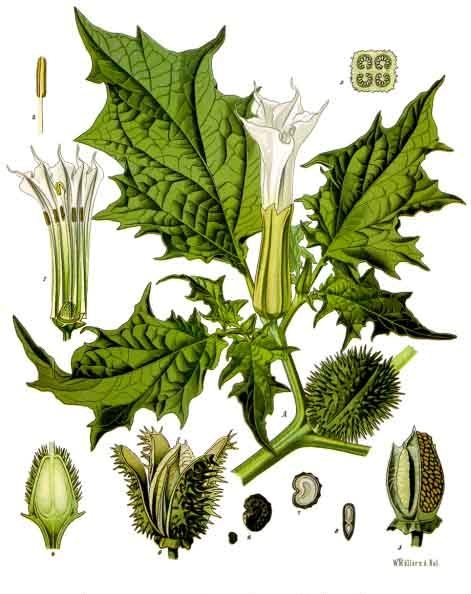 JimsonweedDatura stramonium
-
 EggplantSolanum melongena
-
 TomatilloPhysalis philadelphica
-
 Cape-gooseberryPhysalis peruviana
-
 TamarilloSolanum betaceum
-
 Black NightshadeSolanum nigrum
Compare
Questions and answers
What is the scientific name of the Chilean Box Thorn?
The scientific name of the Chilean Box Thorn is Vestia foetida. Written with its author, the full name is Vestia foetida Hoffmanns..
Which family does the Chilean Box Thorn belong to?
Vestia foetida belongs to the family Solanaceae, in the order Solanales and the class Magnoliopsida.
Where is the Chilean Box Thorn found?
Checklists and occurrence records place Vestia foetida in 2 countries: Chile and Peru.
What other names does the Chilean Box Thorn have?
Vestia foetida is also known in English as Huevil and Vestia.
What other names are used for Chilean box thorn?
Its principal Mapudungun common name in Chile is Huevil, which is also sometimes repeated as Huevilhuevil. Other recorded Chilean names include Chuplí, Echuelcún and Palqui negro.[20][21]
What is the origin of the name Vestia foetida?
The specific epithet foetida refers to the plant's unpleasant smell. The genus Vestia was named in honour of Austrian botanist and physician Lorenz Chrysanth von Vest, and Carl Ludwig Willdenow named the genus in 1809.[22][23][24]
Is Vestia a monotypic genus?
Yes. Vestia is a monotypic genus containing only Vestia foetida. Vestia lycioides is a synonym of Vestia foetida.[25][26]
Is Chilean box thorn poisonous?
Yes. Chilean box thorn is poisonous and contains alkaloidal compounds. Its foliage has caused fatalities in sheep, goats and cattle, with livestock poisoning attributed to hepatotoxic compounds in the plant.[27][28][29]
Which toxic compounds have been detected in Chilean box thorn?
Quercetin-3-diglucoside and isoquercetin have been detected among its toxic compounds. The plant also contains an indole alkaloid belonging to the β-carboline group, diosgenin and insonuatigenin.[30][31][32][33][34]
What sensory properties have been reported for Chilean box thorn?
A historical botanical account describes the plant as causing sneezing and having a very bitter taste.[35]
Sources
Passages the profile rests on
- Vestia foetida is an evergreen shrub with glossy, privet-like, mid-green leaves. Source passage: “it is an evergreen shrub with glossy, privet-like, mid-green leaves.” — English Wikipedia
- Vestia foetida can reach 2 m in height and 1.5 m in width. Source passage: “Growing to 2 m (7 ft) tall by 1.5 m (5 ft) broad” — English Wikipedia
- The species produces tubular yellow flowers measuring up to 3 cm in length during spring and summer. Source passage: “In spring and summer it bears tubular yellow flowers to 3 cm (1 in) long” — English Wikipedia
- Its flowers have prominently protruding stamens. Source passage: “with stamens so markedly exserted (= protruding)” — English Wikipedia
- The flowers are followed by ovoid capsules with four valves, measuring up to 1 cm. Source passage: “followed by 4-valved, ovoid capsules to 1 cm (0 in)” — English Wikipedia
- The fruit capsules contain small, prismatic seeds. Source passage: “containing small, prismatic seeds.” — English Wikipedia
- The species is described as frost-hardy but requires some protection from winter winds. Source passage: “Although frost-hardy, the plant requires some protection from winter winds.” — English Wikipedia
- Extracts of Vestia foetida showed insecticidal effects against granary weevils at a concentration of 2.5 percent by weight in diet over six days. Source passage: “Total extracts at concentrations of 2.5 percent w/w in diet over a period of 6 days displayed insecticidal effects” — English Wikipedia
- Vestia foetida extracts caused 56 percent mortality in Sitophilus granarius during the reported insecticidal investigation. Source passage: “with V. foetida causing the mortality of 56 percent of insects” — English Wikipedia
- Vestia foetida has received the Royal Horticultural Society's Award of Garden Merit. Source passage: “It has gained the Royal Horticultural Society's Award of Garden Merit.” — English Wikipedia
- A yellow dye has been extracted from the leaves and stems of Vestia foetida. Source passage: “A yellow dye has been extracted from the leaves and stems” — English Wikipedia
- Plant infusions have been used in Chilean folk medicine to treat dysentery and appendicitis, with recognition of their toxicity. Source passage: “infusions of the plant have been used in the folk medicine of Chile (with due recognition of the toxicity of the medication) to treat dysentery and appendicitis.” — English Wikipedia
- Historical accounts describe the plant as a remedy for chavalongo and dysentery. Source passage: “It is an efficacious remedy for chavalongo and dysentery” — English Wikipedia
- Historical accounts also report the use of Vestia for contagious diseases. Source passage: “and also for contagious diseases.” — English Wikipedia
- Historical accounts describe infusions of the plant as having tonic properties. Source passage: “infusions of the plant possess tonic, stomachic and anthelmintic properties.” — English Wikipedia
- Historical accounts describe infusions of the plant as having stomachic properties. Source passage: “infusions of the plant possess tonic, stomachic and anthelmintic properties.” — English Wikipedia
- Historical accounts describe infusions of the plant as having anthelmintic properties. Source passage: “infusions of the plant possess tonic, stomachic and anthelmintic properties.” — English Wikipedia
- The English common name Chilean box thorn reflects a perceived similarity to plants in the genus Lycium. Source passage: “an English common name Chilean box thorn has also been coined recently in reference to a certain similarity of the plant to some species in the box thorn / wolfberry genus Lycium” — English Wikipedia
- Livestock poisoning caused by Vestia resembles poisoning caused by Cestrum parqui. Source passage: “stock poisoning caused by Vestia resembles closely that caused by Cestrum parqui” — English Wikipedia
- The species' principal Mapudungun common name in Chile is Huevil, which is also sometimes repeated as Huevilhuevil. Source passage: “Its principal common names in the Mapudungun language of its native Chile are Huevil (pron. "wayfil" and sometimes redoubled Huevilhuevil)” — English Wikipedia
- Other Chilean names recorded for the species include Chuplí, Echuelcún and Palqui negro. Source passage: “Other Chilean names include Chuplí, Echuelcún and Palqui (negro)” — English Wikipedia
- The specific epithet foetida refers to the plant's unpleasant smell. Source passage: “The specific epithet foetida refers to the unpleasant smell of this plant.” — English Wikipedia
- The genus Vestia was named in honour of Austrian botanist and physician Lorenz Chrysanth von Vest. Source passage: “The genus Vestia was named in honour of Austrian botanist and physician Lorenz Chrysanth von Vest” — English Wikipedia
- Carl Ludwig Willdenow named the genus Vestia in 1809. Source passage: “in 1809 by German botanist and pharmacist Carl Ludwig Willdenow” — English Wikipedia
- Vestia is a monotypic genus containing only Vestia foetida. Source passage: “Vestia is a monotypic genus of flowering plants in the family Solanaceae containing the single species Vestia foetida” — English Wikipedia
- Vestia lycioides is a synonym of Vestia foetida. Source passage: “Vestia foetida (syn. V. lycioides).” — English Wikipedia
- Vestia foetida is poisonous and contains alkaloidal compounds. Source passage: “Vestia is poisonous and alkaloidal.” — English Wikipedia
- Browsing on Vestia foetida foliage has caused fatalities in sheep, goats and cattle. Source passage: “V. foetida has caused fatalities in sheep, goats and cattle which had browsed its foliage” — English Wikipedia
- Fatal livestock poisoning by Vestia foetida has been attributed to hepatotoxic compounds in the plant. Source passage: “death being attributable to hepatotoxic compounds present in the plant.” — English Wikipedia
- Quercetin-3-diglucoside has been detected among the toxic compounds in Vestia foetida. Source passage: “Toxic compounds detected in the plant include quercetin-3-diglucoside” — English Wikipedia
- Isoquercetin has been detected among the toxic compounds in Vestia foetida. Source passage: “quercetin-3-diglucoside, isoquercetin” — English Wikipedia
- The plant contains an indole alkaloid belonging to the β-carboline group. Source passage: “an indole alkaloid belonging to the β-carboline group” — English Wikipedia
- Diosgenin, a phytosteroid sapogenin, has been detected in Vestia foetida. Source passage: “the phytosteroid sapogenin diosgenin” — English Wikipedia
- Insonuatigenin is another steroidal compound present in Vestia. Source passage: “Another steroidal compound present both in Cestrum and Vestia is the obscure insonuatigenin.” — English Wikipedia
- Vestia foetida causes sneezing and has a very bitter taste according to a historical botanical account. Source passage: “Vestia foetida causes sneezing and has a very bitter taste.” — English Wikipedia
Data
- Catalogue of Life, 2026-10-16 XR cc by
- Global Biodiversity Information Facility CC BY 4.0
- Wikidata CC0
- GeoNames CC BY 4.0
- Wikimedia Commons per image; credit shown with each image
- Within the Catalogue of Life, this name comes from Synonymic Checklists of the Vascular Plants of the World cc by
References
- Hoffmanns. Verz. Pfl.-Kult. 119 (1824). where the name was published
This species in other databases
- Catalogue of Life 7G2X8
- Wikidata Q141733
- iNaturalist 406952
- World Flora Online wfo-0001032716
- GRIN 461650
Page built on 29 November 2026. See how the catalog is made and all sources and licences.
Cite this page
ScientificNames.org. (2026). Vestia foetida (Chilean Box Thorn). Retrieved November 29, 2026, from https://scientificnames.org/species/vestia-foetida
“Vestia foetida (Chilean Box Thorn).” ScientificNames.org, 2026, scientificnames.org/species/vestia-foetida. Accessed 29 Nov. 2026.
ScientificNames.org. “Vestia foetida (Chilean Box Thorn).” Accessed November 29, 2026. https://scientificnames.org/species/vestia-foetida.
@misc{scientificnames_vestia_foetida_chilean_box_thorn,
  author = {{ScientificNames.org}},
  title = {Vestia foetida (Chilean Box Thorn)},
  year = {2026},
  url = {https://scientificnames.org/species/vestia-foetida},
  note = {Accessed 2026-11-29}
}