Species · Flowering plants
Toothpick-plant Visnaga daucoides
The scientific name of the Toothpick-plant is Visnaga daucoides. It is a species of flowering plant in the family Apiaceae (umbellifer), order Apiales.
- Scientific name
- Visnaga daucoides Gaertn.
- Common name
- Toothpick-plant
- Genus
- Visnaga
- Family
- Apiaceae (Umbellifer)
- Order
- Apiales
- Class
- Magnoliopsida
- Recorded in
- 57 countries
- Name status
- accepted in the Catalogue of Life

Overview
Toothpick-plant is an erect annual plant that grows from a taproot. The species is native to Europe, Asia, and North Africa and occurs throughout the world as an introduced plant. The plant produces compound umbels bearing white flowers.
Written 26 November 2026 from the sources listed below. Each statement was checked against the passage it cites; statements that could not be supported were removed.
Appearance
Toothpick-plant reaches a maximum height of approximately 80 centimeters. Its leaves can grow up to 20 centimeters long.[1][2]
The leaves are generally oval or triangular and divided into numerous small linear or lance-shaped segments. The plant produces compound umbels bearing white flowers.[3][4]
The fruits are compressed, oval-shaped structures measuring less than 3 millimeters long.[5]
Habitat
Toothpick-plant is native to Europe, Asia, and North Africa. It occurs throughout the world as an introduced plant.[6][7]
The species is commonly cultivated in gardens from seed on an annual basis.[8]
Uses
Toothpick-plant is a source of khellin, a diuretic extract. In Egypt, tea prepared from its fruits has traditionally been used as a herbal remedy for kidney stones.[9][10]
Preparations made from the fruits have been used in the treatment of angina pectoris. Khellin obtained from the species was formerly used as a smooth muscle relaxant, but its use is now restricted because of adverse side effects.[11][12]
Laboratory studies in rats indicate that the plant extract slows the accumulation of calcium oxalate crystals in the kidneys. The extract has also demonstrated diuretic activity in laboratory rat studies.[13][14]
The clinical effects of the plant extract in humans are unknown.[15]
Amiodarone and cromoglycate are synthetic derivatives of khellin developed for modern medical use with fewer side effects.[16]
Visnagin is a chemical compound found in the species that is toxic when ingested in its pure form. The species also contains visnadine, a natural vasodilator.[17][18]
Classification of the Toothpick-plant
| Kingdom | Plantae |
|---|---|
| Subkingdom | Pteridobiotina |
| Phylum | Tracheophyta |
| Class | Magnoliopsida |
| Order | Apiales |
| Family | Apiaceae (Umbellifer) |
| Subfamily | Apioideae |
| Tribe | Apieae |
| Genus | Visnaga |
| Species | Visnaga daucoides Gaertn. |
Where the Toothpick-plant is found
Checklists and occurrence records place Visnaga daucoides in 57 countries across Africa, Asia, Europe, North America, Oceania and South America. GBIF holds 6,182 georeferenced records of it.
Countries where it is native or its origin is not stated
- Albania 19
- Algeria 77
- Armenia
- Austria 7
- Azerbaijan 35
- Belgium 93
- Croatia 1
- Cyprus 21
- Czechia 8
- Denmark 11
- Egypt 23
- Ethiopia 26
- France 1,228
- Georgia 15
- Greece 48
- Iran 12
- Iraq 37
- Israel 895
- Italy 377
- Lebanon 3
- Libya
- Malta 8
- Morocco 121
- Norway 4
- Palestinian Territory 9
- Poland 5
- Portugal 348
- Russia 6
- Saudi Arabia 1
- Spain 1,361
- Sweden 83
- Switzerland 21
- Syria 18
- The Netherlands 101
- Tunisia 4
- Turkey 52
- Ukraine 5
- Yemen
Countries where it has been introduced
- Argentina 211
- Australia 1
- Belarus
- Brazil 48
- Chile 49
- China 2
- Colombia 4
- Germany 89
- Guernsey 3
- Japan 3
- Jersey
- Mexico 28
- Pakistan 8
- Peru 10
- United Kingdom 172
- United States 447
- Uruguay 24
- Venezuela
- Vietnam
Regions and cities with the most records
- Northern District, Israel 465
- California, United States 372
- Provence-Alpes-Côte d'Azur, France 282
- Occitanie, France 275
- Davis, United States 268
- Safed, Israel 247
- Catalonia, Spain 238
- Qiryat Shmona, Israel 238
- West Sacramento, United States 234
- Woodland, United States 215
- Sacramento, United States 213
- Shefar‘am, Israel 158
- Tamra, Israel 156
- Acre, Israel 149
- Judeida Makr, Israel 149
- Qiryat Ata, Israel 149
- Majd el Kurūm, Israel 144
- Qiryat Bialik, Israel 143
- Yirkā, Israel 142
- Qiryat Motsqin, Israel 141
- Qiryat Yam, Israel 140
- Karmi’el, Israel 139
- Kafr Mandā, Israel 137
- Rekhasim, Israel 136
- Nesher, Israel 135
- Haifa, Israel 134
- Qiryat Tiv‘on, Israel 133
- Nahariyya, Israel 129
- Sakhnīn, Israel 129
- Auvergne-Rhône-Alpes, France 124
- Haifa, Israel 121
- Kafr Qari‘, Israel 121
- ‘Ara-‘Ar‘ara, Israel 120
- Daliyat al Karmel, Israel 116
- Binyamina-Giv'at Ada, Israel 115
- Binyamina-Giv‘at ‘Ada, Israel 115
1 more country has a few records outside this range
These countries hold a few records of Visnaga daucoides but lie outside the range the checklists give for it. Such records are often zoo or garden specimens, museum material or vagrants, so the species is not counted as occurring there.
Range as the checklists state it
England [I] (England [I], Wales [I], S-Scotland [I]); Germany [I]; Portugal; Spain; Baleares (Mallorca, Menorca); France; Channel Isl. [I] (Guernsey [I], Jersey [I]); ?Corsica; Sardinia; Italy; Sicily; Malta; Croatia; Albania; European Turkey; Greece (mainland); Belarus [I]; Morocco; Algeria; Tunisia; Libya; Egypt (Great Southwestern Desert, Nile Delta); Azores (Santa Maria Isl., Sao Miguel Isl.); Madeira (Madeira Isl., Porto Santo Isl.); Canary Isl. (Gran Canaria, La Palma); Northern Caucasus; Georgia [Caucasus]; Armenia; Azerbaijan; East Aegaean Isl. (Lesvos, Chios, Samos, Rhodos); Turkey (N-Anatolia, NW-Anatolia: Bithynia, S-Anatolia, SE-Anatolia, SE-Anatolia: Mesopotamian Anatolia, SSW-Anatolia, SW-Anatolia, W-Anatolia); Iraq (NE-Iraq, NW-Iraq, SE-Iraq: Mesopotamia); Iran (N-Iran, S-Iran, W-Iran); Cyprus (C-Mountains, E-Cyprus, N-Cyprus, W-Cyprus); Lebanon (Antilebanon, coastal W-Lebanon); Syria (coastal W-Syria, C-Syrian Desert, Jazira); Israel (coastal W-Israel, Rift Valley, N-Israel); Sinai peninsula (N-Sinai); Saudi Arabia (C-Saudi Arabia, NE-Saudi Arabia, Asir); N-Yemen; China [I]; Japan [I]; Pakistan [I]; Vietnam [I]; Australia [I] (New South Wales [I]); USA [I] (Alabama [I], California [I], Florida [I], North Carolina [I], Oregon [I], Pennsylvania [I], Texas [I]); Mexico [I]; Colombia [I]; Venezuela [I]; Peru [I]; Brazil [I]; Uruguay [I]; Argentina [I] (Buenos Aires [I], Córdoba [I], Entre Rios [I], La Pampa [I], Mendoza [I], Santiago del Estero [I], Santa Fe Prov. [I], San Juan [I]); Chile [I] (Coquimbo [I], Valparaíso [I], Metropolitana de Santiago [I], O'Higgins [I], Maule [I], Araucanía [I]); Juan Fdz. Isl. [I]
A number beside a place is its count of GBIF occurrence records. A place without a number comes from a checklist alone. Records show where a species has been observed or collected, which can include escapes and vagrants.
Common names
English
- Toothpick-plant
- Bisnaga
- Toothpickweed
Names in 18 other languages
- Arabic
- خلة بلدية
- Czech
- morač zákrovnatý
- Dutch
- Fijn akkerscherm
- Estonian
- orgi-ammi
- Finnish
- sirosudenporkkana
- French
- Ammi visnage, Khella
- German
- Bischofskraut
- Greek
- Άμμι το βισνάγιον, Άμμι το γλυφίδιον, Κέλλα, Καρίγανα, Καραγάνι, Χαλαβάνα
- Hebrew
- אמיתה קיצית
- Italian
- Visnaga comune
- Norwegian Bokmål
- tannstikke
- Polish
- Aminek Egipski
- Portuguese
- Âmio-bisnaga
- Russian
- Виснага морковевидная
- Slovak
- parasca väčšia, parasca špáradlová
- Spanish
- Encaje
- Swedish
- tandpetarsilja
- Turkish
- Hıltan
Synonyms
16 other scientific names have been used for this species and are now treated as synonyms of Visnaga daucoides.
- Ammi dilatatum St.-Lag.
- Ammi visnaga (L.) Lam.
- Ammi visnaga f. putatum Thell.
- Ammi visnaga f. putatum Vollm.
- Ammi visnaga var. hybernonis Sennen
- Ammi visnaga var. longibracteatum Zohary
- Ammi visnaga var. paui Sennen
- Apium visnaga (L.) Crantz
- Carum visnaga (L.) Koso-Pol.
- Daucus laevis Salisb.
- Daucus visnaga L.
- Gingidium hispanicum Hill
- Selinum visnaga (L.) E.H.L.Krause
- Sium visnaga (L.) Stokes
- Visnaga vera Raf.
- Daucus gingidium L. ex DC. ambiguous synonym
Related species
- Visnaga crinita
-
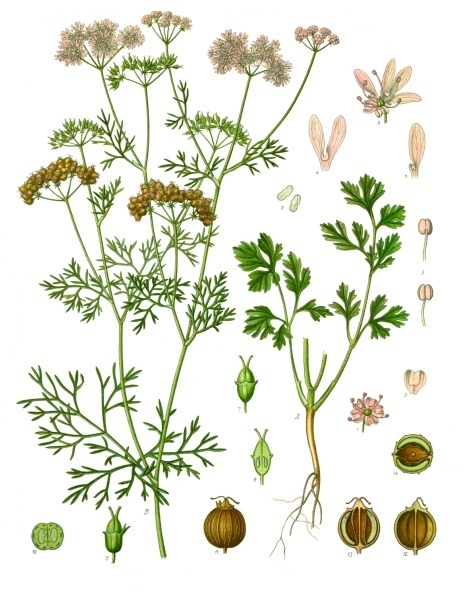 CorianderCoriandrum sativum
-
 Poison HemlockConium maculatum
-
 FennelFoeniculum vulgare
-
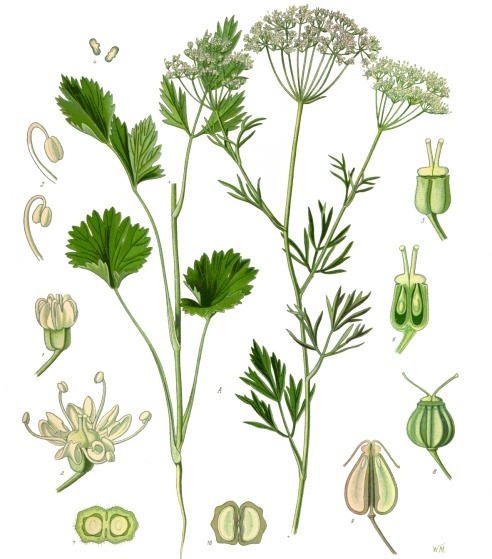 AnisePimpinella anisum
-
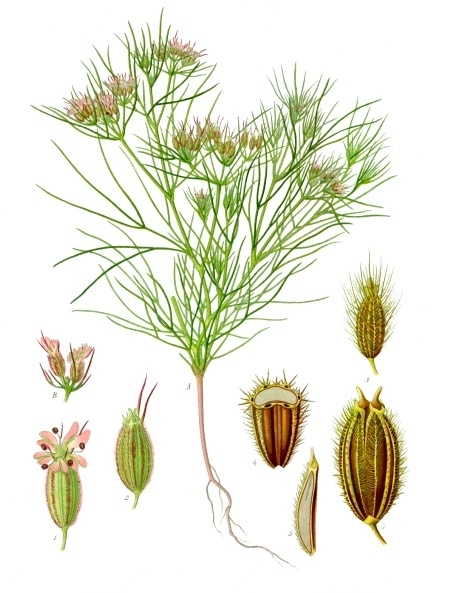 CuminCuminum cyminum
-
 CarawayCarum carvi
-
 ParsnipPastinaca sativa
Compare
Questions and answers
What is the scientific name of the Toothpick-plant?
The scientific name of the Toothpick-plant is Visnaga daucoides. Written with its author, the full name is Visnaga daucoides Gaertn..
Which family does the Toothpick-plant belong to?
Visnaga daucoides belongs to the family Apiaceae, in the order Apiales and the class Magnoliopsida.
Where is the Toothpick-plant found?
Checklists and occurrence records place Visnaga daucoides in 57 countries, including Spain, France, Israel, Italy, Portugal and Morocco.
What other names does the Toothpick-plant have?
Visnaga daucoides is also known in English as Bisnaga and Toothpickweed.
Sources
Passages the profile rests on
- The plant reaches a maximum height of approximately 80 centimeters. Source passage: “to a maximum height near 80 centimeters (31 in).” — English Wikipedia
- The leaves can grow up to 20 centimeters long. Source passage: “The leaves are up to 20 centimeters (7.9 in) long” — English Wikipedia
- The leaves are generally oval or triangular and divided into numerous small linear or lance-shaped segments. Source passage: “generally oval to triangular in shape but dissected into many small linear to lance-shaped segments.” — English Wikipedia
- The plant produces compound umbels bearing white flowers. Source passage: “The inflorescence is a compound umbel of white flowers” — English Wikipedia
- The fruits are compressed, oval-shaped structures measuring less than 3 millimeters long. Source passage: “The fruit is a compressed oval-shaped body less than 3 millimeters long.” — English Wikipedia
- The species is native to Europe, Asia, and North Africa. Source passage: “It is native to Europe, Asia, and North Africa” — English Wikipedia
- The species occurs throughout the world as an introduced plant. Source passage: “it can be found throughout the world as an introduced species.” — English Wikipedia
- The species is commonly cultivated in gardens from seed on an annual basis. Source passage: “Visnaga daucoides is commonly seen in gardens where it is grown from seed annually.” — English Wikipedia
- The plant is a source of khellin, a diuretic extract. Source passage: “This species is a source of khellin, a diuretic extract.” — English Wikipedia
- In Egypt, tea prepared from the fruits has traditionally been used as a herbal remedy for kidney stones. Source passage: “In Egypt, a tea made from the fruit of this species has been used as a herbal remedy for kidney stones.” — English Wikipedia
- Preparations made from the fruits have been used in the treatment of angina pectoris. Source passage: “Preparations of the fruits have also been used for angina pectoris therapy.” — English Wikipedia
- Khellin obtained from the species was formerly used as a smooth muscle relaxant, but its use is now restricted because of adverse side effects. Source passage: “Khellin, a chemical compound obtained from Visnaga daucoides, was used at one time as a smooth muscle relaxant, but its use is now limited due to adverse side effects.” — English Wikipedia
- Laboratory studies in rats indicate that the plant extract slows the accumulation of calcium oxalate crystals in the kidneys. Source passage: “Laboratory rat studies show that the extract slows the buildup of calcium oxalate crystals in the kidneys” — English Wikipedia
- The plant extract has demonstrated diuretic activity in laboratory rat studies. Source passage: “and acts as a diuretic.” — English Wikipedia
- The clinical effects of the plant extract in humans are unknown. Source passage: “Its clinical effects in humans are unknown.” — English Wikipedia
- Amiodarone and cromoglycate are synthetic derivatives of khellin developed for modern medical use with fewer side effects. Source passage: “Amiodarone and cromoglycate are synthetic derivatives of khellin with fewer side effects which were developed for use in modern medicine.” — English Wikipedia
- Visnagin is a chemical compound found in the species that is toxic when ingested in its pure form. Source passage: “Visnagin is another chemical compound found in Visnaga daucoides, which is toxic if ingested in the pure state.” — English Wikipedia
- The species contains visnadine, a natural vasodilator. Source passage: “Visnadine is a natural vasodilator found in Visnaga daucoides.” — English Wikipedia
Data
- Catalogue of Life, 2026-10-16 XR cc by
- Global Biodiversity Information Facility CC BY 4.0
- Wikidata CC0
- GeoNames CC BY 4.0
- Wikimedia Commons per image; credit shown with each image
- Within the Catalogue of Life, this name comes from Synonymic Checklists of the Vascular Plants of the World cc by
References
- Gaertn. (1788). Fruct. Sem. Pl. 1: 92, t. 21 (1788). where the name was published
This species in other databases
- Catalogue of Life 5BKT5
- Wikidata Q15596411
- iNaturalist 806563
- World Flora Online wfo-0000421889
- GRIN 466289
Page built on 27 November 2026. See how the catalog is made and all sources and licences.
Cite this page
ScientificNames.org. (2026). Visnaga daucoides (Toothpick-plant). Retrieved November 27, 2026, from https://scientificnames.org/species/visnaga-daucoides
“Visnaga daucoides (Toothpick-plant).” ScientificNames.org, 2026, scientificnames.org/species/visnaga-daucoides. Accessed 27 Nov. 2026.
ScientificNames.org. “Visnaga daucoides (Toothpick-plant).” Accessed November 27, 2026. https://scientificnames.org/species/visnaga-daucoides.
@misc{scientificnames_visnaga_daucoides_toothpick_plant,
  author = {{ScientificNames.org}},
  title = {Visnaga daucoides (Toothpick-plant)},
  year = {2026},
  url = {https://scientificnames.org/species/visnaga-daucoides},
  note = {Accessed 2026-11-27}
}