Species · Flowering plants
Xylopia vielana
Xylopia vielana has no English name on record in the checklists used here. It is a species of flowering plant in the family Annonaceae (pawpaw family), order Magnoliales.
- Scientific name
- Xylopia vielana Pierre
- Genus
- Xylopia
- Family
- Annonaceae (Pawpaw Family)
- Order
- Magnoliales
- Class
- Magnoliopsida
- Recorded in
- 5 countries
- Name status
- accepted in the Catalogue of Life

Overview
Xylopia vielana grows in tropical seasonal forests in Cambodia, Laos, Thailand, Vietnam, and southern Guangxi in southeastern China, at elevations of up to 700 metres. It has ovate to elliptic leaves and solitary, axillary, perfumed flowers with a diameter of 20 mm.
Written 27 November 2026 from the sources listed below. Each statement was checked against the passage it cites; statements that could not be supported were removed.
Habitat
Xylopia vielana grows in tropical seasonal forests at elevations of up to 700 metres. It occurs in Cambodia, Laos, Thailand, Vietnam, and southern Guangxi in southeastern China.[1][2][3]
Appearance
Xylopia vielana is an evergreen tree with dark brown bark and tomentose branches.[4]
Its leaves are ovate to elliptic, measuring 30–70 mm in length and 15–30 mm in width. They are more or less pubescent, with obtuse to rounded bases and obtuse apices with short acuminations.[5][6][7]
The leaf petioles measure 40–80 mm in length and are sometimes pubescent.[8][9]
Its flowers are solitary, axillary, and perfumed, with a diameter of 20 mm. The sepals are oval and tomentose, measuring 4 mm in length.[10][11][12][13]
Its petals measure 15 mm in length, and its internal petals are linear-lanceolate and measure 14 mm in length. Its carpels are pubescent.[14][15][16][17]
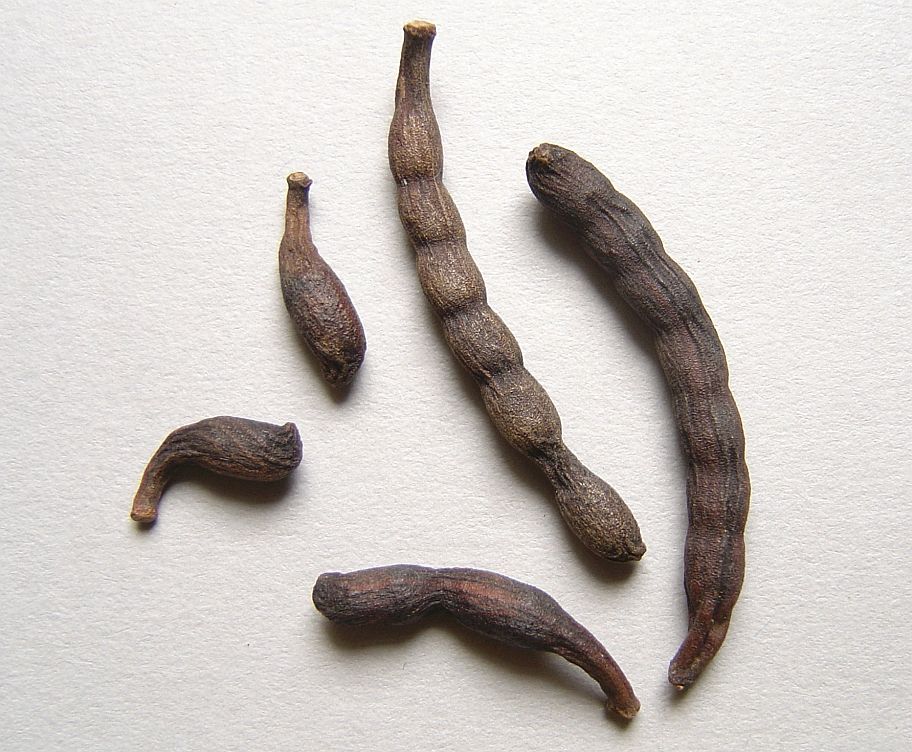
Its fruits consist of oblong carpels measuring 25–35 mm in length and 10 mm in width.[18][19]
Reproduction and life cycle
Xylopia vielana flowers between March and June. It produces fruit between July and October.[20][21]
Uses
The species is prepared as a decoction in a documented traditional preparation.[22]
Classification of Xylopia vielana
| Kingdom | Plantae |
|---|---|
| Subkingdom | Pteridobiotina |
| Phylum | Tracheophyta |
| Class | Magnoliopsida |
| Order | Magnoliales |
| Family | Annonaceae (Pawpaw Family) |
| Subfamily | Annonoideae |
| Tribe | Xylopieae |
| Genus | Xylopia |
| Species | Xylopia vielana Pierre |
Where Xylopia vielana is found
Checklists and occurrence records place Xylopia vielana in 5 countries across Asia. GBIF holds 84 georeferenced records of it.
Countries
Regions and cities with the most records
- Dương Minh Châu, Vietnam 10
- Hòa Thành, Vietnam 10
- Phú Khương, Vietnam 10
- Tay Ninh, Vietnam 10
- Tây Ninh, Vietnam 10
- Dongxing, China 4
- Móng Cái, Vietnam 4
- Guangxi, China 3
- Kampong Thom, Cambodia 3
- Naliang, China 3
Range as the checklists state it
China (S-Guangxi); Thailand (NE-, E- & SE-Thailand); Laos; Cambodia; Vietnam
A number beside a place is its count of GBIF occurrence records. A place without a number comes from a checklist alone. Records show where a species has been observed or collected, which can include escapes and vagrants.
Common names
Names in 1 other language
- Chinese
- 木瓣树
Synonyms
One other scientific name has been used for this species and is now treated as a synonym of Xylopia vielana.
- Xylopicrum vielana (Pierre) Kuntze
Related species
-
 Ethiopian PepperXylopia aethiopica
-
 Xylopia aromatica
-
 Xylopia polyantha
-
 PimientilloXylopia frutescens
- Xylopia quintasii
-
 Xylopia emarginata
-
 Xylopia brasiliensis
-
 Xylopia discreta
Compare
Sources
Passages the profile rests on
- The species grows in tropical seasonal forests. Source passage: “the tropical seasonal forests of Asia” — English Wikipedia
- The species occurs at elevations of up to 700 metres. Source passage: “up to 700 metres elevation.” — English Wikipedia
- The species occurs in Cambodia, Laos, Thailand, Vietnam, and southern Guangxi in southeastern China. Source passage: “Cambodia, Laos, Thailand, Vietnam (where its name is giên đỏ), and south-east China (southern Guangxi).” — English Wikipedia
- Xylopia vielana is an evergreen tree with dark brown bark and tomentose branches. Source passage: “Xylopia vielana is an evergreen tree up to 20 m high, with dark brown bark and tomentose branches.” — English Wikipedia
- Its leaves are ovate to elliptic in shape. Source passage: “Leaves are ovate to elliptic” — English Wikipedia
- Its leaves measure 30–70 mm in length and 15–30 mm in width. Source passage: “long: 30–70 mm, broad: 15–30 mm” — English Wikipedia
- Its leaves are more or less pubescent and have obtuse to rounded bases and obtuse apices with short acuminations. Source passage: “more or less pubescent, obtuse to rounded base, obtuse apex with short acuminate” — English Wikipedia
- The leaf petioles measure 40–80 mm in length. Source passage: “The 40–80 mm petiole” — English Wikipedia
- The leaf petioles are sometimes pubescent. Source passage: “is sometimes pubescent.” — English Wikipedia
- Its flowers are solitary, axillary, and perfumed. Source passage: “Flowers are solitary, axillary and perfumed” — English Wikipedia
- Its flowers have a diameter of 20 mm. Source passage: “with a diameter of 20 mm” — English Wikipedia
- Its sepals measure 4 mm in length. Source passage: “sepals are oval (4 mm long)” — English Wikipedia
- Its sepals are oval and tomentose. Source passage: “sepals are oval (4 mm long), and tomentose” — English Wikipedia
- Its petals measure 15 mm in length. Source passage: “the petals (15 mm long)” — English Wikipedia
- Its internal petals are linear-lanceolate. Source passage: “the internals being linear lanceolate” — English Wikipedia
- Its internal petals measure 14 mm in length. Source passage: “linear lanceolate (14 mm long)” — English Wikipedia
- Its carpels are pubescent. Source passage: “with pubescent carpels” — English Wikipedia
- Its fruits consist of oblong carpels. Source passage: “Fruits are composed of oblong carpels” — English Wikipedia
- Its fruit carpels measure 25–35 mm in length and 10 mm in width. Source passage: “long: 25–35 mm, broad: 10 mm” — English Wikipedia
- The species flowers between March and June. Source passage: “It flowers from March to June” — English Wikipedia
- The species produces fruit between July and October. Source passage: “fruits from July to October.” — English Wikipedia
- The species is prepared as a decoction in a documented traditional preparation. Source passage: “Xylopia vielana Pierre, 100.00, IF, Dry, Prepared as a decoction; the filtrate is ...” — pmc.ncbi.nlm.nih.gov
Data
- Catalogue of Life, 2026-10-16 XR cc by
- Global Biodiversity Information Facility CC BY 4.0
- Wikidata CC0
- GeoNames CC BY 4.0
- Wikimedia Commons per image; credit shown with each image
- Within the Catalogue of Life, this name comes from Synonymic Checklists of the Vascular Plants of the World cc by
References
- Pierre. (1881). Fl. Forest. Cochinch. 1: t. 34 (1881). where the name was published
This species in other databases
Page built on 29 November 2026. See how the catalog is made and all sources and licences.
Cite this page
ScientificNames.org. (2026). Xylopia vielana. Retrieved November 29, 2026, from https://scientificnames.org/species/xylopia-vielana
“Xylopia vielana.” ScientificNames.org, 2026, scientificnames.org/species/xylopia-vielana. Accessed 29 Nov. 2026.
ScientificNames.org. “Xylopia vielana.” Accessed November 29, 2026. https://scientificnames.org/species/xylopia-vielana.
@misc{scientificnames_xylopia_vielana,
  author = {{ScientificNames.org}},
  title = {Xylopia vielana},
  year = {2026},
  url = {https://scientificnames.org/species/xylopia-vielana},
  note = {Accessed 2026-11-29}
}