Species · Flowering plants
Golden Alexander Zizia aurea
The scientific name of the Golden Alexander is Zizia aurea. It is a species of flowering plant in the family Apiaceae (umbellifer), order Apiales.
- Scientific name
- Zizia aurea (L.) W.D.J.Koch
- Common name
- Golden Alexander
- Genus
- Zizia
- Family
- Apiaceae (Umbellifer)
- Order
- Apiales
- Class
- Magnoliopsida
- Recorded in
- 2 countries
- Name status
- accepted in the Catalogue of Life
Overview
Zizia aurea (L.) W.D.J.Koch is a herbaceous perennial flowering plant in the family Apiaceae, order Apiales, and class Magnoliopsida. It grows in moist black-soil prairies, woodlands, meadows, thickets, glades, and savannas. It is distinguished by its yellow flowers arranged in flat-topped compound umbels and its leaves and fruits turning purple in autumn.
Written 26 November 2026 from the sources listed below. Each statement was checked against the passage it cites; statements that could not be supported were removed.
Appearance
Golden Alexander has compound, odd-pinnate leaves arranged alternately along the stems. The leaves typically contain three to five leaflets with serrated margins, which may be lanceolate, ovate, cordate, or broadly oblong.[1][2][3][4]
Its stems are light green, hairless, and shiny. Its root system consists of a dense cluster of coarse fibrous roots.[5][6]
Its yellow flowers are arranged in flat to slightly rounded compound umbels at the ends of upper stems. Each flower has five sepals, five petals, and five stamens.[7][8][9]
Its leaves and fruits turn purple in autumn, and its dry seed heads become purple.[10][11]
The plant generally grows to 40–75 centimetres tall, although some individuals grow taller. Its leaves are approximately 8 centimetres long and 5 centimetres wide.[12][13]
Each flower measures approximately 3 millimetres in length, and each fruit measures approximately 3–4 millimetres in length. Its compound umbels are approximately 2–3 inches across and contain about 12 umbellets, each with approximately 21 flowers.[14][15][16][17]
Habitat
Golden Alexander occurs in moist black-soil prairies and openings within moist to mesic woodlands. It also grows in savannas, thickets, limestone glades, bluffs, wet meadows, and abandoned fields.[18][19][20][21]
It grows in moist woods, meadows, thickets, glades, and prairies, including degraded and higher-quality habitats. It prefers moist, loamy soil that may contain rocky material.[22][23]
It prefers full to partial sunlight but tolerates light shade beneath trees. Despite preferring wet habitats, it tolerates dry summers.[24][25]
Diet
Females of the mining bee Andrena ziziae feed exclusively on Golden Alexander pollen.[26]
Behaviour
Its flowers attract numerous species of bees, flies, wasps, butterflies, and other insects seeking nectar. It serves as a host plant for black swallowtail and Ozark swallowtail butterfly caterpillars.[27][28][29]
Golden Alexander has a self-seeding spreading habit that can produce ground cover.[30]
Reproduction and life cycle
Golden Alexander produces a single oblong fruit containing two seeds from each flower. Its fruits change color over the course of the year and contain a brown seed.[31][32]
It reproduces by self-seeding.[33]
Conservation
Golden Alexander is described as hardy in USDA plant hardiness zones 4–9.[34]
Uses
Its raw flowers can be added to green salads after tougher stems are removed. Its young flower clusters can be eaten whole after blanching.[35][36]
Native Americans used its leaves and flowers to prepare tea for disorders of the female reproductive system. Its roots were used in traditional preparations and teas intended to treat fever.[37][38][39]
Golden Alexander is planted in gardens for its ornamental color.[40]
Eating excessive amounts of its root has been associated with excessive vomiting.[41]
Similar species
The common name Golden Alexander refers to its resemblance to Smyrnium olusatrum, another carrot-family plant native to coastal Europe and Northern Africa.[42]
Classification of the Golden Alexander
| Kingdom | Plantae |
|---|---|
| Subkingdom | Pteridobiotina |
| Phylum | Tracheophyta |
| Class | Magnoliopsida |
| Order | Apiales |
| Family | Apiaceae (Umbellifer) |
| Subfamily | Apioideae |
| Tribe | Selineae |
| Subtribe | Thecocarpinae |
| Genus | Zizia (Alexanders) |
| Species | Zizia aurea (L.) W.D.J.Koch |
Where the Golden Alexander is found
Checklists and occurrence records place Zizia aurea in 2 countries across North America. GBIF holds 21,630 georeferenced records of it.
Countries
Regions and cities with the most records
- Illinois, United States 2,131
- Wisconsin, United States 1,761
- Minnesota, United States 1,722
- Pennsylvania, United States 1,443
- New York, United States 1,172
- Vermont, United States 1,101
- Massachusetts, United States 937
- Michigan, United States 694
- Melrose Park, United States 685
- Maywood, United States 681
- Berwyn, United States 660
- Franklin Park, United States 639
- Cicero, United States 636
- Elmwood Park, United States 620
- Oak Park, United States 610
- Virginia, United States 607
- Niles, United States 604
- Morton Grove, United States 599
- Quebec, Canada 598
- Skokie, United States 583
- Ohio, United States 575
- Park Ridge, United States 574
- Evanston, United States 571
- Wilmette, United States 571
- Chicago, United States 558
- Bellwood, United States 547
- McLean, United States 526
- Idylwood, United States 520
- Glenview, United States 516
- Tysons, United States 507
- Vienna, United States 507
- Merrifield, United States 503
- West Falls Church, United States 501
- Middleton, United States 500
- Wolf Trap, United States 500
- Madison, United States 490
Range as the checklists state it
Canada (Manitoba, New Brunswick, Nova Scotia, Ontario, Québec); USA (Alabama, Arkansas, Connecticut, District of Columbia, Delaware, Florida, Georgia, Iowa, Illinois, Indiana, Kansas, Kentucky, Louisiana, Massachusetts, Maryland, Maine, Michigan, Minnesota, Missouri, Mississippi, Montana, North Carolina, North Dakota, Nebraska, New Hampshire, New Jersey, New York, Ohio, Oklahoma, Pennsylvania, Rhode Island, South Carolina, South Dakota, Tennessee, Texas, Virginia, Vermont, Wisconsin, West Virginia)
A number beside a place is its count of GBIF occurrence records. A place without a number comes from a checklist alone. Records show where a species has been observed or collected, which can include escapes and vagrants.
Common names
English
- Golden Alexander
- Golden Alexanders
Names in 6 other languages
- Finnish
- kultaintiaaniputki
- French
- zizia doré, zizie dorée
- Russian
- Циция золотистая
- Slovak
- cícia zlatá
- Swedish
- guldzizia
- Ukrainian
- Зізія золотиста
Synonyms
10 other scientific names have been used for this species and are now treated as synonyms of Zizia aurea.
- Carum aureum (L.) Alph.Wood
- Carum aureum (L.) Benth. & Hook.fil.
- Sison aureum (L.) Spreng.
- Smyrnium acuminatum Sm.
- Smyrnium aureum L.
- Smyrnium luteum Muhl.
- Zizia aurea f. aurea
- Zizia aurea f. obtusifolia (Bissell) Fernald
- Zizia aurea var. acuminata (Sm.) DC.
- Zizia aurea var. obtusifolia Bissell
Related species
-
 Heart-leaf Golden AlexandersZizia aptera
- Zizia trifoliata
-
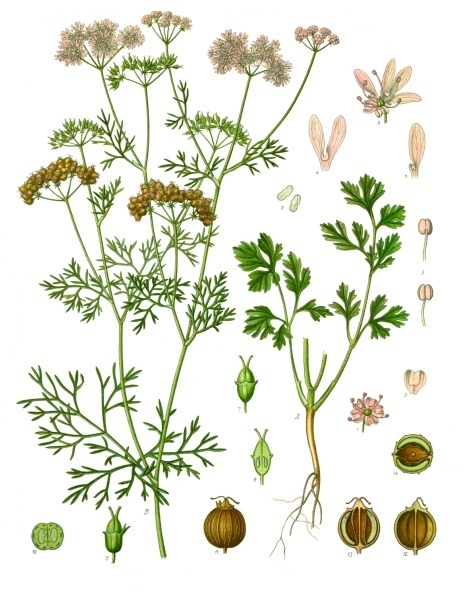 CorianderCoriandrum sativum
-
 Poison HemlockConium maculatum
-
 FennelFoeniculum vulgare
-
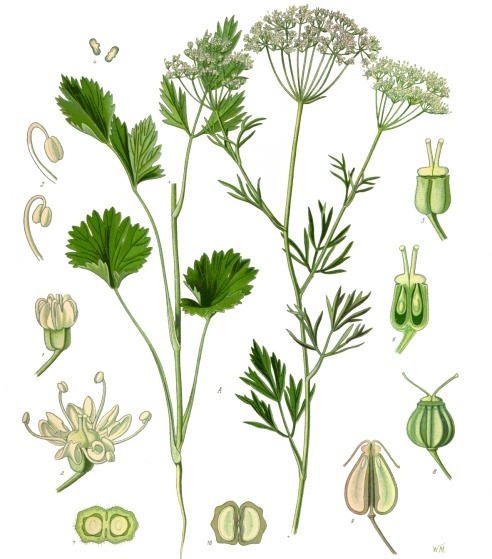 AnisePimpinella anisum
-
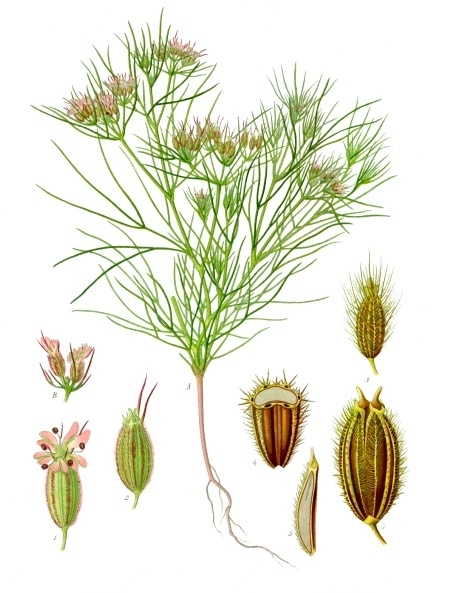 CuminCuminum cyminum
-
 CarawayCarum carvi
Compare
Questions and answers
What is the scientific name of the Golden Alexander?
The scientific name of the Golden Alexander is Zizia aurea. Written with its author, the full name is Zizia aurea (L.) W.D.J.Koch.
Which family does the Golden Alexander belong to?
Zizia aurea belongs to the family Apiaceae, in the order Apiales and the class Magnoliopsida.
Where is the Golden Alexander found?
Checklists and occurrence records place Zizia aurea in 2 countries: United States and Canada.
What other names does the Golden Alexander have?
Zizia aurea is also known in English as Golden Alexanders.
Are golden alexanders invasive?
Golden Alexander has a self-seeding spreading habit that can produce ground cover.[30][33]
Are golden Alexanders edible?
Its raw flowers can be added to green salads after tougher stems are removed. Its young flower clusters can be eaten whole after blanching. Eating excessive amounts of its root has been associated with excessive vomiting.[35][36][41]
How aggressive is Golden Alexander?
Golden Alexander has a self-seeding spreading habit that can produce ground cover.[30][33]
How tall does Golden Alexander grow?
It generally grows to 40–75 centimetres tall, although some individuals grow taller.[12]
Sources
Passages the profile rests on
- The plant has compound, odd-pinnate leaves with normally lanceolate or ovate leaflets and serrated edges. Source passage: “Each leaf is compound and odd-pinnate, with leaflets that are normally lanceolate or ovate with serrated edges.” — English Wikipedia
- Its leaves are arranged alternately along the stems. Source passage: “They are attached to the stems alternately.” — English Wikipedia
- Its compound leaves typically contain three to five leaflets with serrated margins. Source passage: “Shiny compound leaves are made of three to five leaflets with serrated margins.” — extension.psu.edu
- Its leaves can be lanceolate, ovate, cordate, or broadly oblong, with serrated edges. Source passage: “Zizia Aurea has leaves which are normally lanceolate, ovate, cordate, or broadly oblong in shape, and they have serrated edges as well as two or three lobes in the leaf.” — lakeforest.edu
- Its root system consists of a dense cluster of coarse fibrous roots. Source passage: “The root system consists of a dense cluster of coarse fibrous roots.” — English Wikipedia
- Its stems are light green, hairless, and shiny. Source passage: “These stems are light green, hairless, and rather shiny.” — lakeforest.edu
- Its flowers are yellow and arranged in flat-topped umbels at the tops of the plant. Source passage: “Its flowers are yellow and grow in a flat-topped umbel at the top of the plant.” — English Wikipedia
- Each flower has five sepals, five petals, and five stamens. Source passage: “Each flower is only 3 mm (0.12 in) long and has five sepals, five petals, and five stamens.” — English Wikipedia
- Its yellow flowers occur in flat to slightly rounded compound umbels at the ends of upper stems. Source passage: “Flat to slightly rounded compound umbels of yellow flowers occur at the ends of the upper stems.” — lakeforest.edu
- Its leaves and fruits turn purple in autumn. Source passage: “In the fall both the leaves and the fruit turn purple.” — English Wikipedia
- Its dry seed heads become purple. Source passage: “Dry seed heads turn purple.” — extension.psu.edu
- The plant generally grows to 40–75 centimetres tall, although some individuals grow taller. Source passage: “Zizia aurea grows to 40 to 75 centimetres (16 to 30 in) tall but can sometimes grow taller.” — English Wikipedia
- Its leaves are approximately 8 centimetres long and 5 centimetres wide. Source passage: “The leaves are 8 cm (3+1⁄4 in) long and 5 cm (2 in) wide.” — English Wikipedia
- Each flower measures approximately 3 millimetres in length. Source passage: “Each flower is only 3 mm (0.12 in) long” — English Wikipedia
- Each fruit measures approximately 3–4 millimetres in length. Source passage: “Each flower produces a single 3 to 4 mm (0.12 to 0.16 in) long, oblong fruit (schizocarp) containing two seeds.” — English Wikipedia
- Its compound umbels are approximately 2–3 inches across and contain about 12 umbellets. Source passage: “Each compound umbel is about 2–3” across, and consists of about 12 umbellets.” — lakeforest.edu
- Each umbellet contains approximately 21 flowers. Source passage: “There are about 21 flowers in each umbellet;” — lakeforest.edu
- It occurs in moist black-soil prairies. Source passage: “such as moist black soil prairies,” — English Wikipedia
- It grows in openings within moist to mesic woodlands. Source passage: “openings in moist to mesic woodlands,” — English Wikipedia
- It occurs in savannas, thickets, limestone glades, and bluffs. Source passage: “savannas, thickets, limestone glades and bluffs,” — English Wikipedia
- It can grow in wet meadows and abandoned fields. Source passage: “abandoned fields, and wet meadows.” — English Wikipedia
- It grows in moist woods, meadows, thickets, glades, and prairies, including degraded and higher-quality habitats. Source passage: “Zizia aurea occurs most often in small colonies in moist woods and meadows, thickets, glades and prairies, and it could be found in both degraded and higher quality habitats.” — lakeforest.edu
- It prefers moist, loamy soil that may contain rocky material. Source passage: “The soil should be moist and loamy, and can contain some rocky material.” — lakeforest.edu
- It tolerates dry summers despite preferring wet habitats. Source passage: “It can tolerate dry summers even though it prefers wet habitats.” — English Wikipedia
- It prefers full to partial sunlight but tolerates light shade beneath trees. Source passage: “Its preference is full to partial sun, although light shade under trees is tolerated.” — lakeforest.edu
- Females of the mining bee Andrena ziziae feed exclusively on its pollen. Source passage: “Females of the mining bee species Andrena ziziae are oligolectic on Zizia aurea—they eat only its pollen.” — English Wikipedia
- Its flowers attract numerous species of bees, flies, wasps, butterflies, and other insects seeking nectar. Source passage: “Dozens of species of bees, flies, wasps, butterflies, and other insects visit the flowers of Zizia aurea for its nectar.” — English Wikipedia
- It serves as a host plant for black swallowtail butterfly caterpillars. Source passage: “It is a host plant for the caterpillars of the black swallowtail (Papilio polyxenes asterius)” — English Wikipedia
- It serves as a host plant for Ozark swallowtail butterfly caterpillars. Source passage: “and Ozark swallowtail (Papilio joanae) butterflies.” — English Wikipedia
- It has a self-seeding spreading habit that can produce ground cover. Source passage: “Spreading habit: Self-seeds; can spread to create ground cover” — extension.psu.edu
- It produces a single oblong fruit containing two seeds from each flower. Source passage: “Each flower produces a single 3 to 4 mm (0.12 to 0.16 in) long, oblong fruit (schizocarp) containing two seeds.” — English Wikipedia
- Its fruits change color over the course of the year and contain a brown seed. Source passage: “The fruit changes color as the year goes on and contains a brown seed.” — lakeforest.edu
- It reproduces by self-seeding. Source passage: “Spreading habit: Self-seeds; can spread to create ground cover” — extension.psu.edu
- It is described as hardy in USDA plant hardiness zones 4–9. Source passage: “It is hardy in USDA zones 4–9.” — English Wikipedia
- Its raw flowers can be added to green salads after tougher stems are removed. Source passage: “The raw flowers (trimmed of any tougher stems) are sometimes added to green salads,” — English Wikipedia
- Its young flower clusters can be eaten whole after blanching. Source passage: “while the young inflorescences are eaten whole after blanching in the same way as that used to cook broccoli.” — English Wikipedia
- Native Americans used its leaves and flowers to prepare tea for disorders of the female reproductive system. Source passage: “the leaves and flowers were used to prepare a tea believed to be beneficial in the treatment of disorders of the female reproductive system,” — English Wikipedia
- Native Americans used its roots in traditional preparations intended to treat fever. Source passage: “infused to brew a tea considered to have febrifugal virtues.” — English Wikipedia
- Native Americans used its roots to prepare fever-relieving tea. Source passage: “Native Americans used the roots of Zizia aurea to make tea to break fevers.” — lakeforest.edu
- It is planted in gardens for its ornamental color. Source passage: “Humans: Would plant these in their gardens for color.” — lakeforest.edu
- Eating excessive amounts of its root has been associated with excessive vomiting. Source passage: “eating too much of the root has been known to cause excess vomiting.” — lakeforest.edu
- Its common name refers to its resemblance to Smyrnium olusatrum, another carrot-family plant native to coastal Europe and Northern Africa. Source passage: “The common name is based on the similarity to alexanders (Smyrnium olusatrum), another member of the carrot family from coastal areas in Europe and Northern Africa.” — English Wikipedia
Data
- Catalogue of Life, 2026-10-16 XR cc by
- Global Biodiversity Information Facility CC BY 4.0
- Wikidata CC0
- GeoNames CC BY 4.0
- Within the Catalogue of Life, this name comes from Synonymic Checklists of the Vascular Plants of the World cc by
References
- Koch, W. D. J. (1824). Nova Acta Phys.-Med. Acad. Caes. Leop.-Carol. Nat. Cur. 12(1): 129 (1824). where the name was published
This species in other databases
- Catalogue of Life 5D5TB
- Wikidata Q926091
- iNaturalist 83154
- World Flora Online wfo-0001067721
- GRIN 417633
Page built on 29 November 2026. See how the catalog is made and all sources and licences.
Cite this page
ScientificNames.org. (2026). Zizia aurea (Golden Alexander). Retrieved November 29, 2026, from https://scientificnames.org/species/zizia-aurea
“Zizia aurea (Golden Alexander).” ScientificNames.org, 2026, scientificnames.org/species/zizia-aurea. Accessed 29 Nov. 2026.
ScientificNames.org. “Zizia aurea (Golden Alexander).” Accessed November 29, 2026. https://scientificnames.org/species/zizia-aurea.
@misc{scientificnames_zizia_aurea_golden_alexander,
  author = {{ScientificNames.org}},
  title = {Zizia aurea (Golden Alexander)},
  year = {2026},
  url = {https://scientificnames.org/species/zizia-aurea},
  note = {Accessed 2026-11-29}
}