Comparison
Boston Fern vs Tuberous Sword Fern
Boston Fern (Nephrolepis exaltata) and Tuberous Sword Fern (Nephrolepis cordifolia) both belong to the genus Nephrolepis (sword ferns) and part ways below it. Both are recorded in 33 countries.


How they differ
Sword Fern (Nephrolepis exaltata) has slightly serrated leaf margins, rounded sori, and spores with warty and wrinkled surfaces, whereas tuber fern (Nephrolepis cordifolia) has leaflets with entire margins and an underground rhizome that develops several small tubers. Sword Fern (Nephrolepis exaltata) generally has erect fronds and a slender, tuberous underground rhizome, whereas tuber fern (Nephrolepis cordifolia) has erect, pinnate fronds and a rhizome that develops several small tubers. Sword Fern (Nephrolepis exaltata) commonly inhabits humid forests and swamps, whereas tuber fern (Nephrolepis cordifolia) also occurs in rocky outcrops, rock faces, roadsides, ditches, creeks, abandoned buildings and ruins. Sword Fern (Nephrolepis exaltata) is classified as an invasive alien plant in South Africa, whereas tuber fern (Nephrolepis cordifolia) is listed as invasive in Florida, United States.
| Boston Fern | Tuberous Sword Fern | |
|---|---|---|
| Rhizome | Sword Fern (Nephrolepis exaltata) develops a slender, tuberous underground rhizome. | Tuber fern (Nephrolepis cordifolia) develops several small tubers on its underground rhizome. |
| Leaf margins | Sword Fern (Nephrolepis exaltata) has slightly serrated leaf margins. | Tuber fern (Nephrolepis cordifolia) has leaflets with entire margins. |
| Petiole scales | Sword Fern (Nephrolepis exaltata) has sparse to moderate pale or reddish-brown scales on its petiole. | Tuber fern (Nephrolepis cordifolia) has pale and dark brown scales covering its petiole. |
| Growth forms | Sword Fern (Nephrolepis exaltata) grows terrestrially or as an epiphyte. | Tuber fern (Nephrolepis cordifolia) grows terrestrially, as an epiphyte, or as a lithophyte. |
| Habitat | Sword Fern (Nephrolepis exaltata) commonly inhabits humid forests and swamps. | Tuber fern (Nephrolepis cordifolia) occurs in deep swamps, along riverbanks, and on rocky outcrops and rock faces. |
| Conservation | Sword Fern (Nephrolepis exaltata) is classified as an invasive alien plant in South Africa. | Tuber fern (Nephrolepis cordifolia) is considered invasive in some regions where it has been introduced. |
Written from the checked facts listed further down. Statements that the sources did not support were removed.
Side by side
| Boston Fern | Tuberous Sword Fern | |
|---|---|---|
| Scientific name | Nephrolepis exaltata (L.) Schott | Nephrolepis cordifolia (L.) C.Presl |
| English name | Boston Fern | Tuberous Sword Fern |
| Group | Ferns and allies | Ferns and allies |
| Class | Polypodiopsida Fern | Polypodiopsida Fern |
| Order | Polypodiales | Polypodiales |
| Family | Nephrolepidaceae Macho Ferns | Nephrolepidaceae Macho Ferns |
| Genus | Nephrolepis Sword Ferns | Nephrolepis Sword Ferns |
| Red List category | Least Concern | Not recorded |
| Countries on record | 41 countries | 98 countries |
| GBIF occurrence records | 3,258 records | 22,021 records |
Rows where the two agree are shown in grey.
Where each is found
Both recorded in 33 countries
- Australia
- Bermuda
- Bolivia
- Brazil
- Canada
- Colombia
- Costa Rica
- Cuba
- Dominica
- Dominican Republic
- Ecuador
- French Guiana
- Guadeloupe
- Guatemala
- Guyana
- Haiti
- Honduras
- Jamaica
- Martinique
- Mexico
- Morocco
- Nicaragua
- Panama
- Peru
- Portugal
- Puerto Rico
- Saint Helena
- Seychelles
- Suriname
- Tanzania
- Trinidad and Tobago
- United States
- Zimbabwe
Only Boston Fern (8)
- Algeria
- Bahamas
- Bonaire, Saint Eustatius and Saba
- British Virgin Islands
- Grenada
- Saint Vincent and the Grenadines
- U.S. Virgin Islands
- Venezuela
Only Tuberous Sword Fern (65)
- Argentina
- Bangladesh
- Barbados
- Belize
- Benin
- Bhutan
- Cambodia
- Cameroon
- China
- Comoros
- Cook Islands
- Democratic Republic of the Congo
- El Salvador
- Equatorial Guinea
- Eswatini
- Ethiopia
- Fiji
- French Polynesia
- Georgia
- Germany
- Ghana
- Guinea
- Hong Kong
- India
- Indonesia
- Ivory Coast
- Japan
- Kenya
- Laos
- Liberia
- Macao
- Madagascar
- Malaysia
- Mauritius
- Mozambique
- Myanmar
- Namibia
- Nepal
- New Caledonia
- New Zealand
- Norfolk Island
- Pakistan
- Palau
- Papua New Guinea
- Paraguay
- Philippines
- Pitcairn
- Reunion
- Samoa
- Sao Tome and Principe
- Senegal
- Sierra Leone
- Singapore
- Solomon Islands
- South Africa
- South Korea
- Sri Lanka
- Taiwan
- Thailand
- Timor Leste
- Togo
- Uganda
- Vanuatu
- Vietnam
- Zambia
From Catalogue of Life checklists and GBIF occurrence records. A country missing from a list means no record is held, which is not proof of absence.
Checked facts
| Boston Fern | Tuberous Sword Fern | |
|---|---|---|
| Appearance |
|
|
| Size |
|
|
| Habitat |
|
|
| Behaviour |
| No checked fact yet |
| Reproduction |
|
|
| Distribution | No checked fact yet |
|
| Conservation |
|
|
| Uses |
|
|
| Similar species |
| No checked fact yet |
In brief
Boston Fern
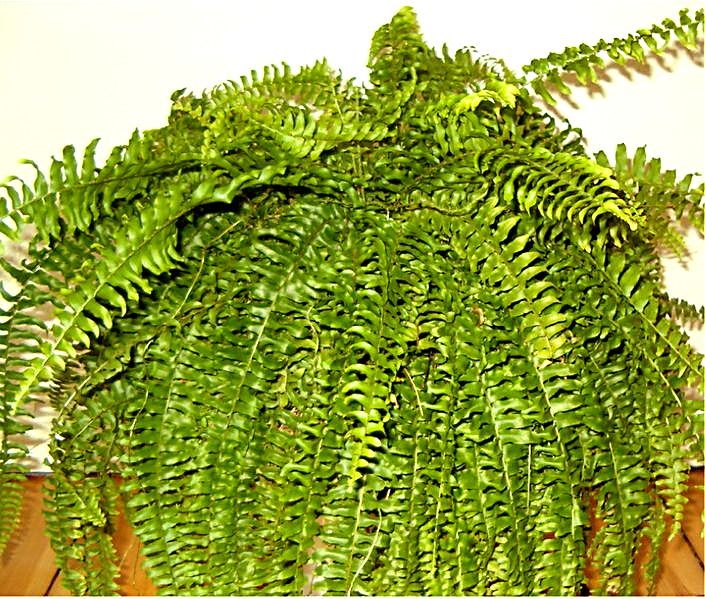
The Boston fern (Nephrolepis exaltata) is a fern with generally erect fronds, although some cultivated forms have arching fronds. It commonly inhabits humid forests, swamps and floodplains, where it grows terrestrially or as an epiphyte. It has alternate, generally deltoid pinnae, rounded sori and spores with warty and wrinkled surfaces. Full profile
Tuberous Sword Fern
Nephrolepis cordifolia is distinguished by underground rhizomes that develop several small tubers and by erect, pinnate fronds. Full profile
Compare something else
Page built on 24 November 2026 from the data on the two species pages, where every source is listed.
Cite this page
ScientificNames.org. (2026). Boston Fern vs Tuberous Sword Fern. Retrieved November 24, 2026, from https://scientificnames.org/compare/boston-fern-vs-tuberous-sword-fern
“Boston Fern vs Tuberous Sword Fern.” ScientificNames.org, 2026, scientificnames.org/compare/boston-fern-vs-tuberous-sword-fern. Accessed 24 Nov. 2026.
ScientificNames.org. “Boston Fern vs Tuberous Sword Fern.” Accessed November 24, 2026. https://scientificnames.org/compare/boston-fern-vs-tuberous-sword-fern.
@misc{scientificnames_boston_fern_vs_tuberous_sword_fern,
  author = {{ScientificNames.org}},
  title = {Boston Fern vs Tuberous Sword Fern},
  year = {2026},
  url = {https://scientificnames.org/compare/boston-fern-vs-tuberous-sword-fern},
  note = {Accessed 2026-11-24}
}