Species · Ferns and allies
Tuberous Sword Fern Nephrolepis cordifolia
The scientific name of the Tuberous Sword Fern is Nephrolepis cordifolia. It is a species of fern or lycophyte in the family Nephrolepidaceae (macho ferns), order Polypodiales.
- Scientific name
- Nephrolepis cordifolia (L.) C.Presl
- Common name
- Tuberous Sword Fern
- Genus
- Nephrolepis
- Family
- Nephrolepidaceae (Macho Ferns)
- Order
- Polypodiales
- Class
- Polypodiopsida
- Recorded in
- 98 countries
- Name status
- accepted in the Catalogue of Life

Overview
Nephrolepis cordifolia is distinguished by underground rhizomes that develop several small tubers and by erect, pinnate fronds.
Written 24 November 2026 from the sources listed below. Each statement was checked against the passage it cites; statements that could not be supported were removed.
Appearance
The tuberous sword fern is an evergreen fern with an underground rhizome that develops several small tubers. Its fronds are erect, pinnate, and linear to lanceolate in shape.[1][2][3]
The fronds are glandular and simple. The rachis bears scales with two colours, while the petiole is covered with pale and dark brown scales.[4][5][6]
Its leaflets are elongate-lanceolate, have entire margins, and lack stalks. They can reach 4.8 centimetres in length and are spaced less than 1 centimetre apart.[7][8][9]
The fern typically grows between 40 and 80 centimetres tall, although exceptional individuals can reach 1 metre in height.[10][11]
Habitat
The species favours moist and shady locations. It can grow terrestrially, as an epiphyte, or as a lithophyte when moisture and light conditions are suitable.[12][13]
It occurs in deep swamps and along riverbanks. Within its native range, it commonly grows in swamps as an epiphyte and terrestrially along brooks and ditches in coniferous forest floodplains.[14][15][16]
It can grow epiphytically on the bark of tree branches above water sources. Other habitats include rocky outcrops, rock faces, roadsides, ditches, creeks, and fallen trees.[17][18][19]
The species can also grow in abandoned buildings and ruins.[20]
Its native distribution extends across tropical and subtropical regions from India through Southeast Asia to Australia and Pacific islands. Its native range also includes parts of Africa and several Indian Ocean islands.[21][22][23]
Its native distribution includes China, Japan, Korea, Taiwan, Tibet, India, Bangladesh, Nepal, Sri Lanka, Cambodia, Laos, Myanmar, Thailand, and Vietnam. It also includes Borneo, Java, the Lesser Sunda Islands, Malaya, the Philippines, and Sulawesi.[24][25][26][27]
Its native Australian distribution includes New South Wales and Queensland. Its native Pacific distribution includes Fiji, New Caledonia, Vanuatu, Hawaii, and the Caroline Islands.[28][29]
The species has been introduced to numerous countries outside its native range, including Kenya, Tanzania, New Zealand, Italy, France, and Spain. Its introduced range in the United States includes Alabama, Florida, Georgia, and California.[30][31][32][33]
Reproduction and life cycle
The species produces rounded sori. Its spores have warty and wrinkled surfaces.[34][35]
Conservation
The species is considered invasive in some regions where it has been introduced. It is listed as invasive in Florida, United States.[36][37]
New Zealand includes the species on its National Pest Plant Accord, which prohibits its sale, cultivation, and distribution.[38]
Uses
The species is recorded in Nepalese food-fern research under the local names Pani amala, Bhui amala, Ras amala, Ambeli, and Pani saro.[39]
Classification of the Tuberous Sword Fern
| Kingdom | Plantae |
|---|---|
| Subkingdom | Pteridobiotina |
| Phylum | Tracheophyta |
| Class | Polypodiopsida (Fern) |
| Order | Polypodiales |
| Family | Nephrolepidaceae (Macho Ferns) |
| Genus | Nephrolepis (Sword Ferns) |
| Species | Nephrolepis cordifolia (L.) C.Presl |
Where the Tuberous Sword Fern is found
Checklists and occurrence records place Nephrolepis cordifolia in 98 countries across Africa, Asia, Europe, North America, Oceania and South America. GBIF holds 22,021 georeferenced records of it.
Countries where it is native or its origin is not stated
- Australia 3,895
- Bangladesh 1
- Benin 4
- Bermuda 28
- Bhutan 17
- Cambodia
- Cameroon 48
- Canada 3
- China 1,454
- Comoros 5
- Cook Islands 9
- Costa Rica 95
- Democratic Republic of the Congo 12
- Dominica 6
- Equatorial Guinea 32
- Ethiopia 3
- Fiji 63
- French Polynesia 43
- Georgia 4
- Ghana 6
- Guadeloupe 9
- Guinea 12
- Hong Kong 160
- India 156
- Indonesia 253
- Ivory Coast 5
- Japan 1,150
- Laos 4
- Liberia 8
- Macao 155
- Madagascar 65
- Malaysia 71
- Martinique 4
- Mauritius 45
- Morocco 3
- Myanmar 14
- Namibia 7
- Nepal 56
- New Caledonia 182
- Norfolk Island 29
- Palau
- Papua New Guinea 88
- Philippines 209
- Reunion 312
- Saint Helena 18
- Samoa 18
- Sao Tome and Principe 6
- Senegal 8
- Seychelles 25
- Sierra Leone 7
- Solomon Islands 19
- South Korea 31
- Sri Lanka 74
- Taiwan 3,722
- Thailand 73
- Timor Leste 11
- Togo 40
- Trinidad and Tobago 3
- Uganda 4
- Vanuatu 28
- Vietnam 72
Countries where it has been introduced
- Argentina 87
- Barbados 3
- Belize 2
- Bolivia 48
- Brazil 625
- Colombia 332
- Cuba 59
- Dominican Republic 13
- Ecuador 306
- El Salvador 11
- Eswatini 10
- French Guiana 5
- Germany 5
- Guatemala 61
- Guyana 43
- Haiti 21
- Honduras 59
- Jamaica 92
- Kenya 5
- Mexico 238
- Mozambique
- New Zealand 1,220
- Nicaragua 7
- Pakistan 6
- Panama 16
- Paraguay 2
- Peru 106
- Pitcairn 4
- Portugal 559
- Puerto Rico 31
- Singapore 1
- South Africa 1,049
- Suriname 8
- Tanzania 20
- United States 4,070
- Zambia 3
- Zimbabwe 10
Regions and cities with the most records
- Florida, United States 3,021
- New South Wales, Australia 2,912
- Taiwan, Taiwan 2,288
- Sydney, Australia 985
- Tampa, United States 745
- Queensland, Australia 737
- Brandon, United States 669
- Taipei, Taiwan 631
- Neihu, Taiwan 619
- Banqiao, Taiwan 617
- New Taipei City, Taiwan 598
- Xizhi, Taiwan 595
- Western Cape, South Africa 553
- Shulin, Taiwan 524
- Chongqing, China 510
- Town 'n' Country, United States 503
- Auckland, New Zealand 481
- Azores, Portugal 421
- Auckland, New Zealand 405
- Taipei, Taiwan 390
- Sanxia, Taiwan 374
- Danshui, Taiwan 349
- Chongqing, China 335
- Huixing, China 332
- Jiangbei, China 332
- Shuangfengqiao, China 332
- Shuanglonghu, China 332
- Yingge, Taiwan 310
- Zhudong, Taiwan 293
- Yilan, Taiwan 270
- KwaZulu-Natal, South Africa 267
- Papatoetoe, New Zealand 259
- Keelung, Taiwan 253
- Central Coast, Australia 249
- Hawaii, United States 236
- Daxi, Taiwan 221
11 more countries have a few records outside this range
These countries hold a few records of Nephrolepis cordifolia but lie outside the range the checklists give for it. Such records are often zoo or garden specimens, museum material or vagrants, so the species is not counted as occurring there.
Range as the checklists state it
Germany [I]; Madeira [I] (Madeira Isl. [I]); Kenya [I]; Tanzania [I]; Zambia [I]; Zimbabwe [I]; Mozambique [I]; South Africa [I] (Limpopo [I], Mpulamanga [I], KwaZulu-Natal [I], W-Cape Prov. [I], E-Cape Prov. [I]); Eswatini [Swaziland] [I]; St. Helena [I]; Madagascar; Comores [I]; Mauritius; La Réunion; Seychelles; China (Fujian, Guangdong, Guangxi, Guizhou, Hainan, Hunan, Yunnan, Zhejiang); Tibet; South Korea (Cheju Isl.); Japan (incl. Izu Isl.); Ryukyu Isl.; Ogasawara Isl. (Chichijima, Anijima, Hahajima); Volcano Isl. (Kita-Iwojima, Minami-Iwojima); Taiwan; Pakistan [I]; Nepal; Bhutan; India (Arunachal Pradesh, Assam, ?Chhattisgarh, Goa, Karnataka, Kerala, Madhya Pradesh, Maharashtra, Manipur, Meghalaya, Mizoram, Nagaland, Odisha, Rajasthan, Sikkim, Tamil Nadu, Telanaga, Tripura, Uttarakhand, West Bengal); Lakshadweep Isl. [Laccadives]; Sri Lanka; Bangladesh; Myanmar (Kachin, etc.); Thailand; Laos; Cambodia; Vietnam; peninsular Malaysia (Perak, Selangor, Pahang); Singapore [I]; South China Sea Isl.; Borneo (Mt. Kinabalu, Sabah); Sulawesi; Philippines; Jawa; Lesser Sunda Isl. (Lombok, Sumba, Bali, Sumbawa, Flores); New Guinea (Irian Jaya, Papua New Guinea); Australia (E-Queensland, NE-New South Wales); Lord Howe Isl.; Norfolk Isl. [I]; New Zealand [I]; New Caledonia; Vanuatu; Cook Isl. [I] (Rarotonga [I]); Marquesas Isl. (Hiva Oa, Ua Pou); Society Isl. (Moorea, Tahiti, Maupiti, etc.); Austral Isl. (Tubuai); Pitcairn Isl. [I]; Palau; Hawaii (Kauai, Oahu, Molokai, Lanai, Maui, Hawaii Isl.); USA [I] (Alabama [I], Florida [I], Georgia [I]); Mexico [I] (Veracruz [I], Puebla [I], Oaxaca [I], Chiapas [I], México Distrito Federal [I], México State [I]); Guatemala [I]; Belize [I]; El Salvador [I]; Honduras [I]; Nicaragua [I]; Panama [I]; Cuba [I]; Jamaica [I]; Hispaniola [I] (Haiti [I], Dominican Republic [I]); Puerto Rico [I]; Virgin Isl. [I] (St. Croix [I], St. Thomas [I]); Barbados [I]; Trinidad [I]; Colombia [I] (Antioquia [I], Boyacá [I], Caldas [I], Cauca [I], Chocó [I], Cundinamarca [I], Huila [I], Magdalena [I], Norte de Santander [I], Putumayo [I], Santander [I], Tolima [I], Valle [I], Vaupés [I]); Guyana [I]; Surinam [I]; French Guiana [I]; Ecuador [I]; Galápagos [I]; Peru [I]; Bolivia [I]; Brazil [I] (Acre [I], Bahia [I], Brasilia Distrito Federal [I], Espírito Santo [I], Goiás [I], Minas Gerais [I], Pará [I], Pernambuco [I], Paraná [I], Rio de Janeiro [I], Rondônia [I], Rio Grande do Sul [I], Santa Catarina [I], São Paulo [I]); Paraguay [I] (Central [I]); Argentina [I] (Buenos Aires [I], Catamarca [I], Córdoba [I], Corrientes [I], Jujuy [I], Salta [I], Santa Fe [I], Tucumán [I])
A number beside a place is its count of GBIF occurrence records. A place without a number comes from a checklist alone. Records show where a species has been observed or collected, which can include escapes and vagrants.
Common names
English
- Tuberous Sword Fern
- Boston Fern
- Ladder Sword Fern
- Tuber Ladder Fern
- Ladder Fern
- Tuber Fern
Names in 13 other languages
- Chinese
- 圓羊齒, 石黃皮, 腎蕨
- Danish
- nyrebregne
- Finnish
- Pystysulkasaniainen
- French
- Néphrolépide à feuilles cordées
- Hawaiian
- kupukupu
- Italian
- Felce cordifolia
- Japanese
- tama-shida, タマシダ, 玉羊歯
- Polish
- nefrolepis sercolistny, nerczyłusk sercolistny
- Russian
- Нефролепис сердцелистный
- Slovak
- nefrolepka srdcovitolistá
- Spanish
- Helecho rizado gigante, helecho serrucho
- Swedish
- fjäderbräken
- Thai
- เฟิร์นใบมะขาม
Synonyms
31 other scientific names have been used for this species and are now treated as synonyms of Nephrolepis cordifolia.
- Aspidium cordifolium var. tambourinense (Domin) F.M.Bailey
- Aspidium edule (D.Don) Spreng.
- Aspidium sublanosum Wall.
- Aspidium tuberosum Bory ex Willd.
- Aspidium volubile var. cavernicola (Domin) F.M.Bailey
- Asplenium bulbosum Lour.
- Humata falcata (Sw.) Cav. ex Desv.
- Nephrodium cordifolium (L.) Baker
- Nephrodium edule D.Don
- Nephrodium imbricatum (Kaulf. ex Spreng.) Bojer
- Nephrodium tuberosum (Bory ex Willd.) Desv.
- Nephrolepis auriculata (L.) Trimen
- Nephrolepis cordifolia var. tambourinensis Domin
- Nephrolepis cordifolia var. tuberosa (Bory ex Willd.) Baker
- Nephrolepis exaltata var. tuberosa (Bory ex Willd.) Kuntze
- Nephrolepis imbricata (Kaulf. ex Spreng.) C.Presl
- Nephrolepis intramarginalis Kunze
- Nephrolepis paleacea Jungh. & de Vriese
- Nephrolepis radicans var. cavernicola Domin
- Nephrolepis rhizodes Kunze
- Nephrolepis tuberosa (Bory ex Willd.) C.Presl
- Aspidium auriculatum (L.) Sw. ambiguous synonym
- Aspidium auriculatum (L.) Wall. ambiguous synonym
- Aspidium cordifolium (L.) Sw. ambiguous synonym
- Aspidium imbricatum Kaulf. ex Spreng. ambiguous synonym
- Davallia falcata Sw. ambiguous synonym
- Dryopteris auriculata (L.) Kuntze ambiguous synonym
- Nephrodium auriculatum (L.) A.Rich. ambiguous synonym
- Polypodium auriculatum L. ambiguous synonym
- Polypodium cordifolium L. ambiguous synonym
- Polystichum auriculatum (L.) C.Presl ambiguous synonym
Subspecies and varieties
- Nephrolepis cordifolia var. cordifolia (Tuber Sword Fern) variety
- Nephrolepis cordifolia var. pumicicola variety
- Nephrolepis pumicicola var. pumicicola variety
Related species
-
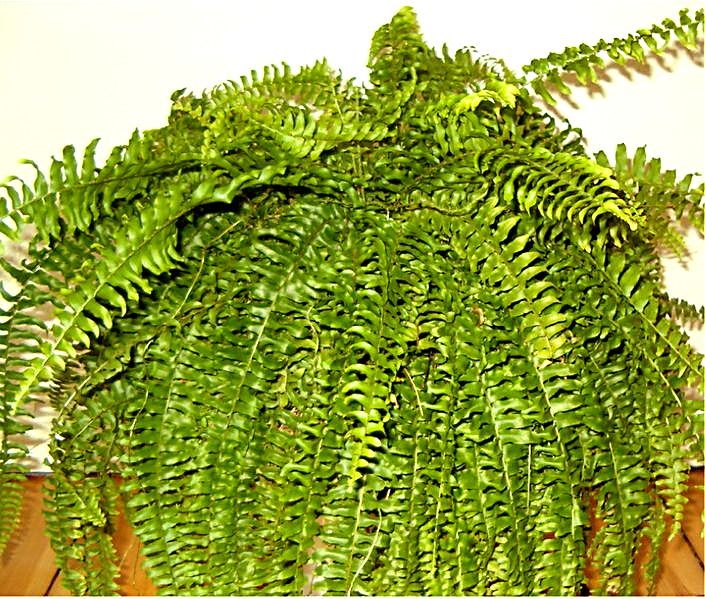 Boston FernNephrolepis exaltata
-
 Large Sword FernNephrolepis biserrata
-
 Kimberly Queen FernNephrolepis obliterata
- Asian Sword FernNephrolepis brownii
- Fishtail SwordfernNephrolepis falcata
- Scaly SwordfernNephrolepis hirsutula
- Basket FernNephrolepis pectinata
- Streamside SwordfernNephrolepis rivularis
Compare
Questions and answers
What is the scientific name of the Tuberous Sword Fern?
The scientific name of the Tuberous Sword Fern is Nephrolepis cordifolia. Written with its author, the full name is Nephrolepis cordifolia (L.) C.Presl.
Which family does the Tuberous Sword Fern belong to?
Nephrolepis cordifolia belongs to the family Nephrolepidaceae, in the order Polypodiales and the class Polypodiopsida.
Where is the Tuberous Sword Fern found?
Checklists and occurrence records place Nephrolepis cordifolia in 98 countries, including Australia, Taiwan, China, Japan, Reunion and Indonesia.
What other names does the Tuberous Sword Fern have?
Nephrolepis cordifolia is also known in English as Boston Fern, Ladder Sword Fern, Tuber Ladder Fern, Ladder Fern and Tuber Fern.
Where did the Boston fern originate?
The tuberous sword fern is native to tropical and subtropical regions extending from India through Southeast Asia to Australia and Pacific islands. Its native distribution also includes Cameroon, the Gulf of Guinea Islands, the Comoros, Mauritius, Réunion, and Seychelles.[21][22][23]
What is the information you need about the Nephrolepis plant?
Nephrolepis cordifolia (L.) C.Presl, known here as the tuberous sword fern, is an evergreen fern with underground rhizomes that develop several small tubers. It typically grows between 40 and 80 centimetres tall and occurs in moist and shady habitats, including swamps, riverbanks, forests, and rocky outcrops.[1][2][10][14][18][13]
Is Nephrolepis cordifolia an indoor plant?
The species can grow in abandoned buildings and ruins, but these records do not establish whether it is an indoor plant.[20]
Sources
Passages the profile rests on
- Nephrolepis cordifolia is an evergreen fern. Source passage: “Nephrolepis cordifolia is an evergreen fern” — English Wikipedia
- Its underground rhizome develops several small tubers. Source passage: “It forms an underground rhizome in the form of several small tubers.” — English Wikipedia
- Its fronds are erect, pinnate, and linear to lanceolate in shape. Source passage: “The pinnate fronds are erect and pinnate linear to lanceolate” — English Wikipedia
- The fronds are glandular and simple. Source passage: “glandular and simple.” — English Wikipedia
- The rachis bears scales with two colours. Source passage: “The rachis bears bicolored chaff scales.” — English Wikipedia
- Its petiole is covered with pale and dark brown scales. Source passage: “The petiole is covered with bicolored pale and dark brown scales.” — English Wikipedia
- Its leaflets have entire margins, lack stalks, and are elongate-lanceolate. Source passage: “The leaflets are entire, sessile and elongate-lanceolate.” — English Wikipedia
- Its leaflets can reach 4.8 centimetres in length. Source passage: “They grow up to 4.8 centimeters long” — English Wikipedia
- The leaflets are spaced less than 1 centimetre apart. Source passage: “They stand at a distance of less than 1 centimeter.” — English Wikipedia
- The fern typically grows between 40 and 80 centimetres tall. Source passage: “grows to between 40 and 80 centimeters” — English Wikipedia
- Exceptional individuals can reach 1 metre in height. Source passage: “in extreme cases up to 1 meter.” — English Wikipedia
- The species can grow terrestrially, as an epiphyte, or as a lithophyte when moisture and light conditions are suitable. Source passage: “They can establish themselves terrestrially, or as an epiphyte or lithophyte, provided that the location has ideal moisture and light levels.” — English Wikipedia
- The species favours moist and shady locations. Source passage: “They love moist, shady locations” — English Wikipedia
- It occurs in deep swamps and along riverbanks. Source passage: “from deep swamps and riverbanks” — English Wikipedia
- Within its native range, it commonly grows in swamps as an epiphyte. Source passage: “they are usually found in swamps (as an epiphyte)” — English Wikipedia
- It also commonly grows terrestrially along brooks and ditches in coniferous forest floodplains. Source passage: “along brooks and ditches of coniferous forest floodplains (growing more terrestrially).” — English Wikipedia
- It can grow epiphytically on the bark of tree branches above water sources. Source passage: “typically adhering to the bark of tree branches above a water source” — English Wikipedia
- It can inhabit rocky outcrops and rock faces. Source passage: “rugged outcrops and rock faces” — English Wikipedia
- It can also occur along roadsides, in ditches and creeks, and on fallen trees. Source passage: “roadsides, ditches, creeks, fallen trees” — English Wikipedia
- It can grow in abandoned buildings and ruins. Source passage: “even abandoned buildings and ruins.” — English Wikipedia
- The species is native to tropical and subtropical regions extending from India through Southeast Asia to Australia and Pacific islands. Source passage: “native to tropical and subtropical areas from India through Southeast Asia to Australia and the Pacific islands.” — English Wikipedia
- Its native distribution includes Cameroon and the Gulf of Guinea Islands. Source passage: “West-Central Tropical Africa – Cameroon, Gulf of Guinea Islands” — English Wikipedia
- Its native distribution includes the Comoros, Mauritius, Réunion, and Seychelles. Source passage: “Western Indian Ocean – Comoros, Mauritius, Réunion, Seychelles” — English Wikipedia
- Its native distribution includes China, Japan, Korea, Taiwan, and Tibet. Source passage: “China – China South-Central, China Southeast, Hainan, Tibet Eastern Asia – Japan, Kazan-retto, Korea, Nansei-shoto, Ogasawara-shoto, Taiwan” — English Wikipedia
- Its native distribution includes India, Bangladesh, Nepal, and Sri Lanka. Source passage: “Indian Subcontinent – Assam, Bangladesh, East Himalaya, India, Laccadive Islands, Nepal, Sri Lanka, West Himalaya” — English Wikipedia
- Its native distribution includes Cambodia, Laos, Myanmar, Thailand, and Vietnam. Source passage: “Indo-China – Cambodia, Laos, Myanmar, South China Sea, Thailand, Vietnam” — English Wikipedia
- Its native distribution includes Borneo, Java, the Lesser Sunda Islands, Malaya, the Philippines, and Sulawesi. Source passage: “Malesia – Borneo, Jawa, Lesser Sunda Islands, Malaya, Philippines, Sulawesi” — English Wikipedia
- Its native Australian distribution includes New South Wales and Queensland. Source passage: “Australia – New South Wales, Norfolk Island, Queensland” — English Wikipedia
- Its native Pacific distribution includes Fiji, New Caledonia, Vanuatu, Hawaii, and the Caroline Islands. Source passage: “Southwestern Pacific – Fiji, New Caledonia, Vanuatu South-Central Pacific – Marquesas, Pitcairn Island, Society Islands, Tubuai Islands Northwestern Pacific – Caroline Islands North-Central Pacific – Hawaii” — English Wikipedia
- The species has been introduced to numerous countries outside its native range. Source passage: “It has been introduced to many other countries.” — English Wikipedia
- Its introduced range includes Kenya and Tanzania. Source passage: “East Tropical Africa – Kenya, Tanzania” — English Wikipedia
- Its introduced range includes New Zealand, Italy, France, and Spain. Source passage: “New Zealand – New Zealand North, New Zealand South Southeastern Europe – Italy Southwestern Europe – France, Spain” — English Wikipedia
- Its introduced range in the United States includes Alabama, Florida, Georgia, and California. Source passage: “Southeastern U.S.A. – Alabama, Florida, Georgia Southwestern U.S.A. – California” — English Wikipedia
- The species produces rounded sori. Source passage: “The sori are rounded.” — English Wikipedia
- Its spores have warty and wrinkled surfaces. Source passage: “The spores are warty, wrinkled.” — English Wikipedia
- The species is considered invasive in some regions where it has been introduced. Source passage: “Nephrolepis cordifolia has become an invasive species is some areas where it has been introduced.” — English Wikipedia
- The species is listed as invasive in Florida, United States. Source passage: “It is listed as an invasive species in Florida, United States.” — English Wikipedia
- New Zealand includes the species on its National Pest Plant Accord, which prohibits its sale, cultivation, and distribution. Source passage: “In New Zealand it is listed on the National Pest Plant Accord, which prohibits the sale, cultivation and distribution of the plant.” — English Wikipedia
- The species is recorded in Nepalese food-fern research under the local names Pani amala, Bhui amala, Ras amala, Ambeli, and Pani saro. Source passage: “Nephrolepis cordifolia (L.) C. Prest, Pani amala, Bhui amala, Ras amala, Ambeli (Tamang), Pani saro (Majhi)” — pmc.ncbi.nlm.nih.gov
Data
- Catalogue of Life, 2026-10-16 XR cc by
- Global Biodiversity Information Facility CC BY 4.0
- Wikidata CC0
- GeoNames CC BY 4.0
- Wikimedia Commons per image; credit shown with each image
- Within the Catalogue of Life, this name comes from Checklist of Ferns and Lycophytes of the World cc by
References
- Presl, C. Tent. Pterid. 79 (1836), nom. cons. where the name was published
This species in other databases
- Catalogue of Life 4722B
- Wikidata Q1040814
- iNaturalist 48233
- World Flora Online wfo-0001109172
- GRIN 403335
Page built on 24 November 2026. See how the catalog is made and all sources and licences.
Cite this page
ScientificNames.org. (2026). Nephrolepis cordifolia (Tuberous Sword Fern). Retrieved November 24, 2026, from https://scientificnames.org/species/nephrolepis-cordifolia
“Nephrolepis cordifolia (Tuberous Sword Fern).” ScientificNames.org, 2026, scientificnames.org/species/nephrolepis-cordifolia. Accessed 24 Nov. 2026.
ScientificNames.org. “Nephrolepis cordifolia (Tuberous Sword Fern).” Accessed November 24, 2026. https://scientificnames.org/species/nephrolepis-cordifolia.
@misc{scientificnames_nephrolepis_cordifolia_tuberous_sword_fern,
  author = {{ScientificNames.org}},
  title = {Nephrolepis cordifolia (Tuberous Sword Fern)},
  year = {2026},
  url = {https://scientificnames.org/species/nephrolepis-cordifolia},
  note = {Accessed 2026-11-24}
}