Comparison

Japanese Cedar vs Coast Redwood

Japanese Cedar (Cryptomeria japonica) and Coast Redwood (Sequoia sempervirens) both belong to the family Cupressaceae (cypress) and part ways below it. Both are recorded in 20 countries.
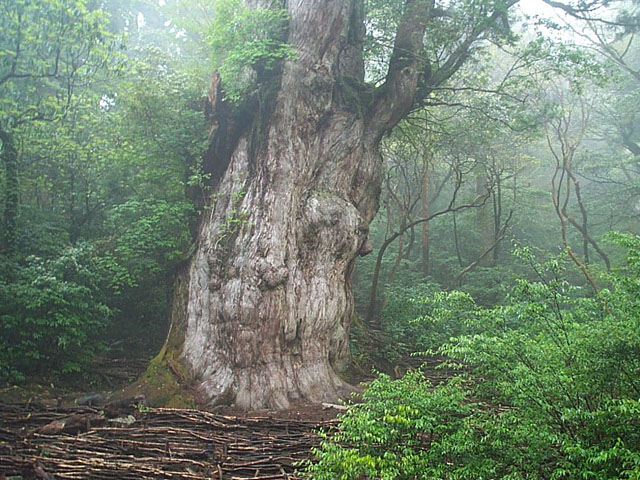
Japanese Cedar

Japanese Cedar

Cryptomeria japonica

Yosemite, CC BY-SA 3.0, via Wikimedia Commons

Coast Redwood

Coast Redwood

Sequoia sempervirens

Allie_Caulfield from Germany, CC BY 2.0, via Wikimedia Commons

Side by side

Japanese CedarCoast Redwood
Scientific nameCryptomeria japonica (Thunb. ex L.) D.DonSequoia sempervirens (D.Don) Endl.
English nameJapanese CedarCoast Redwood
GroupConifers and alliesConifers and allies
ClassPinopsida ConiferPinopsida Conifer
OrderCupressalesCupressales
FamilyCupressaceae CypressCupressaceae Cypress
GenusCryptomeria SugisSequoia Redwood
Red List categoryNear ThreatenedEndangered
Countries on record50 countries20 countries
GBIF occurrence records15,755 records26,954 records

Rows where the two agree are shown in grey.

Where each is found

Both recorded in 20 countries

Only Japanese Cedar (30)

From Catalogue of Life checklists and GBIF occurrence records. A country missing from a list means no record is held, which is not proof of absence.

Checked facts

Japanese CedarCoast Redwood
Appearance
  • The coast redwood is an evergreen conifer with a conical crown and a remarkably straight trunk. English Wikipedia
  • Its bark is thick, soft, fibrous and bright red-brown when freshly exposed. English Wikipedia
  • Its leaves are dark green above and have two blue-white stomatal bands underneath. English Wikipedia
  • Its leaves vary from flat and 15–25 mm long to scalelike and 5–10 mm long, depending on their position and exposure to sunlight. English Wikipedia
  • Its seed cones are oval and measure 15–32 mm in length. English Wikipedia
  • Its leaves are mostly needle-like, flat, stiff and sharply pointed, with scale-like leaves on leaders and lateral shoots. landscapeplants.oregonstate.edu
Size
Habitat
  • The native range includes coastal California and the southwestern corner of Oregon. English Wikipedia
  • The species naturally occupies a coastal strip approximately 750 km long and 8–75 km wide along the Pacific coast of North America. English Wikipedia
  • Its native elevation range is generally 30–750 m above sea level, with occasional occurrences from sea level to approximately 900 m. English Wikipedia
  • The tallest and oldest trees occur in deep valleys and gullies with year-round streams and regular fog drip. English Wikipedia
  • The species naturally grows in maritime Mediterranean and temperate rainforest climates. extension.oregonstate.edu
  • Its native habitats receive an average of 70 inches of precipitation annually, mostly as winter rain. extension.oregonstate.edu
  • The species occurs on deep, moist soils belonging to the Inceptisol and Ultisol soil orders. extension.oregonstate.edu
  • Common geological parent materials in its habitats include graywacke sandstones, shales and conglomerates. extension.oregonstate.edu
  • The species occurs in mixed forests containing western redcedar, western hemlock and Douglas-fir. extension.oregonstate.edu
  • Coast redwoods can occur in mixed evergreen forests with tanoak, Pacific madrone, canyon live oak and California-laurel. extension.oregonstate.edu
Diet
  • The species serves as a food plant for larvae of several moths in the genus Endoclita. English Wikipedia
  • Moth species whose larvae feed on this tree include Endoclita auratus, Endoclita punctimargo and Endoclita undulifer. English Wikipedia
No checked fact yet
Behaviour
  • The species grows rapidly under warm, moist conditions with deep, well-drained soils. English Wikipedia
  • The species does not tolerate poor soils or cold, drier climates. English Wikipedia
ReproductionNo checked fact yet
  • Coast redwood is monoecious, producing pollen and seed cones on the same individual. English Wikipedia
  • Pollination occurs in late winter, and seed cones mature approximately eight to nine months later. English Wikipedia
  • Each seed cone scale produces between three and seven seeds. English Wikipedia
  • Seeds are released when mature cone scales dry and open. English Wikipedia
  • Seeds are dispersed by wind over an average distance of 200 to 400 feet from the parent tree. extension.oregonstate.edu
  • Basal burls can produce new trees when the main trunk is damaged by fire, cutting or toppling. nps.gov
Distribution
  • The species is considered endemic to Japan. English Wikipedia
  • The species has been extensively introduced outside its native range. English Wikipedia
  • The species has been cultivated in China for a long time. English Wikipedia
  • The species was introduced to the Azores during the mid-19th century for wood production. English Wikipedia
  • The species is widely cultivated as an ornamental tree in Britain, Europe and North America. English Wikipedia
  • The species is also cultivated in the eastern Himalayan regions of Nepal and India. English Wikipedia
No checked fact yet
ConservationNo checked fact yet
  • Many coast redwoods are preserved in state and national parks. English Wikipedia
  • Old-growth coast redwood stands provide habitat for the federally threatened spotted owl and the California-endangered marbled murrelet. English Wikipedia
Uses
  • The species is cultivated for timber production. English Wikipedia
  • Its timber is used to manufacture staves, tubs, casks and furniture. English Wikipedia
  • Its timber is suitable for light construction, boxes, veneers and plywood. English Wikipedia
  • The species is cultivated as an ornamental tree in temperate regions. English Wikipedia
  • Dwarf cultivars of the species are used in rock gardens and for bonsai. English Wikipedia
  • The species is sometimes harvested using the Japanese coppicing method known as daisugi. English Wikipedia
  • The species is planted around temples and shrines in Japan. English Wikipedia
  • Landowners in Oregon plant coast redwoods for timber, biodiversity, conservation, aesthetics and climate-change adaptation. extension.oregonstate.edu
Similar species
  • The species is superficially similar in appearance to the giant sequoia. English Wikipedia
  • The species differs from giant sequoia in having longer leaves and smaller cones. English Wikipedia
  • The species has harder trunk bark than giant sequoia. English Wikipedia
No checked fact yet
OtherNo checked fact yet

In brief

Japanese Cedar

The species is considered endemic to Japan and has been introduced and cultivated in several places outside its native range. It has red-brown bark that peels in vertical strips, spirally arranged needle-like leaves and globular seed cones. Full profile

Coast Redwood

Coast Redwood (Sequoia sempervirens (D.Don) Endl.) is an evergreen conifer in the Cupressaceae family. It grows naturally along coastal California and the southwestern corner of Oregon. The species can reach a height of 116.22 m without its roots. Full profile

Compare something else

Page built on 24 November 2026 from the data on the two species pages, where every source is listed.

Cite this page

ScientificNames.org. (2026). Japanese Cedar vs Coast Redwood. Retrieved November 24, 2026, from https://scientificnames.org/compare/japanese-cedar-vs-coast-redwood