Species · Conifers and allies
Coast Redwood Sequoia sempervirens
The scientific name of the Coast Redwood is Sequoia sempervirens. It is a species of gymnosperm in the family Cupressaceae (cypress), order Cupressales.
- Scientific name
- Sequoia sempervirens (D.Don) Endl.
- Common name
- Coast Redwood
- Genus
- Sequoia
- Family
- Cupressaceae (Cypress)
- Order
- Cupressales
- Class
- Pinopsida
- Red List category
- EN Endangered
- Recorded in
- 20 countries
- Name status
- accepted in the Catalogue of Life

Overview
Coast Redwood (Sequoia sempervirens (D.Don) Endl.) is an evergreen conifer in the Cupressaceae family. It grows naturally along coastal California and the southwestern corner of Oregon. The species can reach a height of 116.22 m without its roots.
Written 24 November 2026 from the sources listed below. Each statement was checked against the passage it cites; statements that could not be supported were removed.
Appearance
The Coast Redwood has a conical crown and a remarkably straight trunk. Its bark is thick, soft and fibrous, with a bright red-brown colour when freshly exposed.[1][2]
Its leaves are dark green above and have two blue-white stomatal bands underneath. They vary from flat leaves measuring 15–25 mm long to scalelike leaves measuring 5–10 mm long, depending on their position and exposure to sunlight.[3][4]
Its leaves are mostly needle-like, flat, stiff and sharply pointed, with scale-like leaves on leaders and lateral shoots. Its oval seed cones measure 15–32 mm in length.[5][6]
Habitat
The Coast Redwood naturally occupies a coastal strip approximately 750 km long and 8–75 km wide along the Pacific coast of North America. Its native range includes coastal California and the southwestern corner of Oregon.[7][8]
Its native elevation range is generally 30–750 m above sea level, with occasional occurrences from sea level to approximately 900 m. It naturally grows in maritime Mediterranean and temperate rainforest climates.[9][10]
Its native habitats receive an average of 70 inches of precipitation annually, mostly as winter rain. The species occurs on deep, moist soils belonging to the Inceptisol and Ultisol soil orders.[11][12]
Common geological parent materials in its habitats include graywacke sandstones, shales and conglomerates. The species occurs in mixed forests containing western redcedar, western hemlock and Douglas-fir.[13][14]
Coast Redwoods can also occur in mixed evergreen forests with tanoak, Pacific madrone, canyon live oak and California-laurel. The tallest and oldest trees occur in deep valleys and gullies with year-round streams and regular fog drip.[15][16]
Behaviour
The Coast Redwood can regenerate through root and stump sprouting after its main trunk is damaged or removed. Basal burls can also produce new trees when the main trunk is damaged by fire, cutting or toppling.[17][18]
The species tolerates heavy shade, although shade can reduce sprout height. It can dominate stands containing other tree species and self-thins in denser stands.[19][20]
Reproduction and life cycle
The Coast Redwood is monoecious, producing pollen and seed cones on the same individual. Pollination occurs in late winter, and seed cones mature approximately eight to nine months later.[21][22]
Each seed cone scale produces between three and seven seeds. Seeds are released when mature cone scales dry and open.[23][24]
Seeds are dispersed by wind over an average distance of 200 to 400 feet from the parent tree.[25]
Conservation
Many Coast Redwoods are preserved in state and national parks. Old-growth Coast Redwood stands provide habitat for the federally threatened spotted owl and the California-endangered marbled murrelet.[26][27]
Uses
Landowners in Oregon plant Coast Redwoods for timber, biodiversity, conservation, aesthetics and climate-change adaptation.[28]
Classification of the Coast Redwood
| Kingdom | Plantae |
|---|---|
| Subkingdom | Pteridobiotina |
| Phylum | Tracheophyta |
| Class | Pinopsida (Conifer) |
| Subclass | Cupressidae |
| Order | Cupressales |
| Family | Cupressaceae (Cypress) |
| Genus | Sequoia (Redwood) |
| Species | Sequoia sempervirens (D.Don) Endl. |
Where the Coast Redwood is found
Checklists and occurrence records place Sequoia sempervirens in 20 countries. GBIF holds 26,954 georeferenced records of it.
Countries
- Belgium 25
- Canada 17
- France 2,525
- Germany 39
- Hungary 4
- Ireland 15
- Isle of Man 3
- Italy 557
- Luxembourg 4
- Mexico 7
- Poland 3
- Portugal 88
- Russia 7
- Spain 99
- Sweden 7
- Switzerland 72
- The Netherlands 8
- Ukraine 5
- United Kingdom 2,412
- United States 21,057
Regions and cities with the most records
- California, United States 19,414
- San Rafael, United States 2,650
- Santa Cruz, United States 2,505
- San Francisco, United States 1,917
- England, United Kingdom 1,867
- Palo Alto, United States 1,653
- Mountain View, United States 1,607
- Redwood City, United States 1,540
- Oakland, United States 1,519
- Alameda, United States 1,499
- Berkeley, United States 1,496
- Richmond, United States 1,436
- Walnut Creek, United States 1,357
- San Leandro, United States 1,334
- Cupertino, United States 1,311
- San Mateo, United States 1,263
- Santa Clara, United States 997
- Novato, United States 996
- Sunnyvale, United States 996
- Castro Valley, United States 950
- Hayward, United States 851
- San Jose, United States 827
- San Ramon, United States 814
- Santa Rosa, United States 788
- Watsonville, United States 656
- Milpitas, United States 550
- Île-de-France, France 513
- Newark, United States 414
- Paris 16 Passy, France 391
- Suresnes, France 390
- Boulogne-Billancourt, France 387
- Levallois-Perret, France 387
- Meudon, France 387
- Neuilly-sur-Seine, France 386
- Courbevoie, France 385
- Asnières-sur-Seine, France 384
14 more countries have a few records outside this range
These countries hold a few records of Sequoia sempervirens but lie outside the range the checklists give for it. Such records are often zoo or garden specimens, museum material or vagrants, so the species is not counted as occurring there.
A number beside a place is its count of GBIF occurrence records. A place without a number comes from a checklist alone. Records show where a species has been observed or collected, which can include escapes and vagrants.
Common names
English
- Coast Redwood
- California Redwood
- Coastal Redwood
- Redwood
Names in 51 other languages
- Afrikaans
- Kaliforniese rooihout, Rooihoutboom
- Arabic
- سيكويا دائمة الخضرة
- Armenian
- Սեքվոյա
- Azerbaijani
- Sekvoya
- Basque
- Sekuoia luze
- Bulgarian
- Гигантска секвоя
- Burmese
- ဆီကွိုင်းယားပင်
- Chinese
- bei mei hong shan, 加州紅木, 北美紅杉, 長葉世界爺
- Czech
- Sekvoj vždyzelená, sekvoje vždyzelená
- Danish
- Rødtræ
- Dutch
- Kustmammoetboom, Kustsequoia
- Esperanto
- Sekvojo
- Estonian
- Ranniksekvoia
- Finnish
- Jättiläispunapuu, Punapuu
- French
- Séquoia à feuilles d'if, séquoia sempervirent, séquoia toujours vert
- Georgian
- მარადმწვანე სეკვოია
- German
- Küsten-Sequoie, Küstenmammutbaum
- Greek
- Σεκόια
- Hebrew
- סקוויה נאה
- Hungarian
- tengerparti mamutfenyő
- Icelandic
- Strandrauðviður
- Italian
- Sequoia di California, Sequoia sempreverde, sequoia semperverde
- Japanese
- イチイモドキ, セコイア
- Korean
- 세쿼이아
- Latvian
- Mūžzaļā sekvoja
- Lithuanian
- Visžalė sekvoja
- Macedonian
- Крајбрежна црвена секвоја
- Norwegian
- Kystsequoia
- Persian
- سکویای همیشهسبز
- Polish
- Sekwoja wieczniezielona
- Portuguese
- Sequoia vermelha, sequóia, sequóia-com-folhas-de-teixo, sequóia-vermelha
- Russian
- Секвойя вечнозелёная
- Serbian
- Црвена Секвоја
- Slovak
- sekvoja vždyzelená
- Slovenian
- Obalna sekvoja
- Spanish
- Sequoia, secuoya roja
- Swedish
- amerikansk sekvoja
- Tamil
- கலிபோர்னியா செம்மரம்
- Turkish
- Kıyı sekoyası, Sahil Sekoyası, Sekoya
- Ukrainian
- Секвоя, Секвоя вічнозелена, Секвоя червона
- Welsh
- Cochwydden Arfor, Cochwydden Califfornia
- azb
- همیشه یاشیل سکوویا
- bar
- Kystenmaamutbaam
- chm
- Секвойя
- dsb
- Pśimórski mamutowy bom
- hsb
- Přimórski žerowc
- ksh
- Mammutboohm
- ldn
- womelanodal wohóowáanin
- pnb
- سیکوئیا
- wln
- Secoya
- wuu
- 加州红木
Synonyms
19 other scientific names have been used for this species and are now treated as synonyms of Sequoia sempervirens.
- Chamaecyparis lawsoniana f. albospica (G. Nicholson) C. K. Schneid.
- Condylocarpus sempervirens Carrière ex Salisb.
- Gigantabies taxifolia J.Nelson
- Schubertia sempervirens (D.Don) Spach
- Sequoia pyramidata Carrière
- Sequoia religiosa C.Presl
- Sequoia sempervirens f. adpressa (Carrière) Beissn.
- Sequoia sempervirens f. glauca (R.Sm.) Rehder
- Sequoia sempervirens f. pendula Rehder
- Sequoia sempervirens f. sempervirens
- Sequoia sempervirens var. adpressa Carrière
- Sequoia sempervirens var. albospica G.Nicholson
- Sequoia sempervirens var. glauca R.Sm.
- Sequoia sempervirens var. nana-pendula Hornibr.
- Sequoia sempervirens var. pendula C.K.Schneid.
- Sequoia taxifolia K.Koch
- Steinhauera sempervirens (D.Don) Voss
- Taxodium nutkaense Lamb. ex Endl.
- Taxodium sempervirens D.Don
Related species
-
 Giant SequoiaSequoiadendron giganteum
-
 Bald CypressTaxodium distichum
-
 Eastern Red CedarJuniperus virginiana
-
 Northern White CedarThuja occidentalis
-
 Western Red CedarThuja plicata
-
 Dawn RedwoodMetasequoia glyptostroboides
-
 Mediterranean CypressCupressus sempervirens
-
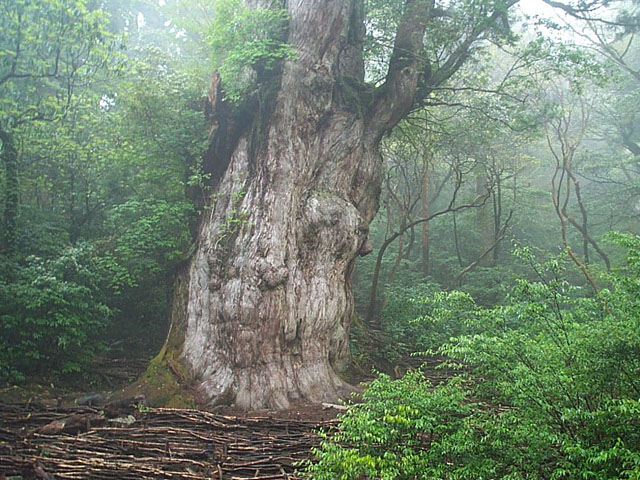 Japanese CedarCryptomeria japonica
Compare
Questions and answers
What is the scientific name of the Coast Redwood?
The scientific name of the Coast Redwood is Sequoia sempervirens. Written with its author, the full name is Sequoia sempervirens (D.Don) Endl..
Which family does the Coast Redwood belong to?
Sequoia sempervirens belongs to the family Cupressaceae, in the order Cupressales and the class Pinopsida.
Where is the Coast Redwood found?
Checklists and occurrence records place Sequoia sempervirens in 20 countries, including United States, France, United Kingdom, Italy, Spain and Portugal.
What is the conservation status of the Coast Redwood?
The IUCN Red List category recorded for Sequoia sempervirens is Endangered (EN).
What other names does the Coast Redwood have?
Sequoia sempervirens is also known in English as California Redwood, Coastal Redwood and Redwood.
What is the scientific name for redwood trees?
The scientific name of the Coast Redwood is Sequoia sempervirens (D.Don) Endl.[1]
Where do redwoods grow naturally?
Coast Redwoods grow naturally in coastal California and the southwestern corner of Oregon.[7]
Sources
Passages the profile rests on
- The coast redwood is an evergreen conifer with a conical crown and a remarkably straight trunk. Source passage: “Coast redwoods have a conical crown, with horizontal to slightly drooping branches. The trunk is remarkably straight.” — English Wikipedia
- Its bark is thick, soft, fibrous and bright red-brown when freshly exposed. Source passage: “The bark can be very thick, up to 35 cm (1.15 ft), and quite soft and fibrous, with a bright red-brown color when freshly exposed” — English Wikipedia
- Its leaves are dark green above and have two blue-white stomatal bands underneath. Source passage: “They are dark green above and have two blue-white stomatal bands below.” — English Wikipedia
- Its leaves vary from flat and 15–25 mm long to scalelike and 5–10 mm long, depending on their position and exposure to sunlight. Source passage: “The leaves are variable, being 15–25 mm (5⁄8–1 in) long and flat on young trees and shaded lower branches in older trees. The leaves are scalelike, 5–10 mm (1⁄4–3⁄8 in) long on shoots in full sun in the upper crown of older trees” — English Wikipedia
- Its seed cones are oval and measure 15–32 mm in length. Source passage: “The seed cones are ovoid, 15–32 mm (9⁄16–1+1⁄4 in) long” — English Wikipedia
- Its leaves are mostly needle-like, flat, stiff and sharply pointed, with scale-like leaves on leaders and lateral shoots. Source passage: “Leaves (dimorphic) mostly needle-like, flat, 2-ranked, 1-2 cm long, stiff and sharp pointed, dark green, two broad whitish stomatal bands below; leaves on leaders and lateral shoots are scale-like.” — landscapeplants.oregonstate.edu
- The native range includes coastal California and the southwestern corner of Oregon. Source passage: “this tree occurred naturally in an estimated 810,000 ha (2,000,000 acres) along much of coastal California (excluding southern California where rainfall is not sufficient) and the southwestern corner of coastal Oregon within the United States.” — English Wikipedia
- The species naturally occupies a coastal strip approximately 750 km long and 8–75 km wide along the Pacific coast of North America. Source passage: “coast redwoods occupy a narrow strip of land approximately 750 km (470 mi) in length and 8–75 km (5–47 mi) in width along the Pacific coast of North America” — English Wikipedia
- Its native elevation range is generally 30–750 m above sea level, with occasional occurrences from sea level to approximately 900 m. Source passage: “The prevailing native elevation range is 30–750 m (100–2,460 ft) above sea level, occasionally down to 0 and up to about 900 m (3,000 ft).” — English Wikipedia
- The species naturally grows in maritime Mediterranean and temperate rainforest climates. Source passage: “Redwood naturally occurs on sites that experience both a maritime Mediterranean climate with cool and rainy winters and dry summers, and a temperate rainforest climate with heavy rain and moderate winter and summer temperatures.” — extension.oregonstate.edu
- Its native habitats receive an average of 70 inches of precipitation annually, mostly as winter rain. Source passage: “Precipitation, mostly winter rain, averages 70 inches (180 centimeters) across redwood’s range” — extension.oregonstate.edu
- The species occurs on deep, moist soils belonging to the Inceptisol and Ultisol soil orders. Source passage: “Redwoods occur on deep, moist soils in the Inceptisol and Ultisol soil orders.” — extension.oregonstate.edu
- Common geological parent materials in its habitats include graywacke sandstones, shales and conglomerates. Source passage: “Common parent materials are graywacke sandstones, shales and conglomerates found along alluvial fans, coastal plains and benches along large streams.” — extension.oregonstate.edu
- The species occurs in mixed forests containing western redcedar, western hemlock and Douglas-fir. Source passage: “Mixed western redcedar (Thuja plicata), western hemlock (Tsuga heterophylla) and Douglas-fir (Pseudotsuga menziesii) forest.” — extension.oregonstate.edu
- The tallest and oldest trees occur in deep valleys and gullies with year-round streams and regular fog drip. Source passage: “The tallest and oldest trees are found in deep valleys and gullies, where year-round streams can flow, and fog drip is regular.” — English Wikipedia
- Coast redwoods can occur in mixed evergreen forests with tanoak, Pacific madrone, canyon live oak and California-laurel. Source passage: “Mediterranean California mixed evergreen forest: redwood, Douglas-fir, canyon live oak (Quercus chrysolepis), tanoak (Notholithocarpus densiflorus), Pacific madrone (Arbutus menziesii), California-laurel or Oregon-myrtle (Umbellularia californica)” — extension.oregonstate.edu
- The species can regenerate through root and stump sprouting after its main trunk is damaged or removed. Source passage: “Redwood seed viability is low, and root and stump sprouting is the most usual form of reproduction.” — extension.oregonstate.edu
- Basal burls can produce new trees when the main trunk is damaged by fire, cutting or toppling. Source passage: “Basal burls — hard, knotty growths that form from dormant seedlings on a living tree — can sprout a new tree when the main trunk is damaged by fire, cutting, or toppling.” — nps.gov
- Coast redwood tolerates heavy shade, although shade can reduce sprout height. Source passage: “It tolerates heavy shade, although shading can reduce sprout height.” — extension.oregonstate.edu
- The species can dominate stands containing other tree species and self-thins in denser stands. Source passage: “Redwood will dominate when growing with other trees and self-thin in denser stands” — extension.oregonstate.edu
- Coast redwood is monoecious, producing pollen and seed cones on the same individual. Source passage: “The species is monoecious, with pollen and seed cones on the same plant.” — English Wikipedia
- Pollination occurs in late winter, and seed cones mature approximately eight to nine months later. Source passage: “pollination is in late winter with maturation about 8–9 months after.” — English Wikipedia
- Each seed cone scale produces between three and seven seeds. Source passage: “Each cone scale bears three to seven seeds” — English Wikipedia
- Seeds are released when mature cone scales dry and open. Source passage: “The seeds are released when the cone scales dry and open at maturity.” — English Wikipedia
- Seeds are dispersed by wind over an average distance of 200 to 400 feet from the parent tree. Source passage: “that produce seeds that are dispersed short distances by wind on average 200 to 400 feet from the parent tree.” — extension.oregonstate.edu
- Many coast redwoods are preserved in state and national parks. Source passage: “many redwoods are preserved in various state and national parks” — English Wikipedia
- Old-growth coast redwood stands provide habitat for the federally threatened spotted owl and the California-endangered marbled murrelet. Source passage: “Old-growth redwood stands provide habitat for the federally threatened spotted owl and the California-endangered marbled murrelet.” — English Wikipedia
- Landowners in Oregon plant coast redwoods for timber, biodiversity, conservation, aesthetics and climate-change adaptation. Source passage: “Landowners in Oregon plant redwoods and giant sequoias for various reasons, including aesthetics, timber, biodiversity, conservation, adaptation to climate change and to experiment with new tree species.” — extension.oregonstate.edu
Data
- Catalogue of Life, 2026-10-16 XR cc by
- Global Biodiversity Information Facility CC BY 4.0
- Wikidata CC0
- GeoNames CC BY 4.0
- Wikimedia Commons per image; credit shown with each image
- Within the Catalogue of Life, this name comes from Pinopsida from WFO cc0
References
- Syn. Conif. 198. 1847 [May-Jun 1847] Link where the name was published
- Conifer TEN record for Sequoia sempervirens (D.Don) Endl. Link
This species in other databases
- Catalogue of Life 4WSQG
- Wikidata Q150129
- iNaturalist 47372
- World Flora Online wfo-0000437871-2026-06
- GRIN 33710
Page built on 24 November 2026. See how the catalog is made and all sources and licences.
Cite this page
ScientificNames.org. (2026). Sequoia sempervirens (Coast Redwood). Retrieved November 24, 2026, from https://scientificnames.org/species/sequoia-sempervirens
“Sequoia sempervirens (Coast Redwood).” ScientificNames.org, 2026, scientificnames.org/species/sequoia-sempervirens. Accessed 24 Nov. 2026.
ScientificNames.org. “Sequoia sempervirens (Coast Redwood).” Accessed November 24, 2026. https://scientificnames.org/species/sequoia-sempervirens.
@misc{scientificnames_sequoia_sempervirens_coast_redwood,
  author = {{ScientificNames.org}},
  title = {Sequoia sempervirens (Coast Redwood)},
  year = {2026},
  url = {https://scientificnames.org/species/sequoia-sempervirens},
  note = {Accessed 2026-11-24}
}