Comparison
Cloud Forest Parrot Snake vs Pacific Coast Parrot Snake
Cloud Forest Parrot Snake (Leptophis modestus) and Pacific Coast Parrot Snake (Leptophis diplotropis) both belong to the genus Leptophis (parrot snakes) and part ways below it. Both are recorded in 1 country.
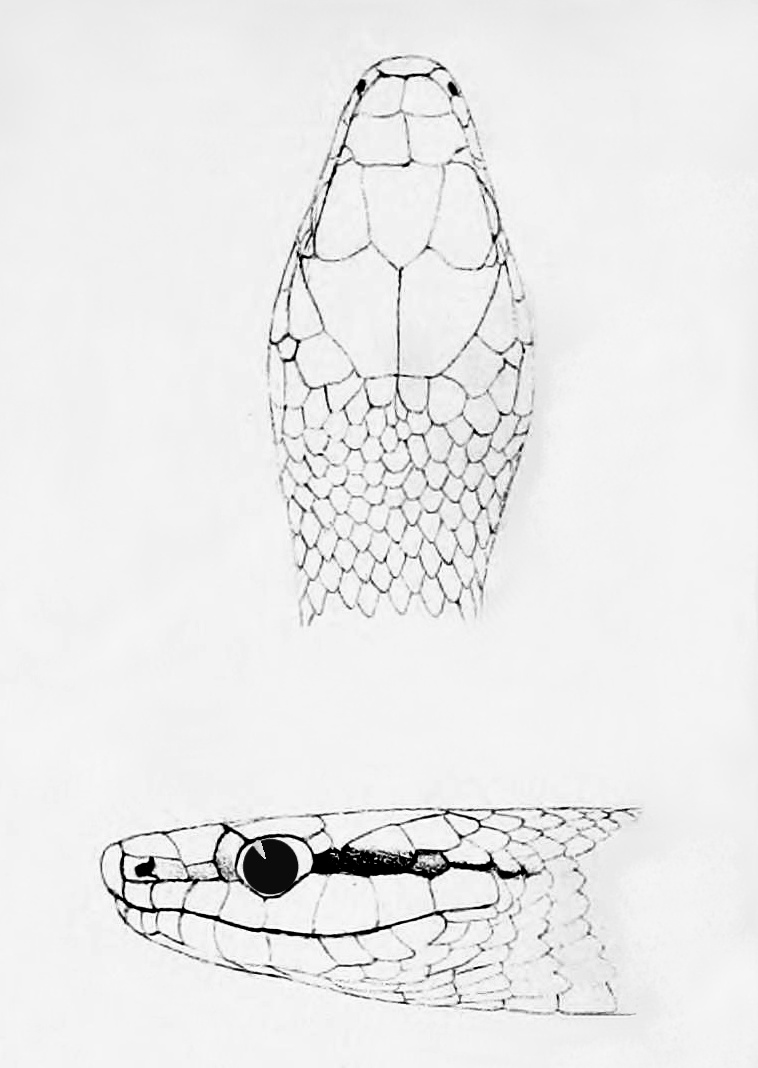
Cloud Forest Parrot Snake
Leptophis modestus
Albert Charles Lewis Günther (1830-1914), Public domain, via Wikimedia Commons


Pacific Coast Parrot Snake
Leptophis diplotropis
George Henry Ford, Public domain, via Wikimedia Commons

Side by side
| Cloud Forest Parrot Snake | Pacific Coast Parrot Snake | |
|---|---|---|
| Scientific name | Leptophis modestus (Günther, 1872) | Leptophis diplotropis (Günther, 1872) |
| English name | Cloud Forest Parrot Snake | Pacific Coast Parrot Snake |
| Group | Reptiles | Reptiles |
| Class | Reptilia Reptile | Reptilia Reptile |
| Order | Squamata Snakes | Squamata Snakes |
| Family | Colubridae Colubrid | Colubridae Colubrid |
| Genus | Leptophis Parrot Snakes | Leptophis Parrot Snakes |
| Named in | 1872 | 1872 |
| Red List category | Vulnerable | Least Concern |
| Countries on record | 4 countries | 1 country |
| GBIF occurrence records | 82 records | 1,183 records |
Rows where the two agree are shown in grey.
Where each is found
Both recorded in 1 country
Only Cloud Forest Parrot Snake (3)
From Catalogue of Life checklists and GBIF occurrence records. A country missing from a list means no record is held, which is not proof of absence.
Checked facts
| Cloud Forest Parrot Snake | Pacific Coast Parrot Snake | |
|---|---|---|
| Appearance |
|
|
| Size |
|
|
| Habitat |
|
|
| Diet | No checked fact yet |
|
| Behaviour | No checked fact yet |
|
| Reproduction | No checked fact yet |
|
| Distribution |
|
|
| Conservation |
| No checked fact yet |
| Name origin |
| No checked fact yet |
In brief
Cloud Forest Parrot Snake
Leptophis modestus occurs in southern Mexico, northwestern El Salvador, and southwestern Honduras. It has olive-green dorsal coloration, blackish streaks behind the eyes, yellowish lips and throat, and pale-green ventral coloration. Full profile
Pacific Coast Parrot Snake
Leptophis diplotropis is endemic to Mexico, ranging from southwestern Chihuahua and southern Sonora to southeastern Oaxaca. It has green dorsal coloration with black and white stripes, a white ventral surface, and two strongly enlarged rearmost maxillary teeth. Full profile
Compare something else
Page built on 27 November 2026 from the data on the two species pages, where every source is listed.
Cite this page
ScientificNames.org. (2026). Cloud Forest Parrot Snake vs Pacific Coast Parrot Snake. Retrieved November 27, 2026, from https://scientificnames.org/compare/cloud-forest-parrot-snake-vs-pacific-coast-parrot-snake
“Cloud Forest Parrot Snake vs Pacific Coast Parrot Snake.” ScientificNames.org, 2026, scientificnames.org/compare/cloud-forest-parrot-snake-vs-pacific-coast-parrot-snake. Accessed 27 Nov. 2026.
ScientificNames.org. “Cloud Forest Parrot Snake vs Pacific Coast Parrot Snake.” Accessed November 27, 2026. https://scientificnames.org/compare/cloud-forest-parrot-snake-vs-pacific-coast-parrot-snake.
@misc{scientificnames_cloud_forest_parrot_snake_vs_pacific_coast_parrot_snake,
  author = {{ScientificNames.org}},
  title = {Cloud Forest Parrot Snake vs Pacific Coast Parrot Snake},
  year = {2026},
  url = {https://scientificnames.org/compare/cloud-forest-parrot-snake-vs-pacific-coast-parrot-snake},
  note = {Accessed 2026-11-27}
}