Comparison
Marsh Woundwort vs Hedge Woundwort
Marsh Woundwort (Stachys palustris) and Hedge Woundwort (Stachys sylvatica) both belong to the genus Stachys (woundwort) and part ways below it. Both are recorded in 57 countries.
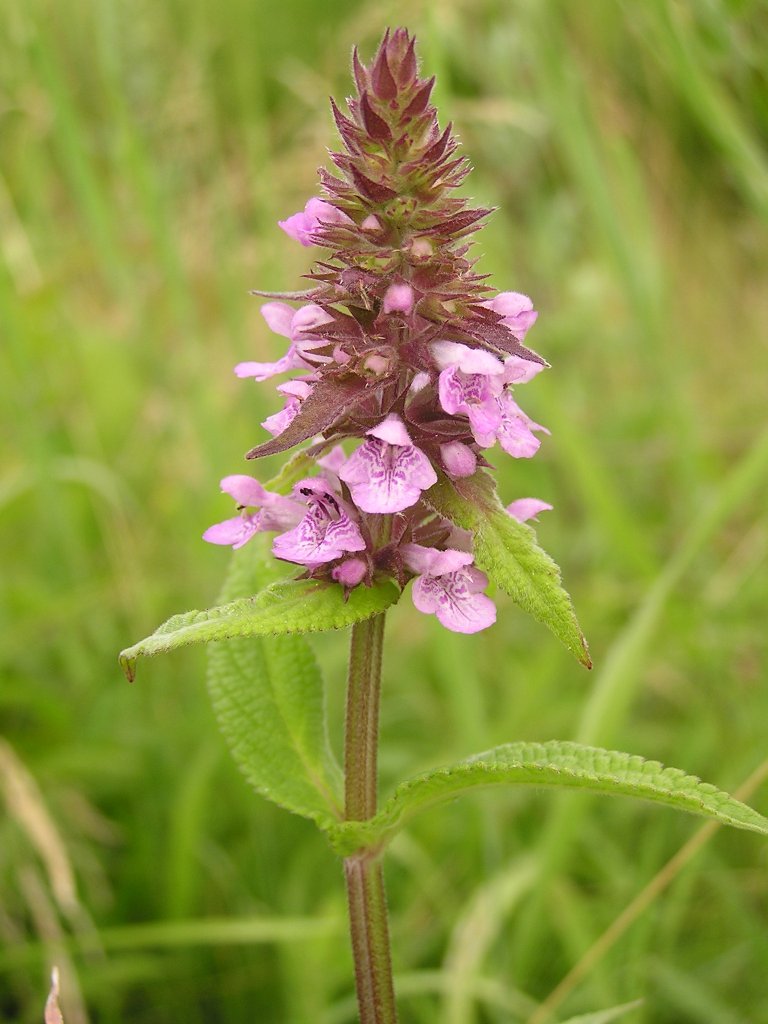


Side by side
| Marsh Woundwort | Hedge Woundwort | |
|---|---|---|
| Scientific name | Stachys palustris L. | Stachys sylvatica L. |
| English name | Marsh Woundwort | Hedge Woundwort |
| Group | Flowering plants | Flowering plants |
| Class | Magnoliopsida | Magnoliopsida |
| Order | Lamiales | Lamiales |
| Family | Lamiaceae Mint Family | Lamiaceae Mint Family |
| Genus | Stachys Woundwort | Stachys Woundwort |
| Red List category | Least Concern | Not recorded |
| Countries on record | 61 countries | 61 countries |
| GBIF occurrence records | 368,973 records | 692,115 records |
Rows where the two agree are shown in grey.
Where each is found
Both recorded in 57 countries
- Aland Islands
- Albania
- Armenia
- Austria
- Belarus
- Belgium
- Bosnia and Herzegovina
- Bulgaria
- Canada
- China
- Croatia
- Czechia
- Denmark
- Estonia
- Finland
- France
- Georgia
- Germany
- Greece
- Guernsey
- Hungary
- India
- Iran
- Ireland
- Isle of Man
- Italy
- Jersey
- Kazakhstan
- Kosovo
- Kyrgyzstan
- Latvia
- Liechtenstein
- Lithuania
- Luxembourg
- Malta
- Moldova
- Montenegro
- New Zealand
- North Macedonia
- Norway
- Poland
- Portugal
- Romania
- Russia
- San Marino
- Serbia
- Slovakia
- Slovenia
- Spain
- Sweden
- Switzerland
- The Netherlands
- Turkey
- Ukraine
- United Kingdom
- United States
- Uzbekistan
Only Marsh Woundwort (4)
Only Hedge Woundwort (4)
From Catalogue of Life checklists and GBIF occurrence records. A country missing from a list means no record is held, which is not proof of absence.
Checked facts
| Marsh Woundwort | Hedge Woundwort | |
|---|---|---|
| Appearance |
|
|
| Size |
|
|
| Habitat |
|
|
| Diet |
| No checked fact yet |
| Behaviour |
|
|
| Reproduction |
|
|
| Lifespan | No checked fact yet |
|
| Distribution |
| No checked fact yet |
| Conservation |
| No checked fact yet |
| Uses |
|
|
| Other | No checked fact yet |
|
In brief
Marsh Woundwort
Stachys palustris typically grows near lake shores, in marshes containing alder trees, and along the banks of ditches and streams. It has purplish-red flowers arranged in terminal spikes and grows from horizontal tuberous runners. Full profile
Hedge Woundwort
Hedge Woundwort (Stachys sylvatica L.) is a perennial herbaceous flowering plant in the family Lamiaceae, order Lamiales and class Magnoliopsida. It grows in woodland, unmanaged grassland, dappled shade at woodland edges, hedgerows and rough ground. It is distinguished by purple flowers with white markings and leaves that release an unpleasant fetid smell when crushed or bruised. Full profile
Compare something else
Page built on 28 November 2026 from the data on the two species pages, where every source is listed.
Cite this page
ScientificNames.org. (2026). Marsh Woundwort vs Hedge Woundwort. Retrieved November 28, 2026, from https://scientificnames.org/compare/marsh-woundwort-vs-hedge-woundwort
“Marsh Woundwort vs Hedge Woundwort.” ScientificNames.org, 2026, scientificnames.org/compare/marsh-woundwort-vs-hedge-woundwort. Accessed 28 Nov. 2026.
ScientificNames.org. “Marsh Woundwort vs Hedge Woundwort.” Accessed November 28, 2026. https://scientificnames.org/compare/marsh-woundwort-vs-hedge-woundwort.
@misc{scientificnames_marsh_woundwort_vs_hedge_woundwort,
  author = {{ScientificNames.org}},
  title = {Marsh Woundwort vs Hedge Woundwort},
  year = {2026},
  url = {https://scientificnames.org/compare/marsh-woundwort-vs-hedge-woundwort},
  note = {Accessed 2026-11-28}
}