Species · Flowering plants
Whitespot Stachys sylvatica
The scientific name of the Whitespot is Stachys sylvatica. It is a species of flowering plant in the family Lamiaceae (mint family), order Lamiales.
- Scientific name
- Stachys sylvatica L.
- Common name
- Whitespot
- Genus
- Stachys
- Family
- Lamiaceae (Mint Family)
- Order
- Lamiales
- Class
- Magnoliopsida
- Recorded in
- 61 countries
- Name status
- accepted in the Catalogue of Life

Overview
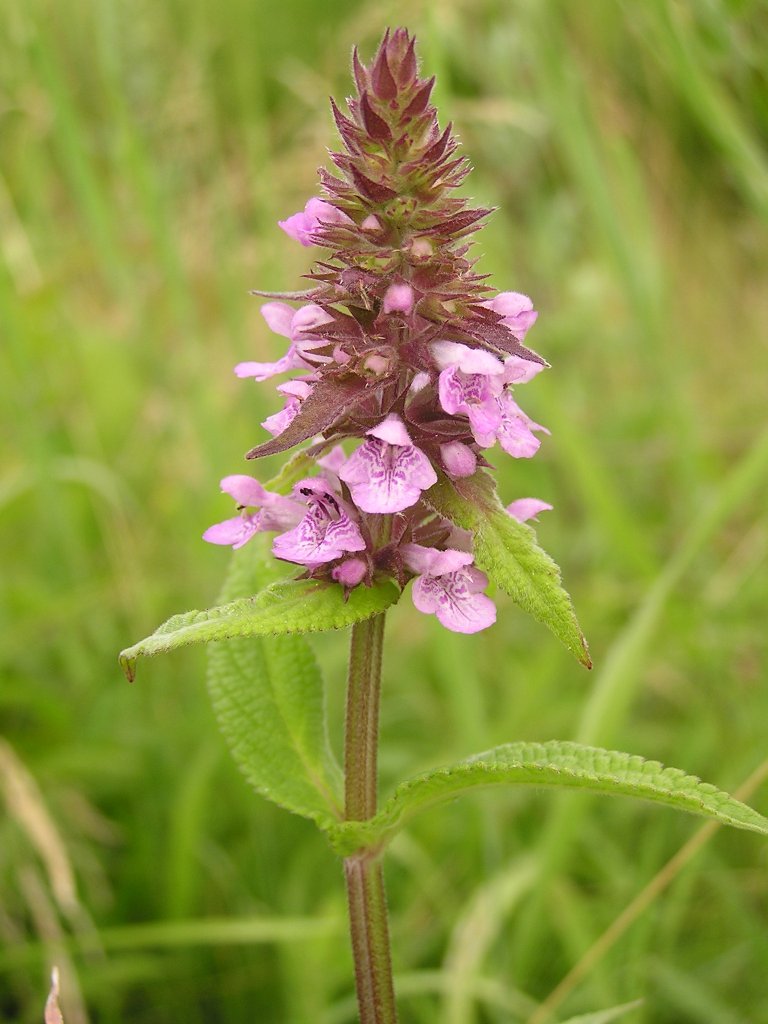
Stachys sylvatica, commonly known as hedge woundwort, whitespot, or sometimes as hedge nettle, is a perennial herbaceous plant growing to 80 cm (31 in) tall in woodland and unmanaged grassland. In temperate zones of the northern hemisphere it flowers in July and August. The flowers are purple. The leaves, when crushed or bruised, give off an unpleasant fetid smell.
Classification of the Whitespot
| Kingdom | Plantae |
|---|---|
| Subkingdom | Pteridobiotina |
| Phylum | Tracheophyta |
| Class | Magnoliopsida |
| Order | Lamiales |
| Family | Lamiaceae (Mint Family) |
| Subfamily | Lamioideae |
| Tribe | Stachydeae |
| Genus | Stachys (Woundwort) |
| Species | Stachys sylvatica L. |
Where the Whitespot is found
Checklists and occurrence records place Stachys sylvatica in 61 countries across Asia, Europe, North America and Oceania. GBIF holds 692,115 georeferenced records of it.
Countries where it is native or its origin is not stated
- Aland Islands 309
- Albania 10
- Andorra 22
- Armenia 43
- Austria 18,792
- Azerbaijan 9
- Belarus 130
- Belgium 30,903
- Bosnia and Herzegovina 24
- Bulgaria 41
- China 59
- Croatia 129
- Czechia 4,757
- Denmark 9,758
- Estonia 1,394
- Finland 2,111
- France 148,445
- Georgia 91
- Germany 60,347
- Greece 39
- Guernsey 15
- Hungary 254
- India 11
- Iran 2
- Ireland 1,686
- Isle of Man 648
- Italy 1,655
- Jersey 12
- Kazakhstan 57
- Kosovo 3
- Kyrgyzstan 1
- Latvia 81
- Liechtenstein 32
- Lithuania 236
- Luxembourg 4,033
- Malta
- Moldova 15
- Montenegro 13
- North Macedonia 3
- Norway 13,876
- Pakistan 4
- Poland 9,696
- Portugal 71
- Romania 143
- Russia 6,121
- San Marino
- Serbia 30
- Slovakia 4,998
- Slovenia 197
- Spain 3,041
- Sweden 22,439
- Switzerland 16,547
- The Netherlands 36,975
- Turkey 63
- Turkmenistan
- Ukraine 1,122
- United Kingdom 289,173
- Uzbekistan
Countries where it has been introduced
Regions and cities with the most records
- England, United Kingdom 234,170
- Bavaria, Germany 37,321
- Scotland, United Kingdom 31,217
- Auvergne-Rhône-Alpes, France 22,525
- Hauts-de-France, France 21,660
- Grand Est, France 21,325
- Bourgogne-Franche-Comté, France 20,584
- Île-de-France, France 18,207
- Wales, United Kingdom 13,806
- Upper Austria, Austria 13,067
- Centre-Val de Loire, France 10,710
- Maastricht, The Netherlands 9,181
- Heerlen, The Netherlands 7,829
- Gelderland, The Netherlands 7,778
- Limburg, The Netherlands 7,138
- Bath, United Kingdom 7,031
- Bristol, United Kingdom 7,000
- Leuven, Belgium 6,217
- Kerkrade, The Netherlands 6,124
- Sittard, The Netherlands 6,095
- Herzogenrath, Germany 5,528
- Derby, United Kingdom 5,327
- Chesterfield, United Kingdom 5,291
- North Rhine-Westphalia, Germany 5,249
- Kidderminster, United Kingdom 5,229
- Worcester, United Kingdom 5,137
- Woluwe-Saint-Lambert, Belgium 4,940
- Sheffield, United Kingdom 4,912
- Aachen, Germany 4,855
- Redditch, United Kingdom 4,826
- Schaerbeek, Belgium 4,761
- Long Eaton, United Kingdom 4,735
- Stourbridge, United Kingdom 4,669
- Pays de la Loire, France 4,646
- Etterbeek, Belgium 4,643
- Rotherham, United Kingdom 4,580
1 more country has a few records outside this range
These countries hold a few records of Stachys sylvatica but lie outside the range the checklists give for it. Such records are often zoo or garden specimens, museum material or vagrants, so the species is not counted as occurring there.
Range as the checklists state it
England (England, Wales, Isle of Man, Scotland, Outer Hebrides, Orkney Isl., Isles of Scilly); Ireland (Ireland, Northern Ireland); Denmark; Norway; Sweden; Finland; Netherlands; Belgium; Luxembourg; Germany (Brandenburg, Berlin, Baden-Württemberg, Bayern, Hessen, Hamburg, Mecklenburg-Vorpommern, Niedersachsen, Nordrhein-Westfalen, Rheinland-Pfalz, Schleswig-Holstein, Saarland, Sachsen, Sachsen-Anhalt, Thüringen); Switzerland; Liechtenstein; Austria; Poland; Czech Republic; Slovakia; Hungary; Portugal; Spain; Andorra; France; Channel Isl. (Alderney, Guernsey, Jersey, Sark); Corsica; Italy; Sicily; Malta; San Marino; Slovenia; Croatia; Bosnia & Hercegovina; Montenegro; Serbia; Kosovo; North Macedonia; Albania; Romania; Bulgaria; European Turkey; Greece (mountains of N-, NE-Greece, south to Mt. Pelion); Estonia; Latvia; Lithuania; Belarus; C-European Russia; E-European Russia; N-European Russia; W-European Russia; Ukraine; Crimea; Madeira (Madeira Isl.); Siberia (Altay, Krasnoyarsk, W-Siberia); Kazakhstan; Turkmenistan; Uzbekistan; Kyrgyzstan; Northern Caucasus; Georgia [Caucasus]; Armenia; Azerbaijan; Turkey (E-Anatolia, N-Anatolia, NE-Anatolia, NW-Anatolia: Bithynia); Iran (N-Iran, Iranian Aserbaijan); China (Xinjiang); China [I]; NW-India (Himachal Pradesh, Jammu & Kashmir); New Zealand [I]; Canada [I] (Ontario [I]); USA [I] (New Jersey [I], New York [I], Ohio [I], Pennsylvania [I])
A number beside a place is its count of GBIF occurrence records. A place without a number comes from a checklist alone. Records show where a species has been observed or collected, which can include escapes and vagrants.
Common names
English
- Whitespot
- Hedge Woundwort
- Woodland Hedge-nettle
Names in 36 other languages
- Belarusian
- Чысцік лясны
- Bulgarian
- Горски ранилист, горски чистец
- Catalan
- Ortiga pudent
- Chinese
- 林地水苏, 林地水蘇
- Czech
- čistec lesní
- Danish
- Skov-galtetand
- Dutch
- Bosandoorn
- Estonian
- mets-nõianõges
- Finnish
- lehtopähkämö
- French
- épiaire des bois, épiaire des forêts
- Georgian
- ყვანჩალა
- German
- Wald-Ziest
- Greek
- Στάχυς ο δασικός
- Hungarian
- Erdei tisztesfű
- Irish
- Créachtlus
- Italian
- Stregona dei boschi
- Japanese
- オオバイヌゴマ
- Latvian
- Meža sārmene
- Lithuanian
- Miškinė notra
- Northern Sami
- rohtospiinneruohtas
- Norwegian Bokmål
- skogsvinerot
- Polish
- Czyściec leśny
- Portuguese
- Estaque-de-trás-os-montes, Rabo-de-raposa-de-trás-os-montes
- Russian
- Чистец лесной
- Scottish Gaelic
- Lus nan Sgor
- Slovak
- čistec lesný
- Slovenian
- gozdni čišljak
- Spanish
- hortiga de zorro, ortiga hedionda
- Swedish
- luktsyska, lundsyska, stinksyska, stinksyssla
- Turkish
- Dağ Çayı, Hamısırgan
- Ukrainian
- Чистець лісовий
- Welsh
- Briwlys y Goedwig, Briwlys y Gwrych
- bak
- Ирен сәскә
- hsb
- Lěsna přeslička
- oss
- Цъирæнгæрдæг
- pcd
- Rouche eurtile
Synonyms
11 other scientific names have been used for this species and are now treated as synonyms of Stachys sylvatica.
- Stachys canariensis Jacq.
- Stachys cordatifolia Gilib.
- Stachys cordato-folia Gilib.
- Stachys foetida Gueldenst. ex Ledeb.
- Stachys glaucescens Muss.-Puschk. ex Spreng.
- Stachys sylvatica f. bracteata (Beck) L.Gross
- Stachys sylvatica var. minus Gray
- Stachys sylvatica var. pallida Hausskn.
- Stachys sylvatica var. tomentosa Čelak.
- Stachys trapezuntea Boiss.
- Stachys cordata Gilib. ambiguous synonym
Related species
-
 Lamb's-earsStachys byzantina
-
 KnotrootStachys affinis
-
 Hedge-nettleStachys palustris
-
 Wild MintStachys arvensis
-
 Florida BetonyStachys floridana
-
 Perennial Yellow-WoundwortStachys recta
-
 Field WoundwortStachys annua
-
 Coastal Hedge-nettleStachys chamissonis
Compare
Questions and answers
What is the scientific name of the Whitespot?
The scientific name of the Whitespot is Stachys sylvatica. Written with its author, the full name is Stachys sylvatica L..
Which family does the Whitespot belong to?
Stachys sylvatica belongs to the family Lamiaceae, in the order Lamiales and the class Magnoliopsida.
Where is the Whitespot found?
Checklists and occurrence records place Stachys sylvatica in 61 countries, including United Kingdom, France, Germany, The Netherlands, Belgium and Sweden.
What other names does the Whitespot have?
Stachys sylvatica is also known in English as Hedge Woundwort and Woodland Hedge-nettle.
Sources
Data
- Catalogue of Life, 2026-10-16 XR cc by
- Global Biodiversity Information Facility CC BY 4.0
- Wikidata CC0
- English Wikipedia CC BY-SA 4.0
- GeoNames CC BY 4.0
- Wikimedia Commons per image; credit shown with each image
- Within the Catalogue of Life, this name comes from Synonymic Checklists of the Vascular Plants of the World cc by
References
- L. (1753). Sp. Pl. [Linnaeus] 2: 580 (1753). where the name was published
This species in other databases
- Catalogue of Life 4ZFZC
- Wikidata Q157422
- iNaturalist 129850
- World Flora Online wfo-0000314658
- GRIN 407652
Page built on 24 November 2026. See how the catalog is made and all sources and licences.
Cite this page
ScientificNames.org. (2026). Stachys sylvatica (Whitespot). Retrieved November 24, 2026, from https://scientificnames.org/species/stachys-sylvatica
“Stachys sylvatica (Whitespot).” ScientificNames.org, 2026, scientificnames.org/species/stachys-sylvatica. Accessed 24 Nov. 2026.
ScientificNames.org. “Stachys sylvatica (Whitespot).” Accessed November 24, 2026. https://scientificnames.org/species/stachys-sylvatica.
@misc{scientificnames_stachys_sylvatica_whitespot,
  author = {{ScientificNames.org}},
  title = {Stachys sylvatica (Whitespot)},
  year = {2026},
  url = {https://scientificnames.org/species/stachys-sylvatica},
  note = {Accessed 2026-11-24}
}