Comparison

Mountain Wren vs Northern House Wren

Mountain Wren (Troglodytes solstitialis) and Northern House Wren (Troglodytes aedon) both belong to the genus Troglodytes (wrens) and part ways below it. Both are recorded in 6 countries.
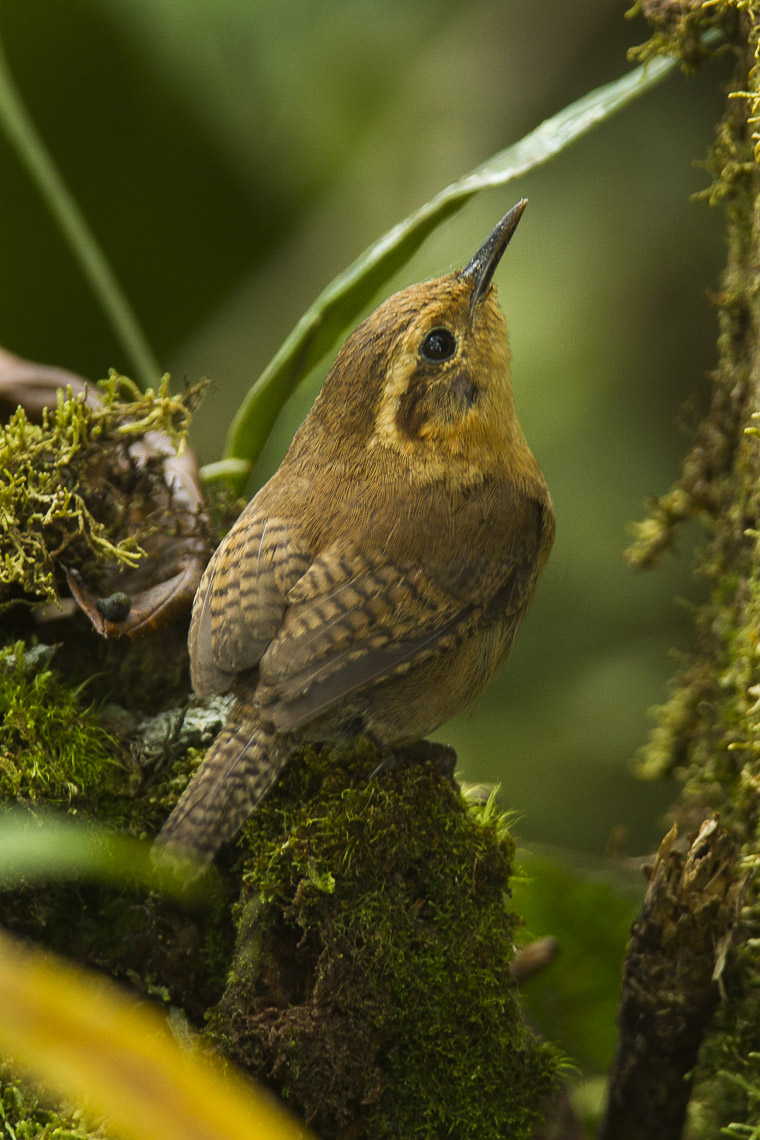
Mountain Wren

Mountain Wren

Troglodytes solstitialis

Francesco Veronesi from Italy, CC BY-SA 2.0, via Wikimedia Commons

Northern House Wren

Northern House Wren

Troglodytes aedon

Rhododendrites, CC BY-SA 4.0, via Wikimedia Commons

Side by side

Mountain WrenNorthern House Wren
Scientific nameTroglodytes solstitialis P. L. Sclater, 1859Troglodytes aedon Vieillot, 1809
English nameMountain WrenNorthern House Wren
GroupBirdsBirds
ClassAves BirdAves Bird
OrderPasseriformes PasserinePasseriformes Passerine
FamilyTroglodytidae WrenTroglodytidae Wren
GenusTroglodytes WrensTroglodytes Wrens
Named in18591809
Red List categoryLeast ConcernLeast Concern
EnvironmentNot recordedterrestrial
Countries on record6 countries34 countries
GBIF occurrence records41,439 records7,869,207 records

Rows where the two agree are shown in grey.

Where each is found

Both recorded in 6 countries

Only Northern House Wren (28)

From Catalogue of Life checklists and GBIF occurrence records. A country missing from a list means no record is held, which is not proof of absence.

Checked facts

Mountain WrenNorthern House Wren
Appearance
  • Adult nominate Mountain Wrens have a rufous brown forehead and crown, a less reddish brown nape, shoulders, back, and rump, and a rufous brown tail with narrow black bars. English Wikipedia
  • The nominate subspecies has barred folded wings. English Wikipedia
  • The nominate subspecies has a buffy brown supercilium, warm buff cheeks, and warm buff throat and chest. English Wikipedia
  • The nominate subspecies has a paler buff belly, buffy brown flanks with darker bars, and a grayish vent with darker bars. English Wikipedia
  • Juveniles have less warm-colored supercilia and upperparts and dull gray-brown underparts with darker speckles. English Wikipedia
  • The subspecies T. s. solitarius has darker upperparts and cheeks, a paler throat, and less reddish flanks than the nominate subspecies. English Wikipedia
  • The subspecies T. s. macrourus has a white middle breast. English Wikipedia
  • The subspecies T. s. frater has a whitish supercilium. English Wikipedia
  • The subspecies T. s. auricularis has less reddish upperparts than T. s. frater. English Wikipedia
Size
Habitat
  • The Mountain Wren inhabits humid montane forest, cloud forest, and forest edges extending to the tree line. English Wikipedia
  • The Mountain Wren is occasionally found in bamboo thickets. English Wikipedia
  • The Mountain Wren generally occurs at elevations between 1,700 and 3,500 m. English Wikipedia
  • In Argentina, the Mountain Wren occurs at elevations as low as 700 m. English Wikipedia
  • The Mountain Wren's habitat includes subtropical or tropical moist montane forests. inaturalist.org
  • The species inhabits open, shrubby woodlands and forest edges. animaldiversity.org
  • Small woodlots and forest edges are commonly used habitats. animaldiversity.org
  • The species frequently occupies suburban backyards and human-made bird houses. animaldiversity.org
  • During winter, birds use thickets, brushy areas, riparian forests, and savannas in the southern United States. animaldiversity.org
  • In Mexico, the species uses tropical evergreen and semideciduous forests during winter. animaldiversity.org
  • The species frequently nests in cavities created by woodpeckers. English Wikipedia
Diet
  • The Mountain Wren's diet has not been analyzed in any published study mentioned in the document. English Wikipedia
  • The species primarily eats small terrestrial insects. animaldiversity.org
  • Adult and independent young birds consume mostly spiders, beetles, and bugs. animaldiversity.org
  • Nestlings are primarily fed grasshoppers, crickets, and caterpillars. animaldiversity.org
  • Adults supplement their diet and their young's food with calcium sources such as mollusk shells. animaldiversity.org
  • Adult birds commonly consume Hemiptera, including cicadas and leafhoppers. pages.vassar.edu
Behaviour
  • The Mountain Wren usually forages in pairs or family groups. English Wikipedia
  • The Mountain Wren occasionally joins mixed-species foraging flocks. English Wikipedia
  • The Mountain Wren hunts mostly in low vegetation but also climbs into mossy trees. English Wikipedia
  • The Mountain Wren can be found singly or in pairs. ebird.org
Reproduction
  • The Mountain Wren breeds at almost any time of year in Colombia and Peru. English Wikipedia
  • The Mountain Wren breeds at least between November and February in Bolivia. English Wikipedia
  • A described Mountain Wren nest was bulky, open-topped, and equipped with a side entrance. English Wikipedia
  • The described Mountain Wren nest was constructed from root fibers and lined with dry leaves. English Wikipedia
  • Mountain Wren clutches contain between two and five eggs. English Wikipedia
LifespanNo checked fact yet
Distribution
  • The Mountain Wren occurs in the Andes of northwestern Argentina, Bolivia, Colombia, Ecuador, Peru, and western Venezuela. English Wikipedia
  • The subspecies T. s. solitarius occurs in the mountains of Colombia, except the extreme south, and in western Venezuela. English Wikipedia
  • The subspecies T. s. solstitialis occurs from extreme southern Colombia through Ecuador into northwestern Peru. English Wikipedia
  • The subspecies T. s. macrourus occurs on the eastern slope of the Peruvian Andes from the Department of San Martín southward. English Wikipedia
  • The subspecies T. s. frater occurs in extreme southeastern Peru and western Bolivia. English Wikipedia
  • The subspecies T. s. auricularis occurs in northwestern Argentina south to Tucumán Province. English Wikipedia
  • The northern house wren occurs in southern Canada, the United States, and Mexico. English Wikipedia
  • Northern house wrens migrate to the southern United States and Mexico for winter. English Wikipedia
Conservation
  • The Mountain Wren was assessed as Least Concern by the IUCN in the assessment described in the document. English Wikipedia
  • The Mountain Wren occurs in several protected areas. English Wikipedia
  • The northern house wren is not considered threatened by the IUCN. English Wikipedia
  • House wrens have benefited from forest fragmentation and other human-induced habitat changes. animaldiversity.org
UsesNo checked fact yet
Name originNo checked fact yet
  • The genus name Troglodytes means hole dweller and refers to the bird's habit of entering crevices. English Wikipedia
Other
  • The Mountain Wren has five recognized subspecies listed in the document. English Wikipedia
  • The South American Classification Committee of the American Ornithological Society considers the Mountain Wren and four related wrens to form a superspecies. English Wikipedia
  • The IUCN Red List page records that the Mountain Wren was most recently assessed in 2024. iucnredlist.org
No checked fact yet

In brief

Mountain Wren

The Mountain Wren (Troglodytes solstitialis) is a bird in the family Troglodytidae, order Passeriformes, and class Aves. It occurs in the Andes of northwestern Argentina, Bolivia, Colombia, Ecuador, Peru, and western Venezuela. It measures 10.5–11.5 cm in length and has rufous brown upperparts, barred wings, and buff-colored underparts in the nominate subspecies. Full profile

Northern House Wren

Troglodytes aedon occurs in southern Canada, the United States, and Mexico, and migrates to the southern United States and Mexico for winter. It has brown upperparts, lighter underparts, blackish wing and tail barring, and a short tail typically held upright. Full profile

Compare something else

Page built on 29 November 2026 from the data on the two species pages, where every source is listed.

Cite this page

ScientificNames.org. (2026). Mountain Wren vs Northern House Wren. Retrieved November 29, 2026, from https://scientificnames.org/compare/mountain-wren-vs-northern-house-wren