Species · Birds
Australian Reed Warbler Acrocephalus australis
The scientific name of the Australian Reed Warbler is Acrocephalus australis. It is a species of bird in the family Acrocephalidae (reed warblers & allies), order Passeriformes. The name dates from 1838.
- Scientific name
- Acrocephalus australis (Gould, 1838)
- Common name
- Australian Reed Warbler
- Genus
- Acrocephalus
- Family
- Acrocephalidae (Reed Warblers & Allies)
- Order
- Passeriformes
- Class
- Aves
- Red List category
- LC Least Concern
- Recorded in
- 5 countries
- Name status
- accepted in the Catalogue of Life

Overview
Acrocephalus australis occurs across Australia and has also been recorded in Papua New Guinea and nearby islands. It is distinguished by its long, slender body, plain brown plumage and loud, varied song.
Written 26 November 2026 from the sources listed below. Each statement was checked against the passage it cites; statements that could not be supported were removed.
Appearance
The Australian Reed Warbler has a long, slender body and generally plain brown plumage. It measures approximately 15–18 cm in length, and its tail measures between 51 and 71 mm.[1][2][3]
Its long, thin bill measures 17–23 mm and has a slightly down-curved shape and hooked tip. Its wings appear short because their tips do not reach the uppertail-coverts.[4][5]
Juveniles resemble adults but have yellowish-brown uppertail-coverts and underparts. Males and females have similar external plumage characteristics.[6][7]
Habitat
The Australian Reed Warbler inhabits natural and artificial wetlands containing freshwater, brackish water or saltwater. It occurs in reed beds across Australia and inhabits freshwater wetlands in the eastern half of Australia, mostly in coastal areas.[8][9][10]
It frequents dense vegetation containing reeds, reedmace and rushes during both breeding and non-breeding seasons. It also inhabits reedbeds, dense vegetation and long grass near wetlands, and occasionally uses shrublands and riparian woodlands around water bodies.[11][12][13]
Diet
The Australian Reed Warbler feeds mainly on insects and spiders, while occasionally consuming molluscs and seeds.[14]
Behaviour
Australian Reed Warblers are frequently observed perched sideways along reed stems.[15]
The species produces a loud, varied song combining melodious fluty notes with hard, metallic-sounding notes. Its song consists of short repeated sound sequences separated by intervals of three to five seconds.[16][17]
Males use song to advertise their fitness and establish and defend breeding territories. The species migrates seasonally between overwintering areas in eastern and northern Australia and breeding areas in southwestern and southeastern Australia.[18][19]
Reproduction and life cycle
The species forms socially monogamous seasonal breeding pairs, which generally do not reunite in subsequent breeding seasons. It also exhibits polygyny, polyandry and extra-pair copulations.[20][21][22]
Males arrive at breeding grounds from July to August onwards. Breeding occurs from October to December in southeastern Australia and from September to December in southern Australia.[23][24]
Both sexes participate in nest construction, although females contribute more than males. The nest is a deep cup measuring 6.4–9 cm in diameter and 7–18.5 cm in height.[25][26]
Nests are constructed from fresh and dead vegetation and supported by reed stems 30–200 cm above the ground or water surface. Clutches contain between two and four eggs, which females incubate for 13–15 days.[27][28][29]
Both parents feed nestlings for 10–13 days and continue feeding fledglings outside the nest until they are older than 28 days. The species has a reported nesting success rate of 58%.[30][31]
Conservation
Habitat loss caused by burning, clearing and draining wetlands and surrounding reed vegetation threatens the Australian Reed Warbler.[32]
Similar species
The Caroline reed warbler (Acrocephalus syrinx) is identified as the closest relative of the Australian Reed Warbler in recent phylogenetic analysis.[33]
Classification of the Australian Reed Warbler
| Kingdom | Animalia |
|---|---|
| Phylum | Chordata |
| Subphylum | Vertebrata |
| Infraphylum | Gnathostomata |
| Parvphylum | Osteichthyes |
| Megaclass | Tetrapoda |
| Class | Aves (Bird) |
| Order | Passeriformes (Passerine) |
| Family | Acrocephalidae (Reed Warblers & Allies) |
| Genus | Acrocephalus (Reed-Warblers) |
| Species | Acrocephalus australis (Gould, 1838) |
Where the Australian Reed Warbler is found
Checklists and occurrence records place Acrocephalus australis in 5 countries. GBIF holds 287,455 georeferenced records of it.
Countries
Regions and cities with the most records
- Victoria, Australia 98,256
- New South Wales, Australia 69,258
- Queensland, Australia 35,800
- Canberra, Australia 28,134
- Australian Capital Territory, Australia 28,079
- Western Australia, Australia 23,834
- South Australia, Australia 22,168
- Tuggeranong, Australia 21,684
- Burwood, Australia 20,750
- Balwyn North, Australia 20,724
- Melbourne, Australia 20,465
- St Albans, Australia 15,896
- Perth, Australia 13,929
- Brisbane, Australia 12,307
- Frankston East, Australia 10,158
- Capalaba, Australia 8,937
- Sydney, Australia 7,796
- Geelong, Australia 6,913
- Adelaide, Australia 6,595
- Parramatta, Australia 6,538
- Ballarat, Australia 6,299
- Adelaide Hills, Australia 6,179
- Northern Territory, Australia 5,130
- Torquay, Australia 4,852
- Newcastle, Australia 4,754
- Liverpool, Australia 4,707
- Logan City, Australia 4,335
- Alice Springs, Australia 3,732
- Maitland, Australia 3,724
- Hornsby, Australia 3,622
- Kwinana, Australia 3,338
- Narangba, Australia 2,878
- Shepparton, Australia 2,313
- Mount Barker, Australia 2,251
- Wollongong, Australia 2,128
- Wodonga, Australia 2,064
2 more countries have a few records outside this range
These countries hold a few records of Acrocephalus australis but lie outside the range the checklists give for it. Such records are often zoo or garden specimens, museum material or vagrants, so the species is not counted as occurring there.
A number beside a place is its count of GBIF occurrence records. A place without a number comes from a checklist alone. Records show where a species has been observed or collected, which can include escapes and vagrants.
Common names
English
- Australian Reed Warbler
- Australasian Reed-warbler
- Australian Reed-Warbler
Names in 28 other languages
- Catalan
- boscarla d'Austràlia
- Chinese
- 澳洲苇莺, 澳洲葦鶯
- Croatian
- australski trstenjak
- Czech
- rákosník australský
- Danish
- Australsk Drosselrørsanger
- Dutch
- Australische Karekiet
- Esperanto
- Aŭstrala kanbirdo, aŭstralia kanbirdo
- Estonian
- austraalia roolind
- Finnish
- australianrastaskerttunen
- French
- Rousserolle d'Australie, Rousserolle d’Australie
- German
- Australien-Rohrsänger, Australischer Sternrohrsänger, Australrohrsänger
- Hungarian
- ausztrál nádirigó
- Indonesian
- Kerak-basi australia
- Italian
- Cannareccione australiano
- Japanese
- オーストラリアヨシキリ
- Lithuanian
- australinė nendrinukė
- Macedonian
- австралиски трскар
- Norwegian
- australtrostesanger
- Persian
- سسک نیزار استرالیایی
- Polish
- trzciniak australijski
- Portuguese
- felosa-australiana
- Russian
- Австралийская камышевка, Австралийская камышовка
- Slovak
- trsteniarik austrálsky, trsteniarik hnedokrídly
- Spanish
- Carricero australiano
- Swedish
- australisk rörsångare
- Turkish
- Avustralya Kamışçını
- Ukrainian
- очеретянка австралійська
- Vietnamese
- Chích sậy Australia
Synonyms
3 other scientific names have been used for this species and are now treated as synonyms of Acrocephalus australis.
- Acrocephalus stentoreus australis Gould, J, 1838
- Calamoherpe australis Gould, J, 1838
- Sylvia arundinacea Lewin, JW, 1808
Subspecies and varieties
- Acrocephalus australis australis (Eastern Australian Reed Warbler) subspecies
- Acrocephalus australis carterae subspecies
- Acrocephalus australis gouldi (Western Australian Reed Warbler) subspecies
Related species
-
 Common Reed WarblerAcrocephalus scirpaceus
-
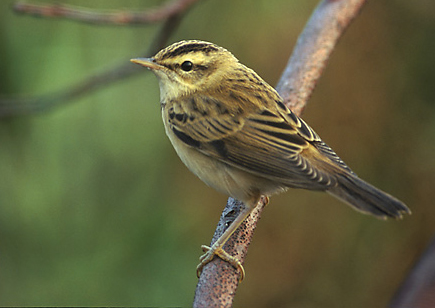 Sedge WarblerAcrocephalus schoenobaenus
-
 Great Reed WarblerAcrocephalus arundinaceus
-
 Blyth's Reed WarblerAcrocephalus dumetorum
-
 Marsh WarblerAcrocephalus palustris
-
 Nauru Reed WarblerAcrocephalus rehsei
-
 Aquatic WarblerAcrocephalus paludicola
-
 BokikokikoAcrocephalus aequinoctialis
Compare
Questions and answers
What is the scientific name of the Australian Reed Warbler?
The scientific name of the Australian Reed Warbler is Acrocephalus australis. Written with its author, the full name is Acrocephalus australis (Gould, 1838).
Which family does the Australian Reed Warbler belong to?
Acrocephalus australis belongs to the family Acrocephalidae, in the order Passeriformes and the class Aves.
Where is the Australian Reed Warbler found?
Checklists and occurrence records place Acrocephalus australis in 5 countries: Australia, Papua New Guinea, Timor Leste, Solomon Islands and New Zealand.
What is the conservation status of the Australian Reed Warbler?
The IUCN Red List category recorded for Acrocephalus australis is Least Concern (LC).
What other names does the Australian Reed Warbler have?
Acrocephalus australis is also known in English as Australasian Reed-warbler and Australian Reed-Warbler.
Is a reed warbler rare?
The Australian Reed Warbler has a reported nesting success rate of 58%, but no information establishes whether it is rare.[31]
What does the warbler bird eat?
The Australian Reed Warbler feeds mainly on insects and spiders, while occasionally consuming molluscs and seeds.[14]
What habitat do warblers like?
The Australian Reed Warbler inhabits natural and artificial wetlands containing freshwater, brackish water or saltwater. It frequents dense vegetation containing reeds, reedmace and rushes, and occasionally uses shrublands and riparian woodlands around water bodies.[8][11][12]
Sources
Passages the profile rests on
- The Australian reed warbler has a long, slender body and generally plain brown plumage. Source passage: “This species appears long (15–18 cm), slender and plain, with drab brown plumage that varies with wear.” — English Wikipedia
- The Australian reed warbler measures approximately 15–18 cm in length. Source passage: “This species appears long (15–18 cm)” — English Wikipedia
- The tail measures between 51 and 71 mm. Source passage: “the tail measurers between 51–71 mm” — English Wikipedia
- Its bill is long and thin, measuring 17–23 mm, with a slightly down-curved shape and a hooked tip. Source passage: “The beak is long and thin (17-23mm) with a slightly decurved bill that has a slight hook at the tip.” — English Wikipedia
- The species has short-looking wings because their tips do not reach the uppertail-coverts. Source passage: “Wing tips fall short of the uppertail-coverts giving the wings a short appearance.” — English Wikipedia
- Juveniles resemble adults but have yellowish-brown uppertail-coverts and underparts. Source passage: “Juveniles are very similar to adults but have yellowish-brownish uppertail-coverts and underparts.” — English Wikipedia
- Males and females have similar external plumage characteristics. Source passage: “Sexes are monomorphic.” — English Wikipedia
- The species inhabits natural and artificial wetlands containing freshwater, brackish water, or saltwater. Source passage: “Australian reed warblers are found in a wide range of natural and man-made wetlands including fresh, brackish and saltwater environments.” — English Wikipedia
- The species inhabits reed beds across Australia. Source passage: “It lives in reed beds across Australia.” — inaturalist.org
- The species inhabits freshwater wetlands in the eastern half of Australia, mostly in coastal areas. Source passage: “Inhabits freshwater wetlands in eastern half of Australia, mostly coastal ...” — ebird.org
- The species frequents dense vegetation containing reeds, reedmace, and rushes during both breeding and non-breeding seasons. Source passage: “Dense vegetation with vertical structures such as reeds (Phragmites), reedmace (Typha) and rushes (Juncus) are frequented in breeding and non-breeding season” — English Wikipedia
- The species occasionally uses shrublands and riparian woodlands around water bodies. Source passage: “This species is occasionally observed in shrublands and riparian woodlands surrounding water bodies” — English Wikipedia
- The species inhabits reedbeds, dense vegetation, and long grass near wetlands. Source passage: “Plain, brownish songbird of reedbeds, dense vegetation, and long grass near wetlands.” — ebird.org
- The Australian reed warbler feeds mainly on insects and spiders, while occasionally consuming molluscs and seeds. Source passage: “in dense vegetation on insects and spiders and occasionally molluscs and seeds.” — English Wikipedia
- Australian reed warblers are frequently observed perched sideways along reed stems. Source passage: “Australian reed warblers are often observed perched sideways midway along a reed stem.” — English Wikipedia
- The species produces a loud, varied song combining melodious fluty notes with hard, metallic-sounding notes. Source passage: “Described as a sweet melodious warble with rich fluty notes as well as hard and metallic sounding notes, Australian reed warbler song is loud and varied.” — English Wikipedia
- Its song consists of short repeated sound sequences separated by intervals of three to five seconds. Source passage: “a pattern of sounds that is repeated, after a 3-5 second interval, in varied combinations.” — English Wikipedia
- Males use song to advertise their fitness and establish and defend breeding territories. Source passage: “used as a signal to advertise a male's fitness to females and other males, as well as having a role in establishing and defending breeding territories.” — English Wikipedia
- The species migrates seasonally between overwintering areas in eastern and northern Australia and breeding areas in southwestern and southeastern Australia. Source passage: “The Australian reed warbler migrates to Southwest and Southeast Australia to breed from overwinter grounds throughout Eastern and Northern Australia.” — English Wikipedia
- The species forms socially monogamous seasonal breeding pairs. Source passage: “This species forms a socially monogamous seasonal breeding pair” — English Wikipedia
- Breeding pairs generally do not reunite in subsequent breeding seasons. Source passage: “The same male and female pairings are not typically repeated in following seasons.” — English Wikipedia
- The species also exhibits polygyny, polyandry, and extra-pair copulations. Source passage: “Australian reed warblers are known to be polygynous/polyandrous and engage in extra-pair copulations.” — English Wikipedia
- Males arrive at breeding grounds from July to August onwards. Source passage: “Males arrive at the breeding grounds from July to August onwards.” — English Wikipedia
- Breeding occurs from October to December in southeastern Australia and from September to December in southern Australia. Source passage: “Breeding season is from October to December in south-eastern Australia and September to December in southern Australia.” — English Wikipedia
- Both sexes participate in nest construction, although females contribute more than males. Source passage: “Both males and females build the nest; however, the females contribute more than the males.” — English Wikipedia
- The nest is a deep cup measuring 6.4–9 cm in diameter and 7–18.5 cm in height. Source passage: “The nest is a deep cup (6.4 – 9 cm diameter and 7 – 18.5 cm height)” — English Wikipedia
- Nests are constructed from fresh and dead vegetation and supported by reed stems 30–200 cm above the ground or water surface. Source passage: “made from dead and fresh vegetation usually supported by fresh and dead reed stems found between 30–200 cm off the ground or water surface.” — English Wikipedia
- Females incubate the eggs for 13–15 days. Source passage: “Incubation is carried out by the female for 13 – 15 days” — English Wikipedia
- Clutches contain between two and four eggs. Source passage: “clutch size is between 2 and 4 eggs.” — English Wikipedia
- Both parents feed nestlings for 10–13 days and continue feeding fledglings outside the nest until they are older than 28 days. Source passage: “Chicks are fed by both the male and female in the nest for a period of 10–13 days and parents continue to feed fledglings outside the nest until they are more than 28 days old.” — English Wikipedia
- The species has a reported nesting success rate of 58%. Source passage: “Australian reed warblers have a nesting success of 58%” — English Wikipedia
- Habitat loss caused by burning, clearing, and draining wetlands and surrounding reed vegetation threatens the species. Source passage: “This species is vulnerable to loss of suitable habitat through burning, clearing or draining of waterbodies and reed vegetation surrounding the waterbodies.” — English Wikipedia
- The Caroline reed warbler (Acrocephalus syrinx) is identified as the closest relative of the Australian reed warbler in recent phylogenetic analysis. Source passage: “Most recent phylogenetic analysis, however, finds the closest relative to the Australian reed warbler is the Caroline reed warbler (Acrocephalus syrinx).” — English Wikipedia
Data
- Catalogue of Life, 2026-10-16 XR cc by
- Global Biodiversity Information Facility CC BY 4.0
- Wikidata CC0
- GeoNames CC BY 4.0
- Wikimedia Commons per image; credit shown with each image
- Within the Catalogue of Life, this name comes from The Integrated Taxonomic Information System cc0
References
- Gill, Frank, & and Minturn Wright. (2006). Birds of the World: Recommended English Names.
This species in other databases
Page built on 27 November 2026. See how the catalog is made and all sources and licences.
Cite this page
ScientificNames.org. (2026). Acrocephalus australis (Australian Reed Warbler). Retrieved November 27, 2026, from https://scientificnames.org/species/acrocephalus-australis
“Acrocephalus australis (Australian Reed Warbler).” ScientificNames.org, 2026, scientificnames.org/species/acrocephalus-australis. Accessed 27 Nov. 2026.
ScientificNames.org. “Acrocephalus australis (Australian Reed Warbler).” Accessed November 27, 2026. https://scientificnames.org/species/acrocephalus-australis.
@misc{scientificnames_acrocephalus_australis_australian_reed_warbler,
  author = {{ScientificNames.org}},
  title = {Acrocephalus australis (Australian Reed Warbler)},
  year = {2026},
  url = {https://scientificnames.org/species/acrocephalus-australis},
  note = {Accessed 2026-11-27}
}