Species · Birds
Blyth's Reed Warbler Acrocephalus dumetorum
The scientific name of the Blyth's Reed Warbler is Acrocephalus dumetorum. It is a species of bird in the family Acrocephalidae (reed warblers & allies), order Passeriformes. The name dates from 1849.
- Scientific name
- Acrocephalus dumetorum Blyth, 1849
- Common name
- Blyth's Reed Warbler
- Genus
- Acrocephalus
- Family
- Acrocephalidae (Reed Warblers & Allies)
- Order
- Passeriformes
- Class
- Aves
- Red List category
- LC Least Concern
- Recorded in
- 60 countries
- Name status
- accepted in the Catalogue of Life

Overview
Acrocephalus dumetorum breeds across the Palearctic zoogeographical region and winters in South Asia. It has plain olive brown upperparts, off-white underparts and a variable song combining harsh sounds, melodious whistles and mimicry.
Written 26 November 2026 from the sources listed below. Each statement was checked against the passage it cites; statements that could not be supported were removed.
Appearance
Blyth's Reed Warbler measures between 12 and 14 cm in length and weighs between 8 and 16 g. It has a slim body, relatively short wings and a long bill.[1][2][3]
Its upperparts are plain olive brown, while its short, rounded wings are less olive in colour. The underparts are plain and off-white.[4][5][6]
A short whitish supercilium extends between the bill base and the eye, with a dusky stripe running through the eye. The bill is relatively long, thick and greyish brown, with a pale pinkish-brown base to the lower mandible.[7][8][9][10]
The feet and legs are pale pinkish-brown.[11]
Habitat
During the breeding season, Blyth's Reed Warbler prefers the edges and clearings of damp broadleaved woodland. It also occupies wooded gullies, parks, gardens, scrub and coniferous forest.[12][13][14]
During winter, it occurs in trees in both wet and dry habitats.[15]
Behaviour
Blyth's Reed Warbler produces a variable song combining harsh sounds with melodious whistles and mimicry. It is typically solitary and territorial.[16][17]
In Finland, individual territories cover between 600 and 1,300 square metres.[18]
Reproduction and life cycle
Blyth's Reed Warbler breeds between late May and July. It is typically monogamous, although polygyny has also been recorded.[19][20]
Pairs construct compact cup-shaped nests from plant material and spider webs. Nests are positioned between 20 and 60 cm above the ground.[21][22]
Clutches contain between three and six eggs. Both parents incubate the eggs, although the female performs most of the incubation, and the incubation period lasts between 12 and 13 days.[23][24][25]
Both parents feed the chicks, which fledge between 11 and 13 days after hatching. Young birds remain dependent on their parents for another 10 to 22 days after fledging.[26][27][28]
Males sometimes leave the brood after the chicks have fledged.[29]
Classification of the Blyth's Reed Warbler
| Kingdom | Animalia |
|---|---|
| Phylum | Chordata |
| Subphylum | Vertebrata |
| Infraphylum | Gnathostomata |
| Parvphylum | Osteichthyes |
| Megaclass | Tetrapoda |
| Class | Aves (Bird) |
| Order | Passeriformes (Passerine) |
| Family | Acrocephalidae (Reed Warblers & Allies) |
| Genus | Acrocephalus (Reed-Warblers) |
| Species | Acrocephalus dumetorum Blyth, 1849 |
Where the Blyth's Reed Warbler is found
Checklists and occurrence records place Acrocephalus dumetorum in 60 countries. GBIF holds 335,682 georeferenced records of it.
Countries
- Afghanistan 133
- Aland Islands 100
- Azerbaijan 39
- Bangladesh 1,438
- Belarus 110
- Belgium 279
- Bhutan 46
- Bulgaria 6
- China 271
- Czechia 49
- Denmark 2,192
- Estonia 5,910
- Faroe Islands 4
- Finland 26,546
- France 131
- Georgia 56
- Germany 495
- Hong Kong 17
- Hungary 8
- Iceland 12
- India 219,512
- Iran 92
- Ireland 8
- Israel 6
- Japan 35
- Kazakhstan 1,491
- Kuwait 3
- Kyrgyzstan 324
- Latvia 262
- Lithuania 103
- Luxembourg 15
- Malta 3
- Mongolia 173
- Myanmar 19
- Nepal 1,552
- Norway 4,091
- Oman 26
- Pakistan 450
- Poland 644
- Portugal 6
- Qatar 3
- Romania 10
- Russia 21,842
- Saudi Arabia 12
- Slovenia 4
- South Korea 5
- Spain 34
- Sri Lanka 5,049
- Sweden 34,828
- Switzerland 42
- Taiwan 51
- Tajikistan 226
- Thailand 9
- The Netherlands 5,362
- Turkey 23
- Turkmenistan 21
- Ukraine 50
- United Arab Emirates 216
- United Kingdom 894
- Uzbekistan 344
Regions and cities with the most records
- Karnataka, India 59,404
- Tamil Nadu, India 42,391
- Kerala, India 36,274
- Maharashtra, India 27,673
- Bengaluru, India 25,845
- Yelahanka, India 18,588
- Electronic City Phase I, India 14,385
- koppana Agrahara, India 14,312
- Hebbagodi, India 13,726
- Bommasandra Industrial Area, India 13,472
- Jigani, India 10,948
- Goa, India 8,026
- Vīrakeralam, India 7,046
- West Bengal, India 6,753
- Vadavalli, India 6,732
- Vellakkinar, India 6,585
- Nelamangala, India 6,565
- Idaiyarpālaiyam, India 6,526
- Tudiyalūr, India 6,490
- Rakkiyapālaiyam, India 6,329
- Airoli, India 6,258
- Narasimhanaickenpalayam, India 6,161
- Attibele, India 6,144
- Hoskote, India 6,142
- Andhra Pradesh, India 5,921
- Kuniyamuttūr, India 5,858
- Kurichchi, India 5,838
- Powai, India 5,766
- Chinnavādampatti, India 5,655
- Valparai, India 5,644
- Coimbatore, India 5,600
- Rāmachettipālaiyam, India 5,600
- Srvanampatti, India 5,586
- Vilankurichi, India 5,540
- Thāne, India 5,506
- Moscow Oblast, Russia 5,479
1 more country has a few records outside this range
These countries hold a few records of Acrocephalus dumetorum but lie outside the range the checklists give for it. Such records are often zoo or garden specimens, museum material or vagrants, so the species is not counted as occurring there.
A number beside a place is its count of GBIF occurrence records. A place without a number comes from a checklist alone. Records show where a species has been observed or collected, which can include escapes and vagrants.
Common names
English
- Blyth's Reed Warbler
- Blyth's Reed-Warbler
- Blyth’s Reed Warbler
Names in 59 other languages
- Arabic
- هازجة قصب بلايث
- Belarusian
- Садовая чаротаўка, Чаротаўка садовая
- Breton
- Rouzegan-Rusia
- Bulgarian
- Градинско шаварче
- Catalan
- Boscarla de Blyth, boscarla dels matolls
- Chinese
- 布氏苇莺, 布氏葦鶯, 布萊氏葦鶯
- Croatian
- trstenjak žbunjar
- Czech
- rákosník pokřovní
- Danish
- Buskrørsanger
- Dutch
- Struikkarekiet, Struikrietzanger
- Esperanto
- Arbedokanbirdo, arbeda kanbirdo
- Estonian
- aed-roolind
- Faroese
- Kjarrljómari
- Finnish
- viitakerttunen
- French
- Rousserolle des buissons
- Galician
- Folosa de Blyth
- German
- Buschrohrsänger, Feldrohrsänger
- Greek
- Θαμνοποταμίδα
- Hebrew
- קנית פינית
- Hungarian
- berki nádiposzáta
- Icelandic
- Elrisöngvari
- Irish
- Ceolaire Blyth
- Italian
- Cannaiola di Blyth
- Japanese
- シベリアヨシキリ, ヤブヨシキリ
- Kannada
- ಬೂದು ಉಲಿಯಕ್ಕಿ
- Kazakh
- Бақ айқабағы
- Korean
- 덤불개개비
- Latvian
- krūmu ķauķis
- Lithuanian
- sodinė nendrinukė
- Luxembourgish
- Heckejäizert
- Macedonian
- трскар грмушкар
- Malayalam
- ഈറ്റപൊളപ്പൻ
- Marathi
- ब्लिथचा वेळूतील वटवट्या
- Nepali
- ट्याकट्याके
- Northern Sami
- Suovkaruoššehas
- Norwegian
- busksanger
- Norwegian Nynorsk
- busksongar
- Persian
- سسک تالابی خاوری, سسک نیزار بلیف
- Polish
- zaroślówka
- Portuguese
- felosa-das-moitas
- Punjabi
- ਦੱਭ ਪਿੱਦੀ
- Romanian
- Lăcar nordic
- Russian
- Садовая камышевка, Садовая камышовка
- Serbian
- Šumski trstenjak
- Slovak
- trsteniarik krovinový
- Slovenian
- robidna trstnica
- Spanish
- Carricero de Blyth
- Swedish
- busksångare
- Tamil
- பிளைத் நாணல் கதிர்க்குருவி
- Thai
- นกพงนาพันธุ์อินเดีย
- Turkish
- Kuzey Kamışçını
- Ukrainian
- очеретянка садова
- Vietnamese
- Chích sậy Blyth
- Welsh
- telor cyrs Blyth
- bak
- Тал ҡурҙайы
- chv
- Сад хăмăш кайăкĕ, Сад хӑмӑш кайӑкӗ
- glv
- Kiaulleyder Blyth
- nav
- Teełtah ayáásh łibáhígíí
- pnb
- دب پدی
Synonyms
10 other scientific names have been used for this species and are now treated as synonyms of Acrocephalus dumetorum.
- Acrocephalus montanus Sykes, WH, 1832
- Calamodyta dumetorum Blyth, E, 1849
- Calamoherpe magnirostris Lilljeborg, W, 1852
- Herbicola dumetorum Blyth, E, 1849
- Notiocichla dumetora Blyth, E, 1849
- Notiocichla dumetorum Blyth, E, 1849
- Salicaria palustris Severtsov, NA, 1873
- Sylvia (Salicaria) magnirostris Lilljeborg, W, 1852
- Sylvia arundinacea Eversmann, E, 1842
- Sylvia montana Sykes, WH, 1832
Related species
-
 Common Reed WarblerAcrocephalus scirpaceus
-
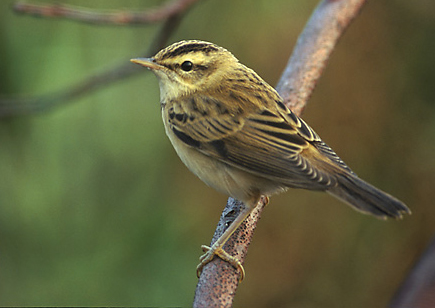 Sedge WarblerAcrocephalus schoenobaenus
-
 Great Reed WarblerAcrocephalus arundinaceus
-
 Marsh WarblerAcrocephalus palustris
-
 Australian Reed WarblerAcrocephalus australis
-
 Nauru Reed WarblerAcrocephalus rehsei
-
 Aquatic WarblerAcrocephalus paludicola
-
 BokikokikoAcrocephalus aequinoctialis
Compare
Questions and answers
What is the scientific name of the Blyth's Reed Warbler?
The scientific name of the Blyth's Reed Warbler is Acrocephalus dumetorum. Written with its author, the full name is Acrocephalus dumetorum Blyth, 1849.
Which family does the Blyth's Reed Warbler belong to?
Acrocephalus dumetorum belongs to the family Acrocephalidae, in the order Passeriformes and the class Aves.
Where is the Blyth's Reed Warbler found?
Checklists and occurrence records place Acrocephalus dumetorum in 60 countries, including India, Sweden, Finland, Russia, Estonia and The Netherlands.
What is the conservation status of the Blyth's Reed Warbler?
The IUCN Red List category recorded for Acrocephalus dumetorum is Least Concern (LC).
What other names does the Blyth's Reed Warbler have?
Acrocephalus dumetorum is also known in English as Blyth's Reed-Warbler and Blyth’s Reed Warbler.
Sources
Passages the profile rests on
- The species measures between 12 and 14 cm in length. Source passage: “is between 12 and 14 cm (4.7 and 5.5 in) in length” — English Wikipedia
- The species weighs between 8 and 16 g. Source passage: “weighs between 8 and 16 g (0.28 and 0.56 oz).” — English Wikipedia
- The species has a slim body, relatively short wings and a long bill. Source passage: “It is a slim warbler with relatively short wings and a long bill.” — English Wikipedia
- Its upperparts are plain olive brown. Source passage: “The upperparts are plain olive brown” — English Wikipedia
- Its wings are short, rounded and less olive in colour than its upperparts. Source passage: “with less olive on the short, rounded wings.” — English Wikipedia
- The underparts are plain and off-white. Source passage: “The underparts are plain and off-white in colour.” — English Wikipedia
- The species has a short whitish supercilium extending between the bill base and the eye. Source passage: “There is a short whitish supercilium running between the base of the bill and the eye” — English Wikipedia
- A dusky stripe runs through the eye. Source passage: “with a dusky stripe through the eye.” — English Wikipedia
- The bill is relatively long, thick and greyish brown. Source passage: “The rather long, thick bill is greyish brown” — English Wikipedia
- The lower mandible has a pale pinkish-brown base. Source passage: “with a pale pinkish-brown base on the lower mandible” — English Wikipedia
- The feet and legs are pale pinkish-brown. Source passage: “which is the colour of the feet and legs.” — English Wikipedia
- During the breeding season, the species prefers the edges and clearings of damp broadleaved woodland. Source passage: “the species prefers the edges of, and clearings within, damp broadleaved woodland” — English Wikipedia
- During the breeding season, the species also occupies wooded gullies, parks and gardens. Source passage: “as well as wooded gullies, parks and gardens” — English Wikipedia
- Scrub and coniferous forest are also breeding-season habitats. Source passage: “scrub and coniferous forest.” — English Wikipedia
- During winter, the species occurs in trees in both wet and dry habitats. Source passage: “In the winter, it is found in trees in both wet and dry habitats.” — English Wikipedia
- The species produces a variable song combining harsh sounds with melodious whistles and mimicry. Source passage: “has a variable song in which harsh sounds like ticks, chaks and churrs are mixed in with melodious whistles and mimicry.” — English Wikipedia
- The species is typically solitary and territorial. Source passage: “They are solitary and territorial;” — English Wikipedia
- In Finland, individual territories cover between 600 and 1,300 square metres. Source passage: “in Finland territories are between 600 and 1,300 m2 (6,500 and 14,000 sq ft).” — English Wikipedia
- The species breeds between late May and July. Source passage: “Blyth's reed warbler breeds between late May and July.” — English Wikipedia
- The species is typically monogamous, although polygyny has also been recorded. Source passage: “They are typically monogamous, but polygyny has been recorded.” — English Wikipedia
- Pairs construct compact cup-shaped nests from plant material and spider webs. Source passage: “The pair builds a nest that is a compact cup made up of plant material and spiders' webs” — English Wikipedia
- Nests are positioned between 20 and 60 cm above the ground. Source passage: “and place it 20 to 60 cm (7.9 to 23.6 in) above the ground.” — English Wikipedia
- Clutches contain between three and six eggs. Source passage: “Between 3 and 6 eggs are laid” — English Wikipedia
- Both parents incubate the eggs, although the female performs most of the incubation. Source passage: “both the male and the female (but predominantly the female) incubate them” — English Wikipedia
- The incubation period lasts between 12 and 13 days. Source passage: “incubate them for 12 to 13 days.” — English Wikipedia
- Both parents feed the chicks. Source passage: “The chicks are fed by both parents” — English Wikipedia
- Chicks fledge between 11 and 13 days after hatching. Source passage: “fledging occurs when the chicks are 11 to 13 days old.” — English Wikipedia
- Young birds remain dependent on their parents for another 10 to 22 days after fledging. Source passage: “They remain dependent on their parents for a further 10 to 22 days.” — English Wikipedia
- Males sometimes leave the brood after the chicks have fledged. Source passage: “The male will on occasion leave the brood after they have fledged;” — English Wikipedia
Data
- Catalogue of Life, 2026-10-16 XR cc by
- Global Biodiversity Information Facility CC BY 4.0
- Wikidata CC0
- GeoNames CC BY 4.0
- Wikimedia Commons per image; credit shown with each image
- Within the Catalogue of Life, this name comes from The Integrated Taxonomic Information System cc0
References
- J. Asiat. Soc. Bengal 18 p. 815 where the name was published
- Gill, Frank, & and Minturn Wright. (2006). Birds of the World: Recommended English Names.
This species in other databases
Page built on 26 November 2026. See how the catalog is made and all sources and licences.
Cite this page
ScientificNames.org. (2026). Acrocephalus dumetorum (Blyth's Reed Warbler). Retrieved November 26, 2026, from https://scientificnames.org/species/acrocephalus-dumetorum
“Acrocephalus dumetorum (Blyth's Reed Warbler).” ScientificNames.org, 2026, scientificnames.org/species/acrocephalus-dumetorum. Accessed 26 Nov. 2026.
ScientificNames.org. “Acrocephalus dumetorum (Blyth's Reed Warbler).” Accessed November 26, 2026. https://scientificnames.org/species/acrocephalus-dumetorum.
@misc{scientificnames_acrocephalus_dumetorum_blyths_reed_warbler,
  author = {{ScientificNames.org}},
  title = {Acrocephalus dumetorum (Blyth's Reed Warbler)},
  year = {2026},
  url = {https://scientificnames.org/species/acrocephalus-dumetorum},
  note = {Accessed 2026-11-26}
}