Species · Birds
Marsh Warbler Acrocephalus palustris
The scientific name of the Marsh Warbler is Acrocephalus palustris. It is a species of bird in the family Acrocephalidae (reed warblers & allies), order Passeriformes. The name dates from 1798.
- Scientific name
- Acrocephalus palustris (Bechstein, 1798)
- Common name
- Marsh Warbler
- Genus
- Acrocephalus
- Family
- Acrocephalidae (Reed Warblers & Allies)
- Order
- Passeriformes
- Class
- Aves
- Red List category
- LC Least Concern
- Environment
- terrestrial
- Recorded in
- 54 countries
- Name status
- accepted in the Catalogue of Life

Overview
The Marsh Warbler is a medium-sized bird in the family Acrocephalidae, order Passeriformes and class Aves. Its song incorporates imitations of many other bird species, averaging approximately 75 species in males.
Written 26 November 2026 from the sources listed below. Each statement was checked against the passage it cites; statements that could not be supported were removed.
Appearance
The Marsh Warbler is a medium-sized warbler. Male and female Marsh Warblers have similar external appearances.[1][2]
Habitat
During the breeding season in western Europe, the Marsh Warbler primarily inhabits dense vegetation growing on damp or seasonally flooded soils. It particularly favours tall herbaceous plants, including nettles, meadowsweet and willowherbs, as well as young osiers.[3][4]
Diet
The Marsh Warbler feeds mainly on insects but also consumes spiders and small numbers of snails. It generally collects insects directly from vegetation, although it sometimes catches them on the ground or in mid-air.[5][6][7]
The species occasionally eats small quantities of berries during autumn.[8]
Behaviour
Male Marsh Warblers incorporate imitations of many other bird species into their songs. An average male incorporates imitations of approximately 75 other species, with more imitations of African bird species than northern bird species.[9][10][11]
Male Marsh Warblers acquire their song imitations during the summer in which they hatch in Europe or Asia and during their first winter in Africa. They do not add imitations of bird calls heard in subsequent years to their song repertoires.[12][13]
Female Marsh Warblers occasionally produce simple songs without imitations.[14]
Marsh Warblers are generally monogamous during breeding and generally select new breeding partners each year. Breeding birds defend territories that are often arranged in loose colonies.[15][16][17]
In Africa, Marsh Warblers are essentially solitary and may defend territories there to some extent.[18]
Reproduction and life cycle
The Marsh Warbler builds a cup-shaped nest primarily from leaves and plant stems. Nests are usually placed within dense vegetation at varying heights.[19][20]
A Marsh Warbler clutch contains between three and six eggs. Both male and female Marsh Warblers feed their nestlings.[21][22]
The breeding season lasts approximately 52–55 days in continental Europe. Common cuckoos significantly parasitize Marsh Warbler nests in some areas, including Bulgaria.[23][24]
Conservation
The Marsh Warbler is classified as a species of Least Concern by the IUCN. Its global population is believed to be increasing, with an estimated total of between 10 and 27 million individuals.[25][26][27]
The Marsh Warbler has become virtually extinct as a breeding bird in Britain. The reasons for its population decline in Britain remain incompletely understood.[28][29]
Classification of the Marsh Warbler
| Kingdom | Animalia |
|---|---|
| Phylum | Chordata |
| Subphylum | Vertebrata |
| Infraphylum | Gnathostomata |
| Parvphylum | Osteichthyes |
| Megaclass | Tetrapoda |
| Class | Aves (Bird) |
| Order | Passeriformes (Passerine) |
| Family | Acrocephalidae (Reed Warblers & Allies) |
| Genus | Acrocephalus (Reed-Warblers) |
| Species | Acrocephalus palustris (Bechstein, 1798) |
Where the Marsh Warbler is found
Checklists and occurrence records place Acrocephalus palustris in 54 countries. GBIF holds 704,218 georeferenced records of it.
Countries
- Aland Islands 1,070
- Albania 3
- Armenia 324
- Austria 7,553
- Belarus 804
- Belgium 52,482
- Bosnia and Herzegovina 31
- Bulgaria 2,865
- Croatia 687
- Cyprus 39
- Czechia 7,579
- Denmark 82,175
- Estonia 7,977
- Faroe Islands 7
- Finland 18,572
- France 30,856
- Georgia 562
- Germany 29,109
- Greece 676
- Hungary 1,636
- Iceland 13
- Ireland 20
- Isle of Man 8
- Israel 2,290
- Italy 2,073
- Jersey 5
- Kenya 882
- Kosovo 152
- Latvia 796
- Liechtenstein 129
- Lithuania 1,134
- Luxembourg 28,269
- Moldova 55
- Montenegro 18
- North Macedonia 29
- Norway 40,264
- Poland 23,113
- Portugal 8
- Romania 852
- Russia 11,829
- Serbia 763
- Slovakia 1,280
- Slovenia 680
- South Africa 9,965
- Spain 158
- Sweden 237,143
- Switzerland 40,442
- The Netherlands 47,293
- Turkey 2,020
- Ukraine 2,670
- United Arab Emirates 2,237
- United Kingdom 1,501
- Zambia 460
- Zimbabwe 660
Regions and cities with the most records
- Skåne, Sweden 50,673
- Västra Götaland, Sweden 43,065
- Luxembourg, Luxembourg 27,566
- Luxembourg, Luxembourg 25,994
- Capital Region, Denmark 18,800
- Central Jutland, Denmark 18,458
- Kalmar, Sweden 18,426
- Halland, Sweden 17,927
- Zealand, Denmark 17,004
- Stockholm, Sweden 15,432
- Gothenburg, Sweden 14,083
- Björlanda, Sweden 13,647
- South Denmark, Denmark 13,505
- Taastrup, Denmark 12,316
- Ishøj, Denmark 12,003
- Västra Frölunda, Sweden 12,002
- Albertslund, Denmark 11,914
- Vallensbæk, Denmark 11,744
- Glostrup, Denmark 11,728
- Brøndbyvester, Denmark 11,593
- Partille, Sweden 11,536
- Rødovre, Denmark 11,465
- Ballerup, Denmark 11,419
- Helsingør, Denmark 11,268
- Greve, Denmark 11,185
- Hauts-de-France, France 11,138
- Wilrijk, Belgium 10,901
- Kontich, Belgium 10,864
- Örebro, Sweden 10,849
- Helsingborg, Sweden 10,796
- Hellerup, Denmark 10,720
- Edegem, Belgium 10,717
- Hoboken, Belgium 10,689
- Hvidovre, Denmark 10,576
- Mölndal, Sweden 10,570
- Berchem, Belgium 10,559
30 more countries have a few records outside this range
These countries hold a few records of Acrocephalus palustris but lie outside the range the checklists give for it. Such records are often zoo or garden specimens, museum material or vagrants, so the species is not counted as occurring there.
- Algeria 4
- Angola 3
- Azerbaijan 137
- Bahrain 12
- Botswana 206
- Democratic Republic of the Congo 41
- Djibouti 4
- Egypt 62
- Eritrea 7
- Eswatini 242
- Ethiopia 45
- Iran 263
- Iraq 21
- Jordan 7
- Kazakhstan 52
- Kuwait 246
- Lebanon 21
- Malawi 246
- Morocco 4
- Mozambique 218
- Namibia 99
- Oman 41
- Palestinian Territory 45
- Qatar 48
- Rwanda 6
- Saudi Arabia 166
- Sudan 6
- Syria 5
- Tanzania 180
- Yemen 5
A number beside a place is its count of GBIF occurrence records. A place without a number comes from a checklist alone. Records show where a species has been observed or collected, which can include escapes and vagrants.
Common names
English
- Marsh Warbler
Names in 47 other languages
- Afrikaans
- Europese Rietsanger
- Albanian
- bilbilthi i kënetave, bilbilthi i verdhemë, çika e verdheme
- Arabic
- هازجة البطائح, هازجة المستنقع, هازجة المستنقعات
- Belarusian
- Балотная чаротаўка, Чаротаўка балотная
- Breton
- Rouzegan-geun
- Bulgarian
- Мочурно шаварче
- Catalan
- boscarla menjamosquits
- Chinese
- 湿地苇莺, 濕地葦鶯
- Czech
- rákosník zpěvný
- Danish
- Kærsanger
- Dutch
- bosrietzanger
- Esperanto
- marĉa kanbirdo
- Estonian
- putke-roolind, soo-roolind, soo-roolind e. putke-roolind
- Faroese
- Fenljómari
- Finnish
- luhtakerttunen
- French
- rousserolle verderolle
- German
- Sumpfrohrsänger
- Greek
- Βαλτοποταμίδα
- Hebrew
- קנית ביצות
- Hungarian
- énekes nádiposzáta
- Icelandic
- Seljusöngvari
- Irish
- Ceolaire corraigh
- Italian
- Cannaiola verdognola
- Japanese
- ヌマヨシキリ
- Kazakh
- Саз айқабағы
- Latvian
- purva ķauķis
- Lithuanian
- karklinė nendrinukė
- Luxembourgish
- Suppejäizert
- Macedonian
- блатен трскар
- Northern Sami
- Jeaggeruoššehas
- Norwegian
- myrsanger
- Norwegian Nynorsk
- myrsongar
- Persian
- سسک تالابی زیتونی
- Polish
- łozówka
- Portuguese
- felosa-palustre
- Romanian
- Lăcar de mlaştină, Lăcar de mlaștină
- Russian
- Болотная камышевка, Болотная камышовка
- Serbian
- Trstenjak mlakar, трстењак млакар
- Slovak
- Trsteniarik spevavý, trsteniarik obyčajný
- Slovenian
- močvirska trstnica
- Spanish
- Carricero políglota
- Swedish
- kärrsångare
- Turkish
- çalı kamışçını
- Ukrainian
- Чагарникова очеретянка, очеретянка чагарникова
- Welsh
- Telor Gwerni, Telorion y Gwerni, telor y gwerni
- chv
- Шурлӑх хӑмӑш кайӑкӗ
- glv
- Kiaulleyder ny curreeyn
Synonyms
15 other scientific names have been used for this species and are now treated as synonyms of Acrocephalus palustris.
- Acrocephalus palustris palustris Bechstein, JM, 1798
- Calamodyta palustris Bechstein, JM, 1798
- Calamoherpe musica Brehm, CL, 1828
- Calamoherpe palustris Bechstein, JM, 1798
- Calamoherpe philomela Brehm, CL, 1855
- Calamoherpe pratensis Jaubert, JB, 1855
- Calamoherpe salicaria Brehm, CL, 1831
- Herbicola palustris Bechstein, JM, 1798
- Motacilla camtschatkensis Bechstein, JM, 1795
- Motacilla s Bechstein, JM, 1798
- Notiocichla palustris Bechstein, JM, 1798
- Salicaria macronyx Severtsov, NA, 1873
- Salicaria palustris Bechstein, JM, 1798
- Sylvia (Calamoherpe) fruticola Naumann, JF, 1853
- Sylvia palustris Bechstein, JM, 1802
Related species
-
 Common Reed WarblerAcrocephalus scirpaceus
-
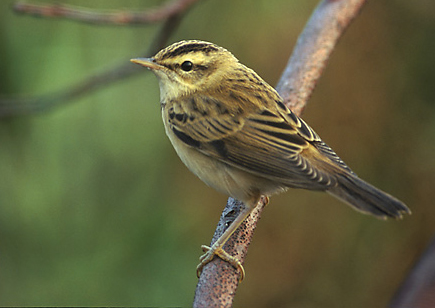 Sedge WarblerAcrocephalus schoenobaenus
-
 Great Reed WarblerAcrocephalus arundinaceus
-
 Blyth's Reed WarblerAcrocephalus dumetorum
-
 Australian Reed WarblerAcrocephalus australis
-
 Nauru Reed WarblerAcrocephalus rehsei
-
 Aquatic WarblerAcrocephalus paludicola
-
 BokikokikoAcrocephalus aequinoctialis
Compare
Questions and answers
What is the scientific name of the Marsh Warbler?
The scientific name of the Marsh Warbler is Acrocephalus palustris. Written with its author, the full name is Acrocephalus palustris (Bechstein, 1798).
Which family does the Marsh Warbler belong to?
Acrocephalus palustris belongs to the family Acrocephalidae, in the order Passeriformes and the class Aves.
Where is the Marsh Warbler found?
Checklists and occurrence records place Acrocephalus palustris in 54 countries, including Sweden, Denmark, Belgium, The Netherlands, Switzerland and Norway.
What is the conservation status of the Marsh Warbler?
The IUCN Red List category recorded for Acrocephalus palustris is Least Concern (LC).
What habitat do warblers like?
During the breeding season in western Europe, the Marsh Warbler primarily inhabits dense vegetation growing on damp or seasonally flooded soils. It particularly favours tall herbaceous plants, including nettles, meadowsweet and willowherbs, as well as young osiers.[3][4]
Sources
Passages the profile rests on
- The Marsh Warbler is a medium-sized warbler. Source passage: “This is a medium-sized warbler.” — English Wikipedia
- Male and female Marsh Warblers have similar external appearances. Source passage: “The sexes are alike in appearance.” — English Wikipedia
- During the breeding season in western Europe, the Marsh Warbler primarily inhabits dense vegetation growing on damp or seasonally flooded soils. Source passage: “breeds mainly in rank vegetation on damp or seasonally flooded soils” — English Wikipedia
- The species particularly favours tall herbaceous plants, including nettles, meadowsweet and willowherbs, as well as young osiers. Source passage: “particularly attracted to tall herbaceous vegetation such as nettles, meadowsweet, willowherbs and to young osiers” — English Wikipedia
- The Marsh Warbler feeds mainly on insects but also consumes spiders and small numbers of snails. Source passage: “The marsh warbler is mostly insectivorous, but also takes some spiders and small numbers of snails.” — English Wikipedia
- The species generally collects insects directly from vegetation. Source passage: “It generally gleans insects from vegetation” — English Wikipedia
- The Marsh Warbler sometimes catches insects on the ground or in mid-air. Source passage: “but sometimes catches them on the ground or in mid-air.” — English Wikipedia
- The species occasionally eats small quantities of berries during autumn. Source passage: “In autumn small numbers of berries may be eaten.” — English Wikipedia
- Male Marsh Warblers incorporate imitations of many other bird species into their songs. Source passage: “Each male marsh warbler incorporates imitations of a wide range of other birds into its song.” — English Wikipedia
- An average male Marsh Warbler incorporates imitations of approximately 75 other species into its song. Source passage: “On average, each male bird incorporates imitations of 75 other species into its song” — English Wikipedia
- The Marsh Warbler's song includes more imitations of African bird species than northern bird species. Source passage: “with rather more African than northern species mimicked.” — English Wikipedia
- Male Marsh Warblers acquire their song imitations during the summer in which they hatch in Europe or Asia and during their first winter in Africa. Source passage: “All learning seems to take place in the summer the bird is hatched in Europe or Asia, and in its first winter in Africa.” — English Wikipedia
- Marsh Warblers do not add imitations of bird calls heard in subsequent years to their song repertoires. Source passage: “The calls of birds heard in subsequent years are not added to the warbler's repertoire.” — English Wikipedia
- Female Marsh Warblers occasionally produce simple songs without imitations. Source passage: “Females may utter a simple, non-imitative song” — English Wikipedia
- Marsh Warblers are generally monogamous during breeding. Source passage: “The species is usually monogamous.” — English Wikipedia
- Marsh Warblers generally select new breeding partners each year. Source passage: “Marsh warblers tend to choose new mates each year” — English Wikipedia
- Breeding Marsh Warblers defend territories that are often arranged in loose colonies. Source passage: “On their breeding grounds they are territorial, with territories often grouped into loose colonies.” — English Wikipedia
- Marsh Warblers are essentially solitary in Africa and may defend territories there to some extent. Source passage: “In Africa, they are essentially solitary, and may defend territories to some extent.” — English Wikipedia
- The Marsh Warbler builds a cup-shaped nest primarily from leaves and plant stems. Source passage: “The nest is a cup, made mostly from leaves and plant stems” — English Wikipedia
- Marsh Warbler nests are usually placed within dense vegetation at varying heights. Source passage: “and is usually in dense vegetation, at varying heights.” — English Wikipedia
- A Marsh Warbler clutch contains between three and six eggs. Source passage: “Three to six eggs are laid.” — English Wikipedia
- Both male and female Marsh Warblers feed their nestlings. Source passage: “Both sexes bring food to the nestlings.” — English Wikipedia
- The breeding season lasts approximately 52–55 days in continental Europe. Source passage: “the species has a short breeding season, of 52–55 days.” — English Wikipedia
- Common cuckoos significantly parasitize Marsh Warbler nests in some areas, including Bulgaria. Source passage: “In some areas, such as Bulgaria, marsh warblers suffer significant levels of parasitism by common cuckoos.” — English Wikipedia
- The Marsh Warbler is classified as a species of Least Concern by the IUCN. Source passage: “the IUCN categorises the species as of least concern.” — English Wikipedia
- The global Marsh Warbler population is believed to be increasing. Source passage: “Globally, the population is believed to be increasing” — English Wikipedia
- The estimated global population of Marsh Warblers is between 10 and 27 million individuals. Source passage: “It is estimated to have a total population of 10 to 27 million individuals.” — English Wikipedia
- The Marsh Warbler has become virtually extinct as a breeding bird in Britain. Source passage: “in Britain it is now virtually extinct as a breeding bird” — English Wikipedia
- The reasons for the Marsh Warbler's population decline in Britain remain incompletely understood. Source passage: “The reasons for the population decline in Britain are not completely understood” — English Wikipedia
Data
- Catalogue of Life, 2026-10-16 XR cc by
- Global Biodiversity Information Facility CC BY 4.0
- Wikidata CC0
- GeoNames CC BY 4.0
- Wikimedia Commons per image; credit shown with each image
- Within the Catalogue of Life, this name comes from The Integrated Taxonomic Information System cc0
References
- Allg. Uebers. Vogel [Latham] 3 p. 545 where the name was published
- Gill, Frank, & and Minturn Wright. (2006). Birds of the World: Recommended English Names.
This species in other databases
- Catalogue of Life 9L78
- Wikidata Q210422
- iNaturalist 116802
- WoRMS urn:lsid:marinespecies.org:taxname:558526
- Avibase marwar3
Page built on 28 November 2026. See how the catalog is made and all sources and licences.
Cite this page
ScientificNames.org. (2026). Acrocephalus palustris (Marsh Warbler). Retrieved November 28, 2026, from https://scientificnames.org/species/acrocephalus-palustris
“Acrocephalus palustris (Marsh Warbler).” ScientificNames.org, 2026, scientificnames.org/species/acrocephalus-palustris. Accessed 28 Nov. 2026.
ScientificNames.org. “Acrocephalus palustris (Marsh Warbler).” Accessed November 28, 2026. https://scientificnames.org/species/acrocephalus-palustris.
@misc{scientificnames_acrocephalus_palustris_marsh_warbler,
  author = {{ScientificNames.org}},
  title = {Acrocephalus palustris (Marsh Warbler)},
  year = {2026},
  url = {https://scientificnames.org/species/acrocephalus-palustris},
  note = {Accessed 2026-11-28}
}