Species · Insects
Tequila Giant-Skipper Aegiale hesperiaris
The scientific name of the Tequila Giant-Skipper is Aegiale hesperiaris. It is a species of insect in the family Hesperiidae (skipper), order Lepidoptera. The name dates from 1855.
- Scientific name
- Aegiale hesperiaris (Walker, 1855)
- Common name
- Tequila Giant-Skipper
- Genus
- Aegiale
- Family
- Hesperiidae (Skipper)
- Order
- Lepidoptera
- Class
- Insecta
- Recorded in
- 1 country
- Name status
- accepted in the Catalogue of Life

Overview
Aegiale hesperiaris occurs in northern and central Mexico, primarily east of the Sierra Madre Occidental. Its larval form is known as the white maguey worm, and its larvae are harvested and consumed as food.
Written 26 November 2026 from the sources listed below. Each statement was checked against the passage it cites; statements that could not be supported were removed.
Habitat
The Tequila Giant-Skipper is usually found on the leaves of Agavaceae plants in central Mexico. Its recorded host plants include Agave tequilana and Agave americana.[1][2]
The species is not found on cacti. It is currently known only from Mexico.[3][4]
Diet
The larvae feed internally on leaves of various Agave species and on the flesh of agave stems and roots. The caterpillars infest maguey and Agave tequilana plants.[5][6][7]
Reproduction and life cycle
Females deposit their eggs at the heart of agave leaves.[8]
Uses
The larvae are harvested from agave leaves and eaten as a delicacy in various parts of Mexico. They are consumed raw, cooked, or incorporated into alcoholic beverages such as mezcal.[9][10]
Appearance
The larval form of the Tequila Giant-Skipper is known as the white maguey worm.[11]
Classification of the Tequila Giant-Skipper
| Kingdom | Animalia |
|---|---|
| Phylum | Arthropoda |
| Subphylum | Hexapoda |
| Class | Insecta (Insect) |
| Order | Lepidoptera |
| Superfamily | Papilionoidea |
| Family | Hesperiidae (Skipper) |
| Subfamily | Hesperiinae |
| Genus | Aegiale (The Tequila Giant-Skipper) |
| Species | Aegiale hesperiaris (Walker, 1855) |
Where the Tequila Giant-Skipper is found
Checklists and occurrence records place Aegiale hesperiaris in 1 country. GBIF holds 340 georeferenced records of it.
Countries
Regions and cities with the most records
- Benito Juarez, Mexico 56
- Iztacalco, Mexico 56
- Coyoacán, Mexico 53
- México, Mexico 53
- Magdalena Contreras, Mexico 51
- Emiliano Zapata, Mexico 47
- Iztapalapa, Mexico 47
- Tlalpan, Mexico 47
- San Antonio Tecómitl, Mexico 46
- San Juan Ixtayopan, Mexico 46
- Tláhuac, Mexico 46
- Ciudad Nezahualcoyotl, Mexico 42
- Milpa Alta, Mexico 42
- Mexico City, Mexico 41
- Los Reyes Acaquilpan, Mexico 38
- Santa María Chimalhuacán, Mexico 38
- Durango, Mexico 35
- Azcapotzalco, Mexico 31
- Ciudad López Mateos, Mexico 31
- Tlalnepantla, Mexico 31
- Xochimilco, Mexico 31
- Cuauhtémoc, Mexico 30
- Gustavo Adolfo Madero, Mexico 30
- Naucalpan de Juárez, Mexico 30
- Coahuila, Mexico 29
- Delegación Cuajimalpa de Morelos, Mexico 29
- Miguel Hidalgo, Mexico 29
- San Miguel Ajusco, Mexico 29
- Buenavista, Mexico 27
- Jesús del Monte, Mexico 27
- San Pablo Oztotepec, Mexico 27
- San Miguel Topilejo, Mexico 25
- Chalco de Díaz Covarrubias, Mexico 22
- Chicoloapan de Juárez, Mexico 22
- Hidalgo, Mexico 22
- Ixtapaluca, Mexico 22
A number beside a place is its count of GBIF occurrence records. A place without a number comes from a checklist alone. Records show where a species has been observed or collected, which can include escapes and vagrants.
Common names
English
- Tequila Giant-Skipper
Names in 1 other language
- Spanish
- Chinicuil, Gusano blanco de maguey, Gusano de maguey, Gusano de maguey blanco, Meocuilin, Saltarina del maguey
Synonyms
5 other scientific names have been used for this species and are now treated as synonyms of Aegiale hesperiaris.
- Acentrocneme hesperiaris Kirby, 1877
- Acentrocneme kollari Scudder, 1875
- Aegiale kollari Felder, C. & Felder, R., 1860
- Castnia hesperiaris Walker, 1855
- Teria agavis Blasquez, 1865
Related species
- Aegiale occidentalis
-
 Long-tailed SkipperUrbanus proteus
-
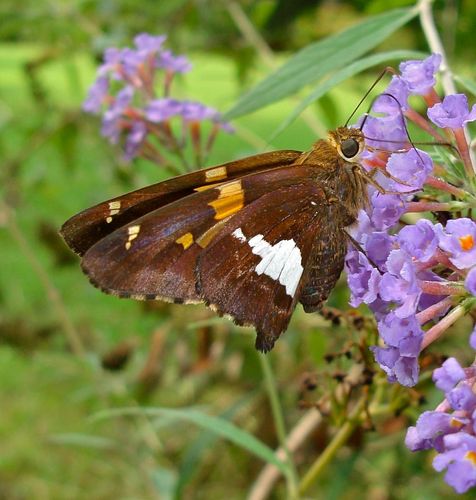 Silver-spotted SkipperEpargyreus clarus
-
 Field SkipperAtalopedes campestris
-
 Common Checkered SkipperBurnsius communis
-
 Common Branded SkipperHesperia comma
-
 Arctic SkipperCarterocephalus palaemon
-
 Small Branded SwiftPelopidas mathias
Compare
Questions and answers
What is the scientific name of the Tequila Giant-Skipper?
The scientific name of the Tequila Giant-Skipper is Aegiale hesperiaris. Written with its author, the full name is Aegiale hesperiaris (Walker, 1855).
Which family does the Tequila Giant-Skipper belong to?
Aegiale hesperiaris belongs to the family Hesperiidae, in the order Lepidoptera and the class Insecta.
Where is the Tequila Giant-Skipper found?
Checklists and occurrence records place Aegiale hesperiaris in 1 country: Mexico.
What is the host plant for skipper butterflies?
The recorded host plants of the Tequila Giant-Skipper include Agave tequilana and Agave americana.[2]
Sources
Passages the profile rests on
- The species is usually found on the leaves of Agavaceae plants in central Mexico. Source passage: “It usually is found in regions of central Mexico, on the leaves of family Agavaceae plants” — English Wikipedia
- Its recorded host plants include Agave tequilana and Agave americana. Source passage: “such as: Agave tequilana and Agave americana (maguey).” — English Wikipedia
- The species is not found on cacti, despite reports suggesting otherwise. Source passage: “They are not found on cacti, as is often erroneously reported.” — English Wikipedia
- The species is currently known only from Mexico. Source passage: “Currently, A. hesperiaris is known only from Mexico” — pmc.ncbi.nlm.nih.gov
- The larvae feed on the flesh of agave stems and roots. Source passage: “The larvae then eat the flesh of the agave stems and roots” — English Wikipedia
- The caterpillars infest maguey and Agave tequilana plants. Source passage: “one of two varieties of edible caterpillars that infest maguey (Agave americana) and Agave tequilana” — inaturalist.org
- The larvae feed internally on leaves of various Agave species. Source passage: “larvae of A. hesperiaris feed internally on the leaves of various species of Agave (Asparagaceae)” — pmc.ncbi.nlm.nih.gov
- Females deposit their eggs at the heart of agave leaves. Source passage: “The butterflies deposit their eggs at the heart of the leaves of agaves.” — English Wikipedia
- The larvae are harvested from agave leaves and eaten as a delicacy in various parts of Mexico. Source passage: “The larvae, also known as ‘gusano blanco de maguey’ and ~11 other local names (see Ramos-Elorduy et al. 2011), are harvested from inside the agave leaves and consumed as a delicacy in various parts of Mexico” — pmc.ncbi.nlm.nih.gov
- The larvae are consumed raw, cooked, or incorporated into alcoholic beverages such as mezcal. Source passage: “either raw, cooked, or incorporated into alcoholic beverages such as mezcal” — pmc.ncbi.nlm.nih.gov
- The larval form of this species is known as the white maguey worm. Source passage: “The white maguey worm, known as meocuiles, are caterpillars of this species.” — English Wikipedia
Data
- Catalogue of Life, 2026-10-16 XR cc by
- Global Biodiversity Information Facility CC BY 4.0
- Wikidata CC0
- GeoNames CC BY 4.0
- Wikimedia Commons per image; credit shown with each image
- Within the Catalogue of Life, this name comes from Global Lepidoptera Index cc by
This species in other databases
Page built on 29 November 2026. See how the catalog is made and all sources and licences.
Cite this page
ScientificNames.org. (2026). Aegiale hesperiaris (Tequila Giant-Skipper). Retrieved November 29, 2026, from https://scientificnames.org/species/aegiale-hesperiaris
“Aegiale hesperiaris (Tequila Giant-Skipper).” ScientificNames.org, 2026, scientificnames.org/species/aegiale-hesperiaris. Accessed 29 Nov. 2026.
ScientificNames.org. “Aegiale hesperiaris (Tequila Giant-Skipper).” Accessed November 29, 2026. https://scientificnames.org/species/aegiale-hesperiaris.
@misc{scientificnames_aegiale_hesperiaris_tequila_giant_skipper,
  author = {{ScientificNames.org}},
  title = {Aegiale hesperiaris (Tequila Giant-Skipper)},
  year = {2026},
  url = {https://scientificnames.org/species/aegiale-hesperiaris},
  note = {Accessed 2026-11-29}
}