Species · Insects
Aegiale occidentalis
Aegiale occidentalis has no English name on record in the checklists used here. It is a species of insect in the family Hesperiidae (skipper), order Lepidoptera. The name dates from 2026.
- Scientific name
- Aegiale occidentalis Kc, McGuire, Willmott, Sapkota, Shirey & Shirey, 2026
- Genus
- Aegiale
- Family
- Hesperiidae (Skipper)
- Order
- Lepidoptera
- Class
- Insecta
- Name status
- provisionally accepted in the Catalogue of Life
Overview
The species is currently known only from its type locality near San Antonio, Sonora, Mexico, in the Sierra Madre Occidental. The female is distinguished by an entirely orange forewing discal cell spot, extensive orange hindwing scaling, and dark gray ventral wing surfaces.
Written 27 November 2026 from the sources listed below. Each statement was checked against the passage it cites; statements that could not be supported were removed.
Appearance
The female holotype has a blackish-brown dorsal forewing with orange scaling at its base and along the discal band. The forewing discal cell spot is entirely orange, and the subapical spots between M2 and R3 are unevenly conjoined and uniformly orange.[1][2][3]
The female hindwing has extensive orange scaling extending from its base through the postdiscal area. The ventral wing surfaces are covered with dark gray overscales.[4][5]
The female antennae are mostly white-scaled and have long, slender clubs. The female holotype has a forewing length of 44 mm, its hindwing measures 35 mm, and its antennae measure 19 mm in length.[6][7][8][9]
The female's papillae anales are almond-shaped and approximately twice as long as they are wide. They bear rows of long, dense setae.[10][11]
The female's sterigma is generally sclerotized but has an unsclerotized lower margin. Its upper margin bears two rounded humps.[12][13]
The eggs measure approximately 2.5 mm in diameter and are dome-shaped, with a circular depression approximately 0.6 mm wide at the top. The museum specimen's eggs are amber in color.[14][15][16]
Habitat
The species is currently known only from its type locality near San Antonio, Sonora, Mexico, situated in the Sierra Madre Occidental.[17][18]
The estimated coordinates of the type locality are 28.415°N, 109.110°W, at approximately 1,170 m above sea level. The holotype was collected approximately seven miles east of the junction of Route 117 (San Nicolas) on Route 16 in Sonora.[19][20][21]
Behaviour
Adult specimens have been recorded flying in June. An additional possible adult flight period has been suggested for August.[22][23]
Diet
Agave or related agavoid plants are suspected larval host plants for the species. The larval host plant has not been confirmed.[24][25]
Reproduction and life cycle
The species lays dome-shaped eggs with a circular depression at the top.[26]
Similar species
Aegiale hesperiaris is the other recognized species in the genus Aegiale. Aegiale occidentalis has dark orange apical forewing spots with unaligned inner margins, whereas Aegiale hesperiaris has white to whitish anterior apical spots.[27][28]
The CuA1 and M3 forewing spots are obliquely inclined toward the costa in Aegiale occidentalis, unlike their more vertical orientation in Aegiale hesperiaris. The forewing discal cell spot is entirely orange in Aegiale occidentalis, whereas its upper portion is white to whitish in Aegiale hesperiaris.[29][30]
Aegiale occidentalis has darker gray ventral wing surfaces than Aegiale hesperiaris. Its female papillae anales are approximately twice as long as wide, compared with more than three times as long as wide in Aegiale hesperiaris.[31][32]
The sterigma of Aegiale occidentalis is shorter and has an unsclerotized lower margin and a rounded upper margin with two humps. Aegiale hesperiaris has a longer, fully sclerotized sterigma.[33]
Classification of Aegiale occidentalis
| Kingdom | Animalia |
|---|---|
| Phylum | Arthropoda |
| Subphylum | Hexapoda |
| Class | Insecta (Insect) |
| Order | Lepidoptera |
| Superfamily | Papilionoidea |
| Family | Hesperiidae (Skipper) |
| Subfamily | Hesperiinae |
| Genus | Aegiale (The Tequila Giant-Skipper) |
| Species | Aegiale occidentalis Kc, McGuire, Willmott, Sapkota, Shirey & Shirey, 2026 |
This name was added to the Catalogue of Life from a contributing dataset by automated merging and has not yet been reviewed by its editors.
Related species
-
 Tequila Giant-SkipperAegiale hesperiaris
-
 Long-tailed SkipperUrbanus proteus
-
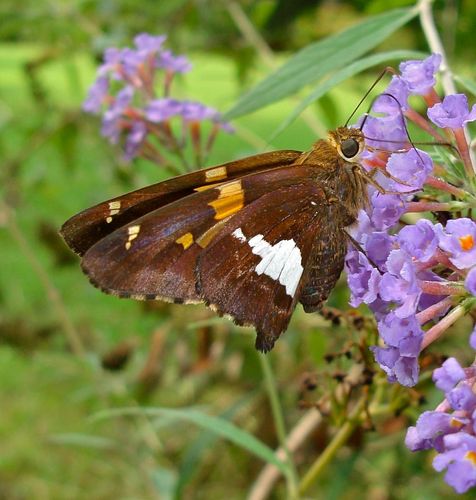 Silver-spotted SkipperEpargyreus clarus
-
 Field SkipperAtalopedes campestris
-
 Common Checkered SkipperBurnsius communis
-
 Common Branded SkipperHesperia comma
-
 Arctic SkipperCarterocephalus palaemon
-
 Small Branded SwiftPelopidas mathias
Compare
Sources
Passages the profile rests on
- The female holotype has a blackish-brown dorsal forewing with orange scaling at its base and along the discal band. Source passage: “The dorsal forewing has a blackish-brown background with orange scaling at the base and along the discal band.” — English Wikipedia
- The forewing discal cell spot is entirely orange. Source passage: “The discal cell spot is entirely orange.” — English Wikipedia
- The female has unevenly conjoined, uniformly orange subapical spots between M2 and R3. Source passage: “The subapical spots (M2–R3) are unevenly conjoined and uniformly orange” — English Wikipedia
- The female hindwing has extensive orange scaling extending from its base through the postdiscal area. Source passage: “The hindwing (35 mm) has extensive orange scaling from the base through the postdiscal area.” — English Wikipedia
- The ventral wing surfaces are covered with dark gray overscales. Source passage: “Ventrally, the wings are clothed in dark gray overscales.” — English Wikipedia
- The female antennae are mostly white-scaled and have long, slender clubs. Source passage: “The antennae are 19 mm long, mostly scaled white with long, slender clubs.” — English Wikipedia
- The female holotype has a forewing length of 44 mm. Source passage: “The holotype is a female with a forewing length of 44 mm.” — English Wikipedia
- The female hindwing measures 35 mm. Source passage: “The hindwing (35 mm) has extensive orange scaling” — English Wikipedia
- The female antennae measure 19 mm in length. Source passage: “The antennae are 19 mm long” — English Wikipedia
- The female's papillae anales are almond-shaped and approximately twice as long as they are wide. Source passage: “The papillae anales are almond-shaped, approximately 2× longer than wide” — English Wikipedia
- The female's papillae anales bear rows of long, dense setae. Source passage: “with rows of long dense setae.” — English Wikipedia
- The female's sterigma is generally sclerotized but has an unsclerotized lower margin. Source passage: “The sterigma is sclerotized overall, but the lower margin is unsclerotized” — English Wikipedia
- The upper margin of the female's sterigma bears two rounded humps. Source passage: “the upper margin bears two rounded humps.” — English Wikipedia
- The eggs measure approximately 2.5 mm in diameter. Source passage: “Eggs are dome-shaped, approximately 2.5 mm in diameter” — English Wikipedia
- The eggs are dome-shaped and have a circular depression approximately 0.6 mm wide at the top. Source passage: “with a ~0.6 mm circular depression at the top.” — English Wikipedia
- The museum specimen's eggs are amber in color. Source passage: “Color is amber in the museum specimen” — English Wikipedia
- The species is currently known only from its type locality near San Antonio, Sonora, Mexico. Source passage: “Aegiale occidentalis is currently known only from its type locality near San Antonio, Sonora, Mexico” — English Wikipedia
- The known type locality is situated in the Sierra Madre Occidental. Source passage: “in the Sierra Madre Occidental.” — English Wikipedia
- The estimated coordinates of the type locality are 28.415°N, 109.110°W. Source passage: “The estimated coordinates of the type locality are 28.415°N, 109.110°W” — English Wikipedia
- The type locality is approximately 1,170 m above sea level. Source passage: “at an elevation of approximately 1,170 m.” — English Wikipedia
- The holotype was collected approximately seven miles east of the junction of Route 117 (San Nicolas) on Route 16 in Sonora. Source passage: “The label data from the holotype indicates the specimen was collected approximately 7 miles east of the junction of Route 117 (San Nicolas) on Route 16 in Sonora.” — English Wikipedia
- Adult specimens have been recorded flying in June. Source passage: “Adults have been recorded in June.” — English Wikipedia
- An additional possible adult flight period has been suggested for August. Source passage: “A possible August flight period has also been suggested.” — English Wikipedia
- The larval host plant of Aegiale occidentalis has not been confirmed. Source passage: “The larval host plant has not been confirmed for A. occidentalis.” — English Wikipedia
- Agave or related agavoid plants are suspected larval host plants for the species. Source passage: “agave or related agavoid plants are suspected” — English Wikipedia
- The species lays dome-shaped eggs with a circular depression at the top. Source passage: “Eggs are dome-shaped, approximately 2.5 mm in diameter, with a ~0.6 mm circular depression at the top.” — English Wikipedia
- Aegiale hesperiaris is the other recognized species in the genus Aegiale. Source passage: “the other being Aegiale hesperiaris (Walker, 1856), the Tequila Giant Skipper.” — English Wikipedia
- Aegiale occidentalis has dark orange apical forewing spots with unaligned inner margins, unlike the white to whitish anterior apical spots of Aegiale hesperiaris. Source passage: “The apical forewing spots in A. occidentalis are dark orange with unaligned inner margins; in A. hesperiaris the anterior apical spots are white to whitish with aligned inner margins” — English Wikipedia
- The CuA1 and M3 forewing spots are obliquely inclined toward the costa in Aegiale occidentalis, unlike their more vertical orientation in Aegiale hesperiaris. Source passage: “Spots CuA1 and M3 are obliquely inclined toward the costa in A. occidentalis, whereas they are more vertical in A. hesperiaris.” — English Wikipedia
- The forewing discal cell spot is entirely orange in Aegiale occidentalis, whereas its upper portion is white to whitish in Aegiale hesperiaris. Source passage: “The forewing discal cell spot is entirely orange in A. occidentalis; in A. hesperiaris the upper portion is white to whitish.” — English Wikipedia
- Aegiale occidentalis has darker gray ventral wing surfaces than Aegiale hesperiaris. Source passage: “The ventral surface is darker gray in A. occidentalis compared to the paler gray of A. hesperiaris.” — English Wikipedia
- Female papillae anales are approximately twice as long as wide in Aegiale occidentalis, compared with more than three times as long as wide in Aegiale hesperiaris. Source passage: “Female papillae anales are ~2× longer than wide in A. occidentalis versus >3× in A. hesperiaris.” — English Wikipedia
- The sterigma of Aegiale occidentalis is shorter and has an unsclerotized lower margin and a rounded upper margin with two humps, unlike the longer, fully sclerotized sterigma of Aegiale hesperiaris. Source passage: “The sterigma is shorter with an unsclerotized lower margin and two round humps on the upper margin in A. occidentalis; longer, fully sclerotized, and concave on the upper margin in A. hesperiaris.” — English Wikipedia
Data
- Catalogue of Life, 2026-10-16 XR cc by
- Wikidata CC0
- Within the Catalogue of Life, this name comes from ZooBank DarwinCore Checklist Data cc0
References
- Kc, Sajan, William W McGuire, Keith R Willmott, Anisha Sapkota, Vaughn Shirey & Vaughn M Shirey. 2026. A new species of tequila giant skipper Aegiale C. Felder & R. Felder, 1860 (Lepidoptera, Hesperiidae, Megathymina) from Sonora, Mexico. ZooKeys 1272: 157-171. Link where the name was published
This species in other databases
Page built on 27 November 2026. See how the catalog is made and all sources and licences.
Cite this page
ScientificNames.org. (2026). Aegiale occidentalis. Retrieved November 27, 2026, from https://scientificnames.org/species/aegiale-occidentalis
“Aegiale occidentalis.” ScientificNames.org, 2026, scientificnames.org/species/aegiale-occidentalis. Accessed 27 Nov. 2026.
ScientificNames.org. “Aegiale occidentalis.” Accessed November 27, 2026. https://scientificnames.org/species/aegiale-occidentalis.
@misc{scientificnames_aegiale_occidentalis,
  author = {{ScientificNames.org}},
  title = {Aegiale occidentalis},
  year = {2026},
  url = {https://scientificnames.org/species/aegiale-occidentalis},
  note = {Accessed 2026-11-27}
}