Species · Birds
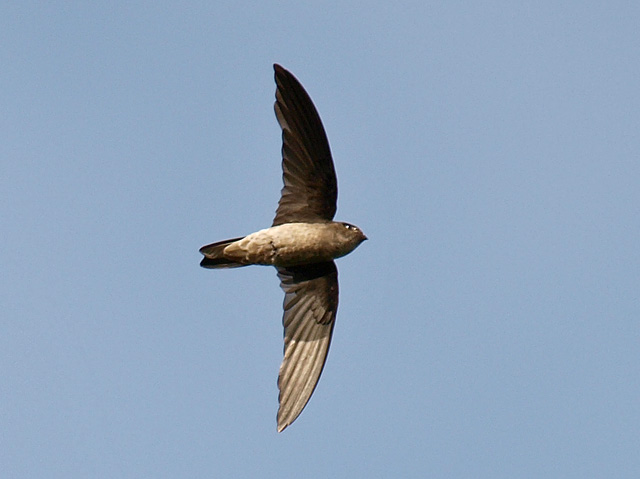
Philippine Swiftlet Aerodramus mearnsi
The scientific name of the Philippine Swiftlet is Aerodramus mearnsi. It is a species of bird in the family Apodidae (swift), order Apodiformes. The name dates from 1912.
- Scientific name
- Aerodramus mearnsi (Oberholser, 1912)
- Common name
- Philippine Swiftlet
- Genus
- Aerodramus
- Family
- Apodidae (Swift)
- Order
- Apodiformes
- Class
- Aves
- Red List category
- LC Least Concern
- Recorded in
- 1 country
- Name status
- accepted in the Catalogue of Life
Overview
Aerodramus mearnsi inhabits tropical dry forests, tropical moist lowland forests, tropical moist montane forests, and tropical submontane forests at elevations starting from 700 meters above sea level. It is monotypic and constructs nests from moss held together with saliva that hardens rather than remaining moist.
Written 26 November 2026 from the sources listed below. Each statement was checked against the passage it cites; statements that could not be supported were removed.
Similar species
The Philippine Swiftlet was formerly classified under the genus Collocalia and was previously placed in that genus.[1][2]
The species is monotypic.[3]
Habitat
The Philippine Swiftlet is endemic to the Philippines. It inhabits tropical dry forests, tropical moist lowland forests, and tropical moist montane forests.[4][5]
The species also occurs in tropical submontane forests at elevations starting from 700 meters above sea level.[6]
Diet
The species' diet is unknown, although it is presumed to consist of insects caught in flight.[7]
Reproduction and life cycle
Breeding has been recorded in May in Mindoro.[8]
The species constructs nests from moss held together with saliva that hardens rather than remaining moist. It nests in caves and rock cavities.[9][10]
The species lays four eggs in its nest.[11]
Conservation
The Philippine Swiftlet is classified as Least Concern by the International Union for Conservation of Nature. Its population is believed to be stable.[12][13]
Classification of the Philippine Swiftlet
| Kingdom | Animalia |
|---|---|
| Phylum | Chordata |
| Subphylum | Vertebrata |
| Infraphylum | Gnathostomata |
| Parvphylum | Osteichthyes |
| Megaclass | Tetrapoda |
| Class | Aves (Bird) |
| Order | Apodiformes (Swifts) |
| Family | Apodidae (Swift) |
| Subfamily | Apodinae |
| Genus | Aerodramus (Edible-nest Swiftlets) |
| Species | Aerodramus mearnsi (Oberholser, 1912) |
Where the Philippine Swiftlet is found
Checklists and occurrence records place Aerodramus mearnsi in 1 country across Asia. GBIF holds 2,252 georeferenced records of it.
Countries
Regions and cities with the most records
- Malaybalay, Philippines 267
- Impasugong, Philippines 253
- Dumaguete, Philippines 195
- Sibulan, Philippines 195
- Bontoc, Philippines 186
- Tanjay, Philippines 76
- Kidapawan, Philippines 74
- Puerto Princesa, Philippines 65
- Baguio, Philippines 63
- Itogon, Philippines 62
- La Trinidad, Philippines 62
- Olongapo, Philippines 46
- Bansalan, Philippines 45
- Morong, Philippines 45
- Subic, Philippines 45
- Digos, Philippines 44
- Lagawe, Philippines 41
- Sorsogon, Philippines 40
- Gubat, Philippines 39
- San Pablo, Philippines 30
- Calauan, Philippines 29
- Del Remedio, Philippines 29
- Sampaloc, Philippines 29
- Apas, Philippines 27
- Cebu City, Philippines 27
- Consolacion, Philippines 27
- Mandaue City, Philippines 27
- Cabuyao, Philippines 26
- Nagcarlan, Philippines 25
- Santo Tomas, Philippines 25
- Tanauan, Philippines 25
- Bislig, Philippines 24
- Calamba, Philippines 24
- Mamatid, Philippines 24
- Los Baños, Philippines 23
- NIA Valencia, Philippines 23
Range as the checklists state it
Southern Asia
A number beside a place is its count of GBIF occurrence records. A place without a number comes from a checklist alone. Records show where a species has been observed or collected, which can include escapes and vagrants.
Common names
English
- Philippine Swiftlet
Names in 26 other languages
- Arabic
- سمامة فلبينية
- Catalan
- salangana de les Filipines
- Chinese
- 菲律宾金丝燕, 菲律賓金絲燕
- Czech
- salangana hnědořitá
- Danish
- Filippinsk Salangan
- Dutch
- Bruinstuitsalangaan
- Esperanto
- filipina salangano
- Estonian
- karvasjalg-salangaan
- Finnish
- ruskoperäsalangaani
- French
- Salangane de Mearns
- German
- Braunbürzelsalangane
- Hungarian
- barnaarcú szalangána
- Italian
- Salangana delle Filippine
- Japanese
- フィリピンムジアナツバメ
- Lithuanian
- filipininis erodramas
- Norwegian
- filippinersalangan
- Polish
- salangana filipińska
- Portuguese
- andorinhão-filipino, salangana-filipina
- Russian
- Филиппинская салангана
- Serbian
- Filipinska čiopica
- Slovak
- salangána tmavá
- Spanish
- Salangana filipina
- Swedish
- filippinsalangan
- Turkish
- Filipin Yelyutanı
- Ukrainian
- салангана мінданайська
- Welsh
- corgoblyn y Philipinau
Synonyms
3 other scientific names have been used for this species and are now treated as synonyms of Aerodramus mearnsi.
- Aerodramus mearnsi mearnsi Oberholser, HC, 1912
- Collocalia fuciphaga mearnsi Oberholser, 1912
- Collocalia mearnsi Oberholser, 1912
Related species
-
 Edible-nest SwiftletAerodramus fuciphagus
-
 Edible-nest SwiftletAerodramus germani
-
 Black-nest SwiftletAerodramus maximus
-
 Indian SwiftletAerodramus unicolor
-
 Himalayan SwiftletAerodramus brevirostris
- Mariana SwiftletAerodramus bartschi
-
 Australian SwiftletAerodramus terraereginae
-
 White-rumped SwiftletAerodramus spodiopygius
Compare
Questions and answers
What is the scientific name of the Philippine Swiftlet?
The scientific name of the Philippine Swiftlet is Aerodramus mearnsi. Written with its author, the full name is Aerodramus mearnsi (Oberholser, 1912).
Which family does the Philippine Swiftlet belong to?
Aerodramus mearnsi belongs to the family Apodidae, in the order Apodiformes and the class Aves.
Where is the Philippine Swiftlet found?
Checklists and occurrence records place Aerodramus mearnsi in 1 country: Philippines.
What is the conservation status of the Philippine Swiftlet?
The IUCN Red List category recorded for Aerodramus mearnsi is Least Concern (LC).
What is the Philippine swiftlet?
The Philippine Swiftlet (Aerodramus mearnsi) is a bird in the family Apodidae, order Apodiformes, and class Aves. It is endemic to the Philippines.[4]
What do Swiftlet birds eat?
The Philippine Swiftlet's diet is unknown, although it is presumed to consist of insects caught in flight.[7]
Sources
Passages the profile rests on
- The species was formerly classified under the genus Collocalia. Source passage: “formerly Collocalia mearnsi” — English Wikipedia
- The species was previously placed in the genus Collocalia. Source passage: “Aerodramus mearnsi (del Hoyo and Collar 2014) was previously placed in the genus Collocalia.” — datazone.birdlife.org
- The species is monotypic. Source passage: “This species is monotypic.” — English Wikipedia
- The Philippine swiftlet is endemic to the Philippines. Source passage: “It is endemic to the Philippines.” — English Wikipedia
- The species inhabits tropical dry forests, tropical moist lowland forests, and tropical moist montane forests. Source passage: “Its natural habitats are or tropical dry forests, tropical moist lowland forests, and tropical moist montane forests.” — English Wikipedia
- The species occurs in tropical submontane forests at elevations starting from 700 meters above sea level. Source passage: “Its natural habitats are tropical submontane forests beginning at 700 meters above sea level.” — English Wikipedia
- The species' diet is unknown, although it is presumed to consist of insects caught in flight. Source passage: “Diet is unknown but it is presumed to have the typical diet of insects caught in flight.” — English Wikipedia
- Breeding has been recorded in May in Mindoro. Source passage: “Breeding has been recorded in May in Mindoro.” — English Wikipedia
- The species constructs nests from moss held together with saliva that hardens rather than remaining moist. Source passage: “Nests consist of moss held together with saliva which does not remain moist but hardens.” — English Wikipedia
- The species nests in caves and rock cavities. Source passage: “Nests in caves and rock cavities.” — English Wikipedia
- The species lays four eggs in its nest. Source passage: “where it lays four eggs.” — English Wikipedia
- The species is classified as Least Concern by the International Union for Conservation of Nature. Source passage: “It is listed as Least-concern species by the International Union for Conservation of Nature” — English Wikipedia
- The species' population is believed to be stable. Source passage: “with the population believed to be stable.” — English Wikipedia
Data
- Catalogue of Life, 2026-10-16 XR cc by
- Global Biodiversity Information Facility CC BY 4.0
- Wikidata CC0
- GeoNames CC BY 4.0
- Within the Catalogue of Life, this name comes from The Integrated Taxonomic Information System cc0
References
- Gill, Frank, & and Minturn Wright. (2006). Birds of the World: Recommended English Names.
This species in other databases
Page built on 29 November 2026. See how the catalog is made and all sources and licences.
Cite this page
ScientificNames.org. (2026). Aerodramus mearnsi (Philippine Swiftlet). Retrieved November 29, 2026, from https://scientificnames.org/species/aerodramus-mearnsi
“Aerodramus mearnsi (Philippine Swiftlet).” ScientificNames.org, 2026, scientificnames.org/species/aerodramus-mearnsi. Accessed 29 Nov. 2026.
ScientificNames.org. “Aerodramus mearnsi (Philippine Swiftlet).” Accessed November 29, 2026. https://scientificnames.org/species/aerodramus-mearnsi.
@misc{scientificnames_aerodramus_mearnsi_philippine_swiftlet,
  author = {{ScientificNames.org}},
  title = {Aerodramus mearnsi (Philippine Swiftlet)},
  year = {2026},
  url = {https://scientificnames.org/species/aerodramus-mearnsi},
  note = {Accessed 2026-11-29}
}