Species · Amphibians
Osgood's Ethiopian Toad Altiphrynoides osgoodi
The scientific name of the Osgood's Ethiopian Toad is Altiphrynoides osgoodi. It is a species of amphibian in the family Bufonidae (true toad), order Anura. The name dates from 1932.
- Scientific name
- Altiphrynoides osgoodi (Loveridge, 1932)
- Common name
- Osgood's Ethiopian Toad
- Genus
- Altiphrynoides
- Family
- Bufonidae (True Toad)
- Order
- Anura
- Class
- Amphibia
- Red List category
- CR Critically Endangered
- Recorded in
- 1 country
- Name status
- accepted in the Catalogue of Life
Overview
Osgood's Ethiopian Toad is an amphibian in the family Bufonidae, order Anura, class Amphibia, and genus Altiphrynoides. It is endemic to the mountains of south-central Ethiopia. The species lays long strings of eggs from which tadpoles hatch.
Written 26 November 2026 from the sources listed below. Each statement was checked against the passage it cites; statements that could not be supported were removed.
Habitat
Osgood's Ethiopian Toad primarily inhabits tropical montane forest. It may extend marginally into open moorland.[1][2]
The species was reported as common in Bale Mountains National Park and other montane environments east of the Great Rift Valley. An isolated population was reported in the Gughe Mountains, although its existence was based on a single potentially misidentified specimen.[3][4]
Excluding the putative Gughe Mountains population, the species' total range covered 56 km².[5]
Reproduction and life cycle
Breeding was observed in April in a small, probably temporary pool within a grassy glade surrounded by Hypericum woodland.[6]
The species lays long strings of eggs from which tadpoles hatch.[7]
Conservation
Osgood's Ethiopian Toad is considered possibly extinct. The last recorded specimen was observed in 2003, despite extensive survey work in 2009.[8][9]
If the species survives, its population probably does not exceed 50 individuals.[10]
Habitat loss caused by subsistence exploitation of forests threatens the species.[11]
Chytrid fungus is prevalent among amphibians in highland Ethiopia, but its impact on this species has not been documented.[12]
Classification of the Osgood's Ethiopian Toad
| Kingdom | Animalia |
|---|---|
| Phylum | Chordata |
| Subphylum | Vertebrata |
| Infraphylum | Gnathostomata |
| Parvphylum | Osteichthyes |
| Megaclass | Tetrapoda |
| Class | Amphibia (Amphibians) |
| Order | Anura (Frogs) |
| Family | Bufonidae (True Toad) |
| Genus | Altiphrynoides (Ethiopia Toads) |
| Species | Altiphrynoides osgoodi (Loveridge, 1932) |
Where the Osgood's Ethiopian Toad is found
Checklists and occurrence records place Altiphrynoides osgoodi in 1 country. GBIF holds 104 georeferenced records of it.
Countries
Regions and cities with the most records
A number beside a place is its count of GBIF occurrence records. A place without a number comes from a checklist alone. Records show where a species has been observed or collected, which can include escapes and vagrants.
Common names
English
- Osgood's Ethiopian Toad
- Osgood’s Ethiopian Toad
Names in 3 other languages
- Arabic
- علجوم أوزغود الإثيوبي
- Czech
- ropucha Osgoodova
- Russian
- Абиссинская жаба
Synonyms
3 other scientific names have been used for this species and are now treated as synonyms of Altiphrynoides osgoodi.
- Bufo osgoodi Loveridge, 1932
- Nectophrynoides osgoodi (Loveridge, 1932)
- Spinophrynoides osgoodi (Loveridge, 1932)
Related species
-
 Malcolm's Ethiopian ToadAltiphrynoides malcolmi
- Cane ToadRhinella marina
-
 Colorado River ToadIncilius alvarius
-
 Common ToadBufo bufo
-
 American ToadAnaxyrus americanus
-
 Panamanian Golden FrogAtelopus zeteki
-
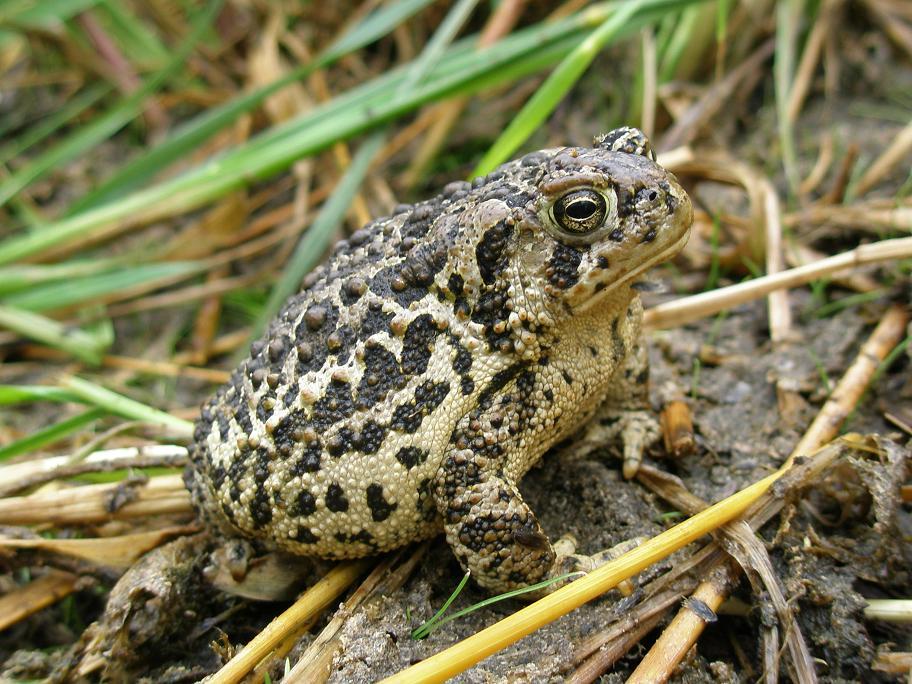 Wyoming ToadAnaxyrus baxteri
-
 Kihansi Spray ToadNectophrynoides asperginis
Compare
Questions and answers
What is the scientific name of the Osgood's Ethiopian Toad?
The scientific name of the Osgood's Ethiopian Toad is Altiphrynoides osgoodi. Written with its author, the full name is Altiphrynoides osgoodi (Loveridge, 1932).
Which family does the Osgood's Ethiopian Toad belong to?
Altiphrynoides osgoodi belongs to the family Bufonidae, in the order Anura and the class Amphibia.
Where is the Osgood's Ethiopian Toad found?
Checklists and occurrence records place Altiphrynoides osgoodi in 1 country: Ethiopia.
What is the conservation status of the Osgood's Ethiopian Toad?
The IUCN Red List category recorded for Altiphrynoides osgoodi is Critically Endangered (CR).
What other names does the Osgood's Ethiopian Toad have?
Altiphrynoides osgoodi is also known in English as Osgood’s Ethiopian Toad.
Sources
Passages the profile rests on
- The species primarily inhabits tropical montane forest. Source passage: “Osgood's Ethiopian toad is mainly a species of tropical montane forest” — English Wikipedia
- The species may extend marginally into open moorland. Source passage: “possibly extending marginally into open moorland.” — English Wikipedia
- The species was reported as common in Bale Mountains National Park and other montane environments east of the Great Rift Valley. Source passage: “The toad was common in the Bale Mountains National Park and other montane environments east of the Great Rift Valley” — English Wikipedia
- An isolated population was reported in the Gughe Mountains, although its existence was based on a single potentially misidentified specimen. Source passage: “although the existence of this population was based on a single specimen which may have been misidentified.” — English Wikipedia
- Excluding the putative Gughe Mountains population, the species' total range covered 56 km². Source passage: “If the putative population in the Gughe mountains is not included then this toad's total range covered an area of 56 km2 (22 sq mi).” — English Wikipedia
- Breeding was observed in April in a small, probably temporary pool within a grassy glade surrounded by Hypericum woodland. Source passage: “There is an observation of these toads breeding in a small pool, which was probably temporary, within a grassy glade surrounded by Hypericum woodland during April.” — English Wikipedia
- The species lays long strings of eggs from which tadpoles hatch. Source passage: “Long strings of eggs were laid from which the tadpoles hatched.” — English Wikipedia
- The species is considered possibly extinct. Source passage: “is a possibly extinct species of toad” — English Wikipedia
- The last recorded specimen was observed in 2003, despite extensive survey work in 2009. Source passage: “The toad is rare; the last specimen was observed 2003, despite extensive survey work in 2009.” — English Wikipedia
- If the species survives, its population probably does not exceed 50 individuals. Source passage: “If it is still extant, it probably numbers no more than 50 individuals.” — English Wikipedia
- Habitat loss caused by subsistence exploitation of forests threatens the species. Source passage: “It is threatened by habitat loss by subsistence exploitation of the forests.” — English Wikipedia
- Chytrid fungus is prevalent among amphibians in highland Ethiopia, but its impact on this species has not been documented. Source passage: “Chytrid fungus is very prevalent in amphibians in highland Ethiopia although there is no data on its impact on this species.” — English Wikipedia
Data
- Catalogue of Life, 2026-10-16 XR cc by
- Global Biodiversity Information Facility CC BY 4.0
- Wikidata CC0
- GeoNames CC BY 4.0
- Within the Catalogue of Life, this name comes from The Integrated Taxonomic Information System cc0
This species in other databases
Page built on 26 November 2026. See how the catalog is made and all sources and licences.
Cite this page
ScientificNames.org. (2026). Altiphrynoides osgoodi (Osgood's Ethiopian Toad). Retrieved November 26, 2026, from https://scientificnames.org/species/altiphrynoides-osgoodi
“Altiphrynoides osgoodi (Osgood's Ethiopian Toad).” ScientificNames.org, 2026, scientificnames.org/species/altiphrynoides-osgoodi. Accessed 26 Nov. 2026.
ScientificNames.org. “Altiphrynoides osgoodi (Osgood's Ethiopian Toad).” Accessed November 26, 2026. https://scientificnames.org/species/altiphrynoides-osgoodi.
@misc{scientificnames_altiphrynoides_osgoodi_osgoods_ethiopian_toad,
  author = {{ScientificNames.org}},
  title = {Altiphrynoides osgoodi (Osgood's Ethiopian Toad)},
  year = {2026},
  url = {https://scientificnames.org/species/altiphrynoides-osgoodi},
  note = {Accessed 2026-11-26}
}