Species · Flowering plants
Love Lies Bleeding Amaranthus caudatus
The scientific name of the Love Lies Bleeding is Amaranthus caudatus. It is a species of flowering plant in the family Amaranthaceae (amaranth family), order Caryophyllales.
- Scientific name
- Amaranthus caudatus L.
- Common name
- Love Lies Bleeding
- Genus
- Amaranthus
- Family
- Amaranthaceae (Amaranth Family)
- Order
- Caryophyllales
- Class
- Magnoliopsida
- Recorded in
- 90 countries
- Name status
- accepted in the Catalogue of Life

Overview
The species is indigenous to the high Peruvian Andes, with a geographical range extending from Ecuador to northern Argentina. It is distinguished by dense flowering panicles that can be black, red or white and grow up to 90 centimetres long.
Written 26 November 2026 from the sources listed below. Each statement was checked against the passage it cites; statements that could not be supported were removed.
Appearance
Love Lies Bleeding has broad leaves and a central stem that grows from a taproot system. Depending on the variety, the plant can reach a height of 2.5 metres.[1][2]
Its dense flowering panicles can be black, red or white and grow up to 90 centimetres long. Red varieties have a high content of betacyanins.[3][4][5]
The seeds have shiny coats and embryos curved around their small endosperms.[6]
Habitat
Love Lies Bleeding is indigenous to the high Peruvian Andes. It is the only amaranth species reported to grow at elevations above 2,500 metres and can be cultivated at elevations up to 3,100 metres.[7][8][9]
The plant grows best in full sun and requires adequate moisture because it is a short-day plant. Established plants tolerate drought as well as wet and dry conditions.[10][11][12]
Loam and loam-sandy soils with abundant organic matter and good drainage are recommended for cultivation, while clay soils are not recommended. The plant grows best in soil with a pH between 6 and 7, although it can tolerate a pH as high as 8.5.[13][14][15]
Diet
The leaves and seeds of Love Lies Bleeding are edible. The species is gluten-free and contains high levels of protein and essential amino acids, including lysine.[16][17]
The plant is high in dietary fibre, iron, magnesium and manganese. Its protein is described as nutritionally similar to milk protein.[18][19]
Reproduction and life cycle
Each flowering panicle is self-pollinating. Each fruit contains one small seed measuring no more than 1 millimetre in diameter.[20][21]
The plant can grow to maturity in four to six months under suitable conditions. In some highland regions, cultivation can take up to ten months.[22][23]
Uses
The seeds can be ground into flour, crushed and used as breading for sweets and main dishes, or popped in a pan like popcorn. They can also be eaten with milk as a cereal.[24][25][26][27]
In Mexico, the seeds are used in a honey-based sweet called alegria. In India, the species is used in a similar sweet called ladoos.[28][29]
The flour is used in the production of pasta and noodles. The remaining plant material after grain removal can be used as animal fodder, and the species can serve as a high-protein forage crop in tropical regions.[30][31][32]
Betalain extracted from red varieties is used as a non-toxic red food colouring in Peru.[33]
Classification of the Love Lies Bleeding
| Kingdom | Plantae |
|---|---|
| Subkingdom | Pteridobiotina |
| Phylum | Tracheophyta |
| Class | Magnoliopsida |
| Order | Caryophyllales |
| Family | Amaranthaceae (Amaranth Family) |
| Subfamily | Amaranthoideae |
| Tribe | Amarantheae |
| Genus | Amaranthus (Amaranth) |
| Species | Amaranthus caudatus L. |
Where the Love Lies Bleeding is found
Checklists and occurrence records place Amaranthus caudatus in 90 countries across Africa, Asia, Europe, North America, Oceania and South America. GBIF holds 5,396 georeferenced records of it.
Countries where it is native or its origin is not stated
- Algeria
- Argentina 160
- Bhutan 5
- Bolivia 149
- Chile 6
- Democratic Republic of the Congo 26
- Ecuador 42
- Ethiopia 101
- Ghana 4
- Indonesia 6
- Israel 13
- Kenya 8
- Mali 5
- Morocco 2
- Nepal 57
- Peru 364
- Republic of the Congo 3
- Reunion 3
- Seychelles 5
- Somalia 3
- Sweden 530
- Tanzania 6
- Uganda 10
Countries where it has been introduced
- Afghanistan
- Angola 11
- Australia 79
- Bangladesh
- Barbados
- Belarus 14
- Belize
- Brazil 147
- Cabo Verde 6
- Cameroon 7
- Central African Republic 3
- China 240
- Colombia 15
- Costa Rica 3
- Croatia 2
- Cuba 2
- Czechia 41
- Egypt 7
- France 1,216
- French Guiana 3
- Georgia
- Germany 555
- Greece 77
- Honduras 2
- Hungary 11
- India 152
- Iran 2
- Italy 70
- Japan 43
- Jersey 2
- Kazakhstan 11
- Maldives
- Malta 1
- Martinique 3
- Mauritius
- Mexico 55
- Moldova
- Montenegro
- Mozambique 1
- Myanmar
- Namibia 3
- New Caledonia 3
- New Zealand 30
- Pakistan 7
- Philippines 4
- Portugal 80
- Puerto Rico
- Qatar
- Saudi Arabia 6
- Slovakia 23
- Slovenia 2
- South Africa 13
- South Korea 9
- Sri Lanka 2
- Sudan 4
- Suriname 9
- Taiwan 1
- Tajikistan
- Thailand 1
- Tonga
- Trinidad and Tobago
- Ukraine 57
- United Kingdom 452
- United States 392
- Uzbekistan 1
- Vietnam 8
- Yemen
Regions and cities with the most records
- England, United Kingdom 369
- Bavaria, Germany 273
- Auvergne-Rhône-Alpes, France 200
- Grand Est, France 187
- Skåne, Sweden 112
- Île-de-France, France 109
- Occitanie, France 92
- Bourgogne-Franche-Comté, France 84
- Limay, France 74
- Mantes-la-Ville, France 74
- Centre-Val de Loire, France 73
- Mantes-la-Jolie, France 73
- Vernon, France 72
- Coimbra, Portugal 65
- Coimbra, Portugal 65
- Condeixa-a-Nova, Portugal 65
- Eiras, Portugal 65
- Ribeira de Frades, Portugal 65
- Santo António dos Olivais, Portugal 65
- Saxony, Germany 65
- São Martinho do Bispo, Portugal 65
- São Paulo de Frades, Portugal 65
- Pays de la Loire, France 62
- Ivry-sur-Seine, France 61
- Villejuif, France 61
- Charenton-le-Pont, France 60
- L'Haÿ-les-Roses, France 60
- Saint-Mandé, France 60
- Alfortville, France 59
- Châtillon, France 59
- Hauts-de-France, France 59
- Issy-les-Moulineaux, France 59
- Malakoff, France 59
- Montrouge, France 59
- Paris, France 59
- Paris 01 Louvre, France 59
17 more countries have a few records outside this range
These countries hold a few records of Amaranthus caudatus but lie outside the range the checklists give for it. Such records are often zoo or garden specimens, museum material or vagrants, so the species is not counted as occurring there.
Range as the checklists state it
England [I] (England [I], Wales [I], Isle of Man [I], Isles of Scilly [I]); Germany [I]; Czech Republic [I]; Slovakia [I]; Hungary [I]; France [I]; Channel Isl. [I] (Jersey [I]); Italy [I]; Sicily [I]; Malta [I]; Slovenia [I]; Croatia [I]; Bosnia & Hercegovina [I]; Montenegro [I]; European Turkey [I]; Greece [I]; Crete [I]; Belarus [I]; European Russia [I]; Moldova [I]; Crimea [I]; Morocco [c]; Algeria [c]; Egypt [I] (Desert Oases [I], NE-Egypt [I], Nile Delta [I], Nile Valley [I], NW-coastal Egypt [I], SE-Egypt [I]); Madeira [I] (Madeira Isl. [I]); Canary Isl. [I] (Gran Canaria [I], Tenerife [I]); Cape Verde Isl. [I] (Santo Antao Isl. [I], Sao Vicente Isl. [I], Ilha de Sao Nicolau [I], Ilha da Boa Vista [I], Ilha de Sao Tiago [I]); Cameroon [I]; São Tomé [I]; Central African Republic [I]; Sudan [I]; Angola [I]; Mozambique [I]; Namibia [I]; South Africa [I]; Mauritius [I]; La Réunion [I]; Russian Far East [I] (Primorye [I]); Kazakhstan [I]; Uzbekistan [I]; Tajikistan [I]; Georgia [Caucasus] [I]; East Aegaean Isl. [I] (incl. Rhodos [I]); Iran [I] (NE-Iran: Mts. [I]); Afghanistan [I]; Sinai peninsula [I] (S-Sinai [I]); Saudi Arabia [I] (C-Saudi Arabia [I], N-Saudi Arabia [I], Asir [I]); Qatar [I]; Yemen [I] (N-Inner Yemen [I], SW-Yemen [I], Tihama [I], W-Yemen [I]); China [I]; South Korea [I]; Japan [I]; Ryukyu Isl. [I]; Taiwan [I]; Pakistan [I] (Baluchistan [I], Baltistan [I]); Nepal [c]; India [I] (throughout); Maldives [I]; Sri Lanka [I]; Bangladesh [I]; Myanmar [I]; Thailand [I]; Vietnam [I]; peninsular Malaysia [I]; Philippines [I]; Jawa [I]; New Guinea [I]; Australia [I] (Western Australia [I], South Australia [I], Queensland [I], Victoria [I], New South Wales [I]); New Zealand [I]; New Caledonia [I]; Tonga [I] (Vava'u [I]); Tuamotu Arch. [I] (Makatea Isl. [I]); USA [I] (Arizona [I], California [I], Connecticut [I], Delaware [I], Florida [I], Idaho [I], Illinois [I], Kansas [I], Massachusetts [I], Maine [I], Michigan [I], Minnesota [I], Missouri [I], Montana [I], New York [I], Oregon [I], Pennsylvania [I], Tennessee [I], Virginia [I], Vermont [I], Washington State [I], Wisconsin [I]); Mexico [I]; Belize [I]; Honduras [I]; Costa Rica [I]; Cuba [I]; Puerto Rico [I]; Virgin Isl. [I] (Tortola [I]); Martinique [I]; St. Vincent [I]; Barbados [I]; Trinidad & Tobago [I]; Colombia [I]; Surinam [I]; French Guiana [I]; Ecuador; Galápagos; Peru; Bolivia (Chuquisaca, La Paz, Potosí, Tarija); Brazil [I]
A number beside a place is its count of GBIF occurrence records. A place without a number comes from a checklist alone. Records show where a species has been observed or collected, which can include escapes and vagrants.
Common names
English
- Love Lies Bleeding
- Amarant
- Inca-wheat
- Foxtail
- Foxtail Amaranth
- Love-lies-bleeding
- Purple Amaranth
- Red-hot-cattail
- Tassel-flower
- Velvet-flower
Names in 36 other languages
- Arabic
- kef alemhena
- Asturian
- amarantu
- Azerbaijani
- Süpürgəvarı qaratərə
- Chinese
- lao qiang gu, 尾穗苋, 尾穗莧, 老枪谷, 老枪谷叶, 老枪谷子, 老枪谷根
- Czech
- laskavec ocasatý
- Dutch
- Kattenstaartamarant
- Estonian
- longus rebashein
- Finnish
- punarevonhäntä
- French
- amarante caudée, amarante queue-de-renard, discipline des religieux, queue de renard
- German
- Garten-Amarant, Garten-Fuchsschwanz, Gartenfuchsschwanz, Inkaweizen
- Greek
- Αμάρανθος ο ουροφόρος
- Hindi
- jataco
- Hungarian
- bókoló disznóparéj
- Italian
- Amaranto coda rossa
- Japanese
- himo-geitō, sennin-koku, センニンコク, ヒモゲイトウ
- Korean
- julmaendeurami, 줄맨드라미
- Lithuanian
- Uodegotasis burnotis
- Marathi
- राजगिरा
- Norwegian Bokmål
- reveamarant
- Persian
- بستانافروز
- Polish
- Szarłat ogrodowy, Szarłat zwisły
- Portuguese
- Rabo-de-gato, moncos-de-Peru
- Romanian
- Moțul curcanului
- Russian
- Щирица хвостатая
- Slovak
- láskavec chvostnatý
- Slovenian
- purmanov žnoder, repati ščir
- Spanish
- Alegría, achita, bledo francés, kiwicha, quilete, trigo del Inca
- Swedish
- Röd amarant, rävsvans
- Thai
- ผักโขมใบแดง
- Turkish
- Uzunibik
- Ukrainian
- Щириця хвостата
- Welsh
- Mari Waedlyd
- amh
- ሊሻሊሾ
- div
- ރަތް މައްސާގު
- hsb
- Pyšny šćěrjenc
- que
- Quihuicha
Synonyms
27 other scientific names have been used for this species and are now treated as synonyms of Amaranthus caudatus.
- Amaranthus abyssinicus L.H.Bailey
- Amaranthus alopecurus Hochst. ex A.Br. & Bouché
- Amaranthus baileyanus Iamonico
- Amaranthus cararu Moq.
- Amaranthus caudatus f. alopecurus (Moq.) Thell.
- Amaranthus caudatus f. maximus (Mill.) A.Braun & C.D.Bouché
- Amaranthus caudatus subsp. caudatus
- Amaranthus caudatus subsp. mantegazzianus (Pass.) Hanelt
- Amaranthus caudatus subsp. saueri V.Jehlík
- Amaranthus caudatus var. albiflorus Moq.
- Amaranthus caudatus var. alopecurus Moq.
- Amaranthus caudatus var. caudatus
- Amaranthus caudatus var. gibbosus L.H.Bailey
- Amaranthus caudatus var. maximus (Mill.) Corrie
- Amaranthus caudatus var. maximus (Mill.) Moq.
- Amaranthus caudatus var. pendulinus (Regel) Thell.
- Amaranthus dussii Sprenger
- Amaranthus edulis var. spadiceus Hunz.
- Amaranthus hybridus subsp. caudatus (L.) Iamonico & Galasso
- Amaranthus mantegazzianus Pass.
- Amaranthus mategazzianus Passerini
- Amaranthus maximus Mill.
- Amaranthus paniculatus var. caudatus (L.) Jess.
- Amaranthus pendulinus Moq.
- Amaranthus pendulus Moq.
- Euxolus arvensis Rojas Acosta
- Amaranthus edulis Speg. ambiguous synonym
Related species
-
 Green AmaranthAmaranthus viridis
-
 Redroot PigweedAmaranthus retroflexus
-
 AmaranthAmaranthus cruentus
-
 Chinese AmaranthAmaranthus tricolor
-
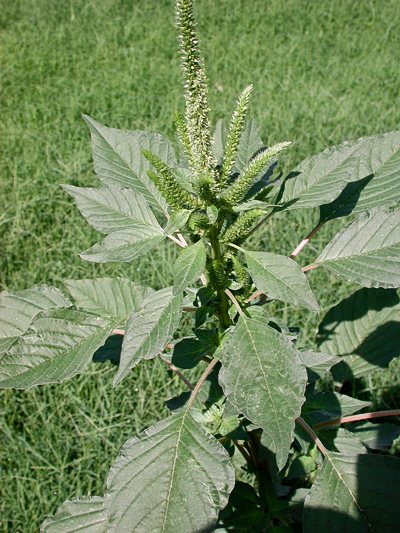 Palmer AmaranthAmaranthus palmeri
-
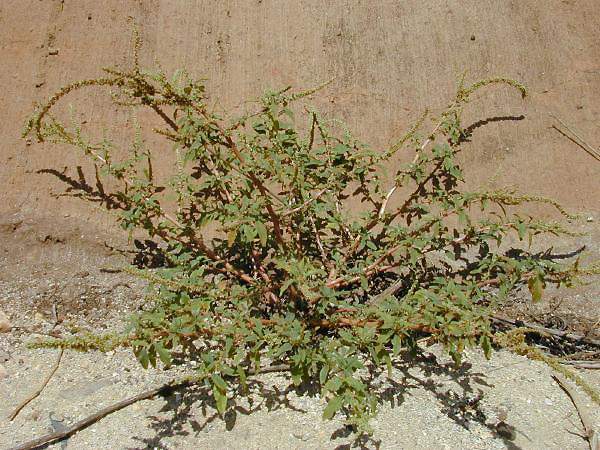 Spiny AmaranthAmaranthus spinosus
-
 Prince-of-Wales FeatherAmaranthus hypochondriacus
-
 Spleen AmaranthAmaranthus dubius
Compare
Questions and answers
What is the scientific name of the Love Lies Bleeding?
The scientific name of the Love Lies Bleeding is Amaranthus caudatus. Written with its author, the full name is Amaranthus caudatus L..
Which family does the Love Lies Bleeding belong to?
Amaranthus caudatus belongs to the family Amaranthaceae, in the order Caryophyllales and the class Magnoliopsida.
Where is the Love Lies Bleeding found?
Checklists and occurrence records place Amaranthus caudatus in 90 countries, including Sweden, Peru, Argentina, Bolivia, Ethiopia and Nepal.
What other names does the Love Lies Bleeding have?
Amaranthus caudatus is also known in English as Amarant, Inca-wheat, Foxtail, Foxtail Amaranth, Love-lies-bleeding and Purple Amaranth.
Why is the flower called love-lies-bleeding?
The common name love-lies-bleeding was associated with untenable romantic relationships or the absence of desirable prospects in Victorian flower symbolism.[34]
Sources
Passages the profile rests on
- Amaranthus caudatus has broad leaves and a central stem that grows from a taproot system. Source passage: “A. caudatus is an annual, broad-leaved dicotyledon with a central stem that grows from a taproot system.” — English Wikipedia
- Depending on the variety, the plant can reach a height of 2.5 metres. Source passage: “Depending on the variety, A. caudatus can reach up to 2.5 metres (8 feet) tall.” — English Wikipedia
- Its flowering panicles can grow up to 90 centimetres long. Source passage: “A. caudatus is most recognizable for its striking flowering panicles that can reach up to 90 centimetres (35 inches) long.” — English Wikipedia
- The dense flowering panicles can be black, red or white. Source passage: “The colour of these highly dense flowering panicles ranges from black, to red and more commonly white.” — English Wikipedia
- The red varieties have a high content of betacyanins. Source passage: “The red varieties of A. caudatus are due to a high content of betacyanins.” — English Wikipedia
- The seeds have shiny coats and embryos curved around their small endosperms. Source passage: “each seed has a shiny coat and the embryo is curved around the small endosperm.” — English Wikipedia
- The species is indigenous to the high Peruvian Andes. Source passage: “A. caudatus is an indigenous crop from the high Peruvian Andes” — English Wikipedia
- Amaranthus caudatus is the only amaranth species reported to grow at elevations above 2,500 metres. Source passage: “It is the only amaranth species that can grow at altitudes greater than 2,500 m (8,200 ft) above sea level.” — English Wikipedia
- The species can be cultivated at elevations up to 3,100 metres. Source passage: “Cultivation can occur at up to 3,100 m (10,200 ft)” — English Wikipedia
- The plant grows best in full sun. Source passage: “grows best in full sun within 4–6 months.” — English Wikipedia
- The species requires adequate moisture because it is a short-day plant. Source passage: “it is a short-day plant and needs adequate moisture.” — English Wikipedia
- Established plants tolerate drought as well as wet and dry conditions. Source passage: “once established it is drought tolerant and can handle both wet and dry conditions.” — English Wikipedia
- Loam and loam-sandy soils with abundant organic matter and good drainage are recommended for cultivation. Source passage: “Loam and loam-sandy soils with lots of organic matter and good drainage are best.” — English Wikipedia
- Clay soils are not recommended for cultivating the species. Source passage: “Clay soils are not recommended for A. caudatus.” — English Wikipedia
- The plant grows best in soil with a pH between 6 and 7, although it can tolerate a pH as high as 8.5. Source passage: “the pH must be between 6–7, although the plant can still grow at a pH of up to 8.5.” — English Wikipedia
- The leaves and seeds of the plant are edible. Source passage: “Many parts of the plant, including the leaves and seeds, are edible” — English Wikipedia
- The species is gluten-free and contains high levels of protein and essential amino acids, including lysine. Source passage: “The flavourful and gluten-free A. caudatus is very high in protein and essential amino acids, such as lysine” — English Wikipedia
- The plant is high in dietary fibre, iron, magnesium and manganese. Source passage: “A. caudatus is high in dietary fiber and minerals such as iron, magnesium and manganese.” — English Wikipedia
- Its protein is described as nutritionally similar to milk protein. Source passage: “A. caudatus protein is virtually similar to milk protein (casein)” — English Wikipedia
- Each flowering panicle is self-pollinating. Source passage: “Each panicle is self-pollinating” — English Wikipedia
- Each fruit contains one small seed measuring no more than 1 millimetre in diameter. Source passage: “the fruits each contain a single small seed, no larger than 1 millimetre (1⁄32 in) in diameter.” — English Wikipedia
- The plant can grow to maturity in four to six months under suitable conditions. Source passage: “grows best in full sun within 4–6 months.” — English Wikipedia
- In some highland regions, cultivation can take up to ten months. Source passage: “However, in some highland regions it can take up to 10 months.” — English Wikipedia
- The seeds can be ground into flour. Source passage: “When ground, it can be used as flour” — English Wikipedia
- The crushed seeds can be used as breading for sweets and main dishes. Source passage: “but also as breading for sweets and main dishes when crushed.” — English Wikipedia
- The seeds can be popped in a pan like popcorn. Source passage: “Seeds can be popped like popcorn in a pan” — English Wikipedia
- The seeds can be eaten with milk as a cereal. Source passage: “like oats, it can be eaten with milk as cereal.” — English Wikipedia
- In Mexico, the seeds are used in a honey-based sweet called alegria. Source passage: “In Mexico, A. caudatus is used on sweets with honey; the dish is called alegria” — English Wikipedia
- In India, the species is used in a similar sweet called ladoos. Source passage: “India has a similar dish called ladoos.” — English Wikipedia
- The flour is used in the production of pasta and noodles. Source passage: “As flour, A. caudatus is also used for pasta and noodles.” — English Wikipedia
- The remaining plant material after grain removal can be used as animal fodder. Source passage: “After the A. caudatus grains have been removed, the remaining plant material (stover) can be used for fodder.” — English Wikipedia
- The species can serve as a high-protein forage crop in tropical regions. Source passage: “A. caudatus can be suitable to be used as a high-protein forage crop in the tropics.” — English Wikipedia
- Betalain extracted from red varieties is used as a non-toxic red food colouring in Peru. Source passage: “In Peru, simple methods have been developed to extract betalain from red varieties of A. caudatus to be used as non-toxic red food colouring.” — English Wikipedia
- The common name love-lies-bleeding was associated with untenable romantic relationships or the absence of desirable prospects in Victorian flower symbolism. Source passage: “Love-lies-bleeding stood for untenable romantic relationships or absence of desirable prospects in the Victorian language of flowers.” — English Wikipedia
Data
- Catalogue of Life, 2026-10-16 XR cc by
- Global Biodiversity Information Facility CC BY 4.0
- Wikidata CC0
- GeoNames CC BY 4.0
- Wikimedia Commons per image; credit shown with each image
- Within the Catalogue of Life, this name comes from Synonymic Checklists of the Vascular Plants of the World cc by
References
- L. (1753). Sp. Pl. [Linnaeus] 2: 990 (1753). where the name was published
This species in other databases
Page built on 28 November 2026. See how the catalog is made and all sources and licences.
Cite this page
ScientificNames.org. (2026). Amaranthus caudatus (Love Lies Bleeding). Retrieved November 28, 2026, from https://scientificnames.org/species/amaranthus-caudatus
“Amaranthus caudatus (Love Lies Bleeding).” ScientificNames.org, 2026, scientificnames.org/species/amaranthus-caudatus. Accessed 28 Nov. 2026.
ScientificNames.org. “Amaranthus caudatus (Love Lies Bleeding).” Accessed November 28, 2026. https://scientificnames.org/species/amaranthus-caudatus.
@misc{scientificnames_amaranthus_caudatus_love_lies_bleeding,
  author = {{ScientificNames.org}},
  title = {Amaranthus caudatus (Love Lies Bleeding)},
  year = {2026},
  url = {https://scientificnames.org/species/amaranthus-caudatus},
  note = {Accessed 2026-11-28}
}