Species · Flowering plants
Green Amaranth Amaranthus viridis
The scientific name of the Green Amaranth is Amaranthus viridis. It is a species of flowering plant in the family Amaranthaceae (amaranth family), order Caryophyllales.
- Scientific name
- Amaranthus viridis L.
- Common name
- Green Amaranth
- Genus
- Amaranthus
- Family
- Amaranthaceae (Amaranth Family)
- Order
- Caryophyllales
- Class
- Magnoliopsida
- Recorded in
- 186 countries
- Name status
- accepted in the Catalogue of Life

Overview
Green amaranth (Amaranthus viridis) is an annual herb with an upright, light green stem. The species is cosmopolitan and is native to tropical regions of the Americas, including South America, Central America, and the Caribbean.
Written 26 November 2026 from the sources listed below. Each statement was checked against the passage it cites; statements that could not be supported were removed.
Appearance
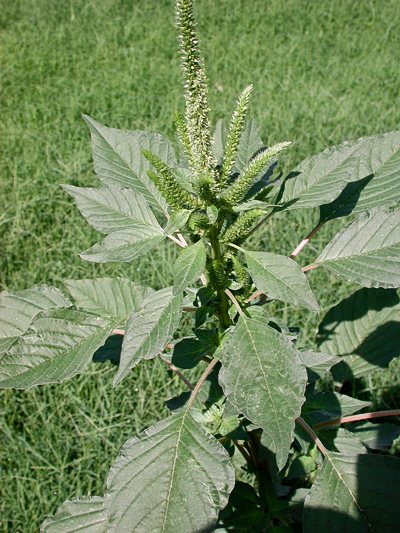
Green amaranth has an upright, light green stem and produces numerous branches from its base. It typically reaches a height of approximately 60–80 cm.[1][2][3]
Its leaves are ovate and have long petioles measuring approximately 5 cm. The leaves measure approximately 3–6 cm in length and 2–4 cm in width.[4][5][6]
The plant produces terminal panicles with relatively few branches. Its flowers are small and green and contain three stamens.[7][8]
Habitat
Green amaranth is described as cosmopolitan. Its native range includes tropical regions of the Americas, specifically South America, Central America, and the Caribbean.[9][10][11]
Uses
Green amaranth is consumed as a boiled leafy green or vegetable in many parts of the world. It is also consumed as a vegetable in parts of Africa.[12][13]
The species is consumed as a vegetable in South India, particularly in Kerala, where it is known as kuppacheera.[14][15]
Green amaranth leaves have been part of the Maldivian diet for centuries. They are used in the Maldivian dish mas huni.[16][17]
The Yoruba in West Africa use the plant for medicinal and spiritual purposes. It is also used as a medicinal herb in traditional Ayurvedic medicine, where it is known by the Sanskrit name Tanduliya.[18][19][20]
Green amaranth was consumed as a food in Australia during the nineteenth century. The plant has historically been recommended as a substitute for spinach.[21][22]
The seeds are edible and have a nutty flavour. They can be eaten as snacks or incorporated into biscuits.[23][24]
A porridge can be prepared by boiling the seeds in water. The seeds can be harvested by scraping ripe seed spikes between the fingers.[25][26]
Similar species
Amaranthus blitum is a closely related species that is also consumed as food. Amaranthus retroflexus is another edible species that is sometimes called green amaranth.[27][28]
Classification of the Green Amaranth
| Kingdom | Plantae |
|---|---|
| Subkingdom | Pteridobiotina |
| Phylum | Tracheophyta |
| Class | Magnoliopsida |
| Order | Caryophyllales |
| Family | Amaranthaceae (Amaranth Family) |
| Subfamily | Amaranthoideae |
| Tribe | Amarantheae |
| Genus | Amaranthus (Amaranth) |
| Species | Amaranthus viridis L. |
Where the Green Amaranth is found
Checklists and occurrence records place Amaranthus viridis in 186 countries across Africa, Asia, Europe and Oceania. GBIF holds 19,014 georeferenced records of it.
Countries where it is native or its origin is not stated
- Algeria 23
- Antigua and Barbuda 4
- Argentina 343
- Armenia 26
- Austria 58
- Bahamas 29
- Barbados 6
- Belgium 141
- Belize 10
- Bolivia 111
- Bonaire, Saint Eustatius and Saba 5
- Brazil 1,331
- Burundi 4
- Cabo Verde 25
- Cameroon 68
- Canada 3
- Chile 3
- Christmas Island 8
- Colombia 65
- Comoros 5
- Cook Islands 21
- Costa Rica 26
- Cuba 29
- Curacao 21
- Czechia 12
- Denmark 28
- Dominica 4
- Dominican Republic 28
- Ecuador 80
- El Salvador 4
- Finland 5
- French Guiana 20
- French Polynesia 82
- Ghana 30
- Gibraltar 6
- Grenada 3
- Guadeloupe 12
- Guam 10
- Guatemala 26
- Guinea-Bissau 4
- Guyana 15
- Haiti 14
- Honduras 9
- Hong Kong 38
- Indonesia 142
- Jamaica 23
- Jordan 11
- Kazakhstan 5
- Kiribati 11
- Luxembourg 3
- Macao 26
- Malaysia 41
- Marshall Islands 10
- Martinique 6
- Mayotte 29
- Mexico 71
- Micronesia 13
- Montserrat 3
- Namibia 4
- Nicaragua 25
- Norfolk Island 6
- Northern Mariana Islands 30
- Norway 9
- Palau 6
- Palestinian Territory 38
- Panama 7
- Papua New Guinea 58
- Paraguay 90
- Peru 70
- Pitcairn 6
- Puerto Rico 48
- Reunion 675
- Romania 6
- Russia 9
- Saint Barthelemy 13
- Saint Martin 6
- Sao Tome and Principe 11
- Singapore 19
- Solomon Islands 6
- Suriname 5
- Sweden 142
- Switzerland 16
- Syria 5
- The Netherlands 78
- Timor Leste 4
- Trinidad and Tobago 8
- Turks and Caicos Islands 4
- U.S. Virgin Islands 16
- Ukraine 17
- United Kingdom 20
- United States 1,667
- United States Minor Outlying Islands 7
- Uruguay 29
- Venezuela 20
Countries where it has been introduced
- Afghanistan 11
- Albania 2
- American Samoa
- Angola 26
- Australia 1,679
- Azerbaijan 14
- Bahrain 2
- Bangladesh 2
- Belarus 1
- Benin 137
- Bhutan 4
- Burkina Faso 69
- Cambodia 7
- Central African Republic 19
- Chad 18
- China 576
- Croatia 3
- Cyprus 11
- Democratic Republic of the Congo 158
- Egypt 74
- Equatorial Guinea 4
- Eritrea 1
- Ethiopia 6
- Fiji 9
- France 260
- Gabon 1
- Gambia 1
- Georgia 4
- Germany 56
- Greece 344
- Guinea 11
- Hungary 2
- India 310
- Iraq 15
- Israel 564
- Italy 125
- Ivory Coast 16
- Japan 902
- Kenya 4
- Kuwait 2
- Laos 5
- Lebanon 8
- Libya
- Madagascar 4
- Maldives 6
- Mali 4
- Malta 26
- Mauritania 2
- Mauritius 3
- Morocco 62
- Mozambique 4
- Myanmar 4
- Nepal 60
- New Caledonia 42
- New Zealand 28
- Niger 12
- Nigeria 41
- Niue 6
- Oman 12
- Pakistan 941
- Philippines 88
- Portugal 131
- Qatar 7
- Saint Helena 5
- Samoa 7
- Saudi Arabia 26
- Senegal 42
- Seychelles 19
- Sierra Leone 1
- Slovakia 9
- South Africa 132
- South Korea 261
- Spain 2,739
- Sri Lanka 21
- Sudan 16
- Taiwan 2,010
- Tajikistan
- Tanzania 10
- Thailand 127
- Togo 17
- Tonga 12
- Tunisia 11
- Turkey 44
- Turkmenistan
- Uganda 6
- United Arab Emirates 48
- Uzbekistan 66
- Vanuatu 25
- Vietnam 22
- Yemen 18
- Zambia 2
- Zimbabwe 3
Regions and cities with the most records
- Taiwan, Taiwan 1,375
- Valencia, Spain 931
- Queensland, Australia 640
- Catalonia, Spain 473
- Punjab, Pakistan 466
- New South Wales, Australia 410
- Catarroja, Spain 385
- Albal, Spain 384
- Alfafar, Spain 381
- Benetússer, Spain 378
- Silla, Spain 375
- Saint-Leu, Reunion 372
- Paiporta, Spain 365
- Picassent, Spain 364
- Piton Saint-Leu, Reunion 362
- Xirivella, Spain 360
- Paterna, Spain 358
- Torrent, Spain 358
- Valencia, Spain 358
- Burjassot, Spain 355
- Quart de Poblet, Spain 353
- Mislata, Spain 352
- Manises, Spain 351
- Alaquàs, Spain 349
- Moncada, Spain 348
- Aldaia, Spain 344
- Alboraya, Spain 343
- Massamagrell, Spain 337
- Citong, Taiwan 329
- Xiluo, Taiwan 329
- Hawaii, United States 323
- Bétera, Spain 311
- Saint-Louis, Reunion 308
- Erlun, Taiwan 301
- Douliu, Taiwan 291
- L'Eliana, Spain 285
Range as the checklists state it
Germany [I]; Slovakia [I]; Hungary [I]; Portugal [I]; Spain [I]; Baleares [I]; France [I]; Italy [I]; Sicily [I]; Isole Pelagie [I] (Lampedusa [I]); Malta [I]; Croatia [I]; Albania [I]; Greece [I]; Crete [I]; Belarus [I]; Morocco [I]; Tunisia [I]; Libya [I]; Egypt [I] (Desert Oases [I], NE-Egypt [I], Nile Delta [I], Nile Valley [I], NW-coastal Egypt [I]); Azores [I] (Sao Miguel Isl. [I], Sao Jorge [I], Pico [I]); Madeira [I] (Madeira Isl. [I]); Canary Isl. [I] (Fuerteventura [I], Gran Canaria [I], Tenerife [I], La Gomera [I], Hierro [I], La Palma [I]); Mauritania [I]; Senegal [I]; Gambia [I]; Guinea [I]; Sierra Leone [I]; Mali [I]; Burkina Faso [I]; Ivory Coast [I]; Togo [I]; Benin [I]; Niger [I]; Nigeria [I]; Bioko Isl. [Fernando Poo] [I]; São Tomé [I]; Annobon Isl. [I]; Gabon [I]; Congo [Brazzaville] [I]; Central African Republic [I]; D. R. Congo [Zaire] [I]; Chad [I]; Chad [I]; Sudan [I]; Ethiopia [I]; Eritrea [I]; Uganda [I]; Kenya [I]; Tanzania [I]; Angola [I]; Zambia [I]; Zimbabwe [I]; Mozambique [I]; South Africa [I]; Ascension Isl. [I]; St. Helena [I]; Madagascar [I]; Comores [I]; Mozambique Channel Isl. [Îles Éparses] [I] (Île Europa [I], Juan de Nova Isl. [I]); Mauritius [I]; La Réunion [I]; Rodrigues [I]; Îles Glorieuses [I]; Aldabra [I] (Aldabra Isl. [I]); Seychelles [I]; Chagos Arch. [I] (Diego Garcia [I]); Russian Far East [I] (Primorye [I]); Northern Caucasus [I]; Georgia [Caucasus] [I]; Azerbaijan [I]; Turkmenistan [I]; Uzbekistan [I]; Tajikistan [I]; East Aegaean Isl. [I] (widespread, incl. Rhodos [I]); Turkey [I] (SSW-Anatolia [I]); Iraq [I] (W-Iraq: Desert [I]); Afghanistan [I]; Cyprus [I] (E-Cyprus [I]); Lebanon [I] (C-Lebanon [I], coastal W-Lebanon [I]); Israel [I] (coastal W-Israel [I], Rift Valley [I], N-Israel [I]); Sinai peninsula [I] (N-Sinai [I], S-Sinai [I]); Jordania [I] (S-Jordania [I], W-Jordania [I]); Saudi Arabia [I] (NE-Saudi Arabia [I], Hejaz [I], Asir [I]); Kuwait [I]; Bahrain [I]; Qatar [I]; United Arab Emirates [I]; Oman [I] (Mascat & Oman [I]); Yemen [I] (SW-Yemen [I], Tihama [I], W-Yemen [I]); China [I]; South Korea [I]; Japan [I]; Ryukyu Isl. [I]; Taiwan [I]; Pakistan [I] (Sind [I], Baluchistan [I], N. W. Frontier Prov. [I], Pakistani Punjab [I], Hazara [I]); Nepal [I]; Bhutan [I]; India [I] (throughout); Lakshadweep Isl. [Laccadives] [I]; Maldives [I]; Sri Lanka [I]; Bangladesh [I]; Andaman Isl. [I]; Nicobar Isl. [I]; Myanmar [I]; Thailand [I]; Laos [I]; Cambodia [I]; Vietnam [I]; peninsular Malaysia (throughout [I]); Philippines [I]; Jawa [I]; Lesser Sunda Isl. [I] (Bali [I]); Moluccas [I]; Christmas Isl. [Austr.] [I]; New Guinea [I]; Solomon Isl. [I]; Australia [I] (Western Australia [I], Northern Territory [I], South Australia [I], Queensland [I], New South Wales [I], Victoria [I]); Lord Howe Isl. [I]; New Zealand [I]; New Caledonia [I]; Vanuatu [I]; Rotuma Isl. [I]; Tonga [I] (Late Isl. [I], Tongatapu [I], 'Eua [I], Tafahi [I]); Niue [I]; Fiji [I]; [Western] Samoa [I] ('Upolu [I], Savai'i [I]); American Samoa [I] (Tutuila [I], Ta'u [I]); Phoenix Isl. [I] (Kanton [I]); N-Line Isl. [I] (Teraina [I]); Marquesas Isl. [I] (Fatu Hiva [I], Nuku Hiva [I], Hiva Oa [I], Mohotani [I], Tahuata [I], Ua Huka [I], Ua Pou [I]); Society Isl. [I] (Mopelia Atoll [I], Tahiti [I], Huahine [I], Raiatea [I]); Gambier Isl. [I] (Mangareva [I]; Tuamotu Arch. [I] (Raroia [I], Takapoto [I]; Austral Isl. [I] (Rimatara [I], Rapa Iti [I], Rurutu [I], Tubuai [I]); Pitcairn Isl. [I]; Palau [I] (Koror [I]); Northern Marianas [I] (Agrihan [I], Alamagan [I], Sarigan [I], Saipan [I], Tinian [I], Rota [I]); Guam [I]; Fed. States of Micronesia [I] (Yap [I], Pohnpei [I], Ulithi [I], Fais [I], Satawal [I], Kosrae [I]); Marshall Isl. [I] (Enewetok [I], Kwajalein [I], Arno [I], Jaluit [I]); Wake Isl. [I]; Hawaii [I] (Kure Isl. [I], Midway Isl. [I], Lanai [I], Kauai [I], Oahu [I], Molokai [I], Lanai [I], Maui [I], Kahoolawe Isl. [I], Hawaii Isl. [I], Laysan Isl. [I]); USA [I] (Alabama [I], Arizona [I], Arkansas [I], Florida [I], Georgia [I], Louisiana [I], Massachusetts [I], Michigan [I], Mississippi [I], New Mexico [I], New York [I], North Carolina [I], Oklahoma [I], Pennsylvania [I], South Carolina [I], Tennessee [I], Texas [I], Virginia [I]); Mexico (Campeche, Tamaulipas, Veracruz, etc.); Belize; Nicaragua; Costa Rica; Panama; Bahamas [I]; Turks & Caicos Isl. [I]; Cuba [I]; Cayman Isl. [I]; Jamaica [I]; Hispaniola [I]; Puerto Rico [I]; Navassa Isl. [I]; Virgin Isl. [I] (Guana [I], St. Croix [I], St. John [I], St. Thomas [I], Virgin Gorda [I]); St. Barthélémy [I]; St. Eustatius [I]; Antigua [I]; Montserrat [I]; Guadeloupe [I]; Marie-Galante [I]; Dominica [I]; Martinique [I]; St. Lucia [I]; St. Vincent [I]; Barbados [I]; Trinidad & Tobago [I]; Aruba [I]; Bonaire [I]; Curacao [I]; Colombia (Antioquia, Atlántico, Bolívar, Casanare, Guaviare, Huila, La Guajira, Magdalena, Meta, Quindío, Tolima, Valle, Vaupés); Venezuela (Anzoátegui, Bolívar, Delta Amacuro, Venezuela Distrito Federal, Guárico, Lara, Nueva Esparta, Sucre, Táchira, Yaracuy); Guyana; Surinam; French Guiana; Ecuador; Galápagos; Galápagos; Peru; Bolivia (Beni, Chuquisaca, Cochabamba, La Paz, Pando, Santa Cruz, Tarija); N-Brazil (Pará, Amazonas); NE-Brazil (Piauí, Bahia); SE-Brazil (Minas Gerais, São Paulo, Rio de Janeiro); S-Brazil (Rio Grande do Sul, Santa Catarina); Paraguay (Alto Paraguay, Guaira, Pres. Hayes); Uruguay (Artigas, Canelones, Cerro Largo, Montevideo, Paysandú, Rio Negro, Salto, San Jose, Tacuarembó); Argentina (Buenos Aires, Chaco, Corrientes, Entre Rios, Formosa, Jujuy, La Rioja, Misiones, Salta, Santiago del Estero, Santa Fe, San Juan); Chile [I] (Atacama [I], Coquimbo [I], Araucanía [I])
A number beside a place is its count of GBIF occurrence records. A place without a number comes from a checklist alone. Records show where a species has been observed or collected, which can include escapes and vagrants.
Common names
English
- Green Amaranth
- Callaloo
- Prince-of-Wales-feather
- Pigweed
- Slender Amaranth
Names in 9 other languages
- Chinese
- zhou guo xian, 白苋, 皱果苋, 皱果苋(绿苋), 野苋, 野苋菜, 野莧菜
- Czech
- laskavec zelený
- Finnish
- hentorevonhäntä
- French
- amarante verte
- German
- Zierlicher Fuchsschwanz, grüner Amarant
- Papiamento
- Kalalú, Kalalú di Kome
- Portuguese
- bredo, cararu, carurú-comum, carurú-de-mancha, carurú-de-porco, carurú-de-soldado
- Spanish
- bledo
- Swedish
- smalamarant
Synonyms
20 other scientific names have been used for this species and are now treated as synonyms of Amaranthus viridis.
- Albersia caudata (Jacq.) Boiss.
- Albersia gracilis (Desf.) Webb & Berthel.
- Albersia polystachya (Willd.) Kunth
- Amaranthus fasciatus Roxb.
- Amaranthus gracilis Desf. ex Poir.
- Amaranthus major Salzm. ex Moq.
- Amaranthus polystachyus Willd.
- Amaranthus polystachyus Buch.-Ham. ex Wall.
- Chenopodium caudatum Jacq.
- Euxolus caudatus (Jacq.) Moq.
- Euxolus caudatus var. gracilis Moq.
- Euxolus caudatus var. maximus Moq.
- Euxolus polystachyus (Willd.) Miq.
- Euxolus viridis (L.) Moq.
- Euxolus viridis var. viridis
- Galliaria adscendens Bubani
- Glomeraria viridis (L.) Cav.
- Pyxidium viride (L.) Moq.
- Amaranthus blitum Moq. ambiguous synonym
- Amaranthus littoralis Bernh. ex Moq. ambiguous synonym
Related species
-
 Love Lies BleedingAmaranthus caudatus
-
 Redroot PigweedAmaranthus retroflexus
-
 AmaranthAmaranthus cruentus
-
 Chinese AmaranthAmaranthus tricolor
-
 Palmer AmaranthAmaranthus palmeri
-
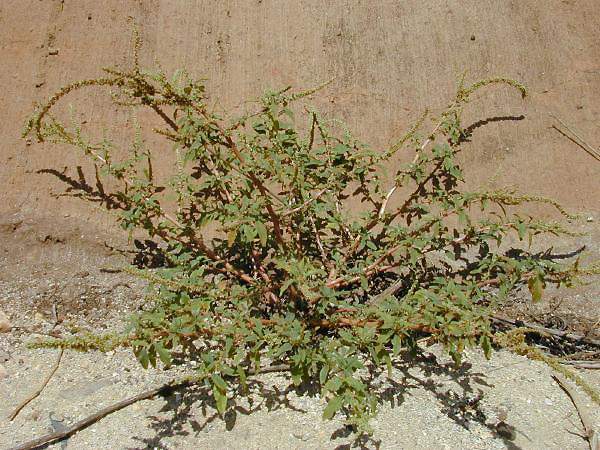 Spiny AmaranthAmaranthus spinosus
-
 Prince-of-Wales FeatherAmaranthus hypochondriacus
-
 Spleen AmaranthAmaranthus dubius
Compare
Questions and answers
What is the scientific name of the Green Amaranth?
The scientific name of the Green Amaranth is Amaranthus viridis. Written with its author, the full name is Amaranthus viridis L..
Which family does the Green Amaranth belong to?
Amaranthus viridis belongs to the family Amaranthaceae, in the order Caryophyllales and the class Magnoliopsida.
Where is the Green Amaranth found?
Checklists and occurrence records place Amaranthus viridis in 186 countries, including United States, Brazil, Reunion, Argentina, Indonesia and Sweden.
What other names does the Green Amaranth have?
Amaranthus viridis is also known in English as Callaloo, Prince-of-Wales-feather, Pigweed and Slender Amaranth.
Sources
Passages the profile rests on
- Amaranthus viridis is an annual herb with an upright, light green stem. Source passage: “Amaranthus viridis is an annual herb with an upright, light green stem” — English Wikipedia
- The plant produces numerous branches from the base of its stem. Source passage: “Numerous branches emerge from the base” — English Wikipedia
- The plant typically reaches a height of approximately 60–80 cm. Source passage: “grows to about 60–80 cm in height.” — English Wikipedia
- Its leaves are ovate in shape. Source passage: “the leaves are ovate, 3–6 cm long, 2–4 cm wide” — English Wikipedia
- Its leaves have long petioles measuring approximately 5 cm. Source passage: “with long petioles of about 5 cm.” — English Wikipedia
- Its leaves measure approximately 3–6 cm in length and 2–4 cm in width. Source passage: “the leaves are ovate, 3–6 cm long, 2–4 cm wide” — English Wikipedia
- The plant produces terminal panicles with relatively few branches. Source passage: “The plant has terminal panicles with few branches” — English Wikipedia
- Its flowers are small and green and contain three stamens. Source passage: “small green flowers with 3 stamens.” — English Wikipedia
- The species is described as cosmopolitan. Source passage: “Amaranthus viridis is a cosmopolitan species” — English Wikipedia
- The species is native to tropical regions of the Americas. Source passage: “It is native to the tropics of the Americas” — English Wikipedia
- Its native range includes South America, Central America, and the Caribbean. Source passage: “specifically South America, Central America, and the Caribbean.” — English Wikipedia
- The plant is consumed as a boiled leafy green or vegetable in many parts of the world. Source passage: “Amaranthus viridis is eaten as a boiled green or as a [vegetable in many parts of the world.” — English Wikipedia
- The plant is consumed as a vegetable in parts of Africa. Source passage: “It is also eaten as a vegetable in parts of Africa.” — English Wikipedia
- The species is consumed as a vegetable in South India, particularly in Kerala. Source passage: “it is also eaten as a vegetable in South India, especially in Kerala” — English Wikipedia
- In Kerala, India, the plant is known as kuppacheera. Source passage: “where it is known as kuppacheera കുപ്പച്ചീര.” — English Wikipedia
- The leaves have been part of the Maldivian diet for centuries. Source passage: “The leaves of this plant, known as massaagu in Dhivehi, have been used in the diet of the Maldives for centuries” — English Wikipedia
- The leaves are used in the Maldivian dish mas huni. Source passage: “in dishes such as mas huni.” — English Wikipedia
- The plant is used for medicinal and spiritual purposes by the Yoruba in West Africa. Source passage: “The Yoruba in West Africa name for this plant is ewe tete and is used for medicinal and spiritual purposes.” — English Wikipedia
- The species is used as a medicinal herb in traditional Ayurvedic medicine. Source passage: “Amaranthus viridis is used as a medicinal herb in traditional Ayurvedic medicine” — English Wikipedia
- In Ayurvedic medicine, the plant is known by the Sanskrit name Tanduliya. Source passage: “under the Sanskrit name Tanduliya.” — English Wikipedia
- Green amaranth was consumed as a food in Australia during the nineteenth century. Source passage: “In the 19th Century A. viridus, or green amaranth was an item of food in Australia.” — English Wikipedia
- The plant has historically been recommended as a substitute for spinach. Source passage: “It is an excellent substitute for spinach” — English Wikipedia
- Its seeds are edible and have a nutty flavour. Source passage: “Green amaranth also has clusters of nutty edible seeds” — English Wikipedia
- Its seeds can be eaten as snacks or incorporated into biscuits. Source passage: “which can be eaten as snacks or used in biscuits.” — English Wikipedia
- A porridge can be prepared by boiling the seeds in water. Source passage: “A porridge can be made by boiling the seeds in water.” — English Wikipedia
- The seeds can be harvested by scraping ripe seed spikes between the fingers. Source passage: “the seeds can be easily harvested by scraping the ripe spikes of seeds between the fingers.” — English Wikipedia
- Amaranthus blitum is a closely related species that is also consumed as food. Source passage: “The closely related Amaranthus blitum is also eaten.” — English Wikipedia
- Amaranthus retroflexus is another edible species that is sometimes called green amaranth. Source passage: “Amaranthus retroflexus is also edible, and sometimes goes by the name "green amaranth".” — English Wikipedia
- The plant is consumed as a vegetable in Manipur, India, where it is called cheng-kruk. Source passage: “In the Northeastern Indian state of Manipur, it is known as cheng-kruk” — English Wikipedia
Data
- Catalogue of Life, 2026-10-16 XR cc by
- Global Biodiversity Information Facility CC BY 4.0
- Wikidata CC0
- GeoNames CC BY 4.0
- Wikimedia Commons per image; credit shown with each image
- Within the Catalogue of Life, this name comes from Synonymic Checklists of the Vascular Plants of the World cc by
References
- L. (1763). Sp. Pl. [Linnaeus], ed. 2: 1405 (1763). where the name was published
This species in other databases
Page built on 29 November 2026. See how the catalog is made and all sources and licences.
Cite this page
ScientificNames.org. (2026). Amaranthus viridis (Green Amaranth). Retrieved November 29, 2026, from https://scientificnames.org/species/amaranthus-viridis
“Amaranthus viridis (Green Amaranth).” ScientificNames.org, 2026, scientificnames.org/species/amaranthus-viridis. Accessed 29 Nov. 2026.
ScientificNames.org. “Amaranthus viridis (Green Amaranth).” Accessed November 29, 2026. https://scientificnames.org/species/amaranthus-viridis.
@misc{scientificnames_amaranthus_viridis_green_amaranth,
  author = {{ScientificNames.org}},
  title = {Amaranthus viridis (Green Amaranth)},
  year = {2026},
  url = {https://scientificnames.org/species/amaranthus-viridis},
  note = {Accessed 2026-11-29}
}