Species · Flowering plants
Prince-of-Wales Feather Amaranthus hypochondriacus
The scientific name of the Prince-of-Wales Feather is Amaranthus hypochondriacus. It is a species of flowering plant in the family Amaranthaceae (amaranth family), order Caryophyllales.
- Scientific name
- Amaranthus hypochondriacus L.
- Common name
- Prince-of-Wales Feather
- Genus
- Amaranthus
- Family
- Amaranthaceae (Amaranth Family)
- Order
- Caryophyllales
- Class
- Magnoliopsida
- Recorded in
- 39 countries
- Name status
- accepted in the Catalogue of Life

Overview
The species was originally endemic to Mexico and is distributed across Central and Southern North America. It is distinguished by its dense, catkin-like flower clusters and smooth, shiny seeds.
Written 26 November 2026 from the sources listed below. Each statement was checked against the passage it cites; statements that could not be supported were removed.
Appearance
Prince-of-Wales feather has a vigorous, upright growth form and a broad-leaved, bushy appearance. It typically grows between 40 and 200 cm tall, although it is also described as growing approximately 1.8 metres tall.[1][2][3][4]
Its stems are generally erect, green or reddish-purple, and branched mainly in the inflorescences. The leaves are simple, alternate, and have entire margins, with shapes ranging from rhombic-ovate to broadly lanceolate.[5][6][7]
The leaves measure approximately 4–12 cm long and 2–7 cm wide. They are also described as generally 3–6 inches long and 1–3 inches wide.[8][9]
The flowers grow in dense, erect or pendulous, catkin-like inflorescences. They are usually deep purplish-red, dark red, purple, or deep beet-red, but can also be yellow-green, yellowish, or greenish.[10][11][12][13]
The plant produces dry fruits that split open when ripe. These fruits measure approximately 1.5–3 mm in length.[14][15]
The seeds are smooth, shiny, and range from subglobose to lenticular in shape. They can be whitish-pink, dark reddish-brown, or black, and measure approximately 1–1.4 mm in diameter.[16][17][18]
Habitat
Prince-of-Wales feather grows best in fertile, well-drained soil exposed to full sun. It can occur on wasteland and agricultural land.[19][20][21]
Diet
The leaves and seeds are nutritious and have a mild flavor. The seeds contain lysine, an amino acid identified as missing in many other grains, as well as phenolic compounds.[22][23][24]
Young leaves can be cooked and eaten in the same way as spinach. The seeds can be eaten raw or cooked, used as a cereal substitute, or popped like popcorn.[25][26]
Behaviour
The species has a clumping growth habit. It can grow as an annual or a short-lived perennial.[27][28]
Reproduction and life cycle
The species has male and female flowers on the same individual plant. It is pollinated by wind.[29][30]
The flowers occur in dense, erect or pendulous, catkin-like inflorescences during summer and autumn. A flower can contain up to 60,000 seeds.[12][31]
The seeds generally ripen approximately three months after planting.[32]
Uses
Prince-of-Wales feather is cultivated for its grain and ornamental flowers. In temperate regions, it is cultivated as a half-hardy annual.[33][34]
In tropical regions, the species is cultivated for its edible leaves and seeds. It is valued as a food source in Africa and El Salvador.[35][36]
The seeds can be processed into flour. The species is one of three amaranths cultivated for their edible seeds.[37][38]
Similar species
The species likely evolved from Amaranthus hybridus and continues to hybridize readily with it.[39]
Classification of the Prince-of-Wales Feather
| Kingdom | Plantae |
|---|---|
| Subkingdom | Pteridobiotina |
| Phylum | Tracheophyta |
| Class | Magnoliopsida |
| Order | Caryophyllales |
| Family | Amaranthaceae (Amaranth Family) |
| Subfamily | Amaranthoideae |
| Tribe | Amarantheae |
| Genus | Amaranthus (Amaranth) |
| Species | Amaranthus hypochondriacus L. |
Where the Prince-of-Wales Feather is found
Checklists and occurrence records place Amaranthus hypochondriacus in 39 countries across Africa, Asia, Europe, North America and Oceania. GBIF holds 5,443 georeferenced records of it.
Countries where it is native or its origin is not stated
- Afghanistan 8
- Belgium 314
- Canada 39
- India 940
- Indonesia 6
- Mexico 1,418
- Nepal 177
- North Korea 5
- Puerto Rico 3
- Sweden 809
- United States 264
- Vietnam 7
Countries where it has been introduced
- Albania
- Algeria
- Andorra
- Bhutan 18
- Bulgaria
- Cameroon 1
- China 134
- Egypt 1
- France 345
- Georgia 4
- Germany 347
- Greece 6
- Iran 8
- Israel
- Italy 23
- Laos
- Lebanon
- Montenegro
- Morocco 4
- Pakistan 11
- Portugal 28
- Slovakia 21
- Spain 498
- Sri Lanka 4
- Syria
- Tunisia
- Vanuatu
Regions and cities with the most records
- Puebla, Mexico 832
- Catalonia, Spain 264
- Bavaria, Germany 233
- Tlaxcala, Mexico 189
- La Magdalena Tlaltelulco, Mexico 127
- Santa Ana Chiautempan, Mexico 127
- Tlaxcala, Mexico 127
- Teolocholco, Mexico 120
- Zacatelco, Mexico 117
- Amposta, Spain 116
- Moyotzingo, Mexico 116
- Santa Ana Xalmimilulco, Mexico 116
- Huejotzingo, Mexico 115
- San Martin Texmelucan de Labastida, Mexico 115
- San Rafael Tlanalapan, Mexico 115
- Skåne, Sweden 111
- Contla, Mexico 110
- Halland, Sweden 106
- Papalotla, Mexico 105
- Tortosa, Spain 105
- Ixtapaluca, Mexico 103
- San Buenaventura, Mexico 102
- San Isidro, Mexico 97
- Xico, Mexico 97
- Emiliano Zapata, Mexico 94
- Los Reyes Acaquilpan, Mexico 92
- Sant Carles de la Ràpita, Spain 92
- Stockholm, Sweden 90
- Ciudad Nezahualcoyotl, Mexico 88
- San Juan Ixtayopan, Mexico 87
- San Antonio Tecómitl, Mexico 86
- Chalco de Díaz Covarrubias, Mexico 85
- San Mateo Huitzilzingo, Mexico 85
- Milpa Alta, Mexico 83
- Atlixco, Mexico 80
- Tláhuac, Mexico 80
28 more countries have a few records outside this range
These countries hold a few records of Amaranthus hypochondriacus but lie outside the range the checklists give for it. Such records are often zoo or garden specimens, museum material or vagrants, so the species is not counted as occurring there.
Range as the checklists state it
Germany [I]; Slovakia [I]; Portugal [I]; Spain [I]; Andorra [I]; Baleares [I]; France [I]; Sardinia [I]; Italy [I]; Sicily [I]; Montenegro [I]; Albania [I]; Bulgaria [I]; European Turkey [I]; Greece [I] (incl. Kiklades [I]); Crete [I]; European Russia [I]; Russian Far East [I]; Morocco [I]; Algeria [I]; ?Tunisia [I]; Egypt [I] (Nile Delta [I], Nile Valley [I], NW-coastal Egypt [I]); Cameroon [I]; Georgia [Caucasus] [I]; East Aegaean Isl. [I] (Lesvos [I], Ikaria [I], Samos [I]); Iran [I] (N-Iran [I]); Lebanon [I] (C-Lebanon [I], coastal W-Lebanon [I]); Syria [I] (NW-Syria [I], Jbel Druze [I]); Israel [I] (coastal W-Israel [I]); Sinai peninsula [I] (S-Sinai [I]); China [I] (Hebei [I], Nei Mongol [I], Sichuan [I], Xinjiang [I], Yunnan [I]); Pakistan [I]; Nepal [c]; Bhutan [I]; India [c]; Sri Lanka [I]; Laos [I]; Vanuatu [I]; USA (Arizona, Massachusetts, Michigan, Nebraska, New Mexico, New York, Texas, Utah, West Virginia, Wisconsin); Mexico (Chihuahua, Colima, Ciudad de Mexico, Guerrero, Jalisco, Mexico State, Michoacán, Oaxaca, Puebla, San Luis Potosí, Sonora, Tlaxcala, Veracruz)
A number beside a place is its count of GBIF occurrence records. A place without a number comes from a checklist alone. Records show where a species has been observed or collected, which can include escapes and vagrants.
Common names
English
- Prince-of-Wales Feather
- Prince of Wales-feather
- Prince-of-Wales-feather
- Prince's-feather
- Prince's-feather Amaranth
Names in 21 other languages
- Chinese
- qian sui gu, 千穗穀, 千穗谷, 老枪谷子
- Czech
- laskavec červenoklasý
- Dutch
- Pluimamarant
- Finnish
- Amarantti, meksikonrevonhäntä
- French
- amarante hypocondriaque
- German
- Trauer-Amarant, Trauer-Fuchsschwanz
- Hindi
- chua, ramdana
- Hungarian
- Piros amaránt
- Japanese
- シロミセンニンコク
- Lithuanian
- Baltasėklis burnotis
- Norwegian Bokmål
- praktamarant
- Polish
- Szarłat koński, Szarłat posępny
- Russian
- Щирица тёмная
- Slovak
- láskavec červený
- Slovenian
- žitni ščir
- Spanish
- Quintonil rojo o Alegría, alegría, amaranto, bledo, huantli, quintonil
- Swedish
- toppamarant
- Welsh
- Blodyn Amor Pruddglwyfus
- hsb
- Žarowacy šćěrjenc
- hus
- chith
- tsz
- chacua
Synonyms
26 other scientific names have been used for this species and are now treated as synonyms of Amaranthus hypochondriacus.
- Amaranthus anardana Buch.-Ham. ex Moq.
- Amaranthus atrosanguineus Moq.
- Amaranthus atrosanguineus Hort.Lugd.
- Amaranthus bernhardii Moq.
- Amaranthus chlorostachys var. erythrostachys (Moq.) Aellen
- Amaranthus erythrostachys Moq.
- Amaranthus hybridus f. hypochondiacus (L.) B.L.Rob.
- Amaranthus hybridus f. hypochondriacus (L.) B.L.Rob.
- Amaranthus hybridus f. hypochondriacus (L.) H.Rob.
- Amaranthus hybridus subsp. hypochondriacus (L.) Thell.
- Amaranthus hybridus var. erythrostachys Moq.
- Amaranthus hybridus var. hypochondriacus (L.) H.Rob.
- Amaranthus hybridus var. hypochondriacus (L.) B.L.Rob.
- Amaranthus hybridus var. leucocarpus (S.Watson) Hunz.
- Amaranthus hypochondriacus var. hypochondriacus
- Amaranthus hypochondriacus var. macrostachys Moq.
- Amaranthus hypochondriacus var. monstrosus Moq.
- Amaranthus hypochondriacus var. racemosus Moq.
- Amaranthus hypochondriacus var. tortuosus Moq.
- Amaranthus leucocarpus S.Watson
- Amaranthus leucospermus S.Watson
- Amaranthus macrostachyus Mérat ex Moq.
- Amaranthus monstrosus Cat.
- Amaranthus monstrosus Moq.
- Amaranthus frumentaceus Buch.-Ham. ex Roxb. ambiguous synonym
- Amaranthus hybridus Vell. ambiguous synonym
Related species
-
 Love Lies BleedingAmaranthus caudatus
-
 Green AmaranthAmaranthus viridis
-
 Redroot PigweedAmaranthus retroflexus
-
 AmaranthAmaranthus cruentus
-
 Chinese AmaranthAmaranthus tricolor
-
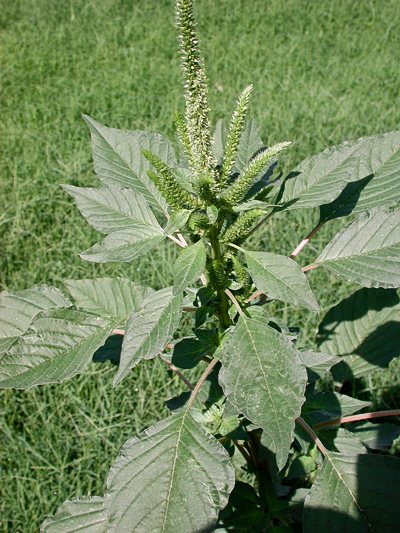 Palmer AmaranthAmaranthus palmeri
-
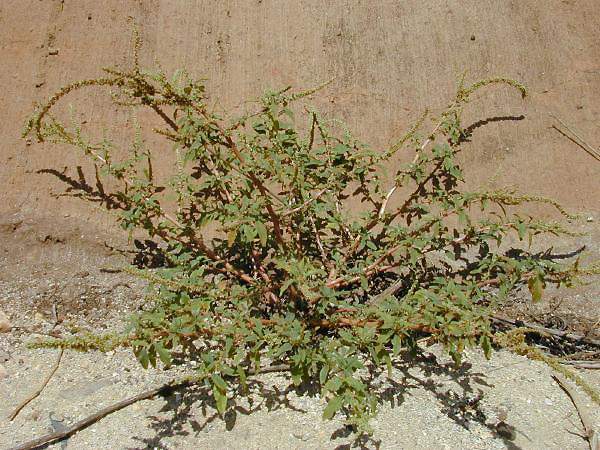 Spiny AmaranthAmaranthus spinosus
-
 Spleen AmaranthAmaranthus dubius
Compare
Questions and answers
What is the scientific name of the Prince-of-Wales Feather?
The scientific name of the Prince-of-Wales Feather is Amaranthus hypochondriacus. Written with its author, the full name is Amaranthus hypochondriacus L..
Which family does the Prince-of-Wales Feather belong to?
Amaranthus hypochondriacus belongs to the family Amaranthaceae, in the order Caryophyllales and the class Magnoliopsida.
Where is the Prince-of-Wales Feather found?
Checklists and occurrence records place Amaranthus hypochondriacus in 39 countries, including Mexico, India, Sweden, Belgium, United States and Nepal.
What other names does the Prince-of-Wales Feather have?
Amaranthus hypochondriacus is also known in English as Prince of Wales-feather, Prince-of-Wales-feather, Prince's-feather and Prince's-feather Amaranth.
What is amaranth called in the USA?
The common name recorded for this species in the New York Flora Atlas is prince's feather.[40]
What are the benefits of eating Amaranthus?
The leaves and seeds are nutritious and have a mild flavor. The seeds contain lysine, an amino acid identified as missing in many other grains, and can be eaten raw or cooked, processed into flour, used as a cereal substitute, or popped like popcorn.[22][24][37][26]
Sources
Passages the profile rests on
- The plant has a vigorous, upright growth form. Source passage: “A. hypochondriacus is a vigorous, upright plant” — English Wikipedia
- The plant typically grows between 40 and 200 cm tall. Source passage: “typically reaches 40–200 cm (15–80 in) tall.” — English Wikipedia
- The species is described as a broad-leaved, bushy plant. Source passage: “It is a broad-leafed, bushy plant” — heritagegarden.uic.edu
- The plant is described as growing approximately 1.8 metres tall. Source passage: “grows about six feet (1.8 meters) tall.” — heritagegarden.uic.edu
- The leaves are simple and arranged alternately along the stems. Source passage: “The leaves are simple and alternately arranged, with entire margins.” — English Wikipedia
- The leaves have entire margins and are rhombic-ovate to broadly lanceolate. Source passage: “with entire margins. They are rhombic-ovate to broadly lanceolate in shape” — English Wikipedia
- The stems are generally erect, green or reddish-purple, and branched mainly in the inflorescences. Source passage: “Usually erect, green or reddish purple, branched, mainly in inflorescences.” — plants.ces.ncsu.edu
- The leaves measure approximately 4–12 cm long and 2–7 cm wide. Source passage: “about 4–12 cm (1+1⁄2–4+1⁄2 inches) long and 2–7 cm (1–3 inches) wide” — English Wikipedia
- The leaves are generally 3–6 inches long and 1–3 inches wide. Source passage: “Leaf Length: 3-6 inches Leaf Width: 1-3 inches” — plants.ces.ncsu.edu
- Its flowers grow in dense, catkin-like inflorescences. Source passage: “dense, catkin-like inflorescences in the summer and autumn.” — English Wikipedia
- The flowers are usually deep purplish-red but can also be yellow-green. Source passage: “They are usually deep purplish-red, but may be yellow-green.” — English Wikipedia
- The flowers occur in dense, erect or pendulous, catkin-like inflorescences during summer and autumn. Source passage: “Flowers appear in dense, erect or pendulous, catkin-like inflorescences in summer and autumn.” — plants.ces.ncsu.edu
- The flowers are predominantly dark red, purple, or deep beet-red, but can also be yellowish or greenish. Source passage: “stiff, erect, dark red, purple, or deep beet-red, less commonly yellowish or greenish” — plants.ces.ncsu.edu
- The plant produces dry fruits that split open when ripe. Source passage: “These give way to dry fruits, about 1.5–3 mm (1⁄16–1⁄8 in) long, that split open when ripe.” — English Wikipedia
- Its dry fruits measure approximately 1.5–3 mm in length. Source passage: “dry fruits, about 1.5–3 mm (1⁄16–1⁄8 in) long” — English Wikipedia
- Its seeds are smooth, shiny, and range from subglobose to lenticular in shape. Source passage: “smooth, shiny seeds that may be subglobose to lenticular” — English Wikipedia
- Its seeds can be whitish-pink, dark reddish-brown, or black. Source passage: “either whitish-pink or dark reddish-brown to black” — English Wikipedia
- Its seeds measure approximately 1–1.4 mm in diameter. Source passage: “1–1.4 mm (3⁄64–1⁄16 inch) in diameter.” — English Wikipedia
- The species grows best in well-drained soils exposed to full sun. Source passage: “It grows best in well-drained soils in full sun” — English Wikipedia
- The species prefers fertile, well-drained soil and full sun. Source passage: “Prince's Feather prefers well-drained fertile soil in full sun.” — plants.ces.ncsu.edu
- The species can occur on wasteland and agricultural land. Source passage: “It is commonly viewed as a weed on wasteland as well as on agricultural land.” — plants.ces.ncsu.edu
- The leaves and seeds are nutritious and have a mild flavor. Source passage: “The leaves and seeds are very nutritious and have a mild flavor.” — English Wikipedia
- The seeds contain phenolic compounds. Source passage: “The seeds also contain phenolic compounds.” — English Wikipedia
- The seeds contain lysine, an amino acid identified as missing in many other grains. Source passage: “it contains lysine, which is an amino acid missing in many other grains” — heritagegarden.uic.edu
- Young leaves can be cooked and eaten in the same way as spinach. Source passage: “Young leaves have a mild flavor when cooked like a spinach.” — plants.ces.ncsu.edu
- The seeds can be eaten raw or cooked, used as a cereal substitute, or popped like popcorn. Source passage: “The seed can be eaten raw or cooked or used as a cereal substitute. They can also be popped like popcorn.” — plants.ces.ncsu.edu
- The species has a clumping growth habit. Source passage: “The plant tends to have a clumping habit.” — plants.ces.ncsu.edu
- The species can grow as an annual or a short-lived perennial. Source passage: “is an herbaceous annual or short-lived perennial plant” — plants.ces.ncsu.edu
- The species has male and female flowers on the same individual plant. Source passage: “Amaranthus is monoecious (meaning individual flowers are either male or female, but both sexes can be found on the same plant).” — plants.ces.ncsu.edu
- The species is pollinated by wind. Source passage: “It is pollinated by wind.” — plants.ces.ncsu.edu
- A flower can contain up to 60,000 seeds. Source passage: “It produces a brightly colored flower that can contain up to 60,000 seeds.” — heritagegarden.uic.edu
- The seeds generally ripen approximately three months after planting. Source passage: “Seed will often ripen many weeks before that, usually after about three months.” — heritagegarden.uic.edu
- The species is cultivated for its grain and ornamental flowers. Source passage: “commonly used for its grain or as an ornamental.” — English Wikipedia
- In temperate regions, the species is cultivated as a half-hardy annual. Source passage: “In temperate regions, it is cultivated as a half-hardy annual plant.” — English Wikipedia
- The species is cultivated in tropical regions for its edible leaves and seeds. Source passage: “It is often cultivated, especially in tropical areas, for its edible leaves and seeds” — plants.ces.ncsu.edu
- The species is valued as a food source in Africa and El Salvador. Source passage: “In Africa and El Salvador, like many other species in the family Amaranthaceae, it is valued as source of food.” — English Wikipedia
- The seeds can be processed into flour. Source passage: “The seeds are nutritious and can be made into a flour.” — heritagegarden.uic.edu
- The species is one of three amaranths cultivated for their edible seeds. Source passage: “Three species of amaranth - Amaranthus cruentus, Amaranthus hypochondriacus, and Amaranthus caudatus - are grown for the edible seeds.” — heritagegarden.uic.edu
- The species likely evolved from Amaranthus hybridus and continues to hybridize readily with it. Source passage: “likely evolved from A. hybridus, with which it continues to readily hybridize.” — English Wikipedia
- The species is identified by the common name prince's feather in the New York Flora Atlas. Source passage: “Common Name: prince's feather amaranth” — newyork.plantatlas.usf.edu
- The species was originally endemic to Mexico. Source passage: “Originally endemic to Mexico” — English Wikipedia
- The species is reported as originating from the Central United States and Mexico. Source passage: “Country Or Region Of Origin: Central United States, Mexico” — plants.ces.ncsu.edu
Data
- Catalogue of Life, 2026-10-16 XR cc by
- Global Biodiversity Information Facility CC BY 4.0
- Wikidata CC0
- GeoNames CC BY 4.0
- Wikimedia Commons per image; credit shown with each image
- iNaturalist per image; credit shown with each image
- Within the Catalogue of Life, this name comes from Synonymic Checklists of the Vascular Plants of the World cc by
References
- L. (1753). Sp. Pl. [Linnaeus] 2: 991 (1753). where the name was published
This species in other databases
Page built on 26 November 2026. See how the catalog is made and all sources and licences.
Cite this page
ScientificNames.org. (2026). Amaranthus hypochondriacus (Prince-of-Wales Feather). Retrieved November 26, 2026, from https://scientificnames.org/species/amaranthus-hypochondriacus
“Amaranthus hypochondriacus (Prince-of-Wales Feather).” ScientificNames.org, 2026, scientificnames.org/species/amaranthus-hypochondriacus. Accessed 26 Nov. 2026.
ScientificNames.org. “Amaranthus hypochondriacus (Prince-of-Wales Feather).” Accessed November 26, 2026. https://scientificnames.org/species/amaranthus-hypochondriacus.
@misc{scientificnames_amaranthus_hypochondriacus_prince_of_wales_feather,
  author = {{ScientificNames.org}},
  title = {Amaranthus hypochondriacus (Prince-of-Wales Feather)},
  year = {2026},
  url = {https://scientificnames.org/species/amaranthus-hypochondriacus},
  note = {Accessed 2026-11-26}
}