Species · Flowering plants
Scabrid Alpine Tarplant Anisocarpus scabridus
The scientific name of the Scabrid Alpine Tarplant is Anisocarpus scabridus. It is a species of flowering plant in the family Asteraceae (composite), order Asterales.
- Scientific name
- Anisocarpus scabridus (Eastw.) B.G.Baldwin
- Common name
- Scabrid Alpine Tarplant
- Genus
- Anisocarpus
- Family
- Asteraceae (Composite)
- Order
- Asterales
- Class
- Magnoliopsida
- Recorded in
- 1 country
- Name status
- accepted in the Catalogue of Life

Overview
The scabrid alpine tarplant (Anisocarpus scabridus (Eastw.) B.G.Baldwin) is a perennial flowering herb in the family Asteraceae, order Asterales, and class Magnoliopsida. It occurs exclusively in northwestern California. It rarely exceeds 5 cm in height and has blue-green leaves and flower heads containing both ray florets and disc florets.
Written 27 November 2026 from the sources listed below. Each statement was checked against the passage it cites; statements that could not be supported were removed.
Appearance
The scabrid alpine tarplant is a perennial herb that rarely exceeds 5 cm in height. Its leaves are blue-green.[1][2][3]
Its flower heads contain both ray florets and disc florets.[4]
Habitat
The species primarily inhabits scree slopes at relatively high elevations in the Coast Ranges. It is associated with upper montane coniferous forest.[5][6]
Similar species
Anisocarpus madioides is the only other species identified in the genus. Anisocarpus scabridus differs considerably from Anisocarpus madioides in ecology and appearance.[7][8]
Molecular and anatomical studies conducted in the 1990s demonstrated a close relationship between Anisocarpus scabridus and Anisocarpus madioides.[9]
Classification of the Scabrid Alpine Tarplant
| Kingdom | Plantae |
|---|---|
| Subkingdom | Pteridobiotina |
| Phylum | Tracheophyta |
| Class | Magnoliopsida |
| Order | Asterales |
| Family | Asteraceae (Composite) |
| Subfamily | Asteroideae |
| Tribe | Madieae |
| Subtribe | Madiinae |
| Genus | Anisocarpus (Tarweed) |
| Species | Anisocarpus scabridus (Eastw.) B.G.Baldwin |
Where the Scabrid Alpine Tarplant is found
Checklists and occurrence records place Anisocarpus scabridus in 1 country across North America. GBIF holds 170 georeferenced records of it.
Countries
Regions and cities with the most records
Range as the checklists state it
USA (California)
A number beside a place is its count of GBIF occurrence records. A place without a number comes from a checklist alone. Records show where a species has been observed or collected, which can include escapes and vagrants.
Common names
English
- Scabrid Alpine Tarplant
Names in 1 other language
- Chinese
- 燥葉歪果菊
Synonyms
2 other scientific names have been used for this species and are now treated as synonyms of Anisocarpus scabridus.
- Raillardella scabrida Eastw.
- Raillardiopsis scabrida (Eastw.) Rydb.
Related species
-
 Woodland MadiaAnisocarpus madioides
-
 Jerusalem ArtichokeHelianthus tuberosus
-
 ChicoryCichorium intybus
-
 Absinthe WormwoodArtemisia absinthium
-
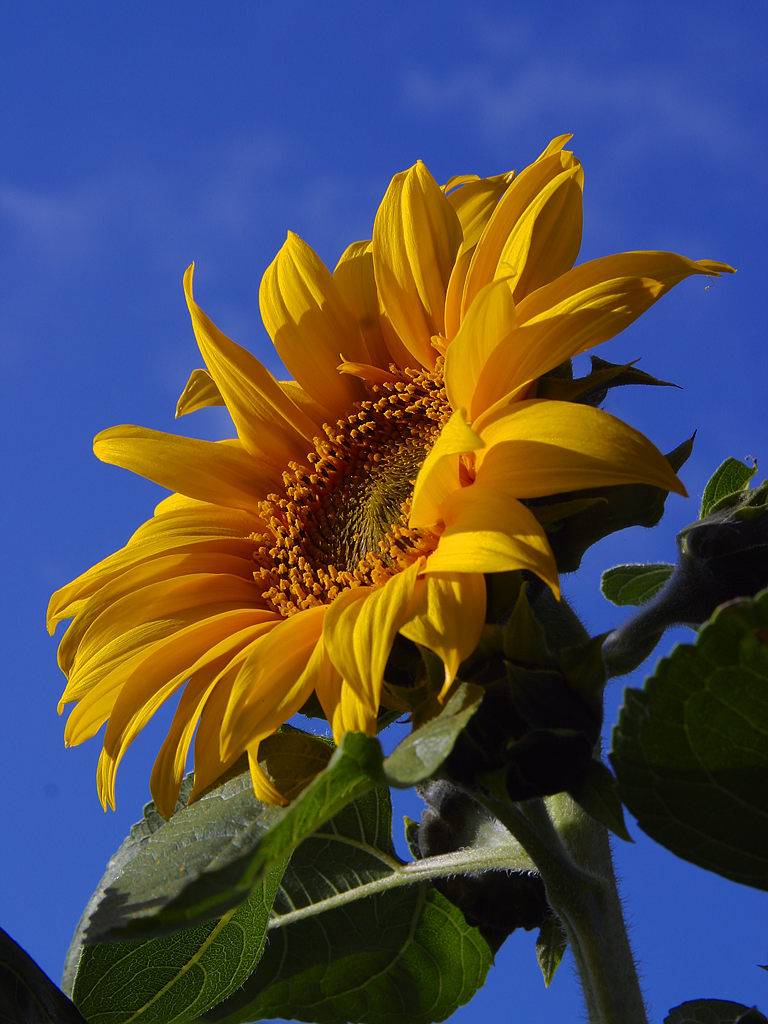 Common SunflowerHelianthus annuus
-
 Common YarrowAchillea millefolium
-
 LettuceLactuca sativa
-
 TarragonArtemisia dracunculus
Compare
Questions and answers
What is the scientific name of the Scabrid Alpine Tarplant?
The scientific name of the Scabrid Alpine Tarplant is Anisocarpus scabridus. Written with its author, the full name is Anisocarpus scabridus (Eastw.) B.G.Baldwin.
Which family does the Scabrid Alpine Tarplant belong to?
Anisocarpus scabridus belongs to the family Asteraceae, in the order Asterales and the class Magnoliopsida.
Where is the Scabrid Alpine Tarplant found?
Checklists and occurrence records place Anisocarpus scabridus in 1 country: United States.
Where does the scabrid alpine tarplant occur?
It occurs in Humboldt, Mendocino, Trinity, Lake, Tehama, and Colusa Counties in California. It also has several isolated populations in the southern Cascades of northern Shasta County.[10][11]
Is the scabrid alpine tarplant native?
The Jepson eFlora identifies the species as native.[12]
What is another name for the scabrid alpine tarplant?
Raillardiopsis scabrida is listed as a synonym of Anisocarpus scabridus.[13]
Sources
Passages the profile rests on
- The plant rarely exceeds 5 cm in height. Source passage: “rarely more than 2 inches (5 cm) high.” — English Wikipedia
- The plant has blue-green leaves. Source passage: “It has blue-green leaves” — English Wikipedia
- The species is described as a perennial herb. Source passage: “scabrid alpine tarplant (Anisocarpus scabridus) is a perennial herb” — fs.usda.gov
- The flower heads contain both ray florets and disc florets. Source passage: “flower heads containing both ray florets and disc florets.” — English Wikipedia
- The species primarily inhabits scree slopes at relatively high elevations in the Coast Ranges. Source passage: “primarily in scree slopes at relatively high elevations in the Coast Ranges” — English Wikipedia
- The species is associated with upper montane coniferous forest. Source passage: “Upper montane coniferous forest.” — nrm.dfg.ca.gov
- Anisocarpus madioides is the only other species identified in the same genus. Source passage: “the only other species in the genus, A. madioides.” — English Wikipedia
- Anisocarpus scabridus differs considerably from Anisocarpus madioides in ecology and appearance. Source passage: “The plant is quite different in ecology and appearance from the only other species in the genus, A. madioides.” — English Wikipedia
- Molecular and anatomical studies conducted in the 1990s demonstrated a close relationship between Anisocarpus scabridus and Anisocarpus madioides. Source passage: “until molecular and anatomical studies in the 1990s demonstrated their close relationship.” — English Wikipedia
- The species occurs in Humboldt, Mendocino, Trinity, Lake, Tehama, and Colusa Counties in California. Source passage: “Humboldt, Mendocino, Trinity, Lake, Tehama, and Colusa Counties” — English Wikipedia
- The species also has several isolated populations in the southern Cascades of northern Shasta County. Source passage: “There are also a few isolated populations in the southern Cascades of northern Shasta County.” — English Wikipedia
- The Jepson eFlora identifies the species as native. Source passage: “Anisocarpus scabridus, SCABRID ALPINE TARPLANT, Native.” — ucjeps.berkeley.edu
- Raillardiopsis scabrida is listed as a synonym of Anisocarpus scabridus. Source passage: “Raillardiopsis scabrida (Under Anisocarpus scabridus), Synonym ...” — ucjeps.berkeley.edu
Data
- Catalogue of Life, 2026-10-16 XR cc by
- Global Biodiversity Information Facility CC BY 4.0
- Wikidata CC0
- GeoNames CC BY 4.0
- Wikimedia Commons per image; credit shown with each image
- Within the Catalogue of Life, this name comes from Synonymic Checklists of the Vascular Plants of the World cc by
References
- Baldwin, B. G. (1999). Novon 9(4): 463 (1999). where the name was published
This species in other databases
Page built on 28 November 2026. See how the catalog is made and all sources and licences.
Cite this page
ScientificNames.org. (2026). Anisocarpus scabridus (Scabrid Alpine Tarplant). Retrieved November 28, 2026, from https://scientificnames.org/species/anisocarpus-scabridus
“Anisocarpus scabridus (Scabrid Alpine Tarplant).” ScientificNames.org, 2026, scientificnames.org/species/anisocarpus-scabridus. Accessed 28 Nov. 2026.
ScientificNames.org. “Anisocarpus scabridus (Scabrid Alpine Tarplant).” Accessed November 28, 2026. https://scientificnames.org/species/anisocarpus-scabridus.
@misc{scientificnames_anisocarpus_scabridus_scabrid_alpine_tarplant,
  author = {{ScientificNames.org}},
  title = {Anisocarpus scabridus (Scabrid Alpine Tarplant)},
  year = {2026},
  url = {https://scientificnames.org/species/anisocarpus-scabridus},
  note = {Accessed 2026-11-28}
}