Species · Flowering plants
Tarragon Artemisia dracunculus
The scientific name of the Tarragon is Artemisia dracunculus. It is a species of flowering plant in the family Asteraceae (composite), order Asterales.
- Scientific name
- Artemisia dracunculus L.
- Common name
- Tarragon
- Genus
- Artemisia
- Family
- Asteraceae (Composite)
- Order
- Asterales
- Class
- Magnoliopsida
- Recorded in
- 53 countries
- Name status
- accepted in the Catalogue of Life

Overview
The species is native to Siberia and Mongolia.
Written 26 November 2026 from the sources listed below. Each statement was checked against the passage it cites; statements that could not be supported were removed.
Appearance
Tarragon is an herbaceous perennial with erect stems and slender branches. Its leaves are alternate, narrow, linear to lanceolate, and gray-green or glossy green, with entire margins and surfaces that may be sparsely hairy or smooth.[1][2][3]
The plant can reach a height of 120–150 centimetres. Its recorded width is 1 to 1.5 feet.[4][5]
Reproduction and life cycle
Tarragon spreads through its rhizomatous roots and can be propagated from rootstocks. Propagation methods include root division, root cuttings, and stem cuttings.[6][7][8]
Seed production varies among plants. Some produce generally sterile seeds, while others produce viable seeds that may self-seed.[9][10]
French tarragon is propagated by dividing its roots rather than growing it from seed.[11]
Habitat
Tarragon is native to Siberia and Mongolia. Wild populations occur in dry open habitats, including roadsides, meadows, desert scrub, and disturbed areas.[12][13]
The species is recorded across Europe, Asia, central-western North America, Alaska, Great Britain, and New Zealand. It is also recorded as originating from temperate Europe and Asia and central-western North America.[14][15]
Wild tarragon grows best in dry, sunny locations with neutral pH and well-drained soil. It may decline during wet and humid summers or cold and wet winters.[16][17]
Uses
The leaves of cultivated Artemisia dracunculus var. sativa are used as an aromatic culinary herb. Tarragon is recognized as a spice plant in Asia, Europe, and the Americas, and has an established role in the food industry as a spice.[18][19][20]
In French cooking, tarragon is one of the four fines herbes and is particularly suited to chicken, fish, and egg dishes. It is the principal flavoring ingredient in Béarnaise sauce, and its sprigs can be steeped in vinegar to make tarragon vinegar.[21][22][23]
In Syria, fresh tarragon is eaten with white Syrian cheese and used in shish barak and kibbeh labaniyeh. In Iran and Armenia, it is eaten as a fresh herb and used in stews and pickled foods.[24][25]
Native Americans used the leaves as an herb or tea and consumed the leaves and seeds as food. The leaves, stems, roots, and flowers were also used extensively for medicinal purposes, and the plant was used to repel insects.[26][27][28]
The species has a long history of use in traditional Asian medicine, particularly in Iran, Pakistan, Azerbaijan, and India. Traditional applications include treating digestive system diseases and using the plant as an analgesic, hypnotic, antiepileptic, anti-inflammatory, and antipyretic agent.[29][30][31]
The species has traditionally been used as a remedy for helminthiasis. Research has documented antibacterial, antifungal, and antiprotozoal properties in its extracts and essential oil.[32][33]
Research has identified antioxidant, immunomodulatory, and antineoplastic properties in the species. Hepatoprotective and hypoglycaemic effects have also been reported, and the species has been investigated for antidepressant effects.[34][35][36]
The principal raw plant materials obtained from the species are its herb and leaves. Its essential oil has a highly variable composition, and the plant also contains flavonoids, phenolic acids, coumarins, and alkamides.[37][38]
The species is increasingly being used in the cosmetics industry.[39]
Classification of the Tarragon
| Kingdom | Plantae |
|---|---|
| Subkingdom | Pteridobiotina |
| Phylum | Tracheophyta |
| Class | Magnoliopsida |
| Order | Asterales |
| Family | Asteraceae (Composite) |
| Subfamily | Asteroideae |
| Tribe | Anthemideae |
| Subtribe | Artemisiinae |
| Genus | Artemisia (Sagewort) |
| Species | Artemisia dracunculus L. |
Where the Tarragon is found
Checklists and occurrence records place Artemisia dracunculus in 53 countries across Africa, Asia, Europe and North America. GBIF holds 18,321 georeferenced records of it.
Countries where it is native or its origin is not stated
- Afghanistan 52
- Algeria
- Armenia 5
- Belarus 11
- Belgium 81
- Canada 1,029
- China 577
- Czechia 91
- Denmark 58
- Finland 51
- Georgia 3
- India 57
- Iran 4
- Kazakhstan 424
- Kyrgyzstan 95
- Lithuania 5
- Luxembourg 10
- Mexico 372
- Moldova 1
- Mongolia 273
- Morocco
- Pakistan 55
- Russia 2,931
- Sweden 414
- Tajikistan 74
- The Netherlands 132
- Turkmenistan 4
- Ukraine 73
- United Kingdom 167
- United States 7,933
- Uzbekistan 15
- Vietnam 1
Countries where it has been introduced
- Austria 106
- Bulgaria
- Croatia 5
- Estonia 46
- France 1,334
- Germany 1,087
- Hungary 153
- Italy 116
- Kosovo
- Latvia 7
- Mauritius
- Norway 25
- Poland 146
- Portugal 15
- Romania 25
- Serbia 2
- Slovakia 37
- Slovenia 11
- Spain 75
- Switzerland 127
- Turkey 6
Regions and cities with the most records
- California, United States 2,433
- Colorado, United States 623
- Chelyabinsk, Russia 407
- Irkutsk Oblast, Russia 364
- British Columbia, Canada 353
- Alberta, Canada 346
- Arizona, United States 334
- New Mexico, United States 329
- Utah, United States 227
- Bavaria, Germany 215
- Baja California, Mexico 202
- Chelyabinsk, Russia 199
- Idaho, United States 193
- Nevada, United States 189
- Usol’ye-Sibirskoye, Russia 187
- Auvergne-Rhône-Alpes, France 185
- Kopeysk, Russia 182
- Okotoks, Canada 178
- Encinitas, United States 175
- Irvine, United States 158
- Tustin, United States 158
- North Tustin, United States 156
- Île-de-France, France 155
- Kurgan Oblast, Russia 152
- Tyumen Oblast, Russia 152
- Buryatiya Republic, Russia 151
- Occitanie, France 146
- England, United Kingdom 145
- Hauts-de-France, France 143
- Santa Ana, United States 141
- Almaty Region, Kazakhstan 140
- Grand Est, France 135
- Palm Springs, United States 134
- Saxony-Anhalt, Germany 131
- Laguna Hills, United States 125
- Laguna Woods, United States 125
3 more countries have a few records outside this range
These countries hold a few records of Artemisia dracunculus but lie outside the range the checklists give for it. Such records are often zoo or garden specimens, museum material or vagrants, so the species is not counted as occurring there.
Range as the checklists state it
Norway [I]; Netherlands [I]; Germany [I]; Switzerland [I]; Austria [I]; Poland [I]; Slovakia [I]; Hungary [I]; Portugal [I]; Spain [I]; France [I]; Sardinia [I]; Italy [I]; Slovenia [I]; Croatia [I]; Bosnia & Hercegovina [I]; Serbia [I]; Kosovo [I]; Romania [I]; Bulgaria [I]; Estonia [I]; Latvia [I]; Belarus; C-European Russia; N-European Russia; NW-European Russia; Moldova; Ukraine; Crimea; Morocco [c]; Algeria [c]; Mauritius [I]; Siberia (Altay, Buryatia, Chita, Irkutsk, Krasnoyarsk, Tuva, W-Siberia, Yakutia); Russian Far East (Amur, Khabarovsk, Magadan, Primorye); Kazakhstan; Turkmenistan; Uzbekistan; Kyrgyzstan; Tajikistan; Turkey [I]; China (W-Gansu, Heilongjiang, Jilin, Liaoning, Nei Mongol, Ningxia, Qinghai, N-Shaanxi, N-Shanxi, Xinjiang); Mongolia; Pakistan (Nubra, Gilgit, Baltistan, Astor, Pakistani Punjab, Chitral); N-India (Ladakh, Zanskar, Nubra, Jammu & Kashmir, Himachal Pradesh, Sikkim); Vietnam; Jawa; Alaska; Canada (Alberta, British Columbia, Manitoba, Ontario, Saskatchewan, Yukon); USA (Arizona, California, Colorado, Idaho, Illinois, Iowa, Kansas, Minnesota, Missouri, Montana, Nebraska, Nevada, New Mexico, North Dakota, Oklahoma, Oregon, South Dakota, Texas, Utah, Washington, Wisconsin, Wyoming); Mexico (Sonora, Chihuahua)
A number beside a place is its count of GBIF occurrence records. A place without a number comes from a checklist alone. Records show where a species has been observed or collected, which can include escapes and vagrants.
Common names
English
- Tarragon
- French Tarragon
- Russian Tarragon
- Dragon Sagewort
- Dragon Wormwood
- False Tarragon
- Linear-leaved Wormwood
- Silky Wormwood
- Tarragon Sagewort
- Wild Tarragon
Names in 7 other languages
- Finnish
- rakuuna
- French
- estragon
- Portuguese
- estragão
- Russian
- polyn estragon
- Spanish
- dragoncillo, estragón
- Swedish
- dragon
- Welsh
- Ancwyn, Taragon
Synonyms
57 other scientific names have been used for this species and are now treated as synonyms of Artemisia dracunculus.
- Absinthium cernuum Moench
- Achillea dracunculus hort. ex Steud.
- Artemisia aromatica A.Nelson
- Artemisia desertorum var. macrocephala Franch.
- Artemisia dracunculiformis Krasch.
- Artemisia dracunculina S.Watson
- Artemisia dracunculoides Pursh
- Artemisia dracunculoides var. brevifolia Torr. & A.Gray
- Artemisia dracunculoides var. dracunculina (S.Watson) S.F.Blake
- Artemisia dracunculoides var. dracunculoides
- Artemisia dracunculoides var. incana Torr. & A.Gray
- Artemisia dracunculoides var. tenuifolia Torr. & A.Gray
- Artemisia dracunculoides var. wolfii Rydb.
- Artemisia dracunculus Pursh
- Artemisia dracunculus f. dracunculus
- Artemisia dracunculus f. humilis Krylov
- Artemisia dracunculus f. minor Kom.
- Artemisia dracunculus f. redowskyi (Ledeb.) Gams & Hayek
- Artemisia dracunculus subsp. dracunculina (S. Watson) H.M. Hall & Clements
- Artemisia dracunculus subsp. dracunculus
- Artemisia dracunculus subsp. typica H.M.Hall & Clem.
- Artemisia dracunculus var. dracunculus
- Artemisia dracunculus var. humilis Krylov
- Artemisia dracunculus var. humilis (Krylov) Poljakov
- Artemisia dracunculus var. inodora Besser
- Artemisia dracunculus var. pilosa Krasch.
- Artemisia dracunculus var. pratorum Krasch.
- Artemisia dracunculus var. redovskyi (Ledeb.) Turcz. ex Ledeb.
- Artemisia dracunculus var. redowskyi (Ledeb.) Turcz. ex Ledeb.
- Artemisia dracunculus var. wolfii Rydb.
- Artemisia glauca var. cernua (Nutt.) Bush
- Artemisia glauca var. dracunculina (S.Watson) Fernald
- Artemisia glauca var. dracunculoides (Pursh) Bush
- Artemisia glauca var. glauca
- Artemisia glauca var. magacephala B.Boivin
- Artemisia glauca var. megacephala B.Boivin
- Artemisia gracillima Rydberg
- Artemisia inodora Hook. & Arn.
- Artemisia nuttalliana Besser ex Hook.
- Artemisia redowskyi Lebed.
Showing 40 of 57.
Subspecies and varieties
Related species
-
 Absinthe WormwoodArtemisia absinthium
-
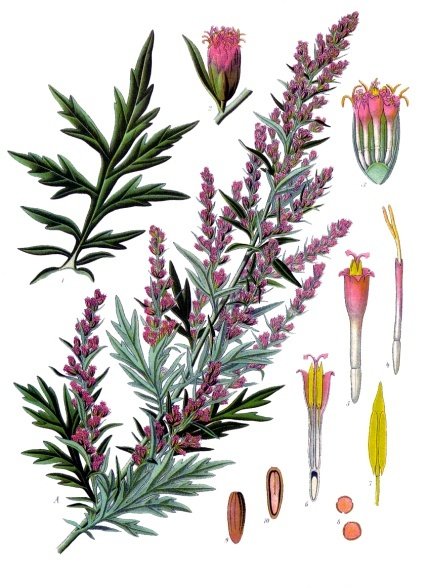 MugwortArtemisia vulgaris
-
 Annual WormwoodArtemisia annua
-
 Big SagebrushArtemisia tridentata
-
 Chinese MugwortArtemisia argyi
-
 Japanese MugwortArtemisia princeps
-
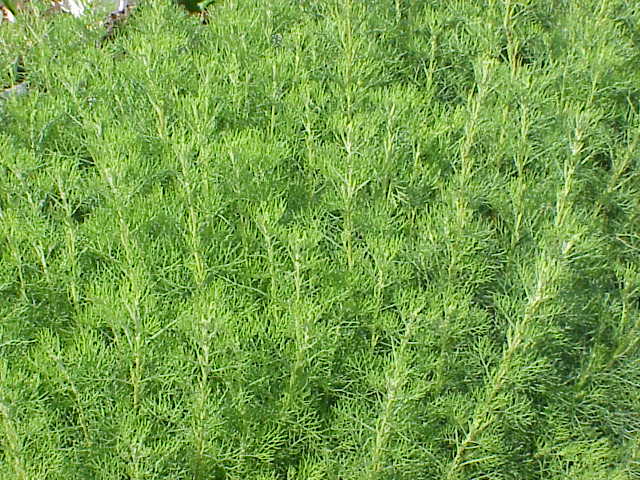 Lad's-loveArtemisia abrotanum
-
 White SageArtemisia ludoviciana
Compare
Questions and answers
What is the scientific name of the Tarragon?
The scientific name of the Tarragon is Artemisia dracunculus. Written with its author, the full name is Artemisia dracunculus L..
Which family does the Tarragon belong to?
Artemisia dracunculus belongs to the family Asteraceae, in the order Asterales and the class Magnoliopsida.
Where is the Tarragon found?
Checklists and occurrence records place Artemisia dracunculus in 53 countries, including United States, Russia, Canada, China, Kazakhstan and Sweden.
What other names does the Tarragon have?
Artemisia dracunculus is also known in English as French Tarragon, Russian Tarragon, Dragon Sagewort, Dragon Wormwood, False Tarragon and Linear-leaved Wormwood.
What does tarragon do to your body?
Traditional Asian medicine uses tarragon to treat digestive system diseases. Traditional medicinal applications also include analgesic, hypnotic, antiepileptic, anti-inflammatory, and antipyretic uses. Research has identified antioxidant, immunomodulatory, antineoplastic, hepatoprotective, and hypoglycaemic properties, as well as antibacterial, antifungal, and antiprotozoal properties in extracts and essential oil.[30][31][33][34][35]
What is the difference between tarragon and French tarragon?
French tarragon is propagated by dividing its roots rather than growing it from seed. The species also includes plants that produce generally sterile seeds and others that produce viable seeds.[9][11]
Sources
Passages the profile rests on
- The plant has slender branches and lanceolate, glossy green leaves with entire margins. Source passage: “The leaves are lanceolate, 2–8 cm (1–3 in) long and 2–10 mm (1⁄8–3⁄8 in) broad, glossy green, with an entire margin.” — English Wikipedia
- The wild plant is an herbaceous perennial with erect stems, slender branches, and narrow linear leaves. Source passage: “This shrub-like plant reaches heights up to 3 feet with erect stems, slender branches, and narrow linear leaves.” — plants.ces.ncsu.edu
- The leaves are alternate, gray-green, and linear to linear-lanceolate, with surfaces that may be sparsely hairy or smooth. Source passage: “Gray-green, alternate, sessile, linear to linear-lanceolate blades, sparsely hairy or smooth.” — plants.ces.ncsu.edu
- The plant can reach a height of 120–150 centimetres. Source passage: “Tarragon grows to 120–150 centimetres (4–5 feet) tall” — English Wikipedia
- The plant has a recorded width of 1 to 1.5 feet. Source passage: “Width: 1 ft. 0 in. - 1 ft. 6 in.” — plants.ces.ncsu.edu
- The plant spreads through its rhizomatous roots and reproduces readily. Source passage: “Tarragon has rhizomatous roots that it uses to spread and readily reproduces.” — English Wikipedia
- The species spreads through rhizomatous roots and can be propagated from rootstocks. Source passage: “It spreads readily by means of rhizomatous roots and it is easily propagated from root-stocks.” — plants.ces.ncsu.edu
- The plant can be propagated by division, root cuttings, and stem cuttings. Source passage: “Recommended Propagation Strategy: Division Root Cutting Stem Cutting” — plants.ces.ncsu.edu
- Some plants produce seeds that are generally sterile, while others produce viable seeds. Source passage: “Some tarragon plants produce seeds that are generally sterile. Others produce viable seeds.” — English Wikipedia
- The plant produces summer flowers and viable seeds that may self-seed. Source passage: “It produces non-ornamental flowers in summer resulting in viable seeds that may self-seed.” — plants.ces.ncsu.edu
- French tarragon is propagated by dividing its roots rather than growing it from seed. Source passage: “French tarragon is the variety used for cooking in the kitchen and is not grown from seed, as the flowers are sterile; instead, it is propagated by root division.” — English Wikipedia
- The species is native to Siberia and Mongolia. Source passage: “Among the subjects of research is A. dracunculus, a species native to Siberia and Mongolia.” — pmc.ncbi.nlm.nih.gov
- Wild populations occur in dry open habitats, including roadsides, meadows, desert scrub, and disturbed areas. Source passage: “In the wild, this plant is found in dry open places such as roadsides, meadows, desert scrub habitats, or disturbed areas.” — plants.ces.ncsu.edu
- The species is recorded across Europe, Asia, central-western North America, Alaska, Great Britain, and New Zealand. Source passage: “Distribution: Europe, Asia, central-western North America, Alaska, Great Britain, New Zealand” — plants.ces.ncsu.edu
- The species is recorded as originating from temperate Europe and Asia and central-western North America. Source passage: “Country Or Region Of Origin: Temperate Europe and Asia, central-western North America” — plants.ces.ncsu.edu
- Wild tarragon grows best in dry, sunny locations with neutral pH and well-drained soil. Source passage: “Wild tarragon is best suited to dry, sunny, pH neutral, well-drained soil.” — plants.ces.ncsu.edu
- The plant may decline during wet and humid summers or cold and wet winters. Source passage: “Plants may decline during wet, humid summers or cold, wet winters.” — plants.ces.ncsu.edu
- The leaves of the cultivated Artemisia dracunculus var. sativa are used as an aromatic culinary herb. Source passage: “One subspecies, Artemisia dracunculus var. sativa, is cultivated to use the leaves as an aromatic culinary herb.” — English Wikipedia
- The species is recognized as a spice plant in Asia, Europe, and the Americas. Source passage: “It is known as a spice species in Asia, Europe and the Americas.” — pmc.ncbi.nlm.nih.gov
- The species has an established role in the food industry as a spice. Source passage: “A. dracunculus has long-held an established position in the food industry as a spice.” — pmc.ncbi.nlm.nih.gov
- Tarragon is used in French cooking as one of the four fines herbes and is particularly suited to chicken, fish, and egg dishes. Source passage: “Tarragon is one of the four fines herbes of French cooking and is particularly suitable for chicken, fish, and egg dishes.” — English Wikipedia
- Tarragon is the principal flavoring ingredient in Béarnaise sauce. Source passage: “Tarragon is the main flavoring component of Béarnaise sauce.” — English Wikipedia
- Tarragon sprigs can be steeped in vinegar to make tarragon vinegar. Source passage: “Fresh, lightly bruised tarragon sprigs are steeped in vinegar to produce tarragon vinegar.” — English Wikipedia
- In Syria, fresh tarragon is eaten with white Syrian cheese and used in shish barak and kibbeh labaniyeh. Source passage: “In Syria, fresh tarragon is eaten with white Syrian cheese, and also used with dishes such as shish barak and kibbeh labaniyeh.” — English Wikipedia
- In Iran and Armenia, tarragon is eaten as a fresh herb and used in stews and pickled foods. Source passage: “In Iran and Armenia, tarragon is used as a side dish in sabzi khordan/kanachi (fresh herbs), or in stews and Persian or Armenian-style pickles” — English Wikipedia
- Native Americans used the leaves as an herb or tea and also consumed the leaves and seeds as food. Source passage: “Native Americans used leaves as an herb or tea. Leaves and seeds were also eaten as food.” — plants.ces.ncsu.edu
- The leaves, stems, roots, and flowers were used extensively for medicinal purposes. Source passage: “Leaves, stems, roots and flowers were used extensively for medicinal purposes.” — plants.ces.ncsu.edu
- The plant was also used to repel insects. Source passage: “The plant was also used to repel insects.” — plants.ces.ncsu.edu
- The species has a long history of use in traditional Asian medicine, particularly in Iran, Pakistan, Azerbaijan, and India. Source passage: “Artemisia dracunculus L. (tarragon), Asteraceae, is a species that has long been used in traditional Asian medicine, mainly in Iran, Pakistan, Azerbaijan and India.” — pmc.ncbi.nlm.nih.gov
- Traditional Asian medicine uses the species to treat digestive system diseases. Source passage: “In traditional Asian medicine, this species is used, for example, in the treatment of digestive system diseases” — pmc.ncbi.nlm.nih.gov
- Traditional medicinal applications include using the plant as an analgesic, hypnotic, antiepileptic, anti-inflammatory, and antipyretic agent. Source passage: “as an analgesic, hypnotic, antiepileptic, anti-inflammatory and antipyretic agent” — pmc.ncbi.nlm.nih.gov
- The species has traditionally been used as a remedy for helminthiasis. Source passage: “and as an effective remedy in the treatment of helminthiasis.” — pmc.ncbi.nlm.nih.gov
- Research has documented antibacterial, antifungal, and antiprotozoal properties in extracts and essential oil from the species. Source passage: “Its antibacterial, antifungal and antiprotozoal properties have been documented” — pmc.ncbi.nlm.nih.gov
- Research has identified antioxidant, immunomodulatory, and antineoplastic properties in the species. Source passage: “together with its extremely valuable antioxidant, immunomodulatory and antineoplastic properties” — pmc.ncbi.nlm.nih.gov
- Research has reported hepatoprotective and hypoglycaemic effects associated with the species. Source passage: “These studies have also been proven to have hepatoprotective, hypoglycaemic and thyroid regulating effects” — pmc.ncbi.nlm.nih.gov
- The species has also been investigated for antidepressant effects. Source passage: “An antidepressant effect has also been documented” — pmc.ncbi.nlm.nih.gov
- The principal raw plant materials obtained from this species are its herb and leaves. Source passage: “The raw materials obtained from this species are herb and leaf.” — pmc.ncbi.nlm.nih.gov
- The plant contains essential oil with highly variable composition, as well as flavonoids, phenolic acids, coumarins, and alkamides. Source passage: “The presence of essential oil with a highly variable composition, as well as flavonoids, phenolic acids, coumarins and alkamides” — pmc.ncbi.nlm.nih.gov
- The species is increasingly being used in the cosmetics industry. Source passage: “And its use is growing in the cosmetics industry.” — pmc.ncbi.nlm.nih.gov
Data
- Catalogue of Life, 2026-10-16 XR cc by
- Global Biodiversity Information Facility CC BY 4.0
- Wikidata CC0
- GeoNames CC BY 4.0
- Wikimedia Commons per image; credit shown with each image
- Within the Catalogue of Life, this name comes from Synonymic Checklists of the Vascular Plants of the World cc by
References
- L. (1753). Sp. Pl. [Linnaeus] 2: 849 (1753). where the name was published
This species in other databases
Page built on 26 November 2026. See how the catalog is made and all sources and licences.
Cite this page
ScientificNames.org. (2026). Artemisia dracunculus (Tarragon). Retrieved November 26, 2026, from https://scientificnames.org/species/artemisia-dracunculus
“Artemisia dracunculus (Tarragon).” ScientificNames.org, 2026, scientificnames.org/species/artemisia-dracunculus. Accessed 26 Nov. 2026.
ScientificNames.org. “Artemisia dracunculus (Tarragon).” Accessed November 26, 2026. https://scientificnames.org/species/artemisia-dracunculus.
@misc{scientificnames_artemisia_dracunculus_tarragon,
  author = {{ScientificNames.org}},
  title = {Artemisia dracunculus (Tarragon)},
  year = {2026},
  url = {https://scientificnames.org/species/artemisia-dracunculus},
  note = {Accessed 2026-11-26}
}