Species · Spiders and other arachnids
Steindachner's Ebony Tarantula Aphonopelma steindachneri
The scientific name of the Steindachner's Ebony Tarantula is Aphonopelma steindachneri. It is a species of arachnid in the family Theraphosidae (tarantulas), order Araneae. The name dates from 1875.
- Scientific name
- Aphonopelma steindachneri (Ausserer, 1875)
- Common name
- Steindachner's Ebony Tarantula
- Genus
- Aphonopelma
- Family
- Theraphosidae (Tarantulas)
- Order
- Araneae
- Class
- Arachnida
- Recorded in
- 2 countries
- Name status
- accepted in the Catalogue of Life

Overview
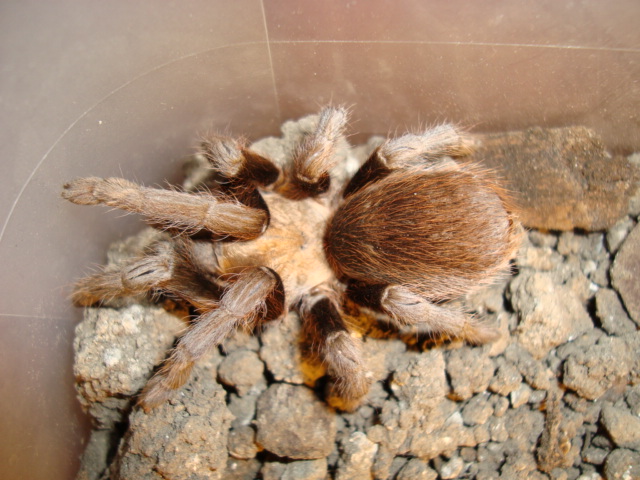
Aphonopelma steindachneri occurs in California and Baja California, Mexico, with its range concentrated around the metropolitan areas of Los Angeles and San Diego. It has velvet-black or deep-brown coloration and reaches a diagonal leg span of 12–13 centimeters (approximately 5 inches).
Written 26 November 2026 from the sources listed below. Each statement was checked against the passage it cites; statements that could not be supported were removed.
Appearance
Steindachner's Ebony Tarantula has velvet-black or deep-brown coloration. Its diagonal leg span reaches 12–13 centimeters (approximately 5 inches).[1][2]
Habitat
Steindachner's Ebony Tarantula inhabits burrows in arid landscapes.[3]
Behaviour
The species is most active during summer and fall, particularly from July through October. Males leave their burrows to search for mates during the breeding season.[4][5]
Recorded predators include spider wasps in the genera Pepsis and Hemipepsis, centipedes, scorpions, solifugids, and wolf spiders that prey on juveniles.[6]
Classification of the Steindachner's Ebony Tarantula
| Kingdom | Animalia |
|---|---|
| Phylum | Arthropoda |
| Subphylum | Chelicerata |
| Class | Arachnida (Arachnid) |
| Order | Araneae (Spider) |
| Family | Theraphosidae (Tarantulas) |
| Genus | Aphonopelma |
| Species | Aphonopelma steindachneri (Ausserer, 1875) |
Origin of the name. Etymology. Person
Where the Steindachner's Ebony Tarantula is found
Checklists and occurrence records place Aphonopelma steindachneri in 2 countries across North America. GBIF holds 1,087 georeferenced records of it.
Countries
Regions and cities with the most records
- California, United States 1,034
- Casa de Oro-Mount Helix, United States 212
- Bostonia, United States 210
- Winter Gardens, United States 210
- El Cajon, United States 201
- Rancho San Diego, United States 201
- La Presa, United States 200
- Spring Valley, United States 200
- Lakeside, United States 192
- Poway, United States 191
- Santee, United States 191
- La Mesa, United States 185
- Lemon Grove, United States 182
- National City, United States 157
- San Diego, United States 142
- Agoura, United States 140
- Agoura Hills, United States 129
- Burbank, United States 124
- Glendale, United States 123
- La Cañada Flintridge, United States 119
- La Crescenta-Montrose, United States 116
- South Pasadena, United States 112
- Pasadena, United States 111
- Thousand Oaks, United States 109
- Altadena, United States 107
- Alhambra, United States 99
- San Gabriel, United States 96
- Monterey Park, United States 95
- Simi Valley, United States 86
- Rosemead, United States 81
- Temple City, United States 81
- Arcadia, United States 80
- Monrovia, United States 80
- Los Angeles, United States 78
- Duarte, United States 76
- Escondido, United States 75
Range as the checklists state it
USA
A number beside a place is its count of GBIF occurrence records. A place without a number comes from a checklist alone. Records show where a species has been observed or collected, which can include escapes and vagrants.
Common names
English
- Steindachner's Ebony Tarantula
- Pecos Brown
- Brownspot
Names in 1 other language
- Czech
- sklípkan Steindachnerův, sklípkan sandiegský
Synonyms
3 other scientific names have been used for this species and are now treated as synonyms of Aphonopelma steindachneri.
- Aphonopelma phanum Chamberlin, 1940
- Aphonopelma reversum Chamberlin, 1940
- Eurypelma steindachneri Ausserer, 1875
Related species
-
 Texas Brown TarantulaAphonopelma hentzi
-
 Arizona Blonde TarantulaAphonopelma chalcodes
-
 Costa Rican Striped-knee TarantulaAphonopelma seemanni
-
 Desert TarantulaAphonopelma iodius
-
 California Ebony TarantulaAphonopelma eutylenum
-
 Johnny Cash TarantulaAphonopelma johnnycashi
-
 Texas Tan TarantulaAphonopelma anax
-
 Grand Canyon Black TarantulaAphonopelma marxi
Compare
Questions and answers
What is the scientific name of the Steindachner's Ebony Tarantula?
The scientific name of the Steindachner's Ebony Tarantula is Aphonopelma steindachneri. Written with its author, the full name is Aphonopelma steindachneri (Ausserer, 1875).
Which family does the Steindachner's Ebony Tarantula belong to?
Aphonopelma steindachneri belongs to the family Theraphosidae, in the order Araneae and the class Arachnida.
Where is the Steindachner's Ebony Tarantula found?
Checklists and occurrence records place Aphonopelma steindachneri in 2 countries: United States and Mexico.
What other names does the Steindachner's Ebony Tarantula have?
Aphonopelma steindachneri is also known in English as Pecos Brown and Brownspot.
Sources
Passages the profile rests on
- The species has velvet-black or deep-brown coloration. Source passage: “with a coloration of velvet black or deep brown.” — English Wikipedia
- The species reaches a diagonal leg span of 12–13 centimeters (approximately 5 inches). Source passage: “The species grows to a size of 12–13 centimeters (5 inches) in its diagonal leg span” — English Wikipedia
- The species inhabits burrows in arid landscapes. Source passage: “its habitat being arid landscapes where it inhabits burrows in the ground.” — English Wikipedia
- The species is most active during summer and fall, particularly from July through October. Source passage: “the species is most active during its breeding season in summer and fall during the months from July to October” — English Wikipedia
- Males leave their burrows to search for mates during the breeding season. Source passage: “males leave their burrows in search of mates.” — English Wikipedia
- Recorded predators include spider wasps in the genera Pepsis and Hemipepsis, centipedes, scorpions, solifugids, and wolf spiders that prey on juveniles. Source passage: “Common predators of the species include other arthropods such as spider wasps in the genera Pepsis and Hemipepsis, centipedes, scorpions, solifugids, and wolf spiders (for juveniles).” — English Wikipedia
Data
- Catalogue of Life, 2026-10-16 XR cc by
- Global Biodiversity Information Facility CC BY 4.0
- Wikidata CC0
- GeoNames CC BY 4.0
- Wikimedia Commons per image; credit shown with each image
- Within the Catalogue of Life, this name comes from The World Spider Catalog cc by
References
- Ausserer, A. (1875). Zweiter Beitrag zur Kenntniss der Arachniden-Familie der Territelariae Thorell (Mygalidae Autor). Verhandlungen der Kaiserlich-Königlichen Zoologisch-Botanischen Gesellschaft in Wien 25: 125-206, pl. 5-7. where the name was published
This species in other databases
Page built on 28 November 2026. See how the catalog is made and all sources and licences.
Cite this page
ScientificNames.org. (2026). Aphonopelma steindachneri (Steindachner's Ebony Tarantula). Retrieved November 28, 2026, from https://scientificnames.org/species/aphonopelma-steindachneri
“Aphonopelma steindachneri (Steindachner's Ebony Tarantula).” ScientificNames.org, 2026, scientificnames.org/species/aphonopelma-steindachneri. Accessed 28 Nov. 2026.
ScientificNames.org. “Aphonopelma steindachneri (Steindachner's Ebony Tarantula).” Accessed November 28, 2026. https://scientificnames.org/species/aphonopelma-steindachneri.
@misc{scientificnames_aphonopelma_steindachneri_steindachners_ebony_tarantula,
  author = {{ScientificNames.org}},
  title = {Aphonopelma steindachneri (Steindachner's Ebony Tarantula)},
  year = {2026},
  url = {https://scientificnames.org/species/aphonopelma-steindachneri},
  note = {Accessed 2026-11-28}
}