Species · Mammals
Large Japanese Field Mouse Apodemus speciosus
The scientific name of the Large Japanese Field Mouse is Apodemus speciosus. It is a species of mammal in the family Muridae (mice), order Rodentia. The name dates from 1845.
- Scientific name
- Apodemus speciosus (Temminck, 1845)
- Common name
- Large Japanese Field Mouse
- Genus
- Apodemus
- Family
- Muridae (Mice)
- Order
- Rodentia
- Class
- Mammalia
- Red List category
- LC Least Concern
- Recorded in
- 3 countries
- Name status
- accepted in the Catalogue of Life

Overview
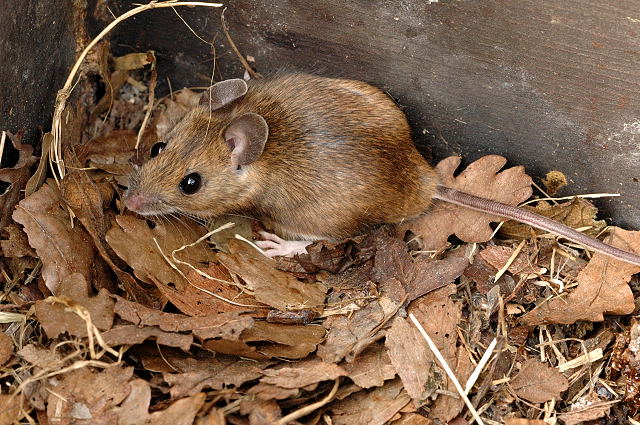
The Large Japanese Field Mouse (Apodemus speciosus) is a rodent belonging to the family Muridae. It inhabits forests, grasslands, and cultivated fields, including rice paddies, in Japan. It is omnivorous, primarily eats seeds during autumn and winter, and contributes to seed dispersal.
Written 26 November 2026 from the sources listed below. Each statement was checked against the passage it cites; statements that could not be supported were removed.
Appearance
The Large Japanese Field Mouse is a rodent in the family Muridae. Its head-body length is 80–140 mm.[1][2]
Habitat
The species inhabits forests, grasslands, and cultivated fields, including rice paddies. It prefers open secondary forests over dense-canopy habitats.[3][4]
The species can inhabit artificially created green spaces in urban areas. It inhabited an artificial green space on reclaimed land on the Chita Peninsula in Aichi Prefecture, Central Japan, during a study conducted from 2012 to 2014.[5][6]
Diet
The species is omnivorous and consumes seeds, insects, and other small invertebrates. It primarily eats seeds during autumn and winter.[7][8]
Acorns and walnuts can comprise between 13% and 100% of its food. The species hoards acorns and walnuts.[9][10]
The species can consume nuts with high tannin levels by acclimating through specialized protein secretion and bacterial recruitment. It preferentially forages on acorns with lower tannin levels and related proteins.[11][12]
A DNA metabarcoding study identified 72 plant taxa as food resources for the species. Of these, 43 were assigned to species, 16 to genus, and 13 to family.[13][14]
Lauraceae was the dominant identified food plant family, occurring in 81% of fecal samples. Fagaceae occurred in 70% of fecal samples collected in the food-resource study.[15][16]
Woody plants accounted for 50 of the 72 identified food plant taxa.[17]
Behaviour
The species is nocturnal and primarily forages at night. Under higher light intensity, it spends less time outside its nest and undertakes shorter excursions than in darkness.[18][19]
The species eats less food under higher light intensity than during dark conditions. Under illuminated conditions, it tends to carry food back to its nest rather than eat it away from the nest.[20][21]
The species can learn to forage more efficiently on hard-shelled walnuts through previous feeding experience. Inexperienced individuals can learn more efficient foraging behavior within 14 days of conditioning.[22][23]
Individuals raised in environments containing more tannin-rich nuts show greater selectivity in their foraging.[24]
The species contributes to seed dispersal and influences forest regeneration through seed dispersal. It also serves as a food resource for carnivorous animals.[25][26][27]
Conservation
The species' population is significantly affected by the abundance of food resources such as acorns.[28]
Artificial green spaces in urban areas can contribute positively to maintaining viable wildlife populations, including those of small mammals.[29]
Classification of the Large Japanese Field Mouse
| Kingdom | Animalia |
|---|---|
| Phylum | Chordata |
| Subphylum | Vertebrata |
| Infraphylum | Gnathostomata |
| Parvphylum | Osteichthyes |
| Megaclass | Tetrapoda |
| Class | Mammalia (Mammal) |
| Subclass | Theria |
| Infraclass | Eutheria |
| Order | Rodentia (Rodent) |
| Suborder | Myomorpha (Mice) |
| Superfamily | Muroidea |
| Family | Muridae (Mice) |
| Subfamily | Murinae (Old World Mice) |
| Genus | Apodemus (Field Mice) |
| Species | Apodemus speciosus (Temminck, 1845) |
Where the Large Japanese Field Mouse is found
Checklists and occurrence records place Apodemus speciosus in 3 countries across Asia. GBIF holds 15,460 georeferenced records of it.
Countries
Regions and cities with the most records
- Hokkaido, Japan 1,028
- Ibaraki, Japan 562
- Akita, Japan 520
- Niigata, Japan 479
- Iwate, Japan 427
- Miyagi, Japan 311
- Yamagata, Japan 293
- Shizuoka, Japan 289
- Aomori, Japan 270
- Nagano, Japan 268
- Toyama, Japan 247
- Funaishikawa, Japan 200
- Inada, Japan 200
- Fukushima, Japan 198
- Hyōgo, Japan 198
- Kita-Akita, Japan 191
- Takanosu, Japan 191
- Hitachi-Naka, Japan 190
- Ishitsuka, Japan 190
- Tochigi, Japan 184
- Wakuya, Japan 184
- Moriya, Japan 181
- Gunma, Japan 180
- Ōmiya, Japan 179
- Hitachi-ota, Japan 177
- Kogota-ekimae, Japan 175
- Tsukuba, Japan 175
- Tsukubamirai, Japan 175
- Mitsukaidō, Japan 173
- Fukui, Japan 172
- Hiroshima, Japan 169
- Uozu, Japan 169
- Hitachiomiya, Japan 168
- Iwai, Japan 168
- Jōsō, Japan 168
- Yachiyo, Japan 165
1 more country has a few records outside this range
These countries hold a few records of Apodemus speciosus but lie outside the range the checklists give for it. Such records are often zoo or garden specimens, museum material or vagrants, so the species is not counted as occurring there.
Range as the checklists state it
Southern Asia
A number beside a place is its count of GBIF occurrence records. A place without a number comes from a checklist alone. Records show where a species has been observed or collected, which can include escapes and vagrants.
Common names
English
- Large Japanese Field Mouse
Names in 10 other languages
- Czech
- myšice východní
- Dutch
- Grote Japanse Bosmuis
- Finnish
- japaninmetsähiiri
- German
- Große Japanische Waldmaus
- Japanese
- アカネズミ
- Korean
- 흰배숲쥐
- Polish
- myszarka japońska
- Portuguese
- Ratão-do-campo-japonês
- Russian
- Krasnaya Mysh, Yaponskaya Mysh, Большая японская мышь, Красная мышь, Японская мышь
- Spanish
- Gran Ratón de Campo Japonés
Synonyms
7 other scientific names have been used for this species and are now treated as synonyms of Apodemus speciosus.
- Apodemus speciosus dorsalis Kuroda, 1924
- Apodemus speciosus insperatus Kuroda, 1938
- Apodemus speciosus sadoensis Tokuda, 1941
- Apodemus speciosus tusimaensis Tokuda, 1939
- Micromys speciosus ainu Thomas, 1906
- Micromys speciosus navigator Thomas, 1906
- Mus speciosus Temminck, 1844
Related species
-
 Wood MouseApodemus sylvaticus
-
 Yellow-necked MouseApodemus flavicollis
-
 Striped Field MouseApodemus agrarius
-
 Ural Field MouseApodemus uralensis
-
 Small Japanese Field MouseApodemus argenteus
-
 Korean Field MouseApodemus peninsulae
- Kashmir Field MouseApodemus rusiges
-
 Alpine Field MouseApodemus alpicola
Compare
Questions and answers
What is the scientific name of the Large Japanese Field Mouse?
The scientific name of the Large Japanese Field Mouse is Apodemus speciosus. Written with its author, the full name is Apodemus speciosus (Temminck, 1845).
Which family does the Large Japanese Field Mouse belong to?
Apodemus speciosus belongs to the family Muridae, in the order Rodentia and the class Mammalia.
Where is the Large Japanese Field Mouse found?
Checklists and occurrence records place Apodemus speciosus in 3 countries: Japan, China and South Korea.
What is the conservation status of the Large Japanese Field Mouse?
The IUCN Red List category recorded for Apodemus speciosus is Least Concern (LC).
How big is a full grown field mouse?
The Large Japanese Field Mouse has a head-body length of 80–140 mm.[2]
What are large mice called?
The Large Japanese Field Mouse is the recorded English name of Apodemus speciosus.[1]
What is the diet of a field mouse?
The Large Japanese Field Mouse is omnivorous and consumes seeds, insects, and other small invertebrates. It primarily eats seeds during autumn and winter.[7][8]
Sources
Passages the profile rests on
- The species is a rodent belonging to the family Muridae. Source passage: “The large Japanese field mouse (Apodemus speciosus) is a nocturnal species of rodent in the family Muridae.” — English Wikipedia
- The species has a head-body length of 80–140 mm. Source passage: “as a small rodent with a head-body length of 80–140 mm” — pmc.ncbi.nlm.nih.gov
- The species inhabits forests, grasslands, and cultivated fields, including rice paddies. Source passage: “It inhabits forests, grasslands, and cultivated fields, including rice paddies, at any altitude.” — English Wikipedia
- The species prefers open secondary forests over dense-canopy habitats. Source passage: “A. argenteus prefers dense canopy, while A. speciosus prefers open secondary forests.” — English Wikipedia
- The species can inhabit artificially created green spaces in urban areas. Source passage: “it has also colonized artificially created green spaces in urban areas” — pmc.ncbi.nlm.nih.gov
- The species inhabited an artificial green space on reclaimed land on the Chita Peninsula in Aichi Prefecture, Central Japan, during a study conducted from 2012 to 2014. Source passage: “inhabiting an artificial green space on reclaimed land on the Chita Peninsula in Aichi Prefecture, Central Japan, from 2012 to 2014.” — pmc.ncbi.nlm.nih.gov
- The species is omnivorous and consumes forest resources including seeds, insects, and other small invertebrates. Source passage: “This species is omnivorous and forages on forest resources such as seeds, insects, and other small invertebrates” — pmc.ncbi.nlm.nih.gov
- The species primarily eats seeds, particularly during autumn and winter. Source passage: “They are omnivores but mostly known to be seed-eating mice, particularly around autumn and winter” — English Wikipedia
- Acorns and walnuts can comprise between 13% and 100% of the species' food. Source passage: “which comprise 13-100% of their food.” — English Wikipedia
- The species hoards acorns and walnuts. Source passage: “the mice hoard acorns and walnuts” — English Wikipedia
- The species can consume nuts with high tannin levels by acclimating through specialized protein secretion and bacterial recruitment. Source passage: “A. speciosus is able to acclimate to nuts with high tannin levels by secretion of specialized proteins and recruitment of bacteria to aid in digestion.” — English Wikipedia
- The species preferentially forages on acorns with lower tannin levels and related proteins. Source passage: “It also displays a proactive foraging preference for acorns with lower levels of tannin and related proteins.” — English Wikipedia
- A DNA metabarcoding study identified 72 plant taxa as food resources for the species. Source passage: “revealed that a total of 72 plant taxa were utilized as food plant resources by A. speciosus.” — pmc.ncbi.nlm.nih.gov
- Of the 72 identified food plant taxa, 43 were assigned to species, 16 to genus, and 13 to family. Source passage: “43 could be assigned to species (59.7%), 16 to genus (22.2%), and 13 to family (18.1%).” — pmc.ncbi.nlm.nih.gov
- Lauraceae was the dominant identified food plant family, occurring in 81% of fecal samples. Source passage: “Lauraceae (81.0% of 100 fecal samples)” — pmc.ncbi.nlm.nih.gov
- Fagaceae occurred in 70% of fecal samples collected in the food-resource study. Source passage: “followed by Fagaceae (70.0%)” — pmc.ncbi.nlm.nih.gov
- Woody plants accounted for 50 of the 72 identified food plant taxa. Source passage: “Fifty of the 72 plant taxa identified as food plant resources were woody plants.” — pmc.ncbi.nlm.nih.gov
- The species is nocturnal and primarily forages at night. Source passage: “Large Japanese field mice forage primarily at night, likely to avoid predation.” — English Wikipedia
- The species spends less time outside its nest and undertakes shorter excursions under higher light intensity than in darkness. Source passage: “A. speciosus significantly decreases time outside of the nest, length of excursions” — English Wikipedia
- The species eats less food under higher light intensity than during dark conditions. Source passage: “and food eaten compared to periods of dark.” — English Wikipedia
- Under illuminated conditions, the species tends to carry food back to its nest rather than eat it away from the nest. Source passage: “the mice tend to carry food back to their nests during periods of light as opposed to eating away from the nest” — English Wikipedia
- The species can learn to forage more efficiently on hard-shelled walnuts through previous feeding experience. Source passage: “wood mice with previous experience eating walnuts are able to eat them more quickly, efficiently, and in greater quantities than mice that had not encountered hard-shelled walnuts.” — English Wikipedia
- Inexperienced individuals can learn more efficient foraging behavior within 14 days of conditioning. Source passage: “mice without previous experience are able to successfully learn more efficient foraging behavior within 14 days of conditioning” — English Wikipedia
- Individuals raised in environments containing more tannin-rich nuts show greater selectivity in their foraging. Source passage: “large Japanese field mice raised in environments with more tannin-rich nuts show greater selectivity than those that do not.” — English Wikipedia
- The species contributes to seed dispersal. Source passage: “This makes them effective seed dispersers.” — English Wikipedia
- The species influences forest regeneration through seed dispersal. Source passage: “has a significant influence on forest regeneration through seed dispersal.” — pmc.ncbi.nlm.nih.gov
- The species serves as a food resource for carnivorous animals. Source passage: “Additionally, it also plays a role as a food resource for carnivorous animals” — pmc.ncbi.nlm.nih.gov
- The species' population is significantly affected by the abundance of food resources such as acorns. Source passage: “the population of A. speciosus is significantly affected by the abundance of food resources, such as acorns” — pmc.ncbi.nlm.nih.gov
- Artificial green spaces in urban areas can contribute positively to maintaining viable wildlife populations, including those of small mammals. Source passage: “artificial green spaces with habitats for small mammals in urban areas have contributed positively towards maintaining viable populations of wildlife” — pmc.ncbi.nlm.nih.gov
Data
- Catalogue of Life, 2026-10-16 XR cc by
- Global Biodiversity Information Facility CC BY 4.0
- Wikidata CC0
- GeoNames CC BY 4.0
- Wikimedia Commons per image; credit shown with each image
- Within the Catalogue of Life, this name comes from The Integrated Taxonomic Information System cc0
References
- In Siebold, Temminck and Schlegel, Fauna Japonica, Arnz et Socii, Lugduni Batavorum p.52 where the name was published
- Sherborn, C. Davies, and F. A. Jentink. (1895). On the Dates of the Parts of Siebold’s ‘Fauna Japonica’ and Giebel’s ‘Allgemeine Zoologie’ (first edition). Proceedings of the Zoological Society of London, 1895, Part 1.
- Ellerman, J. R., and T. C. S. Morrison-Scott. (1966). Checklist of Palaearctic and Indian Mammals 1758 to 1946, 2nd Edition.
- Wilson, Don E., and DeeAnn M. Reeder, eds. (1993). Mammal Species of the World: A Taxonomic and Geographic Reference, 2nd Ed., 3rd Printing.
- Musser, Guy G., and Michael D. Carleton / Wilson, Don E., and DeeAnn M. Reeder, eds. (2005). Superfamily Muroidea. Mammal Species of the World: A Taxonomic and Geographic Reference, 3rd Ed., Vol. 2.
This species in other databases
Page built on 27 November 2026. See how the catalog is made and all sources and licences.
Cite this page
ScientificNames.org. (2026). Apodemus speciosus (Large Japanese Field Mouse). Retrieved November 27, 2026, from https://scientificnames.org/species/apodemus-speciosus
“Apodemus speciosus (Large Japanese Field Mouse).” ScientificNames.org, 2026, scientificnames.org/species/apodemus-speciosus. Accessed 27 Nov. 2026.
ScientificNames.org. “Apodemus speciosus (Large Japanese Field Mouse).” Accessed November 27, 2026. https://scientificnames.org/species/apodemus-speciosus.
@misc{scientificnames_apodemus_speciosus_large_japanese_field_mouse,
  author = {{ScientificNames.org}},
  title = {Apodemus speciosus (Large Japanese Field Mouse)},
  year = {2026},
  url = {https://scientificnames.org/species/apodemus-speciosus},
  note = {Accessed 2026-11-27}
}