Species · Flowering plants
Japanese Spikenard Aralia cordata
The scientific name of the Japanese Spikenard is Aralia cordata. It is a species of flowering plant in the family Araliaceae (ginseng family), order Apiales.
- Scientific name
- Aralia cordata Thunb.
- Common name
- Japanese Spikenard
- Genus
- Aralia
- Family
- Araliaceae (Ginseng Family)
- Order
- Apiales
- Class
- Magnoliopsida
- Recorded in
- 5 countries
- Name status
- accepted in the Catalogue of Life
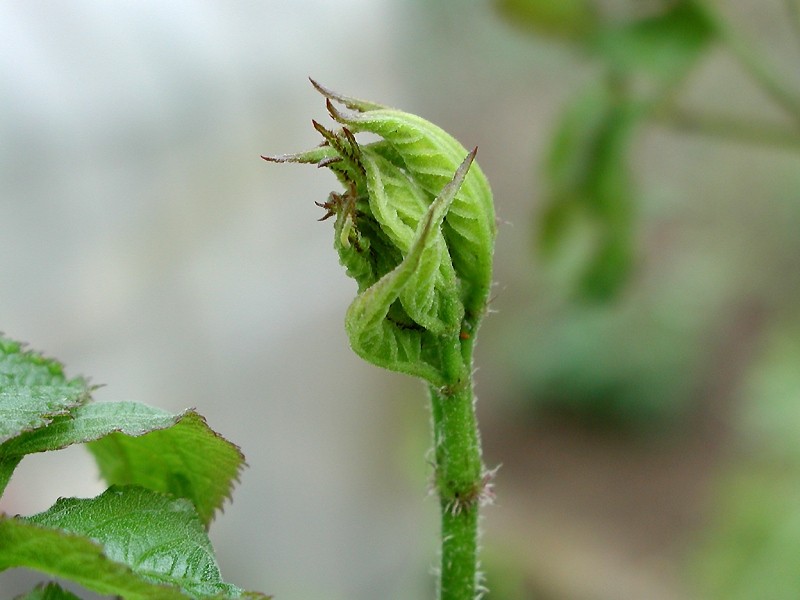
Overview
The species is native to Japan, Korea, the Russian Far East, and eastern China.
Written 26 November 2026 from the sources listed below. Each statement was checked against the passage it cites; statements that could not be supported were removed.
Appearance
The flowers are small and white and grow in large umbels measuring 30–45 cm in diameter. Its fruit is a small black drupe approximately 3 mm in diameter.[1][2]
The plant develops golden leaves in spring and bright green leaves during summer. It has a hefty, plump rootstock and shoots measuring 60–90 cm long.[3][4]
Habitat
Japanese Spikenard commonly grows on slopes of wooded embankments. It grows well in moist and rainy areas and mountainous environments.[5][6]
The species can grow in normal, sandy, or clay soils with a pH between 5.0 and 7.5. It prefers light shade but can also grow in full shade or full sun when water is reliably available.[7][8]
Behaviour
Japanese Spikenard dies back during winter and regrows in spring.[9]
Reproduction and life cycle
Japanese Spikenard can be propagated through seeds or cuttings and also propagates readily through root suckering.[10][11]
Effective seed germination requires several months of stratification. Seeds germinate well when stored in cold, moist sand.[12][13]
Its flowers appear in late summer. The plant can continue producing after regrowth for six years or longer.[14][15]
Conservation
The species has genetic diversity among cultivated and wild populations in China's provinces.[16]
Uses
The young shoots are harvested as a vegetable after blanching. Young stems are used in soups and salads.[17][18]
In Japan, the edible stems are sometimes boiled and served in miso soup.[19]
In Korean cuisine, the young shoots are prepared as blanched namul, pickled jangajji, pan-fried jeon, or grilled sanjeok. In Imsil County, Korea, the shoots are used in spicy fish stew.[20][21]
The dried root has traditionally been used in Korea to treat inflammation, fever, and pain. The root is used in China as a substitute for ginseng.[22][23]
Japanese Spikenard is cultivated as an ornamental plant. It is grown in North America for exotic cuisine and ornamental purposes.[24][25]
Classification of the Japanese Spikenard
| Kingdom | Plantae |
|---|---|
| Subkingdom | Pteridobiotina |
| Phylum | Tracheophyta |
| Class | Magnoliopsida |
| Order | Apiales |
| Family | Araliaceae (Ginseng Family) |
| Subfamily | Aralioideae |
| Tribe | Aralieae |
| Genus | Aralia (Spikenard) |
| Species | Aralia cordata Thunb. |
Where the Japanese Spikenard is found
Checklists and occurrence records place Aralia cordata in 5 countries across Asia. GBIF holds 2,779 georeferenced records of it.
Countries
Regions and cities with the most records
- Kanagawa, Japan 196
- Nagano, Japan 193
- Hokkaido, Japan 160
- Taiwan, Taiwan 139
- Yamato, Japan 106
- Minamirinkan, Japan 105
- Minawa, Japan 95
- Zama, Japan 95
- Ayase, Japan 94
- Machida, Japan 93
- Kanaishima, Japan 92
- Sichuan, China 92
- Atsugi, Japan 90
- Minamiashigara, Japan 90
- Inagi, Japan 86
- Azamino, Japan 82
- Odawara, Japan 82
- Ebina, Japan 81
- Nihammatsu, Japan 81
- Isehara, Japan 80
- Hadano, Japan 79
- Noborito, Japan 79
- Komae, Japan 76
- Tama, Japan 74
- Aihara, Japan 72
- Oyama, Japan 72
- Fuchū, Japan 70
- Ninomiya, Japan 70
- Sagamihara, Japan 70
- Chōfu, Japan 69
- Chigasaki, Japan 67
- Fujisawa, Japan 64
- Ōiso, Japan 64
- Hiratsuka, Japan 62
- Kokubunji, Japan 62
- Gotemba, Japan 61
7 more countries have a few records outside this range
These countries hold a few records of Aralia cordata but lie outside the range the checklists give for it. Such records are often zoo or garden specimens, museum material or vagrants, so the species is not counted as occurring there.
Range as the checklists state it
Russian Far East (Kuril Isl., Sakhalin); China (Anhui, Fujian, Guangxi, Hubei, Jiangsu, Jiangxi, Zhejiang); North Korea; South Korea; Japan (Hokkaido, Honshu, Shikoku, Kyushu); Taiwan
A number beside a place is its count of GBIF occurrence records. A place without a number comes from a checklist alone. Records show where a species has been observed or collected, which can include escapes and vagrants.
Common names
English
- Japanese Spikenard
- Japanese-asparagus
- Japanese-spikenard
- Spikenard
Names in 14 other languages
- Chinese
- 九眼独活, 九眼獨活, 土当归, 长白楤木, 食用土当归, 食用土當歸
- Czech
- arálie Schmidtova, arálie srdčitá
- Finnish
- hertta-aralia
- French
- aralia du Japon
- German
- herzförmige Aralie, japanische Bergangelika
- Japanese
- ウド, ウド、独活, エゾウド, 独活
- Korean
- 땅두릅
- Norwegian Bokmål
- udo
- Polish
- Aralia Sercowata
- Russian
- Аралия сердцевидная, Аралия сердцевидная сахалинская
- Slovak
- aralka srdcovitá
- Slovenian
- japonska aralija
- Spanish
- Aralia del Japón
- Swedish
- sallatsaralia
Synonyms
6 other scientific names have been used for this species and are now treated as synonyms of Aralia cordata.
- Aralia cordata var. cordata
- Aralia edulis Siebold
- Aralia nutans Franch. & Sav.
- Aralia taiwaniana Y.C.Liu & F.Y.Lu
- Dimorphanthus edulis (Siebold & Zucc.) Miq.
- Aralia nudicaulis Blume ambiguous synonym
Subspecies and varieties
Related species
-
 Devil's WalkingstickAralia spinosa
-
 Japanese Angelica TreeAralia elata
-
 Wild LicoriceAralia nudicaulis
-
 American SpikenardAralia racemosa
-
 California SpikenardAralia californica
-
 Bristly-sarsaparillaAralia hispida
-
 Chinese Angelica TreeAralia chinensis
-
 Aralia rex
Compare
Questions and answers
What is the scientific name of the Japanese Spikenard?
The scientific name of the Japanese Spikenard is Aralia cordata. Written with its author, the full name is Aralia cordata Thunb..
Which family does the Japanese Spikenard belong to?
Aralia cordata belongs to the family Araliaceae, in the order Apiales and the class Magnoliopsida.
Where is the Japanese Spikenard found?
Checklists and occurrence records place Aralia cordata in 5 countries: Japan, China, South Korea, Taiwan and North Korea.
What other names does the Japanese Spikenard have?
Aralia cordata is also known in English as Japanese-asparagus, Japanese-spikenard and Spikenard.
What does spikenard do to the body?
The dried root of Japanese Spikenard has traditionally been used in Korea to treat inflammation, fever, and pain. Its root is also used in China as a substitute for ginseng.[22][23]
Does spikenard exist today?
Japanese Spikenard is a species native to Japan, Korea, the Russian Far East, and eastern China. It is cultivated in Japan and Korea and also grown in North America.[26][27]
Sources
Passages the profile rests on
- The flowers are small and white and grow in large umbels measuring 30–45 cm in diameter. Source passage: “The flowers are produced in large umbels of 30 to 45 centimetres (12 to 18 in) diameter in late summer, each flower small and white.” — English Wikipedia
- Its fruit is a small black drupe approximately 3 mm in diameter. Source passage: “The fruit is a small black drupe 3 millimetres (0.12 in) diameter” — English Wikipedia
- The plant develops golden leaves in spring and bright green leaves during summer. Source passage: “It has golden leaves in the spring and an abundance of large bright green ones in the summer.” — English Wikipedia
- The plant has a hefty, plump rootstock and shoots measuring 60–90 cm long. Source passage: “It has a hefty and plump root stock with shoots 60 to 90 centimetres (2.0 to 3.0 ft) in length.” — English Wikipedia
- The species commonly grows on slopes of wooded embankments. Source passage: “It is commonly found on the slopes of wooded embankments.” — English Wikipedia
- The plant grows well in moist and rainy areas and mountainous environments. Source passage: “can grow well in moist and rainy areas, and mountainous areas.” — English Wikipedia
- The species can grow in normal, sandy, or clay soils with a pH between 5.0 and 7.5. Source passage: “Aralia cordata can be grown in normal, sandy, or clay soil with a neutral or acidic content of pH 5.0 to 7.5.” — English Wikipedia
- The plant prefers light shade but can also grow in full shade or full sun when water is reliably available. Source passage: “The plant prefers light shade, but can grow in full shade, or in full sun, provided that it has a reliable water source.” — English Wikipedia
- The plant dies back during winter and regrows in spring. Source passage: “It can tolerate freezing temperatures during winter, as it dies back and then re-grows in the spring” — English Wikipedia
- Aralia cordata can be propagated through seeds or cuttings. Source passage: “It can be grown using seed or propagated from cuttings.” — English Wikipedia
- The species propagates readily through root suckering. Source passage: “The plant propagates readily by root suckering, allowing it to produce indefinitely.” — English Wikipedia
- Effective seed germination requires several months of stratification. Source passage: “The seed propagation requires numerous months of stratification for effective germination.” — English Wikipedia
- Seeds germinate well when stored in cold, moist sand. Source passage: “but germinate well in cold moist sand.” — English Wikipedia
- Its flowers appear in late summer. Source passage: “The flowers are produced in large umbels of 30 to 45 centimetres (12 to 18 in) diameter in late summer” — English Wikipedia
- The plant can continue producing after regrowth for six years or longer. Source passage: “yielding for six years or more.” — English Wikipedia
- The species has genetic diversity among cultivated and wild populations in China's provinces. Source passage: “There is genetic diversity of this crop in the provinces of China” — English Wikipedia
- The young shoots are harvested as a vegetable after blanching. Source passage: “The plant yields new shoots every spring, which are blanched and then eaten as a vegetable.” — English Wikipedia
- Young stems are used in soups and salads. Source passage: “Young stems are consumed from the roots and added to soups and salads.” — English Wikipedia
- In Japan, the edible stems are sometimes boiled and served in miso soup. Source passage: “The edible stem is sometimes boiled and served in miso soup.” — English Wikipedia
- In Korean cuisine, the young shoots are prepared as blanched namul, pickled jangajji, pan-fried jeon, or grilled sanjeok. Source passage: “the shoots are commonly eaten blanched as namul, pickled as jangajji, pan-fried as jeon, or grilled as sanjeok.” — English Wikipedia
- In Imsil County, Korea, the shoots are used in spicy fish stew. Source passage: “In Imsil County, they are also used for maeuntang (spicy fish stew).” — English Wikipedia
- The dried root has traditionally been used in Korea to treat inflammation, fever, and pain. Source passage: “In Korea, the dried root has been traditionally used as medicine to treat inflammation, fever and pain.” — English Wikipedia
- The root is used in China as a substitute for ginseng. Source passage: “The root is often used in China as a substitute for ginseng” — English Wikipedia
- Aralia cordata is cultivated as an ornamental plant. Source passage: “In addition to food and medicinal use, the plant is cultivated as an ornamental.” — English Wikipedia
- The species is grown in North America for exotic cuisine and ornamental purposes. Source passage: “is grown in North America for use in exotic cuisine, and as an ornamental plant.” — English Wikipedia
- Aralia cordata is native to Japan, Korea, the Russian Far East, and eastern China. Source passage: “native to Japan, Korea, Russian Far East, and eastern China.” — English Wikipedia
- The species is cultivated in Japan and Korea and is also grown in North America. Source passage: “Aralia cordata is popularly grown in Korea and Japan, and is grown in North America” — English Wikipedia
- The fruit may be toxic to humans. Source passage: “and may be toxic to humans.” — English Wikipedia
- The species can be affected by root rot, which damages its stems and roots. Source passage: “The disease “Rootrot” targets the stems and roots” — English Wikipedia
- The species can also be affected by wilt, which causes its leaves to yellow, brown, and dry up. Source passage: “The disease "wilt" causes the leaves to turn yellow, then brown, and eventually dry up.” — English Wikipedia
- Aralia cordata can reach 2–3 m in height. Source passage: “growing up to 2 to 3 metres (6.6 to 9.8 ft) in height” — English Wikipedia
- Wild plants typically reach 1.2–1.8 m in height. Source passage: “In the wild, the plant achieves a height of 1.2 to 1.8 metres (3.9 to 5.9 ft).” — English Wikipedia
- Under suitable growing conditions, the plant can reach 1.8–2.7 m in both height and width during one growing season. Source passage: “attaining a size up to 1.8 to 2.7 metres (5.9 to 8.9 ft) in height and width in a single growing season.” — English Wikipedia
Data
- Catalogue of Life, 2026-10-16 XR cc by
- Global Biodiversity Information Facility CC BY 4.0
- Wikidata CC0
- GeoNames CC BY 4.0
- Wikimedia Commons per image; credit shown with each image
- iNaturalist per image; credit shown with each image
- Within the Catalogue of Life, this name comes from Synonymic Checklists of the Vascular Plants of the World cc by
References
- Thunb. Fl. Jap. [Thunberg] 127 (1784). where the name was published
This species in other databases
Page built on 28 November 2026. See how the catalog is made and all sources and licences.
Cite this page
ScientificNames.org. (2026). Aralia cordata (Japanese Spikenard). Retrieved November 28, 2026, from https://scientificnames.org/species/aralia-cordata
“Aralia cordata (Japanese Spikenard).” ScientificNames.org, 2026, scientificnames.org/species/aralia-cordata. Accessed 28 Nov. 2026.
ScientificNames.org. “Aralia cordata (Japanese Spikenard).” Accessed November 28, 2026. https://scientificnames.org/species/aralia-cordata.
@misc{scientificnames_aralia_cordata_japanese_spikenard,
  author = {{ScientificNames.org}},
  title = {Aralia cordata (Japanese Spikenard)},
  year = {2026},
  url = {https://scientificnames.org/species/aralia-cordata},
  note = {Accessed 2026-11-28}
}