Species · Mammals
African Grass Rat Arvicanthis niloticus
The scientific name of the African Grass Rat is Arvicanthis niloticus. It is a species of mammal in the family Muridae (mice), order Rodentia. The name dates from 1803.
- Scientific name
- Arvicanthis niloticus (É. Geoffroy, 1803)
- Common name
- African Grass Rat
- Genus
- Arvicanthis
- Family
- Muridae (Mice)
- Order
- Rodentia
- Class
- Mammalia
- Red List category
- LC Least Concern
- Environment
- terrestrial
- Recorded in
- 29 countries
- Name status
- accepted in the Catalogue of Life

Overview
Arvicanthis niloticus inhabits dry and moist savanna, shrubland, grassland, agricultural land, and urban areas. It is distinguished by rough yellowish fur tipped in black, a variably distinct dark dorsal stripe, and a densely hairy tail.
Written 26 November 2026 from the sources listed below. Each statement was checked against the passage it cites; statements that could not be supported were removed.
Appearance
The African Grass Rat has rough fur with yellowish hairs tipped in black. A dark dorsal stripe extends from the head to the base of the tail, although its distinctness varies, and the ventral fur is whitish with blackish hair bases.[1][2][3]
The whisker areas, eye areas, and small patches behind the ears are orange. The tail is densely hairy, blackish above, and white-yellowish below.[4][5]
The head is roundish, with large, round ears covered in short, fine fur. The incisors are not grooved, the snout is relatively short, and the hindfoot is well-developed, with the inner three toes longer than the outer two.[6][7][8]
Head and body length ranges from 159 to 202 mm, tail length from 125 to 173 mm, foot length from 33 to 42 mm, and ear length from 19 to 23 mm. Recorded body mass reaches up to 201 g, with an average recorded mass of 118 g and a range of 50–183 g; males have higher reported average masses than females.[9][10][11][12][13][14][15]
The diploid chromosome number is 62, with a fundamental number of 62–64.[16]
Habitat
The African Grass Rat inhabits dry savanna and moist savanna. Recorded habitats also include subtropical and tropical moist shrubland, sub-desert, coastal scrub, open woodlands, and grasslands.[17][18][19]
It also occurs in arable land, pastureland, rural gardens, urban areas, and irrigated agricultural land.[20][21]
For nesting, it uses ground cover such as bushes, trees, rocks, and termite mounds.[22]
Diet
The African Grass Rat feeds mainly on vegetative plants and grass seeds.[23]
Behaviour
The African Grass Rat is gregarious and lives in underground burrows. Its burrows have multiple entrances and extend approximately 20 cm below ground, with entrances located at the bases of trees, shrubs, rocks, and termite mounds.[24][25][26]
Individuals frequently forage, play, and interact together outside their burrows. The species creates and maintains runways extending from burrow entrances.[27][28]
During the dry season, individuals clear their runways by clipping grasses and other herbaceous plants and removing small obstructions.[29]
The species is described as alert, nervous, and somewhat skittish. When alarmed, individuals rapidly enter PVC tubing.[30][31]
The African Grass Rat is diurnal and has been maintained as a model for sleep and circadian rhythm research.[32]
Reproduction and life cycle
Wild populations reproduce mainly between June and November. Under highly favorable conditions, reproduction can occur throughout the year.[33][34]
Females typically produce litters of five to six young and may give birth at least three to four times annually. Litter sizes range from a few to 12 young, averaging approximately five.[35][36][37]
Gestation lasts 18–25 days, averaging approximately 23 days. Females experience postpartum estrus and may give birth every 23–25 days during the breeding season.[38][39]
Young are weaned at approximately three weeks of age, and sexual maturity is reached at approximately three to four months.[40][41]
Mothers have been observed defending their young before weaning. Males are more likely to disperse from colonies than females.[42][43]
Conservation
The African Grass Rat is described as widely distributed and common.[44]
Uses
The African Grass Rat is used as an animal model for investigating diet-induced type 2 diabetes and metabolic syndrome.[45]
The species was imported into the United States during the 1990s to establish breeding colonies for sleep and circadian rhythm research.[46]
Similar species
Psammomys obesus is identified as a similar gerbil-like rodent used for comparison in diabetes research.[47]
Classification of the African Grass Rat
| Kingdom | Animalia |
|---|---|
| Phylum | Chordata |
| Subphylum | Vertebrata |
| Infraphylum | Gnathostomata |
| Parvphylum | Osteichthyes |
| Megaclass | Tetrapoda |
| Class | Mammalia (Mammal) |
| Subclass | Theria |
| Infraclass | Eutheria |
| Order | Rodentia (Rodent) |
| Suborder | Myomorpha (Mice) |
| Superfamily | Muroidea |
| Family | Muridae (Mice) |
| Subfamily | Murinae (Old World Mice) |
| Genus | Arvicanthis (African Grass Rats) |
| Species | Arvicanthis niloticus (É. Geoffroy, 1803) |
Where the African Grass Rat is found
Checklists and occurrence records place Arvicanthis niloticus in 29 countries across Africa. GBIF holds 8,738 georeferenced records of it.
Countries
- Benin 779
- Burkina Faso 228
- Burundi 25
- Cameroon 47
- Central African Republic 31
- Chad 59
- Democratic Republic of the Congo 782
- Egypt 483
- Eritrea 7
- Ethiopia 472
- Gambia 10
- Ghana 85
- Guinea-Bissau 3
- Ivory Coast 462
- Kenya 716
- Mali 211
- Mauritania 91
- Niger 112
- Nigeria 423
- Rwanda 295
- Senegal 456
- Sierra Leone 6
- Somalia 3
- South Sudan 93
- Sudan 438
- Tanzania 546
- Togo 94
- Uganda 1,766
- Zambia 15
Regions and cities with the most records
- Plateau, Benin 457
- Kétou, Benin 182
- Eastern Province, Rwanda 162
- Savanes District, Ivory Coast 139
- Borgou, Benin 138
- Kong, Ivory Coast 133
- Tanga, Tanzania 126
- Zanzan District, Ivory Coast 114
- Rutshuru, Democratic Republic of the Congo 109
- Haut-Katanga, Democratic Republic of the Congo 99
- Oromiya, Ethiopia 80
- Collines, Benin 71
- Saint-Louis, Senegal 69
- Manafwa, Uganda 66
- Plateau State, Nigeria 65
- Savanes, Togo 65
- Mbale, Uganda 64
- Nikki, Benin 64
- Richard-Toll, Senegal 64
- Abū an Numrus, Egypt 63
- Giza, Egypt 63
- Giza, Egypt 63
- Nakaloke, Uganda 63
- Rosso, Mauritania 61
- Dagana, Senegal 60
- Savé, Benin 59
- Matui, Tanzania 58
- Mara, Tanzania 55
- Cairo, Egypt 53
- Southern Province, Rwanda 53
- Kirdāsah, Egypt 52
- Centre-Nord, Burkina Faso 51
- Kisesa, Tanzania 51
- Mwanza, Tanzania 51
- Shubrā al Khaymah, Egypt 51
- Awsīm, Egypt 50
4 more countries have a few records outside this range
These countries hold a few records of Arvicanthis niloticus but lie outside the range the checklists give for it. Such records are often zoo or garden specimens, museum material or vagrants, so the species is not counted as occurring there.
Range as the checklists state it
Africa
A number beside a place is its count of GBIF occurrence records. A place without a number comes from a checklist alone. Records show where a species has been observed or collected, which can include escapes and vagrants.
Common names
English
- African Grass Rat
- African Arvicanthis
Names in 1 other language
- German
- Nil-Grasratte, Nilratte
Synonyms
13 other scientific names have been used for this species and are now treated as synonyms of Arvicanthis niloticus.
- Arvicanthis abyssinicus centrosus Hollister, 1916
- Arvicanthis abyssinicus rubescens Wroughton, 1909
- Arvicanthis jebelae Heller, 1911
- Arvicanthis niloticus (Desmarest, 1822)
- Arvicanthis niloticus naso Pocock, 1934
- Arvicanthis testicularis solatus Thomas, 1925
- Arvicola niloticus E. Geoffroy Saint-Hilaire, 1803
- Hypudaeus variegatus Lichtenstein, 1823
- Isomys testicularis Sundevall, 1843
- Isomys variegatus major Sundevall, 1843
- Isomys variegatus minor Sundevall, 1843
- Lemmus niloticus É. Geoffroy Saint-Hilaire, 1803
- Mus discolor Wagner, 1842
Related species
-
 Blick's Grass RatArvicanthis blicki
-
 Neumann's Grass RatArvicanthis neumanni
- Abyssinian Grass RatArvicanthis abyssinicus
- Guinean Grass RatArvicanthis rufinus
- Sudanian Grass RatArvicanthis ansorgei
- Nairobi Grass RatArvicanthis nairobae
-
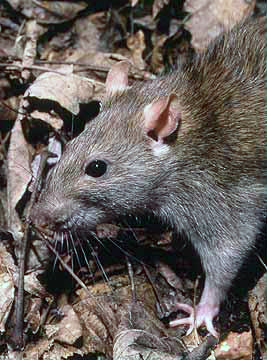 Brown RatRattus norvegicus
-
 Black RatRattus rattus
Compare
Questions and answers
What is the scientific name of the African Grass Rat?
The scientific name of the African Grass Rat is Arvicanthis niloticus. Written with its author, the full name is Arvicanthis niloticus (É. Geoffroy, 1803).
Which family does the African Grass Rat belong to?
Arvicanthis niloticus belongs to the family Muridae, in the order Rodentia and the class Mammalia.
Where is the African Grass Rat found?
Checklists and occurrence records place Arvicanthis niloticus in 29 countries, including Uganda, Democratic Republic of the Congo, Benin, Kenya, Tanzania and Egypt.
What is the conservation status of the African Grass Rat?
The IUCN Red List category recorded for Arvicanthis niloticus is Least Concern (LC).
What other names does the African Grass Rat have?
Arvicanthis niloticus is also known in English as African Arvicanthis.
What does a grass rat look like?
The African Grass Rat has rough yellowish fur tipped in black, a dark dorsal stripe of variable distinctness, whitish ventral fur, and orange areas around the whiskers and eyes and behind the ears. Its tail is densely hairy, blackish above, and white-yellowish below. It has a roundish head, large round ears, a relatively short snout, and a well-developed hindfoot.[1][2][3][4][5][6][7][8]
What is the main diet of a rat?
The African Grass Rat feeds mainly on vegetative plants and grass seeds.[23]
Sources
Passages the profile rests on
- The species has rough fur with yellowish hairs tipped in black. Source passage: “The fur is rough. The upper parts of individual hairs are yellowish with blackish tips.” — English Wikipedia
- A dark dorsal stripe extends from the head to the base of the tail, although its distinctness varies. Source passage: “A dorsal dark stripe more or less distinct extends from the head to the base of the tail.” — English Wikipedia
- The ventral fur is whitish, with blackish hair bases. Source passage: “The ventral parts are whitish, with the base of the hairs blackish.” — English Wikipedia
- The whisker areas, eye areas, and small patches behind the ears are orange. Source passage: “Areas where there are the whiskers, the eyes and a small patch behind each ear are orange.” — English Wikipedia
- The tail is densely hairy, blackish above, and white-yellowish below. Source passage: “The tail is shorter than the head and body, densely covered with hair, blackish above and white-yellowish below.” — English Wikipedia
- The species has a roundish head with large, round ears covered in short, fine fur. Source passage: “Arvicanthis niloticus has a roundish head with large, round ears that are covered with short, fine fur.” — animaldiversity.org
- Its incisors are not grooved and its snout is relatively short. Source passage: “Incisors are not grooved; the snout is rather short” — animaldiversity.org
- The hindfoot is well-developed, with the inner three toes longer than the outer two. Source passage: “The hindfoot is well-developed, and the inner three hind toes are longer than the outer two.” — animaldiversity.org
- Head and body length ranges from 159 to 202 mm. Source passage: “the length of the head and of the body between 159 and 202 mm” — English Wikipedia
- Tail length ranges from 125 to 173 mm. Source passage: “the length of the tail between 125 and 173 mm” — English Wikipedia
- Foot length ranges from 33 to 42 mm. Source passage: “the length of the foot between 33 and 42 mm” — English Wikipedia
- Ear length ranges from 19 to 23 mm. Source passage: “the length of the ears between 19 and 23 mm” — English Wikipedia
- Recorded body mass reaches up to 201 g. Source passage: “a weight up to 201 g.” — English Wikipedia
- The species has an average recorded mass of 118 g, with a range of 50–183 g. Source passage: “Average mass of A. niloticus is 118 g, with a range of 50 g to 183 g.” — animaldiversity.org
- Males have higher reported average masses than females. Source passage: “Males are slightly larger than females with reported average masses of 120 g to 123 g for males and 92 to 114 g for females.” — animaldiversity.org
- The diploid chromosome number is 62, with a fundamental number of 62–64. Source passage: “The karyotype is 2n = 62, FN = 62-64.” — English Wikipedia
- The species inhabits dry savanna and moist savanna. Source passage: “Its natural habitats are dry savanna, moist savanna” — English Wikipedia
- Its recorded habitats include subtropical and tropical moist shrubland. Source passage: “subtropical or tropical moist shrubland” — English Wikipedia
- Additional reported habitats include sub-desert, coastal scrub, open woodlands, and grasslands. Source passage: “A variety of African habitats, including dry savanna, sub-desert, coastal scrub, open woodlands, grasslands, and cultivated areas” — animaldiversity.org
- The species also occurs in arable land, pastureland, and rural gardens. Source passage: “arable land, pastureland, rural gardens” — English Wikipedia
- Its habitats include urban areas and irrigated agricultural land. Source passage: “urban areas, irrigated land, and seasonally flooded agricultural land.” — English Wikipedia
- The species uses ground cover such as bushes, trees, rocks, and termite mounds for nesting. Source passage: “it requires some degree of ground cover, such as short bushes, trees, rocks, or termite mounds, under which it may nest.” — animaldiversity.org
- The species feeds mainly on vegetative plants and grass seeds. Source passage: “feeds mainly on vegetative plants and grass seeds” — pmc.ncbi.nlm.nih.gov
- The species is gregarious and lives in underground burrows. Source passage: “Arvicanthis niloticus is a gregarious species that lives in underground burrows.” — animaldiversity.org
- Its burrows have multiple entrances and extend approximately 20 cm below ground. Source passage: “These burrows have multiple entrances and run about 20 cm deep.” — animaldiversity.org
- Burrows are located at the bases of trees, shrubs, rocks, and termite mounds. Source passage: “They are found at the base of trees, shrubs, rocks, termite mounds, and any other sufficient ground cover.” — animaldiversity.org
- Individuals frequently forage, play, and interact together outside their burrows. Source passage: “Associations outside of the burrow, defined as individuals foraging, "playing", or otherwise interacting together, are very common with no age or sex bias.” — animaldiversity.org
- The species creates and maintains runways extending from burrow entrances. Source passage: “One of the most striking behaviors of A. niloticus is the creation and maintenance of “runways” that extend from the burrow entrances in varying shapes and lengths.” — animaldiversity.org
- Individuals clear their runways during the dry season by clipping grasses and other herbaceous plants and removing small obstructions. Source passage: “Members of this species clip grasses and other herbaceous plants and remove small obstructions to keep the runways clear during the dry season.” — animaldiversity.org
- The species is described as alert, nervous, and somewhat skittish. Source passage: “Nile rats are alert, nervous and somewhat skittish rodents” — pmc.ncbi.nlm.nih.gov
- When alarmed, individuals rapidly enter PVC tubing. Source passage: “quickly dash into their 2" PVC tubing when alarmed.” — pmc.ncbi.nlm.nih.gov
- The species is diurnal and has been maintained as a model for sleep and circadian rhythm research. Source passage: “to establish breeding colonies as a diurnal model for studies of sleep and circadian rhythm” — pmc.ncbi.nlm.nih.gov
- Wild populations reproduce mainly between June and November. Source passage: “It reproduces mainly between June and November.” — English Wikipedia
- Under highly favorable conditions, the species can reproduce throughout the year. Source passage: “Arvicanthis niloticus is capable of breeding year-round under highly favorable conditions.” — animaldiversity.org
- Females typically produce litters of five to six young. Source passage: “The females give birth to 5-6 small cubs” — English Wikipedia
- Females may give birth at least three to four times annually. Source passage: “at least 3-4 times a year.” — English Wikipedia
- Litter sizes range from a few to 12 young, averaging approximately five. Source passage: “litter sizes range from a few to 12 pups, averaging around 5 pups.” — animaldiversity.org
- Gestation lasts 18–25 days, averaging approximately 23 days. Source passage: “gestation may take 18 to 25 days, averaging 23 days.” — animaldiversity.org
- Females experience postpartum estrus and may give birth every 23–25 days during the breeding season. Source passage: “Females experience a post-partum estrus and thus may be consistently pregnant and lactating, giving birth every 23 to 25 days, during the breeding season (October to March).” — animaldiversity.org
- Young are weaned at approximately three weeks of age. Source passage: “Young are weaned at the age of about three weeks” — animaldiversity.org
- Sexual maturity is reached at approximately three to four months. Source passage: “are considered sexually mature at 3 to 4 months.” — animaldiversity.org
- Mothers have been observed defending their young before weaning. Source passage: “mothers have been observed to defend their young prior to weaning.” — animaldiversity.org
- Males are more likely to disperse from colonies than females. Source passage: “males were more likely to disperse than females” — animaldiversity.org
- The species is described as widely distributed and common. Source passage: “Despite its wide distribution and commonness” — English Wikipedia
- The species is used as an animal model for investigating diet-induced type 2 diabetes and metabolic syndrome. Source passage: “as a potential animal model for diet-induced type 2 diabetes mellitus and Metabolic Syndrome.” — pmc.ncbi.nlm.nih.gov
- The species was imported into the United States during the 1990s to establish breeding colonies for sleep and circadian rhythm research. Source passage: “It was imported to the US in 1990s to establish breeding colonies as a diurnal model for studies of sleep and circadian rhythm” — pmc.ncbi.nlm.nih.gov
- Psammomys obesus is identified as a similar gerbil-like rodent used for comparison in diabetes research. Source passage: “The Sand rat (Psammomys obesus) is a similar gerbil-like rodent native to North Africa and the Near East” — pmc.ncbi.nlm.nih.gov
Data
- Catalogue of Life, 2026-10-16 XR cc by
- Global Biodiversity Information Facility CC BY 4.0
- Wikidata CC0
- GeoNames CC BY 4.0
- Wikimedia Commons per image; credit shown with each image
- Within the Catalogue of Life, this name comes from The Integrated Taxonomic Information System cc0
References
- Cat. Mam. Mus. Natl. Hist. Nat., Paris p.186 where the name was published
- International Commission on Zoological Nomenclature. (2002). Opinion 2005 (Case 3022): Catalogue des mammifères du Muséum National d’Histoire Naturelle by Étienne Geoffroy Saint-Hilaire (1803): placed on the Official List of Works Approved as Available for Zoological Nomenclature. Bulletin of Zoological Nomenclature, Vol. 59, No. 2.
- Musser, Guy G., and Michael D. Carleton / Wilson, Don E., and DeeAnn M. Reeder, eds. (2005). Superfamily Muroidea. Mammal Species of the World: A Taxonomic and Geographic Reference, 3rd Ed., Vol. 2.
This species in other databases
Page built on 27 November 2026. See how the catalog is made and all sources and licences.
Cite this page
ScientificNames.org. (2026). Arvicanthis niloticus (African Grass Rat). Retrieved November 27, 2026, from https://scientificnames.org/species/arvicanthis-niloticus
“Arvicanthis niloticus (African Grass Rat).” ScientificNames.org, 2026, scientificnames.org/species/arvicanthis-niloticus. Accessed 27 Nov. 2026.
ScientificNames.org. “Arvicanthis niloticus (African Grass Rat).” Accessed November 27, 2026. https://scientificnames.org/species/arvicanthis-niloticus.
@misc{scientificnames_arvicanthis_niloticus_african_grass_rat,
  author = {{ScientificNames.org}},
  title = {Arvicanthis niloticus (African Grass Rat)},
  year = {2026},
  url = {https://scientificnames.org/species/arvicanthis-niloticus},
  note = {Accessed 2026-11-27}
}