Species · Mammals
Black Rat Rattus rattus
The scientific name of the Black Rat is Rattus rattus. It is a species of mammal in the family Muridae (mice), order Rodentia. The name dates from 1758.
- Scientific name
- Rattus rattus (Linnaeus, 1758)
- Common name
- Black Rat
- Genus
- Rattus
- Family
- Muridae (Mice)
- Order
- Rodentia
- Class
- Mammalia
- Red List category
- LC Least Concern
- Environment
- terrestrial
- Recorded in
- 163 countries
- Name status
- accepted in the Catalogue of Life

Overview
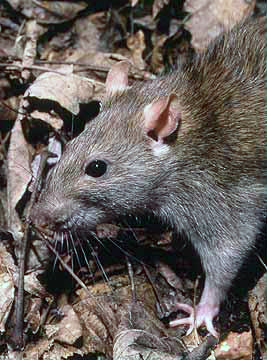
Black Rats inhabit urban environments, wild areas, trees, agricultural fields and other locations. The species is distinguished by a tail that is typically longer than the combined length of its head and body.
Written 26 November 2026 from the sources listed below. Each statement was checked against the passage it cites; statements that could not be supported were removed.
Appearance
The Black Rat ranges in colour from black to light brown and has a lighter-coloured underside. The roof rat colour variant has a slate-black coat and a grey underside.[1][2]
Adult individuals typically have a head-and-body length of 12.75–18.25 cm. Their tails typically measure 15–22 cm and are longer than the combined length of the head and body.[3][4][5]
Adult body weight ranges from 75 to 230 g, depending on the subspecies.[6]
Habitat
Black Rats inhabit urban environments, including warehouses, residential buildings and other human settlements. They prefer dry upper building levels, including wall cavities and false ceilings, and commonly occupy roof habitats.[7][8][9]
Wild Black Rats occupy cliffs, rocky areas, the ground and trees. They commonly inhabit palm trees and pine trees.[10][11]
Black Rats can also inhabit barns and agricultural crop fields, as well as fences, ponds, riverbanks, streams and reservoirs.[12][13]
Diet
The Black Rat is omnivorous and consumes seeds, fruits, stems, leaves, fungi, invertebrates and vertebrates. Its diet includes agricultural products such as cereals, sugar cane, coconuts, cocoa, oranges and coffee beans.[14][15]
Black Rats consume approximately 15 g of food and drink approximately 15 ml of water daily. They commonly forage after sunset.[16][17][18]
When food cannot be consumed immediately, Black Rats carry it to another location and store it for later consumption. They can also consume garbage as a food source that may satisfy their water requirements.[19][20]
Black Rats sampled in Galapagos petrel nesting colonies consumed primarily plants, with arthropods accounting for the remainder. Miconia robinsoniana seeds were the principal food item identified in rats sampled on San Cristóbal Island.[21][22]
Black Rats in Galapagos have been documented consuming a wider range of foods in La Comuna when their primary food resource was less available.[23]
Behaviour
Black Rats generally maintain territories that occupy only a small portion of their overall home ranges. They may mark their territories by rubbing their bodies against trees.[24][25]
Black Rats commonly huddle together in groups. Males generally flee when attacked unless females are present.[26][27]
Black Rats can establish dens both in trees and on the ground. They tend to nest in trees or on upper floors of buildings.[28][29]
Reproduction and life cycle
Black Rats typically reproduce throughout the year. A female can produce up to five litters in one breeding season.[30][31]
The gestation period of female Black Rats ranges from 12 to 29 days.[32]
Conservation
Introduced Black Rats are associated with reduced reproductive success of Galapagos petrels in their nesting areas. They are identified as a major threat to nesting success through egg and chick predation.[33][34]
Black Rats can destroy native bird nests, with nest predation reaching 96% in some affected populations.[35]
Similar species
The brown rat (Rattus norvegicus) is identified as a similar species to the Black Rat. The Asian house rat (Rattus tanezumi) is its closest relative.[36][37]
Classification of the Black Rat
| Kingdom | Animalia |
|---|---|
| Phylum | Chordata |
| Subphylum | Vertebrata |
| Infraphylum | Gnathostomata |
| Parvphylum | Osteichthyes |
| Megaclass | Tetrapoda |
| Class | Mammalia (Mammal) |
| Subclass | Theria |
| Infraclass | Eutheria |
| Order | Rodentia (Rodent) |
| Suborder | Myomorpha (Mice) |
| Superfamily | Muroidea |
| Family | Muridae (Mice) |
| Subfamily | Murinae (Old World Mice) |
| Genus | Rattus (Old World Rats) |
| Species | Rattus rattus (Linnaeus, 1758) |
Where the Black Rat is found
Checklists and occurrence records place Rattus rattus in 163 countries across Africa, Asia, North America, Oceania and South America. GBIF holds 142,355 georeferenced records of it.
Countries
- Afghanistan 4
- Algeria 42
- American Samoa 8
- Angola 106
- Antigua and Barbuda 12
- Argentina 335
- Aruba 14
- Australia 54,104
- Bahamas 9
- Bahrain 3
- Bangladesh 758
- Belgium 738
- Belize 51
- Benin 4,468
- Bermuda 16
- Bolivia 187
- Bonaire, Saint Eustatius and Saba 8
- Botswana 13
- Brazil 1,433
- British Indian Ocean Territory 5
- Burkina Faso 6
- Burundi 62
- Cabo Verde 20
- Cambodia 193
- Cameroon 117
- Canada 401
- Cayman Islands 5
- Central African Republic 69
- Chile 370
- China 151
- Christmas Island 39
- Cocos Islands 48
- Colombia 568
- Comoros 47
- Costa Rica 81
- Cuba 44
- Curacao 17
- Democratic Republic of the Congo 2,193
- Djibouti 67
- Dominica 7
- Dominican Republic 34
- Ecuador 674
- Egypt 176
- El Salvador 5
- Equatorial Guinea 41
- Eritrea 6
- Ethiopia 473
- Fiji 11
- France 5,756
- French Guiana 81
- French Polynesia 119
- Gabon 119
- Gambia 22
- Georgia 99
- Germany 426
- Ghana 54
- Guadeloupe 46
- Guam 6
- Guatemala 63
- Guinea 217
- Guinea-Bissau 21
- Guyana 36
- Haiti 167
- Honduras 73
- Hong Kong 5
- India 919
- Indonesia 2,944
- Iran 40
- Iraq 13
- Israel 738
- Italy 488
- Ivory Coast 451
- Jamaica 41
- Japan 1,431
- Jordan 7
- Kenya 217
- Kiribati 15
- Laos 2,288
- Lebanon 5
- Liberia 96
- Libya 9
- Madagascar 811
- Malawi 31
- Malaysia 373
- Maldives 10
- Mali 20
- Marshall Islands 41
- Martinique 4,030
- Mauritania 3
- Mauritius 136
- Mayotte 29
- Mexico 912
- Micronesia 26
- Montserrat 4
- Morocco 62
- Mozambique 60
- Myanmar 106
- Namibia 4
- Nepal 378
- New Caledonia 91
- New Zealand 3,329
- Nicaragua 137
- Niger 34
- Nigeria 131
- Norfolk Island 18
- Northern Mariana Islands 34
- Oman 8
- Pakistan 238
- Palau 108
- Palestinian Territory 4
- Panama 432
- Papua New Guinea 161
- Paraguay 78
- Peru 142
- Philippines 825
- Portugal 20,933
- Puerto Rico 309
- Republic of the Congo 35
- Reunion 733
- Rwanda 421
- Saint Barthelemy 6
- Saint Helena 19
- Saint Martin 37
- Samoa 6
- Sao Tome and Principe 5
- Saudi Arabia 14
- Senegal 90
- Seychelles 28
- Sierra Leone 230
- Singapore 22
- Solomon Islands 74
- Somalia 25
- South Africa 264
- South Korea 74
- Spain 7,178
- Sri Lanka 272
- Sudan 36
- Suriname 358
- Switzerland 1,369
- Syria 36
- Taiwan 451
- Tanzania 1,412
- Thailand 741
- The Netherlands 622
- Togo 35
- Tonga 41
- Trinidad and Tobago 44
- Tunisia 68
- Turkey 105
- U.S. Virgin Islands 15
- Uganda 157
- United Arab Emirates 4
- United Kingdom 592
- United States 6,320
- United States Minor Outlying Islands 111
- Uruguay 9
- Vanuatu 75
- Venezuela 185
- Vietnam 490
- Wallis and Futuna 6
- Yemen 43
- Zambia 93
- Zimbabwe 105
Regions and cities with the most records
- New South Wales, Australia 30,128
- Azores, Portugal 20,591
- Victoria, Australia 10,596
- Sydney, Australia 5,302
- Plateau, Benin 4,227
- Le François, Martinique 3,977
- Le Lamentin, Martinique 3,977
- Saint-Joseph, Martinique 3,909
- Sainte-Marie, Martinique 3,906
- Le Robert, Martinique 3,903
- La Trinité, Martinique 3,900
- South Australia, Australia 3,318
- Frankston East, Australia 2,981
- Hornsby, Australia 2,775
- Northern Territory, Australia 2,679
- Western Australia, Australia 2,609
- Provence-Alpes-Côte d'Azur, France 2,509
- Valencia, Spain 2,285
- Ducos, Martinique 2,194
- Kétou, Benin 1,795
- Parramatta, Australia 1,721
- California, United States 1,623
- Australian Capital Territory, Australia 1,526
- Almoradí, Spain 1,509
- Rojales, Spain 1,507
- Guardamar del Segura, Spain 1,504
- Santa Pola, Spain 1,502
- Elche, Spain 1,497
- Callosa de Segura, Spain 1,494
- Crevillente, Spain 1,491
- Aspe, Spain 1,484
- Waikato Region, New Zealand 1,342
- Queensland, Australia 1,311
- Occitanie, France 1,117
- Liverpool, Australia 991
- Haut-Katanga, Democratic Republic of the Congo 922
26 more countries have a few records outside this range
These countries hold a few records of Rattus rattus but lie outside the range the checklists give for it. Such records are often zoo or garden specimens, museum material or vagrants, so the species is not counted as occurring there.
- Austria 99
- Belarus 3
- Bosnia and Herzegovina 8
- Bulgaria 68
- Croatia 64
- Cyprus 67
- Czechia 4
- Denmark 218
- Estonia 216
- Finland 161
- French Southern Territories 31
- Gibraltar 3
- Greece 207
- Hungary 5
- Isle of Man 3
- Malta 3
- Montenegro 35
- North Macedonia 9
- Norway 114
- Poland 28
- Romania 22
- Russia 18
- Serbia 30
- Slovenia 20
- Sweden 143
- Ukraine 25
Range as the checklists state it
Europe & Northern Asia (excluding China)
Middle America
North America
South America
A number beside a place is its count of GBIF occurrence records. A place without a number comes from a checklist alone. Records show where a species has been observed or collected, which can include escapes and vagrants.
Common names
English
- Black Rat
- House Rat
- Roof Rat
- Ship Rat
Names in 11 other languages
- Danish
- Husrotte, Sort rotte
- Dutch
- Dakrat, Huisrat, Scheepsrat, zwarte rat
- Finnish
- mustarotta
- French
- rat noir
- German
- Hausratte
- Norwegian Bokmål
- svartrotte
- Papiamento
- Djaka
- Scottish Gaelic
- radain dubha, radan dubh, rodain dubha, rodan dubh
- Spanish
- Rata Negra
- Swedish
- hanråtta, svart råtta, takråtta
- Welsh
- Llygod Du, Llygoden Ddu
Synonyms
62 other scientific names have been used for this species and are now treated as synonyms of Rattus rattus.
- Epimys chionogaster Lönnberg, 1916
- Epimys kelaarti Wroughton, 1915
- Epimys rattus (Linnaeus, 1758)
- Hapalotis arboricola Gould, 1863
- Mus alexandrinorattus Fatio, 1902
- Mus alexandrinus Desmarest, 1819
- Mus alexandrinus É. Geoffroy, 1803
- Mus arboreus Horsfield, 1851
- Mus asiaticus Gray, 1837
- Mus atratus Miller, 1902
- Mus atridorsum Miller, 1903
- Mus ceylonus Kelaart, 1850
- Mus crassipes Blyth, 1859
- Mus flavescens Elliot, 1839
- Mus flaviventris Brants, 1827
- Mus galapagoensis Waterhouse, 1839
- Mus griseocaeruleus Higgins & Petterd, 1883
- Mus infralineatus Blyth, 1863
- Mus insularis Waterhouse, 1839
- Mus jujensis Lönnberg, 1916
- Mus kandianus Kelaart, 1850
- Mus kandiyanus Kelaart, 1887
- Mus kijabius J. A. Allen, 1909
- Mus latipes Bennett, 1835
- Mus leucogaster Pictet, 1841
- Mus muansae Matschie, 1911
- Mus novaezelandiae Buller, 1871
- Mus picteti Schinz, 1845
- Mus rattus Linnaeus, 1758
- Mus rattus ater Millais, 1905
- Mus rattus brookei Crew, 1923
- Mus rattus intermedius Ninni, 1882
- Mus rattus jurassicus Burg, 1921
- Mus rufescens Gray, 1837
- Mus samharensis Heuglin, 1877
- Mus subcaeruleus Lesson, 1842
- Mus sylvestris Pictet, 1841
- Mus tectorum Savi, 1825
- Mus tectorum fuliginosus Bonaparte, 1833
- Mus tompsoni Ramsay, 1881
Showing 40 of 62.
Related species
-
 Brown RatRattus norvegicus
-
 Polynesian RatRattus exulans
-
 Bush RatRattus fuscipes
-
 Maclear's RatRattus macleari
-
 Bulldog RatRattus nativitatis
-
 Ricefield RatRattus argentiventer
-
 Australian Swamp RatRattus lutreolus
- Long-haired RatRattus villosissimus
Compare
Questions and answers
What is the scientific name of the Black Rat?
The scientific name of the Black Rat is Rattus rattus. Written with its author, the full name is Rattus rattus (Linnaeus, 1758).
Which family does the Black Rat belong to?
Rattus rattus belongs to the family Muridae, in the order Rodentia and the class Mammalia.
Where is the Black Rat found?
Checklists and occurrence records place Rattus rattus in 163 countries, including Australia, Portugal, Spain, United States, France and Benin.
What is the conservation status of the Black Rat?
The IUCN Red List category recorded for Rattus rattus is Least Concern (LC).
What other names does the Black Rat have?
Rattus rattus is also known in English as House Rat, Roof Rat and Ship Rat.
What does the black rat eat?
The Black Rat is omnivorous and consumes seeds, fruits, stems, leaves, fungi, invertebrates and vertebrates. Its diet also includes agricultural products such as cereals, sugar cane, coconuts, cocoa, oranges and coffee beans.[14][15]
What is the habitat of the black rat?
Black Rats inhabit urban environments, including warehouses, residential buildings and other human settlements. They also occupy cliffs, rocky areas, the ground, trees, agricultural crop fields and locations near water.[7][10][11][12][13]
Sources
Passages the profile rests on
- The black rat ranges in colour from black to light brown and has a lighter-coloured underside. Source passage: “It is usually black to light brown in colour with a lighter underside.” — English Wikipedia
- The roof rat colour variant has a slate-black coat and a grey underside. Source passage: “Roof rat (R. rattus rattus) – slate black with a gray underside” — English Wikipedia
- Adult individuals typically have a head-and-body length of 12.75–18.25 cm. Source passage: “A typical adult black rat is 12.75 to 18.25 cm (5.02 to 7.19 in) long” — English Wikipedia
- The tail typically measures 15–22 cm in length. Source passage: “not including a 15 to 22 cm (5.9 to 8.7 in) tail” — English Wikipedia
- The tail is typically longer than the combined length of the head and body. Source passage: “Tail length varies among subspecies, but is typically longer than the rat's head and body combined.” — English Wikipedia
- Adult body weight ranges from 75 to 230 g, depending on the subspecies. Source passage: “weighs 75 to 230 g (2.6 to 8.1 oz), depending on the subspecies.” — English Wikipedia
- Black rats inhabit urban environments, including warehouses, residential buildings and other human settlements. Source passage: “In urban areas they are found around warehouses, residential buildings, and other human settlements.” — English Wikipedia
- In urban environments, black rats prefer dry upper building levels, including wall cavities and false ceilings. Source passage: “In urban areas, they prefer to live in dry upper levels of buildings, so they are commonly found in wall cavities and false ceilings.” — English Wikipedia
- Black rats prefer roof habitats in urban environments. Source passage: “The Black Rat lives in urban areas. They prefer to live in roofs ...” — australian.museum
- Wild black rats occupy cliffs, rocky areas, the ground and trees. Source passage: “In the wild, black rats live in cliffs, rocks, the ground, and trees.” — English Wikipedia
- Black rats commonly inhabit palm trees and pine trees. Source passage: “They are great climbers and prefer to live in palms and trees, such as pine trees.” — English Wikipedia
- Black rats can inhabit barns and agricultural crop fields. Source passage: “They are also found in agricultural areas, such as in barns and crop fields.” — English Wikipedia
- Black rats can also occupy fences, ponds, riverbanks, streams and reservoirs. Source passage: “Black rats are also found around fences, ponds, riverbanks, streams, and reservoirs.” — English Wikipedia
- The black rat is omnivorous and consumes seeds, fruits, stems, leaves, fungi, invertebrates and vertebrates. Source passage: “The black rat is considered to be an omnivore and eats a wide range of foods, including seeds, fruit, stems, leaves, fungi, and a variety of invertebrates and vertebrates.” — English Wikipedia
- Their diet includes agricultural products such as cereals, sugar cane, coconuts, cocoa, oranges and coffee beans. Source passage: “It feeds on birds and insects, and also on a variety of agricultural-based crops, such as cereals, sugar cane, coconuts, cocoa, oranges, and coffee beans.” — English Wikipedia
- Black rats consume approximately 15 g of food daily. Source passage: “It eats about 15 g (0.53 oz) per day” — English Wikipedia
- Black rats drink approximately 15 ml of water daily. Source passage: “and drinks about 15 ml (0.53 imp fl oz; 0.51 US fl oz) per day.” — English Wikipedia
- Black rats commonly forage after sunset. Source passage: “It tends to forage after sunset.” — English Wikipedia
- When food cannot be consumed immediately, black rats carry it to another location and store it for later consumption. Source passage: “If the food cannot be eaten quickly, it searches for a place to carry and hoard to eat at a later time.” — English Wikipedia
- Black rats can consume garbage as a source of food that may also satisfy their water requirements. Source passage: “Water is required, although a diet of garbage may satisfy the water ...” — nrm.dfg.ca.gov
- Black rats sampled in Galapagos petrel nesting colonies consumed a diet consisting primarily of plants, with arthropods accounting for the remainder. Source passage: “The omnivorous black rat ate mostly plants (98%) and arthropods (2%).” — pmc.ncbi.nlm.nih.gov
- Miconia robinsoniana seeds were the principal food item identified in black rats sampled on San Cristóbal Island. Source passage: “Intact seeds of Miconia robinsoniana were the main food at all sites (relative abundance=72.1%, present in 95% of the analyzed stomachs)” — pmc.ncbi.nlm.nih.gov
- Black rats in Galapagos have been documented consuming a wider range of foods in La Comuna when their primary food resource was less available. Source passage: “Black rat showed a wider diet in La Comuna, which was related to a lower availability of its primary prey and its ability to adapt to the available resources in its habitat.” — pmc.ncbi.nlm.nih.gov
- Black rats generally maintain territories that occupy only a small portion of their overall home ranges. Source passage: “The black rat is generally territorial, although the territory is typically a small subset of the full range.” — English Wikipedia
- Black rats may mark their territories by rubbing their bodies against trees. Source passage: “Rats may mark their territory by rubbing themselves against trees” — English Wikipedia
- Black rats commonly huddle together in groups. Source passage: “Like its relative R. norvegicus, R. rattus often huddle in groups.” — English Wikipedia
- Male black rats generally flee when attacked unless females are present. Source passage: “while male rats tend to flee when attacked unless females are present.” — English Wikipedia
- Black rats can establish dens both in trees and on the ground. Source passage: “rats have been found to occupy dens located in trees, as well as on the ground.” — English Wikipedia
- Black rats tend to nest in trees or on upper floors of buildings. Source passage: “Unlike brown rats, black rats have a tendency to nest inside trees or the upper floors of a house,” — English Wikipedia
- Black rats typically reproduce throughout the year. Source passage: “Black rats typically breed year-round” — English Wikipedia
- A female black rat can produce up to five litters in one breeding season. Source passage: “females can produce up to 5 litters in one season.” — English Wikipedia
- The gestation period of female black rats ranges from 12 to 29 days. Source passage: “Female rats' gestation period can range from 12 to 29 days.” — English Wikipedia
- Introduced black rats are associated with reduced reproductive success of Galapagos petrels in their nesting areas. Source passage: “their effects on the native flora and fauna are adverse, including the extinction of endemic rodents in some islands and the reduction in the reproductive success of the Galapagos petrel (Pterodroma phaeopygia) in its nesting zones.” — pmc.ncbi.nlm.nih.gov
- Black rats have been identified as a major threat to Galapagos petrel nesting success through egg and chick predation. Source passage: “the reduction in the reproductive success of the Galapagos petrel Pterodroma phaeopygia, an endemic and critically endangered seabird, is related to egg and chick predation by the black rat, Rattus rattus” — pmc.ncbi.nlm.nih.gov
- Black rats can destroy native bird nests, with nest predation reaching 96% in some affected populations. Source passage: “R. rattus is known to destroy the nests of native birds, causing up to 96% of total nest predations.” — English Wikipedia
- The brown rat (Rattus norvegicus) is identified as a similar species to the black rat. Source passage: “Similar species: Brown Rat; also ...” — australian.museum
- The Asian house rat (Rattus tanezumi) is identified as the black rat's closest relative. Source passage: “Its closest relative is the Asian house rat (R. tanezumi) from Southeast Asia.” — English Wikipedia
Data
- Catalogue of Life, 2026-10-16 XR cc by
- Global Biodiversity Information Facility CC BY 4.0
- Wikidata CC0
- GeoNames CC BY 4.0
- Wikimedia Commons per image; credit shown with each image
- Within the Catalogue of Life, this name comes from The Integrated Taxonomic Information System cc0
References
- Syst. Nat., 10th ed. vol.1 p.61 where the name was published
- Ellerman, J. R., and T. C. S. Morrison-Scott. (1966). Checklist of Palaearctic and Indian Mammals 1758 to 1946, 2nd Edition.
- Watts, Christopher H. S., and H. J. Aslin. (1981). The Rodents of Australia.
- Banks, R. C., R. W. McDiarmid, and A. L. Gardner. (1987). Checklist of Vertebrates of the United States, the U.S. Territories, and Canada. Resource Publication, No. 166.
- Wilson, Don E., and DeeAnn M. Reeder, eds. (1993). Mammal Species of the World: A Taxonomic and Geographic Reference, 2nd Ed., 3rd Printing.
- Wilson, Don E., and F. Russell Cole. (2000). Common Names of Mammals of the World.
- Musser, Guy G., and Michael D. Carleton / Wilson, Don E., and DeeAnn M. Reeder, eds. (2005). Superfamily Muroidea. Mammal Species of the World: A Taxonomic and Geographic Reference, 3rd Ed., Vol. 2.
This species in other databases
Page built on 27 November 2026. See how the catalog is made and all sources and licences.
Cite this page
ScientificNames.org. (2026). Rattus rattus (Black Rat). Retrieved November 27, 2026, from https://scientificnames.org/species/rattus-rattus
“Rattus rattus (Black Rat).” ScientificNames.org, 2026, scientificnames.org/species/rattus-rattus. Accessed 27 Nov. 2026.
ScientificNames.org. “Rattus rattus (Black Rat).” Accessed November 27, 2026. https://scientificnames.org/species/rattus-rattus.
@misc{scientificnames_rattus_rattus_black_rat,
  author = {{ScientificNames.org}},
  title = {Rattus rattus (Black Rat)},
  year = {2026},
  url = {https://scientificnames.org/species/rattus-rattus},
  note = {Accessed 2026-11-27}
}