Species · Insects
Australiputo casuarinae
Australiputo casuarinae has no English name on record in the checklists used here. It is a species of insect in the family Pseudococcidae (mealybug), order Hemiptera. The name dates from 1893.
- Scientific name
- Australiputo casuarinae (Maskell, 1893)
- Genus
- Australiputo
- Family
- Pseudococcidae (Mealybug)
- Order
- Hemiptera
- Class
- Insecta
- Recorded in
- 1 country
- Name status
- accepted in the Catalogue of Life
Overview
Wikidata describes Australiputo casuarinae as “species of insect”.
Classification of Australiputo casuarinae
| Kingdom | Animalia |
|---|---|
| Phylum | Arthropoda |
| Subphylum | Hexapoda |
| Class | Insecta (Insect) |
| Order | Hemiptera |
| Suborder | Sternorrhyncha |
| Infraorder | Coccomorpha |
| Family | Pseudococcidae (Mealybug) |
| Genus | Australiputo |
| Species | Australiputo casuarinae (Maskell, 1893) |
Where Australiputo casuarinae is found
Checklists and occurrence records place Australiputo casuarinae in 1 country across Oceania. GBIF holds 6 georeferenced records of it.
Countries
Regions and cities with the most records
Range as the checklists state it
New South Wales
Victoria
A number beside a place is its count of GBIF occurrence records. A place without a number comes from a checklist alone. Records show where a species has been observed or collected, which can include escapes and vagrants.
Synonyms
3 other scientific names have been used for this species and are now treated as synonyms of Australiputo casuarinae.
- Ceroputo casuarinae (Maskell, 1893)
- Phenacoccus casuarinae (Maskell, 1893)
- Pseudococcus casuarinae Maskell, 1893 ambiguous synonym
Related species
- Australiputo eucalypti
-
 Citrus MealybugPlanococcus citri
- Manna Scale-insectTrabutina mannipara
-
 Long-tailed Mealy BugPseudococcus longispinus
-
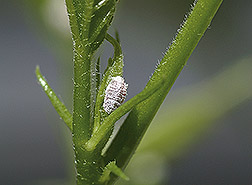 Pink Hibiscus MealybugMaconellicoccus hirsutus
-
 Cotton MealybugPhenacoccus solenopsis
-
 Obscure MealybugPseudococcus viburni
- Old Pasture MealybugHeliococcus summervillei
Compare
Sources
Data
- Catalogue of Life, 2026-10-16 XR cc by
- Global Biodiversity Information Facility CC BY 4.0
- Wikidata CC0
- GeoNames CC BY 4.0
- Within the Catalogue of Life, this name comes from Systematic Database of the Scale Insects of the World cc by
References
- Maskell, W.M. (1893) Further coccid notes: with descriptions of new species from Australia, India, Sandwich Islands, Demerara, and South Pacific. Transactions and Proceedings of the New Zealand Institute, 25(1892). where the name was published
- Williams, D.J. (1985) In Australian mealybugs. British Museum (Natural History), London. 431 pp. [in English]
- Gullan, P.J. (2021) Australian Mealybugs (Hemiptera: Pseudococcidae): Resurrection of the Geunus Australiputo Willialms and Desription of a New Genus and species on Pomaderris) (Rhamnaceae). Australian Entomologist, 48 (1).
- Cockerell, T.D.A. (1893) Note on the genus Pseudococcus Westwood. Entomological News, 4.
- Ben-Dov, Y. (1994) A systematic catalogue of the mealybugs of the world (Insecta: Homoptera: Coccoidea: Pseudococcidae and Putoidae) with data on geographical distribution, host plants, biology and economic importance. Intercept Limited, Andover, UK, 686 pp. [in English]
- Deitz, L.L. & Tocker, M.F. (1980) W.M. Maskell's Homoptera: Species-group names and type-material. New Zealand Department of Scientific and Industrial Research, Information Series, 146.
- Danzig, E.M. & Gavrilov-Zimin, I.A. (2014) In I.A. Danzig E.M. & Gavrilov-Zimin (Ed.). Palaearctic mealybugs (Homoptera: Coccinea: Pseudococcidae), Part 1: Subfamily Phenacoccinae. Russian Academy of Sciences, Zoological Institute, St. Petersburg. 678 pp. [in English]
This species in other databases
Page built on 28 November 2026. See how the catalog is made and all sources and licences.
Cite this page
ScientificNames.org. (2026). Australiputo casuarinae. Retrieved November 28, 2026, from https://scientificnames.org/species/australiputo-casuarinae
“Australiputo casuarinae.” ScientificNames.org, 2026, scientificnames.org/species/australiputo-casuarinae. Accessed 28 Nov. 2026.
ScientificNames.org. “Australiputo casuarinae.” Accessed November 28, 2026. https://scientificnames.org/species/australiputo-casuarinae.
@misc{scientificnames_australiputo_casuarinae,
  author = {{ScientificNames.org}},
  title = {Australiputo casuarinae},
  year = {2026},
  url = {https://scientificnames.org/species/australiputo-casuarinae},
  note = {Accessed 2026-11-28}
}