Species · Flowering plants
Blunt Wisteria Austrocallerya australis
The scientific name of the Blunt Wisteria is Austrocallerya australis. It is a species of flowering plant in the family Fabaceae (bean), order Fabales.
- Scientific name
- Austrocallerya australis (Endl.) J.Compton & Schrire
- Common name
- Blunt Wisteria
- Genus
- Austrocallerya
- Family
- Fabaceae (Bean)
- Order
- Fabales
- Class
- Magnoliopsida
- Recorded in
- 6 countries
- Name status
- accepted in the Catalogue of Life

Overview
Blunt wisteria is a tall, woody climbing flowering plant in the family Fabaceae. It grows in rainforest habitats from sea level to elevations of 800 m and occurs in Australia, Norfolk Island, New Guinea, New Caledonia, the Cook Islands, the Solomon Islands, the Tuamotu Islands and the Tubuai Islands. It has pinnate leaves, panicles of flowers with mauve, purple or whitish standard petals, and oblong, woody pods.
Written 27 November 2026 from the sources listed below. Each statement was checked against the passage it cites; statements that could not be supported were removed.
Appearance
Blunt wisteria is a tall, woody climbing plant with stems covered in rough, grey or cream-coloured bark. Its stems can reach 20 cm in diameter.[1][2][3]
Its pinnate leaves contain between 5 and 19 oblong, elliptic or egg-shaped leaflets, measuring 10–86 mm long and 5–45 mm wide. Each leaflet has a silky-hairy, thread-like or triangular stipel at its base, which may fall off as the leaf matures, and the petioles measure 100–150 mm in length.[4][5][6][7]
Its flowers are arranged in panicles measuring 60–260 mm long. The flowers have yellowish sepals measuring 3.5–7 mm long and 5–10 mm wide, and approximately round standard petals that may be mauve, purple or whitish, measuring 12–15 mm long and 11–18 mm wide; the wing and keel petals are purple or maroon.[8][9][10][11][12][13]
Its fruit is an oblong, woody, hairless pod measuring 15–25 mm long.[14][15]
Habitat
Blunt wisteria grows in rainforest habitats from sea level to elevations of 800 m.[16][17]
Its Australian distribution extends south through New South Wales to Port Macquarie. It also occurs on Norfolk Island, in New Guinea, New Caledonia, the Cook Islands, the Solomon Islands, the Tuamotu Islands and the Tubuai Islands.[18][19][20][21][22][23][24][25]
Reproduction and life cycle
Flowering occurs during winter and spring.[26]
Conservation
Blunt wisteria is classified as least concern under Queensland's Nature Conservation Act 1992.[27]
Classification of the Blunt Wisteria
| Kingdom | Plantae |
|---|---|
| Subkingdom | Pteridobiotina |
| Phylum | Tracheophyta |
| Class | Magnoliopsida |
| Order | Fabales |
| Family | Fabaceae (Bean) |
| Genus | Austrocallerya |
| Species | Austrocallerya australis (Endl.) J.Compton & Schrire |
Where the Blunt Wisteria is found
Checklists and occurrence records place Austrocallerya australis in 6 countries across Oceania. GBIF holds 374 georeferenced records of it.
Countries
- Australia 251
- Cook Islands 13
- French Polynesia 16
- New Caledonia 11
- Norfolk Island 25
- Papua New Guinea 58
Regions and cities with the most records
- New South Wales, Australia 145
- Queensland, Australia 77
- Port Macquarie, Australia 23
- Kingston, Norfolk Island 16
- Western Highlands Province, Papua New Guinea 9
- Gold Coast, Australia 6
- Coffs Harbour, Australia 5
- Hela Province, Papua New Guinea 5
- Enga Province, Papua New Guinea 4
- Mount Hagen, Papua New Guinea 4
- Avarua, Cook Islands 3
- Eastern Highlands Province, Papua New Guinea 3
- Rarotonga, Cook Islands 3
1 more country has a few records outside this range
These countries hold a few records of Austrocallerya australis but lie outside the range the checklists give for it. Such records are often zoo or garden specimens, museum material or vagrants, so the species is not counted as occurring there.
A number beside a place is its count of GBIF occurrence records. A place without a number comes from a checklist alone. Records show where a species has been observed or collected, which can include escapes and vagrants.
Common names
English
- Blunt Wisteria
Synonyms
8 other scientific names have been used for this species and are now treated as synonyms of Austrocallerya australis.
- Callerya australis (Endl.) Schot
- Callerya neocaledonica I.C.Nielsen & Veillon
- Kraunhia australis (Endl.) Greene
- Millettia australis (Endl.) Benth.
- Millettia maideniana F.M.Bailey
- Pterocarpus australis Endl.
- Wisteria australis (Endl.) F.Muell.
- Wisteria maideniana (F.M.Bailey) C.Moore
Related species
-
 Native WisteriaAustrocallerya megasperma
-
 Northern WisteriaAustrocallerya pilipes
-
 PeanutArachis hypogaea
-
 LiquoriceGlycyrrhiza glabra
-
 TamarindTamarindus indica
-
 ChickpeaCicer arietinum
-
 SoybeanGlycine max
-
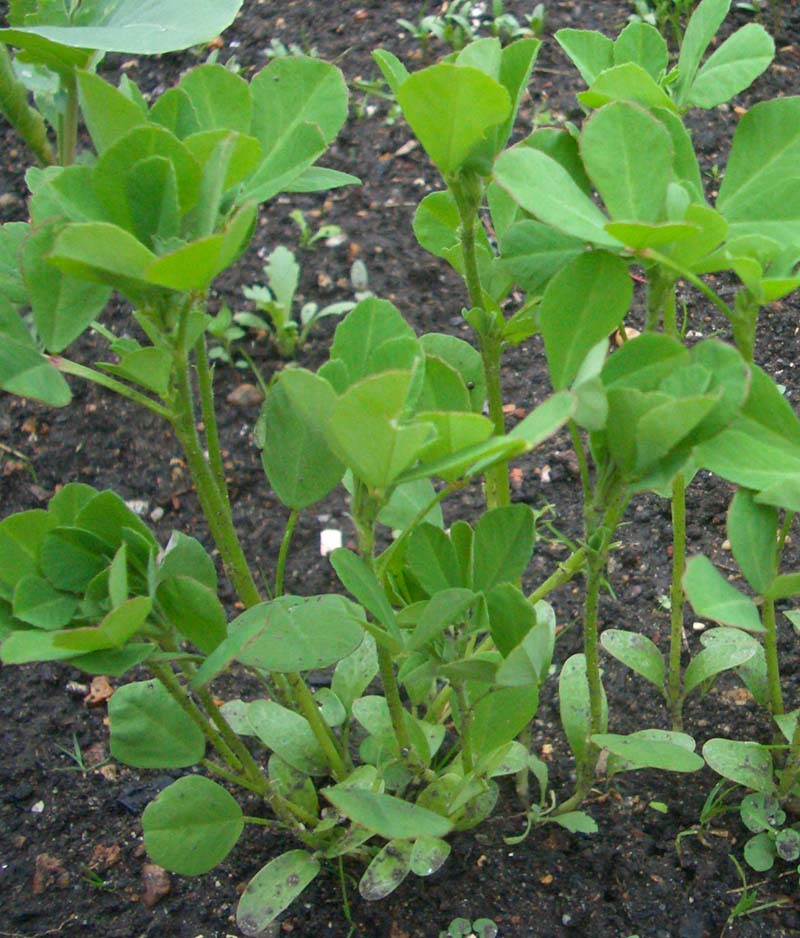 FenugreekTrigonella foenum-graecum
Compare
Questions and answers
What is the scientific name of the Blunt Wisteria?
The scientific name of the Blunt Wisteria is Austrocallerya australis. Written with its author, the full name is Austrocallerya australis (Endl.) J.Compton & Schrire.
Which family does the Blunt Wisteria belong to?
Austrocallerya australis belongs to the family Fabaceae, in the order Fabales and the class Magnoliopsida.
Where is the Blunt Wisteria found?
Checklists and occurrence records place Austrocallerya australis in 6 countries: Australia, Papua New Guinea, Norfolk Island, French Polynesia, Cook Islands and New Caledonia.
What is the scientific name for wisteria?
The scientific name of blunt wisteria is Austrocallerya australis.[28]
Sources
Passages the profile rests on
- Austrocallerya australis is a tall, woody climbing plant. Source passage: “It is a tall, woody climber with pinnate leaves, the leaflets oblong, elliptic or egg-shaped, and panicles of purple, pea-like flowers.” — English Wikipedia
- Its stems have rough, grey or cream-coloured bark. Source passage: “stems up to 20 cm (7.9 in) in diameter with rough, grey or cream-coloured bark.” — English Wikipedia
- Its stems can reach 20 cm in diameter. Source passage: “stems up to 20 cm (7.9 in) in diameter” — English Wikipedia
- Its pinnate leaves contain between 5 and 19 oblong, elliptic or egg-shaped leaflets. Source passage: “The leaves are pinnate with 5 to 19 oblong, elliptic or egg-shaped leaflets” — English Wikipedia
- Its leaflets measure 10–86 mm long and 5–45 mm wide. Source passage: “10–86 mm (0.39–3.39 in) long and 5–45 mm (0.20–1.77 in) wide.” — English Wikipedia
- Each leaflet has a silky-hairy, thread-like or triangular stipel at its base, which may fall off as the leaf matures. Source passage: “There is a silky-hairy, thread-like or triangular stipel 1–4 mm (0.039–0.157 in) long at the base of each leaflet, but that sometimes falls as the leaf matures.” — English Wikipedia
- Its petioles measure 100–150 mm in length. Source passage: “The petiole is 100–150 mm (3.9–5.9 in) long” — English Wikipedia
- Its flowers are arranged in panicles. Source passage: “The flowers are arranged in panicles 60–260 mm (2.4–10.2 in) long” — English Wikipedia
- Its flower panicles measure 60–260 mm long. Source passage: “panicles 60–260 mm (2.4–10.2 in) long” — English Wikipedia
- Its flowers have yellowish sepals measuring 3.5–7 mm long and 5–10 mm wide. Source passage: “The sepals are yellowish, 3.5–7 mm (0.14–0.28 in) long and 5–10 mm (0.20–0.39 in) wide.” — English Wikipedia
- Its standard petal is approximately round and may be mauve, purple or whitish. Source passage: “The standard petal is more or less round, 12–15 mm (0.47–0.59 in) long, 11–18 mm (0.43–0.71 in) wide and mauve, purple or whitish” — English Wikipedia
- Its standard petals measure 12–15 mm long and 11–18 mm wide. Source passage: “12–15 mm (0.47–0.59 in) long, 11–18 mm (0.43–0.71 in) wide” — English Wikipedia
- Its wing and keel petals are purple or maroon. Source passage: “the wings 12–14 mm (0.47–0.55 in) long and purple or maroon, and the keel is 12–14 mm (0.47–0.55 in) long and purple or maroon.” — English Wikipedia
- Its fruit is an oblong, woody, hairless pod. Source passage: “the fruit is an oblong, woody glabrous pod 15–25 mm (0.59–0.98 in) long.” — English Wikipedia
- Its fruit pods measure 15–25 mm long. Source passage: “pod 15–25 mm (0.59–0.98 in) long.” — English Wikipedia
- The species grows in rainforest habitats. Source passage: “This species grows in rainforest” — English Wikipedia
- It occurs in rainforest from sea level to elevations of 800 m. Source passage: “in rainforest from sea level to an altitude of 800 m (2,600 ft)” — English Wikipedia
- Its Australian distribution extends south through New South Wales to Port Macquarie. Source passage: “in New South Wales as far south as Port Macquarie” — English Wikipedia
- The species occurs on Norfolk Island. Source passage: “and on Norfolk Island.” — English Wikipedia
- The species also occurs in New Guinea. Source passage: “it also occurs in New Guinea” — English Wikipedia
- The species occurs in New Caledonia. Source passage: “New Guinea, New Caledonia” — English Wikipedia
- Its distribution includes the Cook Islands. Source passage: “and the Cook, Solomon, Tuamotus and Tubuai Islands.” — English Wikipedia
- Its distribution includes the Solomon Islands. Source passage: “and the Cook, Solomon, Tuamotus and Tubuai Islands.” — English Wikipedia
- Its distribution includes the Tuamotu Islands. Source passage: “and the Cook, Solomon, Tuamotus and Tubuai Islands.” — English Wikipedia
- Its distribution includes the Tubuai Islands. Source passage: “and the Cook, Solomon, Tuamotus and Tubuai Islands.” — English Wikipedia
- Flowering occurs during winter and spring. Source passage: “Flowering occurs in winter and spring” — English Wikipedia
- The species is classified as least concern under Queensland's Nature Conservation Act 1992. Source passage: “Austrocallerya australis is listed as "least concern" under the Queensland Government Nature Conservation Act 1992.” — English Wikipedia
- The species was transferred to the newly established genus Austrocallerya in 2019. Source passage: “in 2019, James A. Compton and Brian David Schrire moved it to their new genus Austrocallerya as Austrocallerya australis” — English Wikipedia
Data
- Catalogue of Life, 2026-10-16 XR cc by
- Global Biodiversity Information Facility CC BY 4.0
- Wikidata CC0
- GeoNames CC BY 4.0
- Wikimedia Commons per image; credit shown with each image
- Within the Catalogue of Life, this name comes from The World Checklist of Vascular Plants (WCVP): Fabaceae cc by
References
- PhytoKeys 125: 86 (2019) where the name was published
This species in other databases
Page built on 29 November 2026. See how the catalog is made and all sources and licences.
Cite this page
ScientificNames.org. (2026). Austrocallerya australis (Blunt Wisteria). Retrieved November 29, 2026, from https://scientificnames.org/species/austrocallerya-australis
“Austrocallerya australis (Blunt Wisteria).” ScientificNames.org, 2026, scientificnames.org/species/austrocallerya-australis. Accessed 29 Nov. 2026.
ScientificNames.org. “Austrocallerya australis (Blunt Wisteria).” Accessed November 29, 2026. https://scientificnames.org/species/austrocallerya-australis.
@misc{scientificnames_austrocallerya_australis_blunt_wisteria,
  author = {{ScientificNames.org}},
  title = {Austrocallerya australis (Blunt Wisteria)},
  year = {2026},
  url = {https://scientificnames.org/species/austrocallerya-australis},
  note = {Accessed 2026-11-29}
}