Species · Flowering plants
Dwarf White Bauhinia Bauhinia acuminata
The scientific name of the Dwarf White Bauhinia is Bauhinia acuminata. It is a species of flowering plant in the family Fabaceae (bean), order Fabales.
- Scientific name
- Bauhinia acuminata L.
- Common name
- Dwarf White Bauhinia
- Genus
- Bauhinia
- Family
- Fabaceae (Bean)
- Order
- Fabales
- Class
- Magnoliopsida
- Red List category
- LC Least Concern
- Recorded in
- 21 countries
- Name status
- accepted in the Catalogue of Life

Overview
The species is native to tropical southeastern Asia and occurs in deciduous forests and scrub habitats. It is distinguished by bilobed leaves shaped like an ox hoof and fragrant flowers with five white petals and ten yellow-tipped stamens.
Written 26 November 2026 from the sources listed below. Each statement was checked against the passage it cites; statements that could not be supported were removed.
Appearance
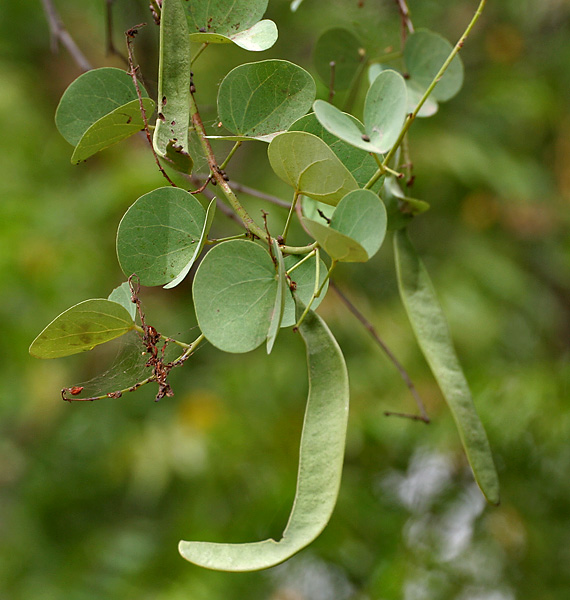
The dwarf white bauhinia has bilobed leaves shaped like an ox hoof, with an apical cleft reaching up to 5 centimetres deep. Its leaves measure 6 to 15 centimetres in both length and breadth, and their petioles measure 1.5 to 4 centimetres long.[1][2][3][4]
Its fragrant flowers measure 8 to 12 centimetres in diameter and have five white petals and ten yellow-tipped stamens. Its fruit pods measure 7.5 to 15 centimetres long and 1.5 to 1.8 centimetres broad.[5][6][7][8]
Habitat
The dwarf white bauhinia occurs in deciduous forests and scrub habitats. It is native to tropical southeastern Asia.[9][10][11]
Behaviour
The dwarf white bauhinia has become naturalised on Australia's Cape York Peninsula. It can occur outside cultivation as an escape and establish outside cultivation in some areas.[12][13][14]
Uses
The dwarf white bauhinia is widely cultivated throughout tropical regions as an ornamental plant. In Javanese traditional use, its roots are used to treat coughs and colds, while its leaves and bark are used to treat asthma in India.[15][16][17]
The species is used in various culinary dishes in Odisha.[18]
Classification of the Dwarf White Bauhinia
| Kingdom | Plantae |
|---|---|
| Subkingdom | Pteridobiotina |
| Phylum | Tracheophyta |
| Class | Magnoliopsida |
| Order | Fabales |
| Family | Fabaceae (Bean) |
| Genus | Bauhinia (Orchid Trees) |
| Species | Bauhinia acuminata L. |
Where the Dwarf White Bauhinia is found
Checklists and occurrence records place Bauhinia acuminata in 21 countries across Africa, Asia, North America and Oceania. GBIF holds 871 georeferenced records of it.
Countries where it is native or its origin is not stated
Countries where it has been introduced
- Bangladesh 16
- Cambodia 2
- China 79
- Democratic Republic of the Congo 10
- Dominican Republic
- India 423
- Laos
- Myanmar 28
- Pakistan
- Sierra Leone
- Sri Lanka 17
- Thailand 53
- Vietnam 6
- Zimbabwe
Regions and cities with the most records
- Kerala, India 91
- Maharashtra, India 43
- Guangdong, China 31
- West Bengal, India 29
- Telangana, India 28
- Padang, Indonesia 27
- Northern Territory, Australia 26
- Yunnan, China 26
- Andhra Pradesh, India 25
- Tamil Nadu, India 23
- Gujarat, India 18
- Karnataka, India 18
- Kukatpally, India 17
- Mumbai, India 17
- Quthbullapur, India 16
- Hyderabad, India 15
- Odisha, India 15
- Chengamanād, India 14
- Malkajgiri, India 14
- Powai, India 14
- Airoli, India 13
- Kalher, India 13
- Kallūr Tekkumuri, India 13
- Kallūr Vadakummuri, India 13
- Koratti, India 13
- Thāne, India 13
- Bolārum, India 12
- Borivli, India 12
- Bāspalli, India 12
- Kompalli, India 12
- Taliparamba, India 12
- Antipolo, Philippines 11
- Bagong Silangan, Philippines 11
- Cainta, Philippines 11
- Calumpang, Philippines 11
- Cherukunnu, India 11
11 more countries have a few records outside this range
These countries hold a few records of Bauhinia acuminata but lie outside the range the checklists give for it. Such records are often zoo or garden specimens, museum material or vagrants, so the species is not counted as occurring there.
A number beside a place is its count of GBIF occurrence records. A place without a number comes from a checklist alone. Records show where a species has been observed or collected, which can include escapes and vagrants.
Common names
English
- Dwarf White Bauhinia
Names in 9 other languages
- Chinese
- 白花洋蹄甲, 白花羊蹄甲, 矮白花羊蹄甲
- Japanese
- モクワンジュ
- Russian
- Баугиния заострённая
- Slovak
- bauhínia končistá
- Spanish
- Pata de vaca
- Swedish
- vit dvärgbauhinia
- Tamil
- வெள்ளை மந்தாரை
- Telugu
- దేవకాంచనం
- Thai
- กาหลง
Synonyms
4 other scientific names have been used for this species and are now treated as synonyms of Bauhinia acuminata.
- Bauhinia linnaei Ali
- Casparia acuminata (L.) Heynh.
- Mandarus acuminata (L.) Raf.
- Pauletia acuminata (L.) A.Schmitz
Related species
-
 Orchid TreeBauhinia variegata
-
 Hong Kong OrchidtreeBauhinia × blakeana
-
 Bidi Leaf TreeBauhinia racemosa
-
 Orchid TreeBauhinia purpurea
-
 Pride of de KaapBauhinia galpinii
-
 Pink BauhiniaBauhinia monandra
-
 Yellow BauhiniaBauhinia tomentosa
-
 Brazilian Orchid TreeBauhinia forficata
Compare
Questions and answers
What is the scientific name of the Dwarf White Bauhinia?
The scientific name of the Dwarf White Bauhinia is Bauhinia acuminata. Written with its author, the full name is Bauhinia acuminata L..
Which family does the Dwarf White Bauhinia belong to?
Bauhinia acuminata belongs to the family Fabaceae, in the order Fabales and the class Magnoliopsida.
Where is the Dwarf White Bauhinia found?
Checklists and occurrence records place Bauhinia acuminata in 21 countries, including Indonesia, Philippines, Australia, Malaysia, Micronesia and Papua New Guinea.
What is the conservation status of the Dwarf White Bauhinia?
The IUCN Red List category recorded for Bauhinia acuminata is Least Concern (LC).
Sources
Passages the profile rests on
- The species has bilobed leaves shaped like an ox hoof. Source passage: “the leaves are bilobed, shaped like an ox hoof” — English Wikipedia
- Its leaves have an apical cleft reaching up to 5 centimetres deep. Source passage: “with the apical cleft up to 5 centimetres (2 in) deep” — English Wikipedia
- Its leaves measure 6 to 15 centimetres in both length and breadth. Source passage: “they are 6 to 15 centimetres (2+1⁄4 to 6 in) long and broad” — English Wikipedia
- Its leaf petioles measure 1.5 to 4 centimetres long. Source passage: “the petiole is 1.5 to 4 centimetres (1⁄2 to 1+1⁄2 in) long.” — English Wikipedia
- Its flowers are fragrant and measure 8 to 12 centimetres in diameter. Source passage: “The flowers are fragrant, 8 to 12 centimetres (3+1⁄4 to 4+3⁄4 in) in diameter” — English Wikipedia
- Its flowers have five white petals. Source passage: “with five white petals” — English Wikipedia
- Its flowers have ten yellow-tipped stamens. Source passage: “ten yellow-tipped stamens” — English Wikipedia
- Its fruit pods measure 7.5 to 15 centimetres long and 1.5 to 1.8 centimetres broad. Source passage: “The fruit is a pod 7.5 to 15 centimetres (3 to 6 in) long and 1.5 to 1.8 centimetres (1⁄2 to 3⁄4 in) broad.” — English Wikipedia
- The species occurs in deciduous forests. Source passage: “The species occurs in deciduous forests and scrub.” — English Wikipedia
- The species occurs in scrub habitats. Source passage: “The species occurs in deciduous forests and scrub.” — English Wikipedia
- The species is native to tropical southeastern Asia. Source passage: “native to tropical southeastern Asia.” — English Wikipedia
- The species has become naturalised on Australia's Cape York Peninsula. Source passage: “has become naturalised on the Cape York Peninsula, Australia.” — English Wikipedia
- The species can occur outside cultivation as an escape in some areas. Source passage: “It may be found as an escape from cultivation in some areas” — English Wikipedia
- The species can establish outside cultivation in some areas. Source passage: “It may be found as an escape from cultivation in some areas” — English Wikipedia
- The species is widely cultivated throughout tropical regions as an ornamental plant. Source passage: “It is widely cultivated throughout the tropics as an ornamental plant.” — English Wikipedia
- Javanese people use the roots to treat coughs and colds. Source passage: “The roots are used by the Javanese to treat cough and cold” — English Wikipedia
- In India, the leaves and bark are used to treat asthma. Source passage: “in India the leaves and bark are used to treat asthma.” — English Wikipedia
- The species is used in various culinary dishes in Odisha. Source passage: “It is also used in many culinary dishes of Odisha” — English Wikipedia
Data
- Catalogue of Life, 2026-10-16 XR cc by
- Global Biodiversity Information Facility CC BY 4.0
- Wikidata CC0
- GeoNames CC BY 4.0
- Wikimedia Commons per image; credit shown with each image
- Within the Catalogue of Life, this name comes from The World Checklist of Vascular Plants (WCVP): Fabaceae cc by
References
- Sp. Pl.: 375 (1753) where the name was published
This species in other databases
Page built on 27 November 2026. See how the catalog is made and all sources and licences.
Cite this page
ScientificNames.org. (2026). Bauhinia acuminata (Dwarf White Bauhinia). Retrieved November 27, 2026, from https://scientificnames.org/species/bauhinia-acuminata
“Bauhinia acuminata (Dwarf White Bauhinia).” ScientificNames.org, 2026, scientificnames.org/species/bauhinia-acuminata. Accessed 27 Nov. 2026.
ScientificNames.org. “Bauhinia acuminata (Dwarf White Bauhinia).” Accessed November 27, 2026. https://scientificnames.org/species/bauhinia-acuminata.
@misc{scientificnames_bauhinia_acuminata_dwarf_white_bauhinia,
  author = {{ScientificNames.org}},
  title = {Bauhinia acuminata (Dwarf White Bauhinia)},
  year = {2026},
  url = {https://scientificnames.org/species/bauhinia-acuminata},
  note = {Accessed 2026-11-27}
}