Species · Insects
Boucomontiellus umbrinus
Boucomontiellus umbrinus has no English name on record in the checklists used here. It is a species of insect in the family Scarabaeidae (dung beetles), order Coleoptera. The name dates from 1913.
- Scientific name
- Boucomontiellus umbrinus (Koshantschikov, 1913)
- Genus
- Boucomontiellus
- Family
- Scarabaeidae (Dung Beetles)
- Order
- Coleoptera
- Class
- Insecta
- Name status
- accepted in the Catalogue of Life
Overview
The species is recorded from Jilin, China. Adults reach approximately 5 mm in length and have a brownish-grey body with a completely dull surface.
Written 28 November 2026 from the sources listed below. Each statement was checked against the passage it cites; statements that could not be supported were removed.
Appearance
Adults have a brownish-grey body with a completely dull surface and reach approximately 5 mm in length. The pronotum bears only a few hairs, while the elytra are more densely covered with hairs.[1][2][3][4]
Classification of Boucomontiellus umbrinus
| Kingdom | Animalia |
|---|---|
| Phylum | Arthropoda |
| Subphylum | Hexapoda |
| Class | Insecta (Insect) |
| Order | Coleoptera (Beetle) |
| Suborder | Polyphaga |
| Series | Staphyliniformia |
| Superfamily | Scarabaeoidea |
| Family | Scarabaeidae (Dung Beetles) |
| Subfamily | Aphodiinae |
| Tribe | Aphodiini |
| Subtribe | Aphodiina |
| Genus | Boucomontiellus |
| Species | Boucomontiellus umbrinus (Koshantschikov, 1913) |
Where Boucomontiellus umbrinus is found
Range as the checklists state it
Palaearctic(China:Jilin)
A number beside a place is its count of GBIF occurrence records. A place without a number comes from a checklist alone. Records show where a species has been observed or collected, which can include escapes and vagrants.
Synonyms
One other scientific name has been used for this species and is now treated as a synonym of Boucomontiellus umbrinus.
- Aphodius (Amidorus) umbrinus Koshantschikov, 1913
Related species
- Boucomontiellus pelliculosus
-
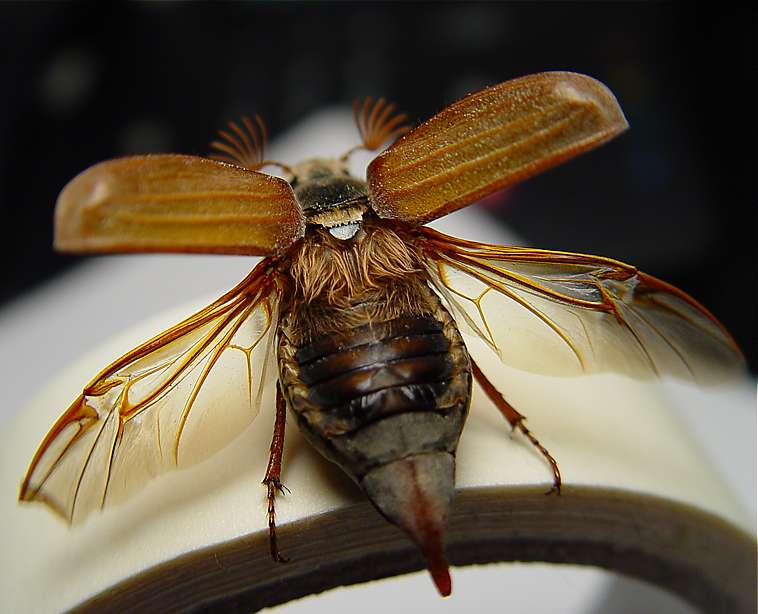 CockchaferMelolontha melolontha
-
 Hercules BeetleDynastes (Dynastes) hercules
-
 Japanese BeetlePopillia japonica
-
 Japanese Rhinoceros BeetleTrypoxylus dichotomus
-
 Sacred ScarabScarabaeus sacer
-
 Figeater BeetleCotinis (Cotinis) mutabilis
-
 Atlas BeetleChalcosoma atlas
Compare
Sources
Passages the profile rests on
- Adults reach approximately 5 mm in length. Source passage: “Adults reach a length of about 5 mm (0.20 in).” — English Wikipedia
- Adults have a brownish-grey body with a completely dull surface. Source passage: “They have a brownish-grey, completely dull body.” — English Wikipedia
- The pronotum bears only a few hairs. Source passage: “The pronotum has only a few hairs” — English Wikipedia
- The elytra are more densely covered with hairs than the pronotum. Source passage: “while the elytra are more densely covered with hairs.” — English Wikipedia
Data
- Catalogue of Life, 2026-10-16 XR cc by
- Wikidata CC0
- Within the Catalogue of Life, this name comes from World Scarabaeidae Database cc by
References
- Löbl, I., & Löbl, D. (2016). Catalogue of Palaearctic Coleoptera Vol. 3. Revised and Updated Edition. Brill Leiden :1-983 (1-412). https://doi.org/10.1163/9789004309142 Link where the name was published
This species in other databases
Page built on 28 November 2026. See how the catalog is made and all sources and licences.
Cite this page
ScientificNames.org. (2026). Boucomontiellus umbrinus. Retrieved November 28, 2026, from https://scientificnames.org/species/boucomontiellus-umbrinus
“Boucomontiellus umbrinus.” ScientificNames.org, 2026, scientificnames.org/species/boucomontiellus-umbrinus. Accessed 28 Nov. 2026.
ScientificNames.org. “Boucomontiellus umbrinus.” Accessed November 28, 2026. https://scientificnames.org/species/boucomontiellus-umbrinus.
@misc{scientificnames_boucomontiellus_umbrinus,
  author = {{ScientificNames.org}},
  title = {Boucomontiellus umbrinus},
  year = {2026},
  url = {https://scientificnames.org/species/boucomontiellus-umbrinus},
  note = {Accessed 2026-11-28}
}